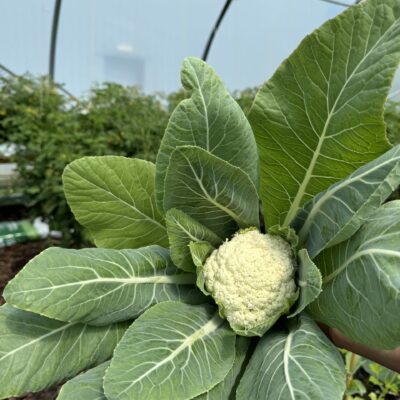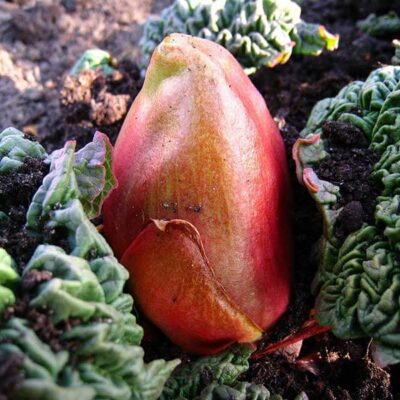


If you are interested in gardening, and especially if you have an interest in sustainable and eco-friendly living, you may have come across the term permaculture. Permaculture gardening and permaculture farming are common terms in organic gardening circles.
If you are a little confused about what this means and what it might entail, you have come to the right place. Read on to find out what this term means and how understanding it can influence your practices in your polytunnel or elsewhere in your garden.
What is Permaculture Farming?
Permaculture is a blueprint for sustainable design and an ethical framework. The term is a portmanteau, combining the words ‘permanent’ and ‘agriculture’ – or ‘culture’ when used in a broader context.
When we adopt a permaculture approach, our goal is to create gardens, farms or other systems that can last – meeting our own needs without compromising the ability of future generations to meet their own.
At the heart of permaculture are three simple core ethics: care for our planet, care for humanity, and fair share. It is about taking only what we need, and returning surplus to the system, doing no harm to the ecosystems around us, and ensuring our survival as a species.
Though the term permaculture has only been around since the 1970s, the broad concepts within this movement have been around for a lot longer, in organic gardening, natural farming, agro-ecology, and other related movements.
Bringing everything back to the simple central ethics can remind us that this is not about terminology and key buzzwords – it is about finding ways to live in a kinder, more reasonable, and more ethical way when it comes to how we grow our food and other crops, and how we conduct ourselves in all areas of our lives.
How Does A Permaculture Approach Impact The Environment?
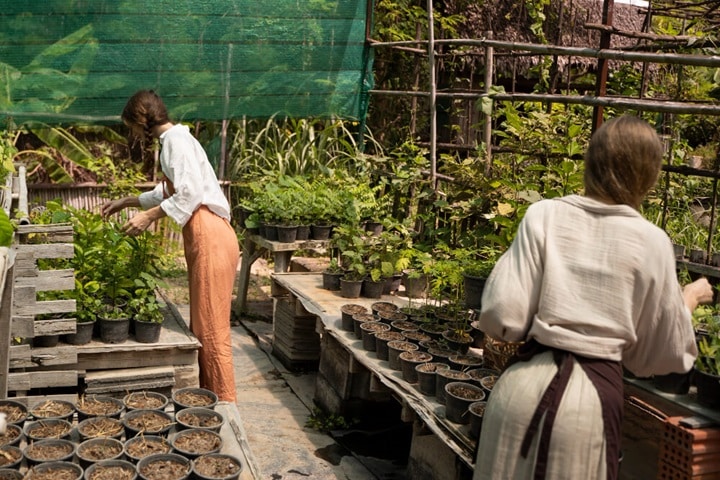
Taking a permaculture approach on our farms or in our gardens can have a profound effect on our own lives and, of course, can have a profound impact on the environment, both locally and globally.
Since permaculture tells us the core importance of caring for this planet we call home, and for other people, safeguarding and where necessary improving the ecosystems around us is of paramount importance.
In an age of increasing climate uncertainty, permaculture offers vital tools for building resilience. Rather than relying on external inputs or rigid systems, permaculture promotes flexible, diverse designs that can adapt to change. Mixed cropping, perennial plants, and water-wise strategies make systems more robust in the face of drought, flooding, and shifting weather patterns.
Microclimate creation—such as planting windbreaks, designing sun traps, or shading sensitive crops—can buffer extremes and protect yields. Similarly, storing excess water in wet seasons and improving soil organic matter helps retain moisture during dry spells. Permaculture also encourages seed saving and the use of local, adapted varieties that are better suited to regional conditions.
Beyond the garden, permaculture fosters social resilience by encouraging community networks, cooperative models, and shared infrastructure. In this way, permaculture becomes more than a method of cultivation—it becomes a strategy for survival and regeneration in a changing world.
The Benefits of Permaculture
Permaculture approaches can help us all to reduce carbon emissions and emissions of other greenhouse gases, reduce waste in all its forms and halt various types of pollution.
Taking a permaculture approach can help us to avoid harmful practices that damage air, water and soil, and it can boost plant and animal variety and help to tackle biodiversity losses. It can attract and benefit the wildlife with whom we share our planet home.
Types of Permaculture Farming
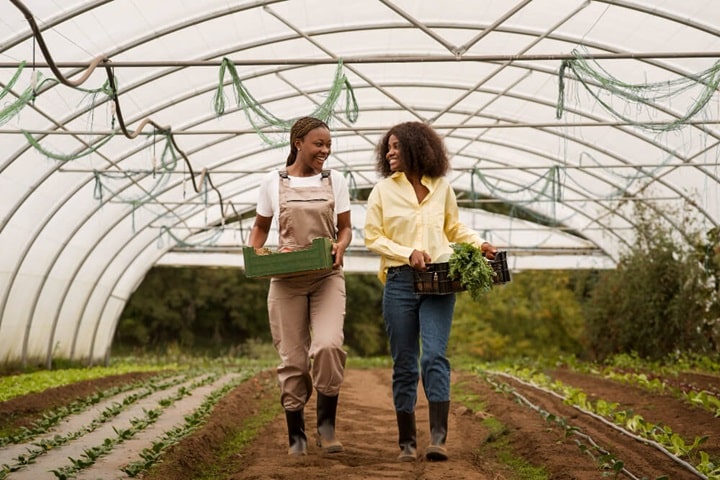
Permaculture design methods and permaculture practical approaches can be and are implemented at a range of scales.
Permaculture is not a one-size-fits-all concept. It is a flexible, responsive design philosophy and practical approach that can be implemented across a wide range of scales, climates, and contexts.
Whether you are tending a small balcony garden or managing a multi-acre holding, permaculture offers guiding principles that enable us to work with, rather than against, natural systems.
Domestic Permaculture
Domestic permaculture begins quite literally at home. It involves implementing permaculture design ethics—earth care, people care, and fair share—within and around our homes.
This might mean growing herbs on a sunny windowsill, or creating a small outdoors or polytunnel garden, collecting rainwater in barrels, composting kitchen scraps, or insulating your home naturally. It also extends to how we organise our living spaces, use energy, manage waste, and relate to our communities.
Domestic permaculture is often the first step many people take on their permaculture journey.
Permaculture Smallholdings and Market Gardens
For those with access to more land, permaculture principles can be used to design and maintain smallholdings and market gardens. These systems integrate perennial crops, annual vegetables, infrastructure, and perhaps animals, in a way that maximises yields while enhancing biodiversity and ecosystem health.
For example, a mixed cropping system might incorporate chickens for garden pest control and fertility, fruit trees for long-term productivity, and no-dig vegetable beds to minimise soil disturbance.
Permaculture market gardens can provide sustainable livelihoods while restoring degraded land and fostering community resilience.
Permaculture at a Larger Scale in an Agricultural Setting
At the farm scale, permaculture can be a powerful regenerative tool. It shifts the focus away from monoculture and intensive industrial agriculture towards systems that mimic natural ecosystems.
Permaculture techniques and practices can be adopted to improve soil health, sequester carbon, and reduce reliance on synthetic inputs. Farmers using permaculture approaches often report improved yields over time, lower costs, and greater resilience to climatic variability.
Common Permaculture Practices
While each permaculture site is unique, there are common practices that emerge from shared principles and goals. Here are some of the key practices to look at:
Permaculture Observation and Planning
A foundational tenet of permaculture is the importance of observation. Before any planting or construction takes place, careful observation and mapping of the site are crucial.
Understanding sun patterns, wind directions, water flows, soil types, and microclimates enables us to make informed decisions.
Thoughtful planning ensures that every element supports and interacts beneficially with others—this is the essence of permaculture design.
Permaculture Water Management
Water is life, and in permaculture, managing this precious resource wisely is a central concern.
Techniques such as swales, rain gardens, ponds, and greywater recycling allow us to catch, store, and slow the movement of water across the land. This helps to reduce erosion, recharge aquifers, and create resilient systems that thrive in both drought and deluge.
Even in domestic settings, simple changes like installing water butts, redirecting downspouts, and mulching can make a meaningful difference.
Soil Care Practices & Maintaining Fertility
Healthy soil underpins all successful permaculture systems. Rather than depleting the soil through tillage and chemical use, permaculture nurtures it through no-dig gardening, composting, mulching, and encouraging soil biodiversity.
Techniques like sheet mulching and the use of green manures protect and enrich the soil, turning it into a living, breathing foundation for long-term fertility. Soil is seen not as dirt, but as a living ecosystem to be cherished.
Forest Gardens, Agroforestry, & Other Perennial Planting
Forest gardens mimic the structure and function of natural woodlands to produce food, fuel, fodder, and fibre. These multi-layered systems can include trees, shrubs, herbaceous plants, ground covers, and climbers—each with a role to play.
Forest gardens or food forests are one type of agroforestry that can implemented even in small domestic gardens.
On larger properties, other forms of agroforestry are silvo-arable systems – growing arable crops between tree rows, and silvo-pasture systems – raising livestock between/ among trees. Both of these are effective and eco-friendly land-management strategies to increase soil health and give higher rates of carbon sequestration.
Polycultures and Companion Planting
Nature doesn’t do monoculture. In permaculture, we take inspiration from natural plant communities by growing polycultures—diverse combinations of plants that support one another.
Companion planting improves pest resistance, boosts yields, and enhances soil fertility. For example, planting carrots and onions together can help deter carrot fly and onion fly, while including marigolds can attract beneficial insects. Diversity brings beauty as well as abundance.
Small Space & Urban Permaculture Practices
You don’t need acres to practise permaculture. In fact, some of the most innovative permaculture work happens in cities. Vertical gardens, container planting, rooftop gardens, and community growing spaces all offer opportunities to integrate permaculture into urban life.
Window boxes can grow salad leaves, a balcony can house a worm bin, and community centres can host composting hubs or tool libraries. Urban permaculture connects people with food, nature, and each other.
Maintaining a Zero Waste Approach for Circular Systems
Permaculture design aims to create closed-loop systems, where waste becomes a resource. This includes composting organic waste, reusing greywater, upcycling materials, and designing for durability.
A permaculture farming system sees the value in every output—whether it’s manure from animals, kitchen scraps from a café, or leaves swept from a street. The goal is a circular economy where nothing is lost, and everything has its place.
Managing Animals in Permaculture Farming Systems
Animals, when integrated thoughtfully, can play vital roles in permaculture systems. Chickens can till soil and control pests, ducks can clear slugs from vegetable beds, and pigs can clear brambles and root out weeds.
Livestock also contribute valuable manure, which can be composted and returned to the soil. Permaculture animal management focuses on welfare, natural behaviour, and creating symbiotic relationships with plants and people.
Here’s some helpful articles regarding animals in polytunnel, both the pros and the cons:
Making Full Use of Natural Resources

Permaculture farming encourages us to use what nature provides, wisely and respectfully. This includes harvesting solar energy through passive solar design or photovoltaics, using wind and water power, building with natural and local materials, and growing our own fuel.
It also means recognising the abundance around us—nettles for fertiliser, willow for baskets, or wild garlic for the kitchen, to give just a few examples. Resourcefulness and resilience go hand in hand.
Permaculture Practices Beyond the Garden or Farm
Permaculture is not limited to landscapes; it can influence how we structure our communities, economies, and daily lives. Social permaculture looks at how we organise groups, make decisions, and share resources. Financial permaculture considers how we spend, save, and invest in ways that reflect permaculture ethics.
Education, art, communication, and care work can all be seen through a permaculture lens—creating cultures that are regenerative, inclusive, and grounded in care.
Permaculture offers a hopeful, grounded path forward—a way of living that is both deeply practical and richly philosophical. By aligning ourselves with natural systems, we not only create abundance for ourselves but also restore the ecosystems and communities we rely on.
Whether you’re planting a single herb pot or designing a full-scale forest garden, you are part of a wider, regenerative movement rooted in care, creativity, and connection.
FAQs
Do I need a large space to start a permaculture garden?
Not at all. Permaculture is a design approach, not a measure of size. Whether you have a small courtyard, a balcony, or even just a few containers, you can begin to apply permaculture principles. Start by observing your space, growing something you enjoy, composting your food waste, or harvesting rainwater. Every action counts, and small systems often teach us the most.
What are some common features in a permaculture garden?
Common elements include diverse planting (often with perennials), composting systems, mulched beds, water-harvesting features, zones of use (from kitchen garden to wilder areas), and habitat for wildlife. Permaculture gardens are typically productive, beautiful, and ever-evolving, with a strong emphasis on working with local conditions and minimising external inputs.
Is permaculture organic?
Permaculture goes beyond organic. While it avoids synthetic chemicals like organic growing does, permaculture also considers system design, energy use, social structures, and ethics. It’s not just what you grow, but how and why you grow it. That said, permaculture and organic practices are very much aligned and often overlap in practical ways.
Sources
Soil Association. (2020) What is agroforestry? [online] Available at: https://www.soilassociation.org/causes-campaigns/agroforestry/what-is-agroforestry/