

In every thriving garden, where life teems in every corner, there will always be those who arrive uninvited. Garden pests are part of the natural world, and while they may frustrate the gardener, they are also indicators of an ecosystem alive and in motion.
The key, in a permaculture garden especially, is to cultivate balance – to deter, rather than destroy with pesticides we should redirect, rather than waging war.
By learning to observe the habits and lifecycles of common pests, we can work with nature to reduce their impact. Many so-called pests are simply creatures doing what they are designed to do – seeking food, shelter, and somewhere to raise their young.
Our task is to make sure we get what we want and need from our gardens too, keeping pest populations in check, repelling, confusing or distracting them to protect key crops, and creating inviting spaces for their natural predators.
1. Aphids (Greenfly, Blackfly)
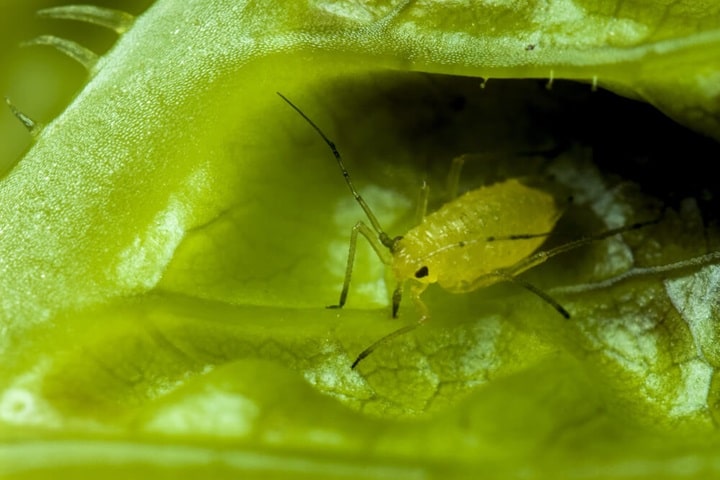
These tiny sap-sucking garden pests cluster on young shoots and under leaves, weakening plants and spreading disease. They multiply rapidly, especially in spring. While a few aphids won’t harm a healthy plant, large infestations can cause curled leaves, stunted growth, and sooty mould.
Ladybirds, lacewings, and hoverfly larvae are other excellent allies. Encourage them with diverse planting, undisturbed corners, and flowering herbs. You can also spray aphids off with water or use a mild soap spray. Avoid over-fertilising, as soft, sappy growth attracts them.
Planting nasturtiums as trap crops nearby brassicas will draw aphids away from your main crops. Likewise, sweet alyssum and yarrow attract beneficial insects that prey on aphids. Learn about other nasturtium companion plants.
2. Whitefly
Whitefly are small, powdery insects found on the undersides of leaves, particularly in greenhouses. They weaken plants by feeding and can transmit viruses. Disturbing the plant sends them fluttering into the air.
Sticky traps help monitor populations, but biological control is more effective. Parasitic wasps such as Encarsia formosa prey on whitefly. Instead of neem oil, which may harm beneficial insects and disturb ecological balance, consider using insecticidal soap or encouraging parasitic wasps like Encarsia formosa with care to reduce infestations. Ventilation and plant spacing are also key to deterring them.
3. Slugs
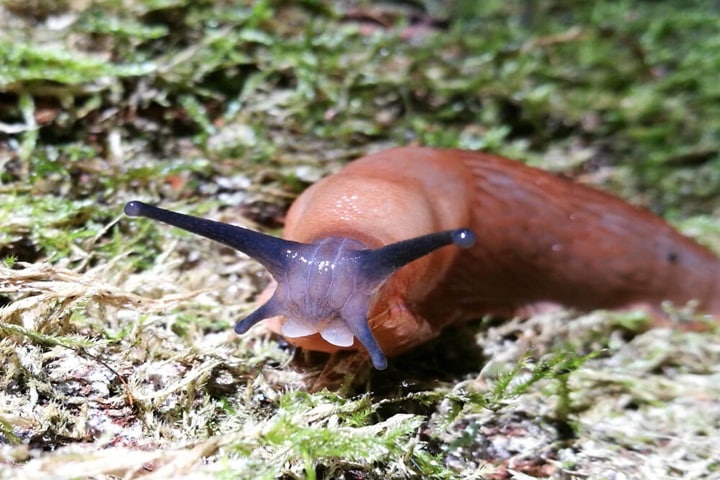
These are among the most familiar and frustrating garden pests. Slugs feed at night on seedlings, young leaves, and tender growth. They thrive in damp, shady conditions and can quickly devastate a vegetable patch.
Hand-picking by torchlight, setting up beer traps, and using copper barriers are all useful tactics. Create habitats for frogs, hedgehogs, and ground beetles – all natural slug predators. Avoid chemical slug pellets, which harm non-target species and soil life.
Planting sacrificial lettuces or using tagetes as a border can lure slugs away from more valuable crops. Herbs such as rosemary and lavender, with their strong scents, may also help deter them.
Learn more about slugs:
4. Cabbage Moth Caterpillar
These grey-brown moths lay eggs on brassica leaves, and the resulting green caterpillars chew through them with zeal. Regular inspection is vital. Check the undersides of leaves and remove eggs or caterpillars by hand.
Fine netting over crops prevents moths from laying. Planting strong-scented herbs nearby, like thyme and sage, can confuse and deter them. Healthy, well-spaced brassicas are more resilient.
Try interplanting with dill, which attracts predatory wasps, or calendula, which can serve as a decoy plant, drawing moths away from your main crops.
5. Vine Weevil (adult and larvae)

Adult vine weevils chew neat notches from leaf edges, while the larvae feed on roots – often unseen until the plant collapses. Container-grown plants are particularly vulnerable.
Encourage birds and toads in the garden. Nematodes can be watered into compost in autumn to target larvae. Re-pot container plants regularly and inspect roots for the tell-tale white grubs.
6. Chafer Grub
These fat, C-shaped larvae live in the soil and feed on grass roots, causing yellowing patches in lawns. Birds and badgers may tear up turf to get at them.
Maintaining a diverse lawn and avoiding overuse of fertilisers supports a healthy soil food web, which in turn keeps chafer numbers in check. Nematodes are again effective when applied at the right time.
7. Mealy Bug
Soft-bodied and covered in a white, waxy coating, mealy bugs feed on sap and are most common in greenhouses and houseplants. They hide in crevices and leaf joints.
Wipe them away with cotton wool dipped in alcohol or neem oil. Boost plant resilience with good air flow, healthy compost, and regular observation. Introduce predatory insects like Cryptolaemus montrouzieri in closed environments.
8. Lily Beetle
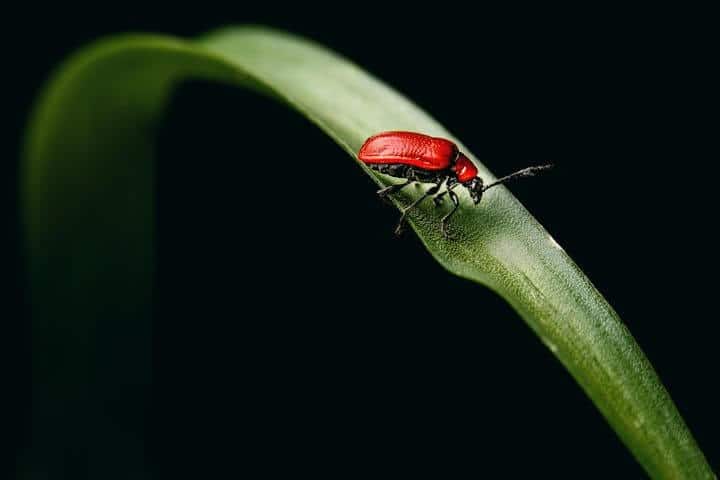
Bright red with black legs, lily beetles are easy to spot but harder to catch. Both adults and their larvae feed voraciously on lilies and fritillaries.
Regular inspection is crucial. Squash any you see and check beneath leaves for sticky brown larvae. Companion planting with strong-smelling herbs may help deter them.
Consider growing chives, garlic, or alliums nearby, as their pungent odours may offer a natural deterrent to lily beetles. Keeping nearby areas free from debris also reduces overwintering sites.
9. Two-Spotted Spider Mite
These minuscule pests thrive in dry, warm conditions and weave fine webs under leaves. They suck sap from the underside of leaves, causing a stippled appearance and eventual leaf drop.
Increase humidity around affected plants and spray with water regularly. Predatory mites such as Phytoseiulus persimilis are effective in controlling them. Good greenhouse hygiene and adequate spacing prevent outbreaks.
10. Leaf Hopper
These small, agile insects jump from plant to plant, sucking sap and sometimes transmitting viruses. They can cause yellowing and stunted growth in a range of plants.
Avoid monocultures and encourage a wide diversity of plant life. Insectary strips can support predatory species. These are intentional plantings of nectar- and pollen-rich flowers designed to attract and sustain beneficial insects such as ladybirds, hoverflies, lacewings, and parasitic wasps.
By offering a continuous source of food and habitat, these strips encourage natural pest control throughout the growing season.
Plants like yarrow, dill, fennel, calendula, phacelia, and buckwheat are often used for their ability to draw in these allies and maintain a thriving ecological balance in the garden. Fine mesh netting may also be used to exclude them from vulnerable crops.
11. Leaf Miner (inc. Allium Leaf Miner)
Leaf miners are larvae that tunnel within leaves, creating distinctive trails. Allium leaf miner is a newer form of garden pests in the UK and can affect leeks, onions, and garlic.
Crop covers can prevent adult flies from laying eggs. Rotating crops, removing and destroying affected foliage, and encouraging beneficial insects all reduce long-term damage.
Chives and leeks benefit from being planted alongside carrots and celery, which can help mask their scent. Also, intercropping with aromatic herbs such as mint or rosemary may confuse pests searching for alliums.
12. Scale Insect
Scale insects are sap feeders that appear as small bumps on stems and leaves. They excrete honeydew, which leads to sooty mould.
Scrape off by hand or use horticultural soap. Ladybirds and parasitic wasps help keep populations in check. Ensure plants are not stressed, as healthy plants are less vulnerable.
13. Tortrix Moth
Tortrix moth larvae roll leaves into shelters and feed within. They can damage fruit trees, roses, and ornamental shrubs.
Remove and destroy affected leaves. Encourage birds, particularly tits, who feed on the larvae. Pheromone traps can help monitor populations.
14. Woolly Aphid
These fluffy white insects tend to cluster on apple trees and other woody plants. They suck sap and can cause swellings or cracks in the bark.
Scrape away colonies and use a stiff brush to remove waxy residues. Natural predators include hoverflies and ladybirds. Keep trees well pruned and remove suckers.
15. Earwig
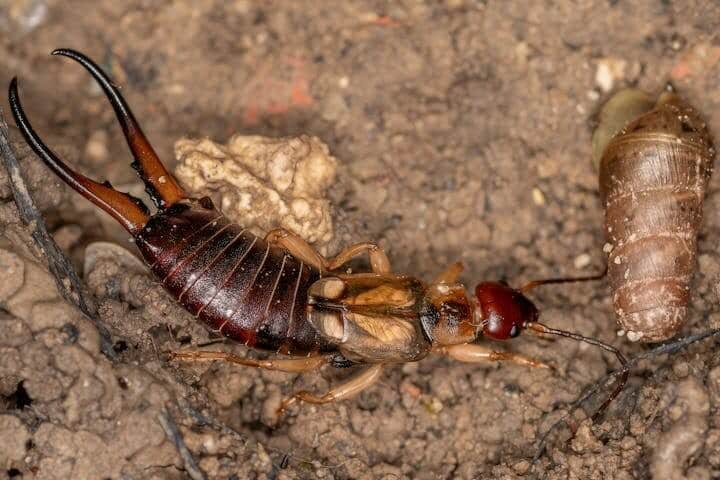
Often unfairly maligned, earwigs feed on aphids and decaying matter, though they will occasionally nibble petals and soft fruit.
Encourage their beneficial role while controlling numbers near vulnerable plants by placing upturned pots stuffed with straw nearby. These can be emptied away from the garden in the morning.
16. Box Caterpillar
A relatively recent arrival in the UK, these garden pests feeds on box plants, stripping them rapidly. Green caterpillars with black heads and stripes hide inside webs.
Remove caterpillars by hand and prune infested branches. Biological controls, such as Bacillus thuringiensis, can be used in early stages. Regular monitoring is vital.
17. Oak Processionary Caterpillar / Moth
These garden pests are not only damaging to oaks but hazardous to human and animal health due to its irritating hairs. If spotted, it must be reported to the authorities.
Do not attempt to remove nests yourself. Look out for white silken trails and clusters on oak trunks and branches in spring and early summer. Contact the Forestry Commission or your local council for advice.
By understanding the role each of these native garden pests plays, we can find gentle ways to tip the balance. With time and observation, a garden can become more resilient – a thriving place where pest populations are kept in check not through control, but through harmony.
Try our handy 5 litre pressure sprayer and reduce your tiredness!
FAQs
What natural methods can I use to control garden pests?
Nature offers an abundance of solutions. Companion planting, wildlife gardening, and homemade deterrents all contribute. Garlic sprays, and soap solutions can play a part, but remember that holistic methods that maintain some pests in natural balance are best. Most importantly, create a garden that encourages predator species by providing habitats and avoiding chemical interventions.
Can companion planting help control garden pests?
Yes, profoundly. Marigolds, nasturtiums, basil, and garlic are just a few examples of plants that repel pests or distract them from more vulnerable crops. For instance, nasturtiums attract aphids away from brassicas and are a classic trap crop, while marigolds deter whitefly and root nematodes. Basil and borage near tomatoes can improve both flavour and resistance to pests such as hornworms.
Chives and onions are effective around carrots and lettuce, helping repel aphids and carrot root fly. Similarly, dill and fennel attract ladybirds, lacewings, and parasitic wasps – all beneficial insects that prey on pest species. Tagetes (French marigolds) are particularly useful in greenhouse environments for their ability to repel whitefly.
Including flowering plants such as yarrow, calendula, and cosmos can attract a wide range of predatory and pollinating insects. By planting in guilds and encouraging layered diversity, companion planting becomes a powerful way to manage pests naturally. In permaculture, this approach is not just a technique but a way to embrace diversity as strength.
Sources
GOV.UK. (2012) Forestry Commission. [online] Available at: https://www.gov.uk/government/organisations/forestry-commission [accessed 24/04/2025]
Gardenia. (2023) Wonderful Plants That Repel Insects. [online] Available at: https://www.gardenia.net/guide/wonderful-plants-that-repel-insects [accessed 24/04/2025]