

Cineraria, Pericallis x hybrida are evergreen perennials commonly cultivated as annuals in the UK. These plants form compact clumps of dark green leaves and produce clusters of vibrant flowers throughout the summer.
Often classified as H3 hardy, they can survive mild UK winters when kept in a greenhouse or the most sheltered areas. Polytunnels are another excellent option for providing winter protection, though winter heating and/or additional protection may be required in most areas of the UK
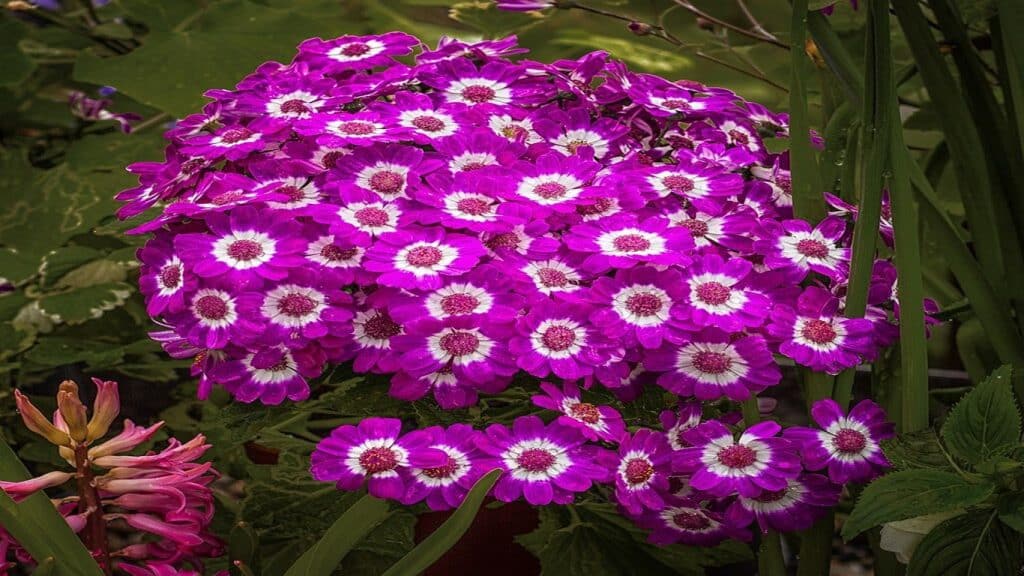
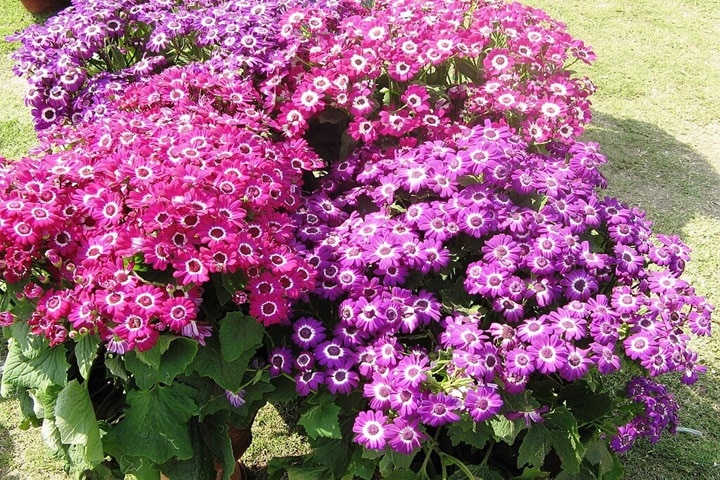
Their striking, daisy-like blooms are perfect for enhancing beds, borders, or containers, and they come in a variety of colours, including blue, purple, pink, red, and white. Many flowers also feature contrasting dark centres in different shades.
These versatile plants are frequently used as temporary annual houseplants, thriving indoors or in covered environments.
Cineraria – What’s in a Name?
Cineraria is a name that can lead to some confusion due to its usage for a variety of plants across different genera. Traditionally, the name “Cineraria” was used to refer to members of the genus Cineraria, within the daisy family (Asteraceae).
However, many of the plants commonly referred to as “Cineraria” today, such as Pericallis x hybrida (florist’s cineraria), are no longer classified within the original genus. These plants have been reclassified under the genus Pericallis, which is native to the Canary Islands and other parts of Macaronesia. Despite this taxonomic update, the older name has persisted in horticultural contexts, adding to the confusion.
Further complicating matters is the use of “Cineraria” to describe Cineraria maritima, also known as Dusty Miller. This plant, valued for its silvery foliage, is now more accurately referred to as Jacobaea maritima, following its reclassification into the genus Jacobaea.
Gardeners and horticulturists often use “Cineraria” as a catch-all term for both flowering types like Pericallis and foliage plants like Dusty Miller, despite their differing botanical classifications. Understanding the specific botanical names can help clarify these distinctions and ensure accurate identification and care for these plants.
Types of Cineraria
Pericallis x hybrida (Florist’s Cineraria) and the type usually referred to when the name Cineraria is used.
- Known for vibrant, daisy-like blooms in a wide range of colours.
- Commonly grown as annuals for ornamental purposes.
Cineraria maritima (Dusty Miller)
- Recognized for its silvery, lobed foliage.
- Often used as a decorative foliage plant in landscaping.
Pericallis cruenta
- Features bright, colorful flowers and is a parent plant of many hybrids.
- Native to the Canary Islands.
Cineraria saxifraga
- A small perennial variety with attractive foliage, native to rocky regions.
Cineraria geifolia
- Grown for its delicate appearance and smaller, understated blooms.
Cineraria albicans
- A hardy species with silvery leaves, well-suited for dry climates.
Cineraria filifolia
- Known for its fine, thread-like foliage, adding texture to gardens.
If you’re interested in Florist’s Cineraria, the Senetti Series provides many popular and vibrant options. Here are some notable named varieties:
- ‘Jester Scarlet’: Features bold scarlet blooms with contrasting centers, perfect for a dramatic effect.
- ‘Magic Salmon’: Offers soft salmon-pink flowers that add a touch of elegance to gardens and containers.
- ‘Sunsenedibu’: Known for its striking and vivid flower colors, this variety is a standout in the series.
- ‘Sunsenere’: A charming option with rich, intense hues that brighten any space.
- ‘Sunsenereba’: Distinguished by its unique coloration and robust blooms, ideal for container displays or beds.
The guidelines for plant care given below all relate to Florist’s Cineraria.
Cineraria Care
Cineraria can be moderately challenging to care for, particularly for beginner gardeners, as it has specific needs to thrive. Its care requirements are manageable with some attention to detail, but the plant can be sensitive to environmental conditions.
Cineraria is typically treated as an annual because it rarely blooms more than once. This short lifespan might not appeal to gardeners seeking long-term plants. Remember, perennials that are native to your area will always be far easier choices for gardeners, no matter their experience level.
Light
Cineraria thrives in bright, indirect light. Too much direct sunlight can scorch the leaves and flowers, while too little light may hinder blooming. Indoors, place them near a window with filtered light.
Soil
These plants prefer well-draining, nutrient-rich soil with a slightly acidic pH, ideally between 5.5 and 6.5. Remember, sustainable gardeners should avoid using peat when growing in containers.
Water
Keep the soil consistently moist but not waterlogged. Overwatering can lead to root rot, so ensure proper drainage. Water at the base to avoid wetting the foliage, which can encourage fungal diseases.
Temperature and Humidity
Cineraria performs best in cool temperatures, ideally between 50°F and 65°F (10°C to 18°C). High humidity is essential; using a humidifier or placing a tray of water near the plant can help indoors. Avoid temperatures above 70°F (21°C), as the plant may struggle in excessive heat.
Fertilizer
Feed cineraria with a balanced, organic, liquid fertilizer every two weeks during the growing season. Reduce feeding as the plant nears dormancy.
Pruning
Remove faded blooms and dead foliage regularly to promote new growth and maintain a tidy appearance.
Propagating Cineraria
Cineraria is typically propagated by seeds. However, certain types, like Dusty Miller, can also be propagated from cuttings. For cuttings, snip a healthy stem, dip it in rooting hormone, and place it in moist soil until roots develop.
Pericallis x hybrida cineraria seeds can be sown as early as December, though when grown indoors, sowing can be done at any time of the year. Since the seeds are extremely small, they should be lightly pressed into the surface of the potting mix or growing medium rather than buried. Using a propagator set to a temperature of 18-20°C ensures optimal germination conditions.
Seedlings typically emerge about two weeks after sowing. Once shoots appear, they should be transplanted into individual pots and kept at around 15°C to encourage healthy growth. These plants can also be propagated through semi-ripe cuttings taken in mid-to-late summer.
For an easier option, you can purchase bedding plants instead of growing or propagating your own. Regardless of the method, plant out Cineraria in May or June. Treat them as annuals or overwinter them in a dry, frost-free environment, as described below.
It’s important to note that Pericallis x hybrida rarely flowers more than once, making them unsuitable as perennials in most UK gardens. For this reason, they are best treated as annuals.
How to Grow Cineraria From Seed

Sow seeds on the soil surface in late summer or early autumn.
- Press seeds lightly into the soil but do not cover them, as they need light to germinate.
- Maintain temperatures around 18°C to 21°C for optimal germination.
- Keep the soil moist until seedlings emerge, typically within two weeks.
Potting and Repotting Cineraria
Plant cineraria in a small pot with good drainage. Repot only if necessary, as these plants have a short lifespan and are often discarded after flowering. Choose a container one size larger when repotting.
Overwintering
Move cineraria plants indoors or to a greenhouse or polytunnel before the first frost. Keep them in a cool, humid environment with indirect light and maintain regular watering without letting the soil become soggy.
Common Pests & Plant Diseases
Aphids and whiteflies can infest cineraria. Wipe off the insects carefully from your plants before the issue gets out of control.
Powdery mildew and other fungal diseases may appear in high humidity with poor air circulation. Ensure good ventilation and avoid overhead watering to reduce the chances that this problem will occur.
How to Get Cineraria to Bloom
Bloom Months
Florists’ Cineraria typically blooms from late winter to early spring, providing a vibrant splash of colour when other plants are dormant.
What Do Cineraria Blooms Look Like?
Cineraria blooms are daisy-like flowers in a wide range of vivid colours, including blue, purple, pink, red, and white, often with contrasting centres.
How to Encourage More Blooms
To encourage blooming, it’s essential to provide the right environmental conditions and care throughout its growth cycle. Here’s a guide to help you achieve a stunning display of flowers:
Cineraria thrives in cool conditions. Maintain temperatures between 10 and 18°C during its growing and blooming phases. Excessive heat can stress the plant and inhibit flowering. Indoors, place it in a cool room away from heat sources.
While Cineraria needs light to produce blooms, direct sunlight can scorch its delicate leaves and flowers. Position the plant in bright, filtered light, such as near a north- or east-facing window, or under shade outdoors.
Cineraria prefers a humid environment, which is vital for flowering. Use a humidifier, a pebble tray filled with water, or mist the plant occasionally to maintain moisture levels in the air.
Keep the soil consistently moist but not soggy. Water the plant regularly, ensuring good drainage to prevent waterlogging, which can cause root rot. Always water at the base to avoid wetting the leaves and flowers.
Feed Cineraria with a low-nitrogen, high-phosphorus fertilizer every two weeks during the growing season. Excess nitrogen can lead to lush foliage at the expense of flowers, so a balanced or bloom-specific fertilizer is ideal.
Environmental stresses like sudden temperature changes, overwatering, or pests can prevent flowering. Monitor the plant closely for signs of stress and address issues promptly.
By creating an environment that mimics its native cool, humid conditions and ensuring consistent care, your Cineraria is more likely to reward you with a spectacular display of blooms.
Common Problems With Cineraria
Cineraria, while beautiful and rewarding, can encounter several challenges due to its specific care requirements and susceptibility to pests and diseases. Understanding these common problems can help you address them effectively and keep your plant healthy.
Root Rot
Root rot is caused by overwatering or poor drainage. To prevent it, use well-draining soil and ensure containers have proper drainage holes.
Sensitivity to Excessive Heat
Cineraria struggles in temperatures above 70°F (21°C). Move the plant to a cooler location or provide shade during heatwaves.
Further reading:
Make sure to view our growing section of our blog for more insightful articles about growing lesser known plants, including:
FAQs
Where does cineraria come from as a plant variety?
Cineraria originates from the Canary Islands and Madeira, where it grows in cool, moist environments.
What is the lifespan of a cineraria plant?
Cineraria plants are short-lived, often grown as annuals. When kept as perennials, their lifespan typically extends to about two years, depending on care.
How can I encourage my cineraria to bloom during winter indoors?
To encourage winter blooms indoors, maintain cool temperatures, provide bright, indirect light, and keep humidity high. Ensure consistent watering without waterlogging the soil.
Sources
Picture This. (n.d.) Top 20 Most Common Plants in Pajara. [online] Available at: https://www.picturethisai.com/region/Spain-Canary-Islands-Pajara.html [accessed 18/12/2024]