


Brachyscome, also known as Swan River Daisies, are delicate, vibrant flowers native to Australia but easily adaptable to UK gardens. These charming daisy-like blooms can bring colour to any garden or polytunnel and attract pollinators into the space.
While native flowering plants are often the best choices, occasionally we may wish to bring in species from elsewhere. Here’s an in-depth guide on how to grow and care for a swan river daisy in the UK, covering everything from sowing and planting to pests and companion plants.
What Are Swan River Daisies?
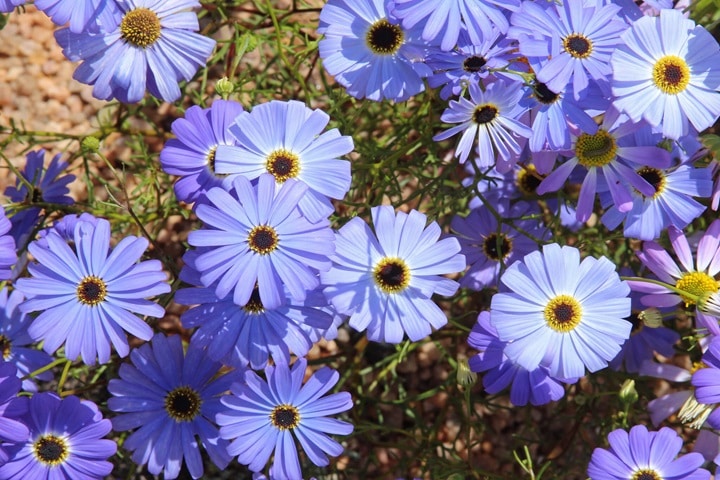
Swan River daisies (Brachyscome iberidifolia) are low-growing, herbaceous perennials. Native to Western Australia, they are commonly used as annuals in the UK due to their sensitivity to cold. The plants produce small, daisy-like flowers in a range of colours, from blue to purple and white, with a soft, fern-like foliage. This plant has been listed by the RHS as a plant for pollinators.
Swan River Daisies naturally occur in Western Australia, South Australia, and the southern regions of the Northern Territory. They adapt to various environments, flourishing in sandy or clay soils, on sandhills and plains, along rivers and streams, in swampy areas, on chalky hillsides, and around granite outcrops.
Size
Swan River daisies are compact and bushy, typically growing 20 to 30 cm tall, with a spread of 30 to 40 cm. This size makes them ideal for container gardening, bedding, and as border plants in mixed flower beds.
Growing Conditions
Swan River daisies are best grown in full sun or light shade. They are quite unfussy plants, adaptable to a range of situations, doing well in sandy, poor soils, for example, and coastal locations.
Moisture
Swan River daisies prefer consistently moist but well-drained soil. Although drought-tolerant once established, they benefit from regular watering, especially in dry periods. In a polythene tunnel, make sure to keep the soil slightly moist but not waterlogged.
PH
Brachyscome thrives in neutral to slightly acidic soil with a pH between 6.0 and 7.0. If your soil is alkaline, consider amending it with organic matter or ericaceous compost before attempting to grow these flowers, or grow them in containers.
Frost Tolerance
Being native to warmer climates, Swan River daisies are not frost-hardy. They are usually grown as annuals in the UK, though you can extend their life in a polytunnel or by bringing them indoors during the colder months. For colder climates, plant them after the last frost in spring.
Spacing
The plants should be spaced to around 20 to 30 cm apart to allow good air circulation, which helps reduce the risk of disease. In containers, make sure they have enough space to spread out without becoming overcrowded.
Sow and Plant
If you wish to grow swan daisies where you live, you may either grow them from seed, or purchase plug of bedding plants to plant out in your garden.
Where & When to Plant Brachyscome

In the UK, the ideal time to plant seeds is from February to May, either directly into pots or trays. Seeds can be started indoors or in a polytunnel for an early start. Germination takes 10-14 days at temperatures around 15-20 degrees C.
For outdoor planting, wait until all risk of frost has passed, typically in late spring. Polytunnels offer an excellent controlled environment, providing warmth and protection, which extends the growing season.
Cultivation
Brachyscome is relatively low-maintenance. They grow well in containers, hanging baskets, and flower beds. When grown in a polytunnel, ensure proper ventilation to prevent fungal infections from developing due to excess humidity. Regularly deadhead the flowers to promote continuous blooming throughout the season.
Propagation
Swan River daisies are usually propagated from seeds, though you can also take cuttings in the summer. Sow seeds thinly and press them gently into the surface of well-draining compost. Seeds need light to germinate, so do not cover them with soil. Water gently and keep the soil moist until seedlings appear.
Cold Protection
Since Swan River daisies are frost-tender, if you are growing them outdoors, be prepared to protect them from early or unexpected frost with fleece or cloches. In polytunnels, ensure the temperature does not drop below 5°C, and move them inside during extreme cold snaps.
Feeding
Feed Swan River daisies every 4-6 weeks with a balanced liquid fertilizer to support vigorous growth and extended flowering. In containers, consider using slow-release fertilizers mixed into the soil when planting. But be sure to use only organic options.
Pruning
Deadheading is crucial for promoting a longer blooming season. Regularly remove spent flowers to encourage new buds. Cut back any straggly growth to maintain a neat and bushy appearance.
Notes
- Swan River daisies can be sensitive to over-watering. Ensure well-draining soil to avoid root rot.
- Mulching can help retain moisture and suppress weeds in outdoor beds.
- In polytunnels, monitor for pests like aphids, which are more common in protected environments.
Harvesting
Swan River daisies can be harvested for floral arrangements, as their delicate blooms add charm to bouquets. Snip flowers just above a node early in the morning when they are freshest.
Transplanting
If you’ve started your Brachyscome indoors, wait until seedlings have at least two sets of true leaves before transplanting them into the garden or larger pots. Harden them off gradually by introducing them to outdoor conditions over a week.
Troubleshooting
Most of the time, swan river daisies are problem-free. But of course issues can arise, and usually these are related to environmental conditions or care. Below are some examples to consider.
Overwatering and Root Rot
Brachyscome are prone to root rot if the soil becomes waterlogged, particularly in containers or poorly drained beds. To avoid this:
- Ensure containers have good drainage.
- Water when the top 2-3 cm of soil feels dry.
- Use a well-draining potting mix.
Signs of overwatering include yellowing leaves, wilting, or soggy soil. If you suspect root rot, stop watering immediately and allow the soil to dry out.
Humidity and Fungal Diseases
In polytunnels, high humidity can encourage fungal diseases such as powdery mildew. To prevent this:
- Ventilate the polytunnel regularly to improve airflow.
- Water at the base of the plants to keep foliage dry.
- Remove any affected leaves to prevent the spread of disease.
Insufficient Light
Swan River daisies require full sun to thrive. Insufficient light can lead to leggy growth and fewer flowers. Ensure they get at least 6 hours of sunlight daily, either outdoors or in a sunny part of your polytunnel.
Cold Damage
Frost can kill Swan River daisies, so ensure they are protected in cooler months. In polytunnels, use horticultural fleece or heat mats if temperatures drop significantly. Outdoors, plant after all danger of frost has passed.
Pests
Swan River daisies are generally pest-resistant but can occasionally suffer from aphids, especially in polytunnels. Use organic insecticidal soap if absolutely necessary to control aphid infestations. Slugs and snails can also target young plants, so keep an eye on seedlings and use deterrents like copper tape. Remember however that natural predation is key to organic pest control – so attract plenty of wildlife into your growing spaces to boost biodiversity and keep pest species in check.
Best Uses for Swan River Daisies
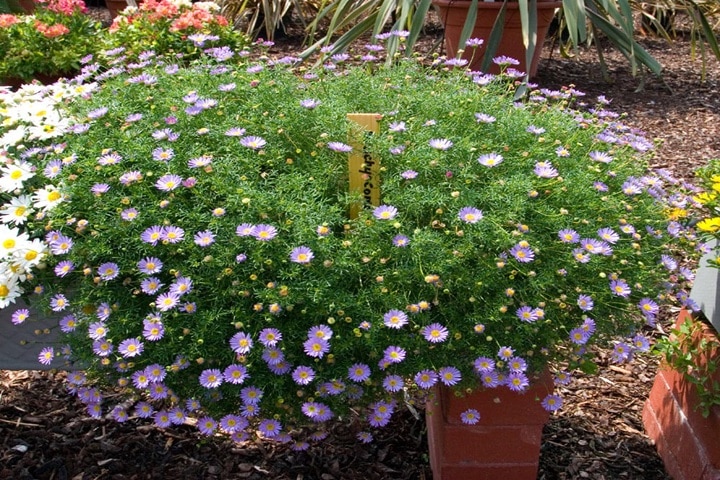
- Borders and Edging: Their compact size makes them ideal for front-of-border planting.
- Containers and Hanging Baskets: Swan River daisies perform beautifully in containers, where their delicate flowers can spill over the edges.
- Rock Gardens: Their drought tolerance makes them suitable for rockeries or gravel gardens.
- Wildflower Gardens: Swan River daisies are perfect for cottage-style gardens or naturalistic settings.
Types of Swan River Daisy
‘Blue Zephyr’ Swan River Daisy
This variety features sky-blue petals with yellow centres. It grows compactly and is known for its reliability and long blooming season.
‘Purple Splendor’ Swan River Daisy
A vivid purple variety that adds a splash of color to garden beds and containers. It thrives in sunny spots and has a slightly bushier habit.
‘Blue Star’ Swan River Daisy
With star-like blue petals and a yellow centre, this variety offers a softer, pastel hue, making it a great companion plant for brighter annuals.
Swan River Daisy Companion Plants
- Gazania
Gazania shares similar growing conditions with Swan River daisies, thriving in sunny, well-drained areas. Together, they create a vibrant display of daisy-like flowers.
- Geranium
Geraniums make good companions due to their similar size and preference for similar moisture levels. Their blooms complement the delicate Swan River daisies.
- Lisianthus
The tall, upright stems of Lisianthus provide a contrasting height to the low-growing Swan River daisies. Both plants enjoy sunny conditions, making them perfect partners in a mixed border
- Verbena
Verbena adds vertical interest to the garden, while its airy blooms complement the compact habit of Swan River daisies. Both plants enjoy well-drained soil and full sun, creating a harmonious display.
- Salvia
Salvia’s tall, spiky flowers contrast with the delicate blooms of Swan River daisies, adding height and texture to garden borders. Their contrasting colors and forms make them ideal for mixed planting.
- Lobelia
The cascading habit of Lobelia pairs well with Swan River daisies in hanging baskets or containers. The vibrant blue hues of Lobelia complement the purple or white shades of Brachyscome.
- Sweet Alyssum (Lobularia)
Sweet Alyssum’s fragrant, low-growing blooms make it a perfect border companion. Both plants thrive in similar growing conditions, and Alyssum’s white or lavender flowers enhance the visual appeal of Swan River daisies.
Since they are pollinator attractants, swan river daisies might also be used as companion plants for any crops or other favoured plants that require insect pollination.
Can You Grow Brachyscome In A Polytunnel?
Yes, Swan River daisies grow very well in polytunnels. In the UK, where the climate can be unpredictable, a polytunnel offers warmth and protection from heavy rainfall, frost, and strong winds. It extends the growing season, allowing for earlier planting and longer blooming. Good ventilation is essential to prevent fungal issues due to high humidity levels in a polytunnel.
FAQs
Do Swan River daisies come back every year?
In the UK, Swan River daisies are typically grown as annuals since they are not frost-tolerant. However, in warmer regions or potentially when grown in polytunnels, they may behave more like short-lived perennials.
How tall do Swan River daisies grow?
Swan River daisies grow between 20 and 30 cm tall, with a similar spread. Their compact size makes them ideal for small spaces, borders, and containers.
Do Swan River daisies self-seed?
Yes, Swan River daisies can self-seed under favourable conditions, though they may not be as prolific in cooler UK climates. To encourage self-seeding, leave some flowers to go to seed at the end of the growing season.
Sources
WWF Australia. (2023) 9 Australian Native Plants and Trees to Attract Wildlife and Bees To Your Apartment Balcony or Garden. [online] Available at: https://wwf.org.au/blogs/9-australian-native-plants-and-trees-to-attract-wildlife-and-bees-to-your-apartment-balcony-or-garden/ [accessed 28/10/2024]