

Have you thought about growing food in water rather than in soil in your polytunnel garden? In this guide, we’ll explore the ins and outs of polytunnel hydroponic plants, focusing on different techniques, plant options, and sustainable practices to help gardeners make the most of their setup.
Creating a hydroponic garden in polytunnel greenhouses offers a highly productive, space-efficient way to grow plants year-round, especially in the UK’s varied climate.
Unlike traditional soil-based growing, hydroponics involves growing plants directly in nutrient-rich water, allowing for faster growth rates, higher yields, and a controlled growing environment. Edible crops, flowers, and even houseplants can sometimes be grown in this way.
When set up sustainably, hydroponic systems also help reduce water waste, use fewer pesticides, and support optimal growing conditions with minimal resources.
KEY TAKEAWAYS
- Hydroponics in a Polytunnel: Growing plants in water-based systems within a polytunnel allows for optimal control over environmental factors.
- System Versatility: Several hydroponic systems work well in polytunnels, each suitable for different plant types and available space.
- Sustainable Advantages: Hydroponic systems reduce water usage and can support organic, pesticide-free growing methods.
- Best Beginner Plants: Leafy greens and herbs are ideal for new hydroponic gardeners.
- Beyond Hydroponics: Polytunnel gardeners can also consider aquaponics and aeroponics to broaden the range of sustainable growing methods.
Quick Facts
- Best Location: Polytunnels with good ventilation and access to natural light or supplemental sustainable lighting.
- Water Requirements: High-quality, pH-balanced water; rainwater harvesting is a sustainable option.
- Plant Types: Ideal for leafy greens, herbs, and some fruiting plants with the right setup.
- Environmental Control: Hydroponic systems benefit from well-insulated polytunnels to manage temperature fluctuations.
Hydroponic Plants: Techniques
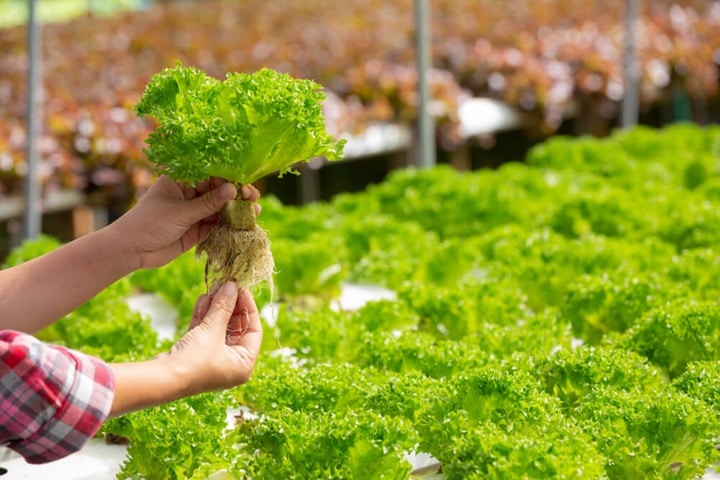
There are several types of hydroponic systems, each with unique characteristics suited to different plants, space requirements, and water usage. Here’s an overview of some of the most popular hydroponic techniques for polytunnel gardens to inspire you to find the right ideas for you:
NFT in a Polytunnel Hydroponic System
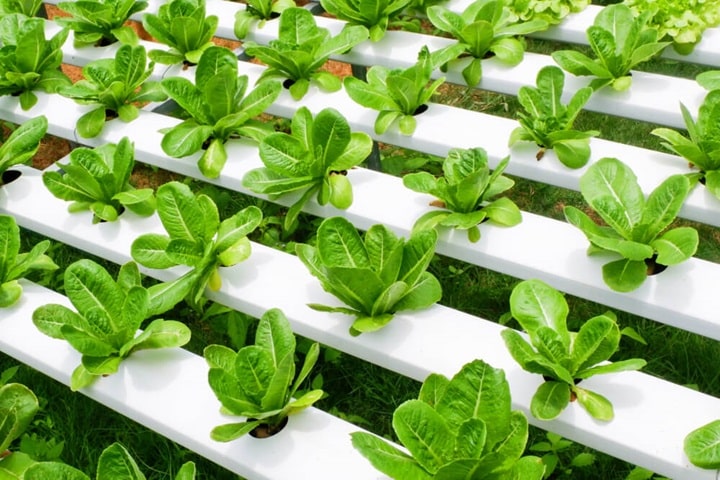
Nutrient Film Technique (NFT) involves a thin film of nutrient solution that constantly flows over the plant roots, which are held in channels or trays. This allows for an efficient and easy-to-manage system suitable for lightweight, fast-growing plants like lettuce and herbs.
NFT systems work well in polytunnels where a steady temperature can be maintained, and though plastic trays or channels are often used, there are more sustainable materials to consider – hollow bamboo canes, for example.
DWC in a Polytunnel Hydroponic System
Deep Water Culture (DWC) is a system where plant roots are suspended in oxygenated water. This constant contact with the nutrient solution supports rapid growth. DWC systems are ideal for large leafy greens and some fruiting plants, though they do require careful monitoring of oxygen and pH levels.
A DWC setup is straightforward and cost-effective for DIY enthusiasts and works well in smaller, warmer polytunnels.
Ebb and Flow Media Beds for a Polytunnel Hydroponic System
In an Ebb and Flow system, water flows periodically into a grow bed filled with a growing medium like clay pellets, then drains away. This system is excellent for heavier plants and can also be used with plants that have longer roots.
Polytunnel gardeners benefit from the ability to automate water flow with a timer, reducing the need for constant supervision.
Dutch Bucket systems, also known as Bato buckets, similarly to media beds, are a versatile and popular choice for growing larger, vining, or fruiting plants within a hydroponic setup. This system is especially well-suited for polytunnels, where controlled conditions can support the growth of larger, more water-demanding plants like tomatoes, peppers, cucumbers, and even small melons.
In a Dutch Bucket system, each plant grows in its own container, or “bucket,” which typically has a drain line positioned slightly above the bottom of the container. This setup creates a small reservoir of nutrient solution at the base of the bucket, allowing the plant roots to access nutrients as they need them, without the risk of waterlogging.
Drip Systems for Polytunnels
Drip water irrigation systems use a controlled drip to deliver nutrients directly to the plant roots, with excess water recirculating back into the system. This setup can work on a variety of scales, making it suitable for large polytunnels or smaller spaces with tight rows of plants. Drip systems are versatile and adapt well to a range of crops, from tomatoes and peppers to leafy greens.
Wicking Systems for Polytunnel Gardens
Wicking Systems use a wicking material, like a rope or fabric, to draw nutrient solution from a reservoir into the plant roots. This passive system requires no pumps, making it ideal for gardeners looking for low-maintenance setups. Wicking systems are suitable for leafy greens and herbs but may struggle to keep up with larger, more water-intensive plants.
Wicking beds, with a reservoir of water at the base, can also be integrated as part of a hydroponic growing system, and allow plants that cannot easily be grown in other hydroponic systems to be grown in a more typical growing medium.
Suitable For…
Each system has its advantages and specific conditions under which it thrives:
- NFT: Ideal for smaller, lighter plants like lettuce and herbs.
- DWC: Suitable for larger leafy greens with high oxygen needs.
- Ebb and Flow: Great for mixed crops and larger fruiting plants.
- Drip Systems: Highly adaptable, useful for both leafy greens and fruiting plants.
- Wicking Systems: Ideal for small-scale, low-maintenance herb and leafy green growing.
Best Hydroponic Plants for Beginners: Leafy Greens
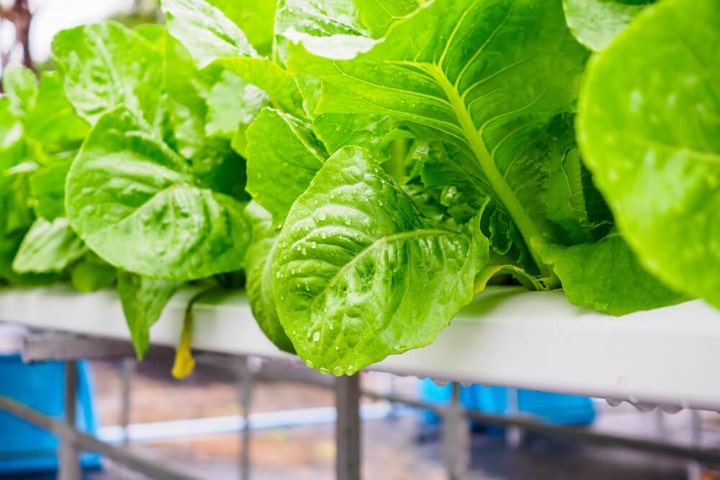
Hydroponics is particularly advantageous for leafy greens, which thrive in a controlled, nutrient-rich environment. Polytunnel growers in the UK can enjoy fresh greens throughout the year by choosing varieties that are fast-growing and resilient.
- Butterhead Lettuce
This tender lettuce grows well in NFT and DWC systems and requires relatively low nutrient concentrations.
- Collard Greens
Robust and nutritious, collard greens do well in a DWC or Ebb and Flow system where they have room to spread.
- Green & Red Oak Lettuces
Attractive, flavourful, and fast-growing, oak leaf lettuce work well in NFT or Drip systems.
- Kale
Kale is a popular green thrives in Ebb and Flow systems but can adapt to most hydroponic setups.
- Mustard Greens
Known for their spicy flavour, mustard greens grow well in hydroponic systems, particularly in cooler conditions.
- Rainbow Chard
Vibrant and nutritious, rainbow chard does well in DWC and Ebb and Flow systems with ample space.
- Leafy Herbs for Hydroponic Systems
Herbs like basil, parsley, coriander, and chives are highly suited to hydroponic systems, especially in polytunnel setups where conditions can be controlled. They add flavour to home-cooked meals and thrive in the clean, disease-free environment of hydroponics.
- Basil: Thrives in NFT and Drip systems and prefers warm, consistent temperatures.
- Parsley: Grows well in DWC systems and appreciates good lighting conditions.
- Coriander: Perfect for NFT systems, requiring slightly lower temperatures to avoid bolting.
- Chives: Grow well in all hydroponic systems, ideal for compact spaces and easy to harvest regularly.
Heating and Lighting Hydroponic Systems Sustainably
Polytunnel gardeners can take advantage of renewable energy sources and sustainable methods to regulate temperature and lighting, essential for year-round hydroponic gardening.
- Solar Panels: Power small pumps, lights, and heaters sustainably.
- Thermal Mass Materials: Incorporate thermal mass, like stones or water barrels, to absorb and release heat, stabilizing temperature.
- LED Grow Lights: Use energy-efficient LED lights that provide the necessary spectrum for plant growth without excessive heat.
By combining renewable energy sources with efficient equipment, polytunnel gardeners can keep their systems running sustainably and minimise their carbon footprint.
Beyond Hydroponics: Aeroponics
Aeroponics is a system in which plants are suspended in air, with roots exposed and regularly misted with nutrient solution.
This highly efficient system supports rapid plant growth and uses less water than traditional hydroponics. Polytunnel gardeners benefit from aeroponics for plants that need high oxygen levels, but the setup can be more complex and costly to maintain.
Sustainable Aquaponics Systems
Aquaponics combines fish farming (aquaculture) with hydroponics, creating a symbiotic ecosystem. Fish waste provides organic nutrients for plants, while plants naturally filter the water, returning it to the fish tank.
This closed-loop system is sustainable and resource-efficient, making it an excellent option for polytunnel gardeners interested in self-sustaining methods. Small fish species like tilapia or koi can be raised, with leafy greens and herbs making ideal plant choices due to their low nutrient demands.
One small-scale aquaponics system is known as barrelponics. In Barrelponics, several barrels are typically set up to create a system where fish are kept in one barrel and plants are grown in others.
Nutrient-rich water from the fish tank is pumped to plant-growing containers, where the plants absorb nutrients from fish waste. This water is then filtered by the plants and returned clean to the fish tank, creating a natural, closed-loop ecosystem.
Some Barrelponics systems include a sump tank to hold additional water and provide backup for the fish tank, or a clarifier to trap solid waste and prevent it from clogging the plant beds. The grow beds are often set up to flood and drain using a bell siphon, which allows for a periodic ebb and flow. This action helps oxygenate plant roots and prevent them from sitting in stagnant water.
Choose food-grade barrels for your system to ensure they’re safe for both fish and plants. Typically, 55-gallon (208-litre) barrels are used for the fish tank, and smaller barrels or cut sections can be used for the grow beds. The ratio of fish to plants varies, but a good starting point is around 1 fish per 20 litres of water. But this is just a rough guide and should be amended based on fish size and plant demand.
Barrelponics can be an affordable DIY project if you use reclaimed materials. Food-grade barrels and simple plumbing components make it a cost-effective way to set up a sustainable system.
Setting up a hydroponic garden in a polytunnel can be an innovative and rewarding way to grow plants sustainably. With a range of systems to choose from and plants that thrive in controlled conditions, hydroponics in a polytunnel can provide fresh produce year-round. By incorporating sustainable practices, such as using renewable energy and recycling nutrients, polytunnel gardeners can maximize productivity while maintaining an eco-friendly approach.
Hydroponic systems allow gardeners to get creative, explore new growing techniques, and contribute positively to the environment—all within the protective environment of a polytunnel.
FAQs
What are the different types of hydroponic systems?
There are several types, including NFT, DWC, Ebb and Flow, Drip Systems, and Wicking Systems. Each has unique advantages depending on plant type and space.
What type of water should I use in hydroponics?
Ideally, use pH-neutral, mineral-free water. Rainwater can work well, though filtered or distilled water is often used to prevent nutrient imbalance.
What nutrients do hydroponic plants need?
Plants need a balanced mix of macro and micronutrients. Hydroponic nutrient solutions typically contain nitrogen, phosphorus, potassium, calcium, magnesium, and sulphur, along with trace elements. In aquaponics systems, no external nutrient solutions are added and instead, essential nutrients are provided by fish and micro-organisms within the system.
Sources
Mcintosh, J., (2024) 33 Plants That Can Grow in Water Indoors. The Spruce. [online] Available at: https://www.thespruce.com/houseplants-grown-in-water-4177520 [accessed 14/11/2024]