

Is your garden turning more into a swamp in the colder weather rather than the tranquil sanctuary that you desire? Understanding the root causes and solutions for waterlogging can transform your green space.
Persistent rain and poor drainage can lead to waterlogged gardens, a frustrating issue for any gardener. In this article, we will explore the causes, symptoms, and both short-term and long-term solutions to prevent and manage garden flooding. From improving soil structure to choosing the right plants, we’ll guide you through practical steps to reclaim your garden from the water.
Choose from our range of First Tunnels polytunnels to keep your plants and crops protected from UK rain. We would also recommend investing in watering systems to create even saturation and prevent waterlogging.
Key points:
- Identify the common causes and symptoms of waterlogged gardens.
- Learn immediate actions to take when your garden floods.
- Explore long-term strategies to improve soil drainage.
- Discover suitable plants for wet conditions.
- Implement preventative measures to avoid future waterlogging.
Quick Facts
- Common Name: Waterlogged or badly drained soil
- Plants Affected: Almost all, except for certain tolerant varieties
- Main Causes: Heavy rainfall coupled with challenging soil conditions
- Main Symptoms: Yellowing leaves, rotting roots, stunted growth
- Timing: Primarily during the wetter months of winter and summer
What is Waterlogging and Flooding?
Waterlogged gardens occur when excess water cannot drain away from the soil, eliminating vital air pockets and causing plant roots to suffocate.
This condition, known as waterlogging, is particularly noticeable in areas with naturally poor drainage or where heavy soils are compacted. Even brief episodes of garden flooding following heavy rain are less detrimental compared to sustained soil saturation, which critically deprives roots and soil microbes of oxygen.
Flooding in gardens can escalate issues, especially from overflowing drains which may introduce pollutants and wastewater, complicating the growth of edible plants. The prevention of waterlogging and how to stop garden flooding becomes crucial in maintaining healthy garden spaces.
Symptoms of Waterlogging

Identifying waterlogging can be challenging as its symptoms often mimic other plant stresses such as drought. Initial signs include:
- Leaves: Look for yellowing or decaying between the veins, creating soft spots around the base or centre. Evergreen leaves may show browning within, and dark streaks along the midrib.
- Plant Appearance: Plants may seem under-watered, with wilting, and the bark peeling easily.
- Shoots and Sprouting: Lack of moisture can cause shoots to die back, and bark to detach smoothly from them. Herbaceous plants might not sprout in spring, or their new leaves may die shortly after unfurling.
- Stunted Growth: Overall, plants may exhibit stunted growth or even die. Some might show signs of oedema, where they take up water faster than they can use it, leading to blisters or water-soaked spots on their leaves.
Causes of Waterlogging in Gardens
Waterlogging can lead to limiting the oxygen supply to roots and impeding the diffusion of carbon dioxide. These are problems in the garden that can be caused by waterlogging.
- This disruption affects root functionality, often halting it entirely, leading to root decay and the invasion of harmful organisms.
- Leaves and stems fail to draw adequate water and nutrients, contributing to the overall deterioration of the plant.
- In colder seasons, the impact of waterlogging is less severe as both roots and soil microbes are less active.
- During warmer months, when root respiration increases, the demand for oxygen is higher, making conditions like summer waterlogging particularly harmful.
- Plant species such as willows and flag irises, which have specially adapted roots, can endure these conditions, but others cannot.
Compaction and Drainage Issues
Compacted or densely textured soils that lack proper drainage channels can retain water longer than is beneficial. Moreover, hard landscaping elements like patios or walkways can prevent rainwater from seeping into the soil, exacerbating garden flooding risks by forcing more water into reduced areas of permeable soil.
Effective Control Measures for a Waterlogged Garden

Managing waterlogging and garden flooding effectively requires both short and long-term methods. Here’s how gardeners can address these issues and stop garden flooding.
Short Term Control Measures
Identify the Water Source: First, determine where the excess water originates—is it heavy rain, groundwater, or overflowing drains? If it’s the latter, contacting your local water company is the best option.
Post-Flood Cleanup After flooding:
- Wash down hard surfaces and clear debris to prevent blocked drains and soil coverage.
- Avoid walking on wet soil to prevent compaction.
- Remove damaged shoots and leaves from plants to prevent decay spread.
Handling Edible Crops:
Edible crops near harvest, particularly root vegetables and leafy greens intended for raw consumption, should be discarded due to potential contamination. Avoid planting similar crops for at least two years to ensure all pathogens have been eradicated from the soil.
Soil Health Improvement:
Applying organic matter or a balanced fertiliser in spring helps soil structure. Mulching the area afterward helps maintain moisture and temperature, which aids in root recovery. Foliar feeds can also be beneficial during the growing season, improving leaf colour and promoting new root growth.
Watering Practices:
After a period of waterlogging, ensure to water the plants thoroughly during dry spells, as they will be more vulnerable to drought stress.
Long-Term Prevention
Soil and Landscape Management:
Improve soil structure by regular cultivation and avoid compacting the soil further when planting.
- Build raised beds to elevate the root zones above the waterlogged areas.
- Install permeable surfaces for paths and driveways to enhance water absorption into the ground.
- Convert roofs into green roofs to slow down stormwater runoff.
Water Management Installations:
Implement drainage solutions like French drains or create ditches and seasonal ponds in the lowest parts of the garden to facilitate slow water absorption.
Install water butts to collect rainwater, reducing runoff and providing a water source for garden use.
Establish rain gardens or bioswales where frequent flooding occurs, which not only manage excess water but also add aesthetic value.
Plant Selection
Choosing plants that thrive in wet conditions or have adaptations for waterlogged soils can dramatically improve the resilience of your garden. Trees and plants suited for moist environments can help stabilise the soil and manage water absorption more effectively.
How to Deal with Compacted Soil
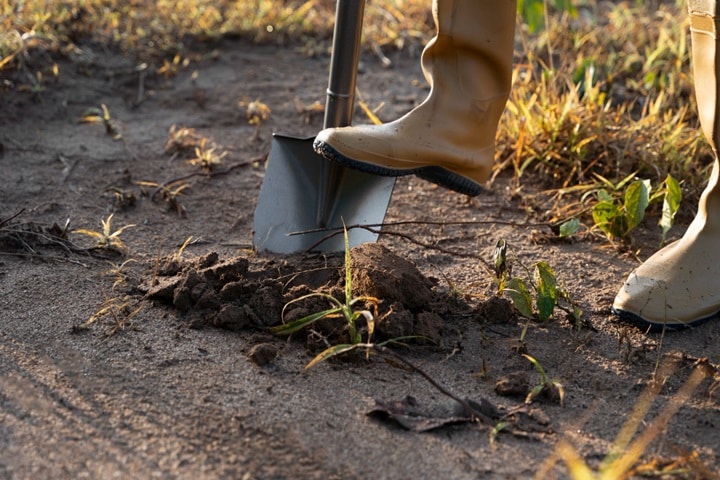
Compacted soil can transform a vibrant garden into a waterlogged mess. Here’s how you can assess and amend compacted garden soil to ensure optimal growth and drainage, helping to prevent garden flooding.
The Biro Test
To determine if your soil is compacted, you can perform a simple test using a biro tube:
- Dig a Hole: Start by digging a small hole, approximately a spade’s depth.
- Test Compaction: Take an empty biro tube and push it into the side of the hole starting just below the rim.
- Assess Resistance: If the tube goes in easily, your soil is likely not compacted. Continue pushing the tube down the side of the hole. When you encounter resistance to the point where the biro won’t push in further, you’ve found the compacted layer.
Breaking Through Compaction
Once you identify the hard pan, or compacted layer, you need to break it up to restore proper drainage. Digging just below this layer can alleviate compaction, allowing water to drain more freely and preventing issues like waterlogging.
Understanding Soil Types
Effective soil improvement starts with knowing your soil type:
- Sandy Soil: Quick-draining but nutrient-poor, sandy soil needs frequent watering and nutrient replenishment.
- Clay Soil: Rich in nutrients but slow to drain, making it prone to waterlogging.
- Loam Soil: An ideal, well-balanced soil that drains well and retains nutrients.
Is clay soil acidic? Find out now and see how it can affect the plants in your garden.
The Squeeze Test
Perform the squeeze test to identify your soil type:
Moisten a Soil Sample: Grab a handful of garden soil, slightly moisten it, and give it a firm squeeze.
Evaluate the Soil’s Texture:
- Loam: Holds shape but crumbles when poked.
- Clay: Maintains shape even when poked.
- Sandy: Falls apart immediately upon opening your hand.
Improving Different Soil Types
Different strategies are required depending on your soil type:
- Clay Soil: Wait for the soil to dry slightly, then dig deeply to break up the dense clumps. Applying lime can help to break down heaviness in the soil.
- Sandy Soil: Aid nutrient retention and water-holding capacity by adding humus-rich materials like well-rotted manure or compost.
- Chalky Soil: This type typically supports rockery plants but may struggle with others due to its alkalinity. Improve it with fertilisers and organic matter.
- Loam Soil: Although nearly ideal, incorporating green manures can further enhance its structure and fertility.
Protect Your Garden with a Polytunnel
For those managing waterlogged gardens, our specialised polytunnel products offer professional solutions to combat garden flooding and waterlogging by protecting your plants. Polytunnels are excellent for controlling the growing environment, and our range includes tailored garden watering systems and polytunnel covers designed to keep your soil conditions at their best.
Contact us today so that we can tailor your specific polytunnel purchase for your garden, allotment, or farm.
Overcoming Garden Waterlogging
In conclusion, waterlogging in a garden can be a stressful time, but by knowing how to protect and drain your soil, as well as being aware of the long and short term solutions on how to prevent a waterlogged garden, you can easily combat flooding in your garden and be prepared for the future.
FAQs
How do you fix a waterlogged garden?
To fix a waterlogged garden, improve drainage by aerating the soil, adding organic matter like compost, and creating raised beds to elevate plants above the water level.
How do I get rid of standing water in my garden in the UK?
To get rid of standing water, consider installing a French drain or soakaway, improving soil drainage, or redirecting water flow with trenches or ditches.
What do I do if my garden is too wet?
If your garden is too wet, avoid walking on the soil to prevent compaction, improve drainage, and consider planting water-tolerant plants or installing raised beds.
How do you drain a wet garden?
Drain a wet garden by installing drainage systems like French drains, creating slopes for water runoff, or incorporating gravel and sand into the soil to improve permeability.
Sources
Waterworth, K., (2022) What Is Edema: Tips For Treating Edema In Plants. Gardening Know How. [online] Available at: https://www.gardeningknowhow.com/plant-problems/environmental/treating-edema-in-plants.htm [accessed 10/09/24]