


How to Store Home-Grown Potatoes
How best to store home-grown potatoes, and how well and for how long they will store depends on the varieties you have chosen, when you harvest them, and the quality of your crop. Thinking about all of the above is important to prevent any of your home-grown potatoes from going to waste.
Once you have considered the basics, you need to understand where you might store home-grown potatoes – in the ground, inside a cool storage area, in your freezer (cooked) or canned in jars.
Read on to learn how you can store your home-grown potatoes after the harvest – either for a short while or, potentially, throughout the winter months.
Choosing Potato Varieties
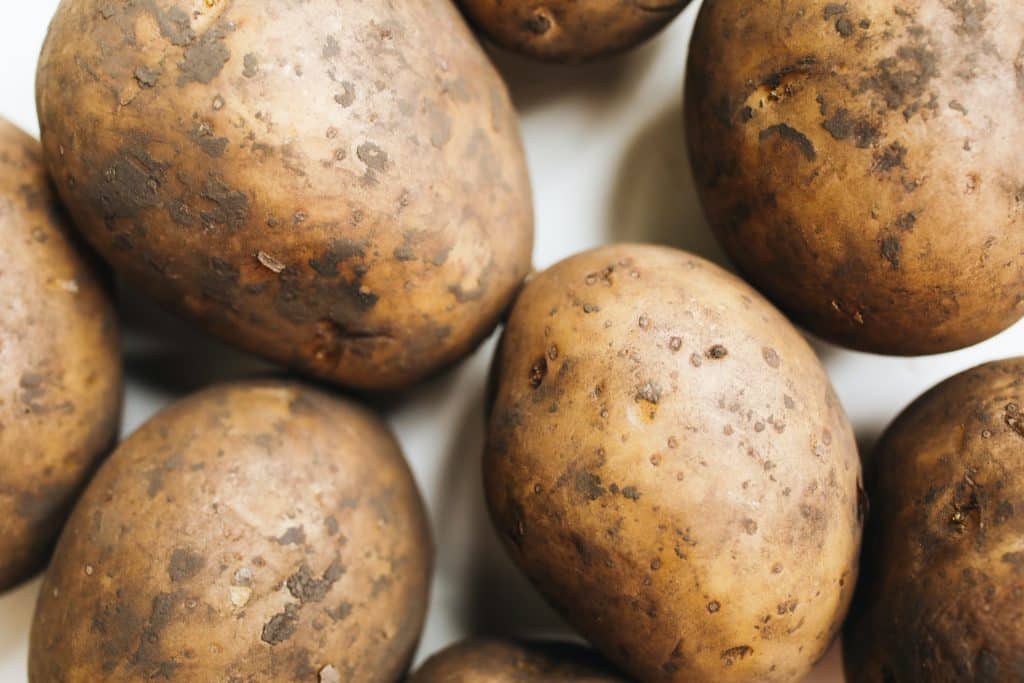
When choosing which potatoes to grow, one important thing that you might not have thought about is whether the variety you choose will store well or not. Some potato types and varieties can be stored longer term over the winter in a cool location. But others won’t store for very long at all without using other methods.
Varieties To Store Short Term
First and second early potatoes won’t store well long term. These are potatoes that are meant to remain in the ground for a shorter period of time. They are usually grown and eaten in summer. Sometimes, they can also be eaten in autumn, and potentially into winter if you grow potatoes for Christmas under cover. They are best eaten while young and fresh, straight from the ground.
Varieties To Store Over Winter
Maincrop potatoes are those typically harvested at the end of the summer season, or into autumn. Potatoes are not all the same when it comes to how well they store over winter, however, and some maincrop varieties will store much better than others.
When to Harvest Home-grown Potatoes
Potatoes can of course be harvested at various times through the summer and autumn, depending on when you planted and the conditions where you live. If you have a polytunnel or some other protection, you may also be able to harvest home-grown potatoes over the winter – and harvest new potatoes around Christmas time.
Potatoes that you would like to store for the winter are typically harvested in October, before the first frosts. Though potatoes can be left in the ground for longer, this can make them very vulnerable to a range of pests, and they can be damaged or degraded.
Selecting Potatoes to Store
One key thing to remember is that only whole and healthy, undamaged potatoes can easily be stored long term. It is important to make sure you do all you can to make sure that you harvest at the right time for where you live, and also take care not to damage potatoes during harvesting – especially if you would like to store potatoes in a traditional way.
Where to Store Home-Grown Potatoes
You might:
- Store potatoes in the ground outdoors.
- Store potatoes in a garage, root cellar or pantry.
- Cook and freeze potatoes.
- Store potatoes in jars after pressure canning.
Storing Potatoes in the Ground Outdoors
One traditional way to store potatoes is to pile them into an underground hidey-hole, often referred to as either a ‘potato grave’ or a ‘potato clamp‘.
Storing potatoes in this way simply means creating a hole in the ground, often insulating this to protect from frost with straw or dried leaves before covering with soil. The hole is typically around 10-15cm in depth, and wide enough to house the number of potatoes you wish to store.
The potatoes are placed in a pyramidal shape, so potatoes are no more than a half metre or so above the ground. After covering with insulating material, soil is mounded over the heap, with a hole at the top to provide ventilation, which is plugged with dried leaves or straw.
Potatoes stored in this way should remain edible through the winter months. But today, this is rarely a favoured approach, since, as when leaving potatoes in the soil where they grew, pests like rodents or slugs can often become a problem.
Storing Potatoes in a Garage, Root Cellar or Pantry
The other main traditional way to store potatoes over the winter is to keep them in a cool pantry or root cellar. Of course, we are not all lucky enough to have one of these spaces, so another cool and relatively humid area like a garage or shed can also work just fine.
One thing to note if you plan on storing potatoes in this way is that the potatoes to be stored in this way need to be cured first. This just means leaving them out for a while in a reasonably warm and dry spot for the skins to thicken, dry out a little and harden up. Cured potatoes will typically store better for longer periods.
Another key thing to remember is that you should not wash your potatoes. If you plan on storing them for winter in a traditional way then you should not wash them until the time comes when you are actually ready to use them.
The ideal temperature range for storing potatoes is between around 7 and 10 degrees Celsius. The potatoes should be placed in a breathable container, such as a basket, cardboard box or crate, and not in plastic, which can lead to dampness and rotting. Good ventilation is important if you want to keep your potatoes for as long as possible. And of course light should be excluded.
Note that you should also make sure that you do not store your potatoes close to onions, since keeping both of these crops in the same storage area can cause both of them to go bad faster.
Though a cool environment is good for potatoes, one other thing to note is that raw potatoes should not be stored in a fridge. The chilly temperatures will alter the taste of the potatoes and their texture can become unpleasant.
Freezing Cooked Home-Grown Potatoes
Of course, in addition to considering a traditional storage option, you can also consider prepping and cooking your potatoes, which can then, once cooked, be frozen. (Though you cannot freeze raw potatoes).
In your freezer, cooked potatoes, either on their own or as part of a freezer-meal recipe such as a cottage pie, for example, can be kept in your freezer, if you have the space, for a number of months and even as much as a year or so.
One other way to store potatoes and preserve your harvest, and make sure nothing goes to waste is to cook up some mash, boiled potatoes, chips etc. to pop in the freezer to take out as needed over the winter months.
Pressure Canning Home-Grown Potatoes
Not all of us, however, will have space to preserve a potato harvest in our freezers. So there is one final option to store home-grown potatoes to consider: pressure canning.
Skinned and boiled potatoes can be safely stored in jars for a long period of time if you use a pressure canner. The downside of this method is that you will need special equipment – canning jars, and a pressure canner.
This can be a good investment if you grow a lot of your own food at home, however, since a pressure canner makes it possible to safely can or bottle low-acid vegetables, beans, and other things that cannot be bottled or canned with a water bath canner.
Canning your home grown food saves freezer space, and gives you convenience meals (like those you can prepare using cans of soup, vegetables or beans from the supermarket, for example).
You do need to remove the skins from potatoes for canning. You can safely can small pieces of potato around 2.5cm across, or very small new potatoes whole. These are first boiled and can then be placed in canning jars (with two part lids) and covered with a canning brine, leaving 1 inch of headspace at the top of the jar.
The jars are then placed into a pressure canner and processed at 10lbs (weighted gauge) or 11 lbs (dial gauge) (below 1000 ft). Pint sized jars are processed for 35 minutes, and larger quart jars for 40 minutes.
Potatoes canned in the right way are shelf-stable and can be stored not only over the winter months but potentially for a whole year or even 18 months as long as the right procedure has been followed and the jars have sealed correctly. This can be very useful where freezer space is at a premium, and can also make it easy to quickly prepare potatoes for a meal without the need to defrost.
References:
https://www.self-sufficient.co.uk/Potato-Clamp-Storing-Potatoes.htm
https://www.onions-potatoes.com/storage/potatoes.php
https://www.healthycanning.com/canning-potatoes/