

Muscari, commonly known as grape hyacinth, is a charming spring-flowering bulb known for its small, bell-shaped, vibrant blue, purple, or white flowers that resemble clusters of grapes.
These low-maintenance plants are ideal for beginners, offering a burst of colour for gardens in the early spring. They are also versatile, growing well in a variety of environments, including First Tunnels polytunnels, containers, and outdoors flower beds. Generally trouble-free, pests like rabbits and deer will generally leave them alone.
This guide provides all the essential information to help you successfully grow and care for Muscari, from planting tips to propagation techniques and troubleshooting, and when to plant muscari bulbs.
Key facts:
- Scientific Name: Muscari armeniacum (the most common species)
- Common Name: Grape hyacinth
- Family: Asparagaceae
- Height: 10-20cm
- Bloom Time: Spring (March to April)
- Planting Time: Autumn (September to November)
- Sun Exposure: Full sun to partial shade
- Soil: Well-drained, fertile soil
What is Muscari?
Muscari is a genus of perennial bulbous plants in the Asparagaceae family, native to Europe, North Africa, and parts of Asia.
The most well-known species is Muscari armeniacum, often referred to as the grape hyacinth. Despite the common name, Muscari is not closely related to true hyacinths (Hyacinthus).
Their blooms, which resemble tiny clusters of grapes, appear in early spring and last for several weeks. These small, hardy plants are often used in borders, rock gardens, or naturalized areas where they can spread and create good groundcover and a sea of purple/ blue.
When To Plant Muscari Bulbs
| JAN | FEB | MAR | APR | MAY | JUN | JUL | AUG | SEP | OCT | NOV | DEC | |
| PLANT | ✅ | ✅ | ✅ | |||||||||
| BLOOMS | ✅ | ✅ |
Can You Grow Muscari in a Polytunnel?
Yes, Muscari can thrive in a polytunnel, both domestic polytunnels and heavy duty polytunnels. Polytunnels are especially useful for protecting bulbs from harsh weather conditions, particularly in colder climates.
While grape hyacinths are cold-hardy and can tolerate frost, a polytunnel allows for better control of the growing environment, ensuring an early and consistent bloom.
Growing Muscari in a polytunnel also helps regulate moisture levels, preventing waterlogging and promoting healthier bulb development.
In a polytunnel, Muscari may even bloom slightly earlier than they would outdoors, as the sheltered environment can create warmer microclimates. Keep in mind, though, that adequate ventilation is essential to prevent fungal diseases.
When & Where to Plant Muscari
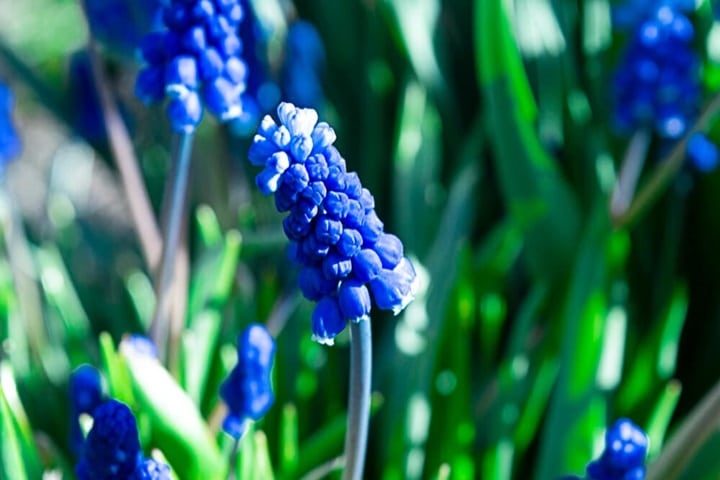
Muscari is best planted in autumn, from September to November, before the ground freezes. This allows the bulbs to establish their roots before the winter dormancy period and bloom in early spring.
Muscari thrives in well-drained soil and enjoys sunny locations, though it will tolerate partial shade. Ideal spots include borders, under deciduous trees, along pathways, or in rock gardens. Avoid areas that are prone to waterlogging, as this can lead to bulb rot. If you have heavy clay soil, amend it with compost or sand to improve drainage.
Plant Muscari bulbs around 7cm deep and 7cm apart. They look best when planted in groups or drifts, rather than spaced out individually, to create a more natural, carpet-like effect when they bloom.
Advice on buying grape hyacinths
When buying Muscari bulbs, it’s essential to look for firm, plump bulbs without any signs of mould, softness, or damage.
Bulbs should be bought from a reputable supplier, whether from a local garden centre or an online store. There are several varieties of grape hyacinth to choose from, each offering different colours and bloom shapes.
Muscari looks best when planted in large clusters, so buy enough bulbs to cover your desired area.
If you’re not planting immediately, store bulbs in a cool, dry place to prevent them from rotting or sprouting prematurely.
Grape Hyacinth Varieties to Grow
There are many varieties of Muscari to consider, each offering slight variations in color, size, and bloom shape. Here are some popular options:
- Muscari armeniacum: The most common grape hyacinth, known for its deep blue, grape-like clusters.
- Muscari ‘Blue Spike’: A double-flowered variety with densely packed blooms, giving a fuller appearance.
- Muscari latifolium: This unique species features two-tone flowers, with darker blue at the base and lighter shades at the top.
- Muscari ‘White Magic’: A lovely white-flowered variety that adds brightness to mixed plantings or stands out in shady areas.
- Muscari ‘Pink Sunrise’: A rare variety with soft pink blooms, offering a delicate alternative to traditional blue grape hyacinths.
How To Grow Grape Hyacinths
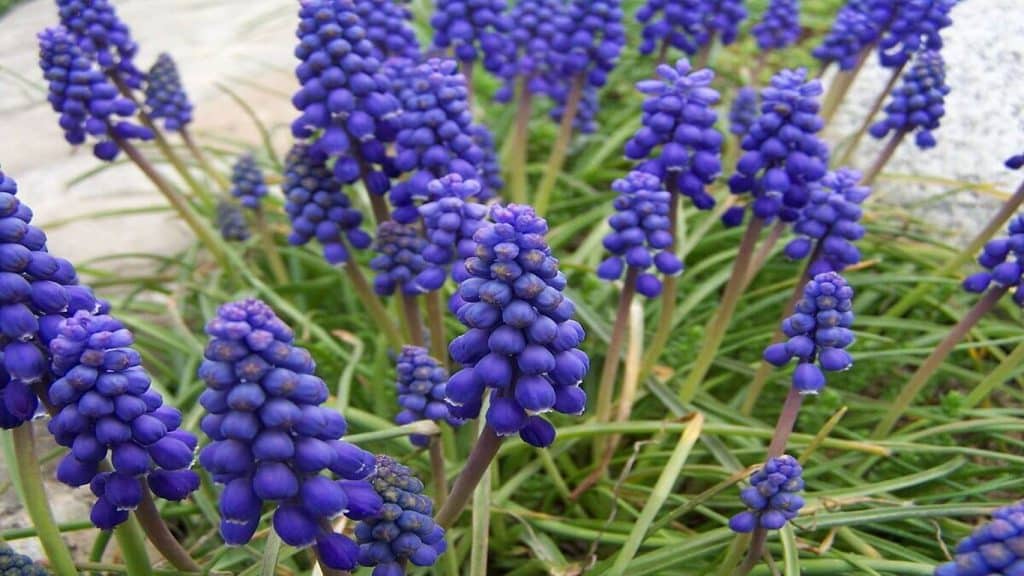
Growing grape hyacinths is simple, even for beginners. These hardy plants require minimal care and will often naturalize in the garden, spreading over time to form dense clusters.
Growing Requirements for Grape Hyacinths
Muscari prefers full sun but will tolerate partial shade, especially in warmer climates where some afternoon shade can help protect against heat stress.
Well-drained soil is crucial. While Muscari can tolerate a range of soil types, they do best in soil that is rich in organic matter.
Keep the soil moist during the growing season, especially in spring, but avoid overwatering. Once the bulbs enter dormancy after flowering, reduce watering significantly.
Muscari bulbs are frost-hardy and can withstand cold winter temperatures, making them perfect for planting in temperate climates.
How to plant grape hyacinths
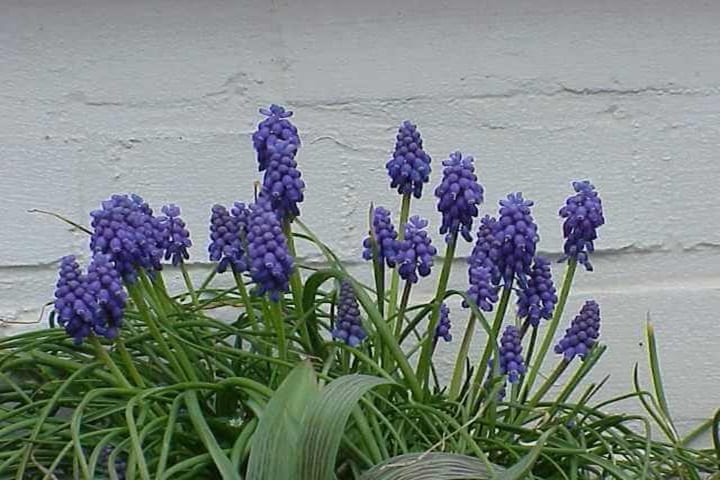
Choose a suitable planting location. Loosen the soil and mix in compost or organic matter if necessary to improve drainage. Dig holes about 7cm deep and place the bulbs pointed side up, spacing them around 7cm apart.
Gently fill the holes with soil and pat down lightly. Give the bulbs a good drink of water after planting to help them settle in. Apply a layer of mulch to help retain moisture and protect the bulbs during winter.
How to care for grape hyacinths
Watering is the main job. Keep the soil moist but not waterlogged during the growing season. Once the foliage dies back in late spring, reduce watering to allow the bulbs to enter dormancy.
Remember, a light layer of mulch is beneficial. Muscari doesn’t require heavy fertilization. However, you can feed them with a balanced fertilizer in early spring to encourage strong growth and blooming.
How to propagate grape hyacinths
Muscari bulbs naturally multiply over time, making propagation easy. You can propagate grape hyacinths by dividing and transplanting the bulbs. In late summer or early autumn, once the foliage has died back, carefully lift the clumps of bulbs from the soil.
Gently separate the individual bulbs from the clump. Discard any that are soft or damaged. Plant the divided bulbs immediately in their new location, following the normal planting guidelines given above.
Muscari is a bulbous perennial commonly propagated by planting bulbs in autumn or by dividing existing clumps in summer to obtain bulb offsets. However, if you’re interested in a cost-effective way to grow new plants, you can also save and sow Muscari seeds.
Growing Muscari from seed is a slower method, as it can take several years for the plants to mature and bloom. If you’re patient, here’s how to do it:
Collect seeds from a mature plant (seeds are rarely sold commercially). You can either:
- Sow the seeds immediately in a cold frame outdoors, allowing them to grow until the following spring.
- Cold stratify the seeds for three months, then sow them indoors in early spring.
- Alternatively, allow the plants to self-seed naturally by letting the seed heads develop.
For the first two methods, after seedlings emerge, gradually harden them off before transplanting. Plant them out in either autumn or spring, about a year after sowing.
After transplanting, continue regular care and expect flowers in another year or two.
Pruning
Pruning is not something you need to worry about when growing grape hyacinths. Once the flowers fade, it is important to allow the foliage to remain until it turns yellow and dies back naturally. This process allows the bulbs to store energy for the next year’s growth.
After the leaves have withered, you can cut them back to tidy up the garden if you wish, but you really don’t need to.
Harvesting
While Muscari is typically grown for ornamental purposes, you can also harvest the flowers for small bouquets or floral arrangements. Snip the flower stalks just above the base of the plant when they are fully open. The flowers will last about a week in water, adding a touch of spring beauty indoors.
Potting and Repotting Grape Hyacinth
Muscari grows well in containers, making them a great choice for small gardens or patios. Select a pot with good drainage and fill it with well-draining soil. Space the bulbs about 5-7cm apart, covering them with soil. Water the bulbs thoroughly after planting and keep the soil moist but not soggy. Every few years, repot the bulbs in fresh soil to ensure healthy growth.
What to plant with Muscari
Muscari can be grown in pots alone, but of course you can also consider growing it in combination with other spring bulbs, creating a mixed display known as a ‘bulb lasagna’ by layering spring bulbs in the same pot. Muscari can pair well with crocuses, irises, daffodils and tulips, for example.
Muscari can also be valuable as part of mixed polycultures. Muscari can be an excellent addition to a fruit tree guild, for example, playing a valuable role in supporting the overall health and productivity of the ecosystem.
These small, early-spring bloomers attract pollinators like bees, which benefit fruit trees by improving pollination rates. Their shallow roots help reduce soil erosion without competing with deeper-rooted plants.
Muscari also provides natural ground cover, suppressing weeds and maintaining moisture around the base of fruit trees. Muscari can also capture and retain nutrients and moisture during the early part of the year. And when planted around a tree’s drip line, they act similarly to other spring bulbs by helping to prevent grass from encroaching into the guild area.
By planting Muscari alongside nitrogen-fixing plants, herbs, and other beneficial species, you can enhance biodiversity and promote a thriving, resilient fruit tree guild.
Growing grape hyacinths: problem solving
Muscari bulbs are prone to rot if overwatered, especially in poorly draining soil. Ensure proper drainage to prevent waterlogging.
While Muscari is generally pest-resistant, slugs and snails may occasionally target the foliage.
Fungal diseases like botrytis can affect grape hyacinths in overly damp conditions. Ensure good air circulation and avoid watering from above.
- Drooping Leaves: If your grape hyacinth’s leaves are drooping, it may not be getting enough sunlight. A location with too much shade could be the issue. To resolve this, you can easily transplant the plants to a sunnier area by carefully digging them up and replanting them in a brighter spot.
- Yellow Leaves: Yellowing leaves on grape hyacinths often indicate overwatering. Let the soil dry out, and water only when the top inch feels dry to the touch to prevent further issues.
- Leaves Falling Off: It’s normal for grape hyacinth leaves to wither and die back after the spring blooming season. If the dying foliage becomes unsightly, you can trim it away. When fresh leaves appear in the fall, leave them intact until spring to promote healthy flowering.
FAQs
Do Muscari grow back every year?
Yes, Muscari are perennial bulbs, meaning they will return year after year with proper care. In fact, they often naturalize and spread, forming large clumps over time.
What conditions do Muscari like?
Muscari thrives in well-drained soil and prefers full sun, though they will tolerate partial shade. They can easily be grown in a range of different growing locations in UK gardens.
Where should I plant Muscari?
Plant Muscari in sunny or partially shaded spots with well-drained soil. They look great in borders, under trees, or in rock gardens, and can also be planted in containers for patio displays.
Sources
Geerts, S., (2024) 12 Beautiful Rabbit- and Deer-Resistant Bulbs for Your Garden. Better Homes & Gardens. [online] Available at: https://www.bhg.com/gardening/flowers/bulbs/beautiful-bulbs-deer-and-rabbits-dont-eat/ [accessed 27/09/24]