

Whether you have a compact urban garden or a more generous suburban plot, adding a polytunnel can completely transform how you use your rear garden. It can extend your growing season, protect delicate crops, and create a sheltered microclimate for plants, while also giving you a space to enjoy year-round. With a little planning, these rear garden ideas for your polytunnel can be both productive and beautiful, blending seamlessly into your wider garden design.
KEY TAKEAWAYS
- A polytunnel can turn even a modest rear garden into a productive growing space, extending the season and improving yields.
- Thoughtful layout planning helps balance growing areas with paths, seating, and features for relaxation.
- Aim for a practical landscaping-to-planting ratio, leaving space for composting, water collection, and access.
- Choose plants suited to the UK climate, including crops that thrive with protection from wind and rain.
- Create a space that is enjoyable as well as useful – consider paths, seating, and decorative plantings inside or around the tunnel.
- Use screening, trellising, and planting to enhance privacy and integrate your polytunnel attractively into the garden.
- Even small gardens can accommodate compact or lean-to polytunnels with creative design.
Planning Your Rear Garden Layout with a Polytunnel
When planning a rear garden that includes a polytunnel, it is a good idea to begin by thinking about how you actually want to use the space.
Do you dream of growing food all year round? Or are you more interested in a sheltered space for tinkering with tender plants and seedlings, or maybe just relaxing with a good book? Perhaps you want a space that does both – a place to allowing to to grow and to relax.
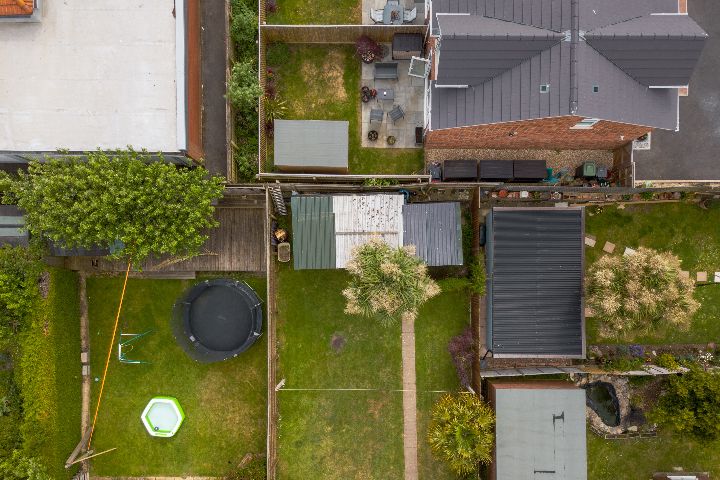
Begin by mapping out your available area. Note sun patterns through the day and across the seasons, any existing trees or structures that cast shade, and the direction of prevailing winds.
In most parts of the UK, the strongest winds come from the southwest, so orienting your polytunnel with a shorter end facing this direction can help it to shed wind effectively. Windbreak hedges can also be very useful in windier spots.
The polytunnel should ideally receive at least six hours of direct sunlight a day. In small rear gardens where light can be obstructed by fences, sheds or neighbouring houses, placing the tunnel in the brightest corner makes all the difference.
Consider access and flow too. How will you move between your house, tunnel, and other garden areas? Create clear paths that allow barrows or baskets to pass easily, and make sure there’s space for water butts, composting bins, or tool storage nearby.
For a cohesive design, think of your polytunnel as part of the wider garden structure rather than an isolated feature. Surround it with mixed planting, paths of gravel or bark, or a low hedge to soften the edges. The goal is for the tunnel to look as though it belongs, not as though it has simply been dropped in.
Landscaping to Planting Ratio
Getting the balance right between hard landscaping and planted areas is key to creating a rear garden that works well. In small gardens especially, too much paving or decking can make the space feel lifeless, while too much planting can make it difficult to move around or maintain.
A useful rule of thumb is to keep at least two-thirds of your rear garden as planting or green space, and one-third as an absolute maximum for paths, patios, and utility areas. If you’re incorporating a polytunnel, consider how it fits within this ratio.
A polytunnel can take up a surprising amount of visual space, so balance it with soft landscaping: beds, planters, or wildlife-friendly areas nearby. Perennial borders, herb spirals, or low-growing groundcovers can make the transition between the tunnel and garden smoother.
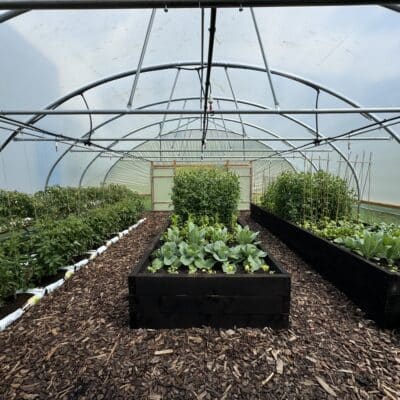
Inside the tunnel, aim for a similar balance between growing and access space. Raised or in-ground beds divided by narrow central paths are efficient, but leave enough room to move comfortably and tend plants without stepping on the soil.
Softening the edges of the polytunnel with surrounding planting – such as grasses and herbaceous perennials that will not cast too much shade, can help to anchor it into the surrounding space.
Rear Garden Ideas for Growing in the UK Climate
One of the greatest advantages of a polytunnel is that it allows gardeners across the UK to grow a wider range of crops than would otherwise be possible. Even in Scotland or the north of England, where summers are short and rainfall frequent, the protection of a tunnel opens up exciting possibilities.
Here are some planting ideas well suited to UK conditions:
Early and Late Crops
Under cover, you can sow earlier and harvest later. Try early peas, broad beans, or salad leaves in late winter, followed by tomatoes, peppers, and aubergines through summer, and then winter salads, spinach, and pak choi into autumn.
Mediterranean Herbs and Tender Plants
Basil, rosemary, sage, and oregano all thrive in the drier, warmer tunnel environment. You might even experiment with small citrus trees or figs in large pots, moving them outside during the height of summer.
Perennials and Cut Flowers
A polytunnel doesn’t have to be purely for vegetables. Perennial herbs, strawberries, or cut flowers like cosmos and dahlias also do wonderfully under cover, bringing colour and scent to your productive space.
Companion Planting and Biodiversity
Where possible, grow a mix of plants (polycultures) to encourage pollinators and beneficial insects. Marigolds, nasturtiums, and calendula not only look cheerful but can deter pests naturally. Diversity helps balance the micro-ecosystem inside your tunnel, reducing problems with aphids or whitefly.
Succession Sowing
With careful planning, you can have crops in every season. Sow small batches of salads, carrots, or radishes every few weeks rather than all at once to keep a steady supply of fresh produce.
By choosing varieties bred for short UK summers or cooler climates, you’ll make the most of your space.

Making the Space Enjoyable to Spend Time In
A rear garden should be a place you love to spend time in, not just a space to work. While productivity might be the main purpose of your polytunnel, there’s no reason it can’t also be a calm and beautiful retreat.
Adding a small bench or chair inside the tunnel can transform it into a peaceful spot to sit with a morning coffee while the rain patters softly overhead. You might hang simple bunting, solar fairy lights, or a string of herbs drying from the ridge pole.
Natural materials complement the softness of the plastic cover – think wooden staging, terracotta pots, and gravel paths. Avoid cluttering the space, but let it feel lived-in and loved. A small water feature or a shallow dish of water can even attract beneficial insects inside.
Around the tunnel, create planting combinations that appeal to the senses: lavender and sage for scent, ornamental grasses for movement, and edible flowers for colour. Consider installing a small patio or deck area just outside the entrance to create a transitional zone between the tunnel and garden – a place to sit, sow, or sort your harvests.
Lighting also plays a role. Subtle solar or LED lighting means you can use your polytunnel after dusk, making it a cosy evening retreat even in autumn.
Ultimately, the goal is to make your rear garden not just practical but restorative. Remember, the more time you spend in a garden the greater the benefits can be for your health and wellbeing.
Privacy in a Garden
Many rear gardens in the UK are overlooked by neighbouring properties. If you’d like your polytunnel area to feel more private, there are plenty of attractive and sustainable solutions.
One of the simplest ways is through planting for privacy. Living screens of bamboo, willow, or evergreen shrubs can create soft boundaries without blocking light. Climbers such as honeysuckle, clematis, or ivy can be trained along trellises or fences, providing greenery while attracting pollinators.
A polytunnel itself can act as a visual screen, especially if positioned along a boundary. If you prefer a more integrated look, use low hedges or raised beds to anchor it visually, or plant tall perennials nearby to break up its outline.
For a more modern aesthetic, you might use slatted wooden fencing, which offers privacy while still allowing airflow. Reclaimed materials such as pallet panels or woven hazel screens are affordable and environmentally friendly.
Remember that privacy doesn’t always mean enclosure. Sometimes, a simple sense of separation – a small pergola, archway, or change in paving texture – can create the feeling of a defined space without blocking views or sunlight.
Small Garden Solutions
Not every rear garden can accommodate a full-sized polytunnel, but that doesn’t mean you can’t enjoy the benefits.
For smaller spaces, consider:
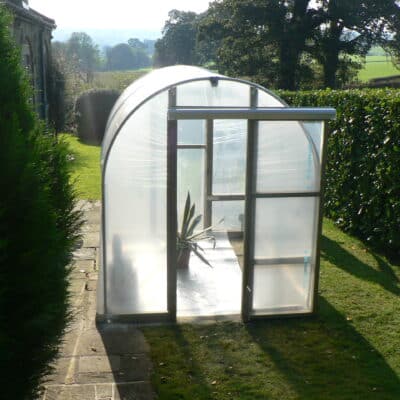
- Mini or compact polytunnels: Models from around 1.2–2 metres wide are ideal for tight plots or courtyards.
- Lean-to polytunnels or cloches: These attach to existing walls or fences and make use of otherwise unused space.
- Vertical growing systems: Shelving, hanging planters, or stacked containers can maximise limited area.
- Moveable raised beds: Using wheels or castors allows flexibility, letting you adjust light exposure through the seasons.
Even in a small rear garden, thoughtful design makes all the difference. Keep pathways narrow but navigable, use light-coloured materials to reflect sunlight, and avoid tall structures that overshadow the space.
A small tunnel can be surprisingly productive – yielding fresh salads, herbs, and soft fruits almost year-round. Combined with container planting and vertical gardening, you might be amazed by how much it allows you to grow in even the smallest rear garden.
FAQs
How much space do I need for a small polytunnel?
Even a small polytunnel can be worthwhile. A structure as little as 2m x 3m can provide ample growing space for salad crops, herbs, or early seedlings. If you have room, a 3m x 6m tunnel offers more flexibility and better temperature stability, but smaller models or lean-tos are excellent for urban gardens.
Before buying, check that you’ll have at least one metre of clear space around the tunnel for maintenance and access, and that it receives good sunlight for most of the day.
Can a polytunnel handle UK wind and rain?
Yes – modern polytunnels, especially those supplied by established UK manufacturers like First Tunnels, are designed to withstand the British climate. A well-installed structure with galvanised steel hoops, secure anchors, and properly tensioned polythene can easily cope with strong winds and heavy rainfall.
Choosing a sheltered site and orienting the tunnel with its ends facing the prevailing wind helps reduce strain. Regular checks on fixings and covers, along with keeping the surrounding area tidy and free from debris, will ensure long-term stability and performance.