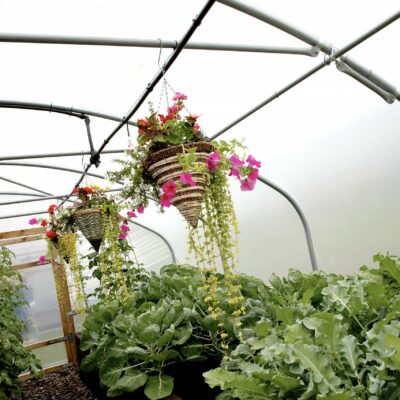


Anyone with a polytunnel will know that it can sometimes be difficult to keep it in the ‘goldilocks zone’ – neither too hot, nor too cold. Fortunately, the right strategies can keep things just right with your polytunnel temperature.
Managing the internal temperature of your polytunnel can be both an art and a science. Too hot, and you risk scorching plants and disrupting pollination. Too cold, and growth stalls, or worse, frostbite damages your crops.
In this article we will explore how warm a polytunnel should be and help you keep it cool in summer and warm enough in winter to regulate polytunnel temperatures.
What Temperature Should Your Polytunnel Be?
There’s no single perfect number, as the “ideal” temperature varies depending on what you’re growing. However, a general target range for a productive polytunnel is:
- Daytime (spring/summer): 20–25°C
- Night-time (spring/summer): 10–15°C
- Winter (depending on crops): 5–10°C for hardy crops; up to 15°C for more tender ones.
This range supports photosynthesis, fruiting, and flower production while minimising stress on the plants. Anything much above 30°C (86°F) for extended periods can start causing problems for most crops, particularly if paired with high humidity and poor airflow.
How hot is too hot for polytunnel plants?
Plants can tolerate high temperatures up to a point, but they have limits. Tomatoes, peppers, aubergines, and cucumbers, for example, thrive in warmth – but once temperatures climb above 30–32°C, stress sets in. Pollination suffers, leaves may wilt, and growth slows.
Some signs your polytunnel is too hot:
- Leaves appear scorched or curled.
- Pollination becomes poor – flowers fall without setting fruit.
- Fruits form with deformities.
- Soil dries rapidly, requiring more frequent watering.
- Fungal issues worsen due to trapped humidity.
In extreme cases, overheating can be fatal to young seedlings or heat-sensitive varieties like lettuce and spinach. Keeping things within that manageable band is crucial.
How to Position Your Polytunnel for Optimum Sun/Temperature
Where and how you place your polytunnel can significantly affect how easy it is to regulate temperature.
In the UK, the ideal orientation is often east–west to maximise sunlight in winter and reduce overheating in summer. This encourages even light distribution and can help avoid one side baking in peak sunlight hours.
While you want your tunnel to get sunlight, strong winds can leech heat quickly. Positioning it near a hedge or adding windbreak netting on exposed sides can preserve warmth without compromising ventilation.
Make sure nearby trees or buildings don’t cast shade over your tunnel, particularly in winter when every ray counts.
How To Keep A Polytunnel Warm
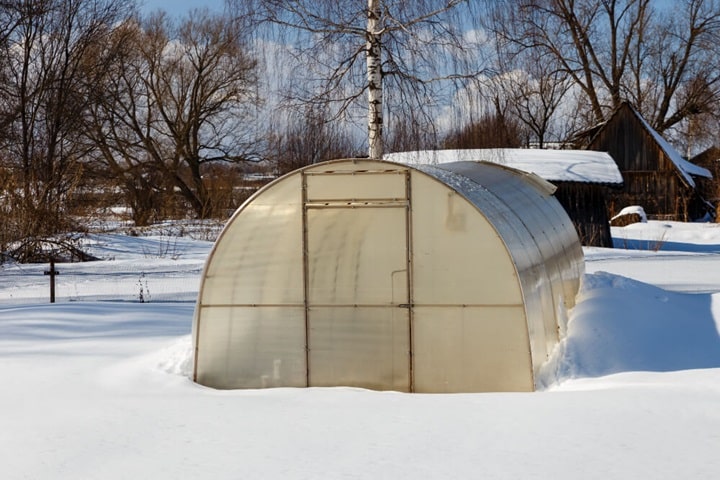
If you’re looking to extend your growing season, get a head start in spring, or overwinter more delicate crops, then maintaining warmth in your polytunnel is essential. While polytunnels offer a useful buffer against outdoor weather, they still need a helping hand when temperatures dip—especially in the UK’s often unpredictable climate.
Fortunately, there are a number of practical and sustainable strategies to retain heat and even generate some of your own. These fall into two broad categories: passive and active heating methods.
Passive Heating Techniques
Passive methods rely on storing or conserving existing heat rather than generating new energy. They are ideal for eco-conscious growers and can be surprisingly effective.
Thermal Mass (Heat Sinks): Using materials that absorb heat during the day and release it at night is a classic and low-maintenance way to regulate temperature. Large barrels or containers of water work exceptionally well. Paint them black to increase absorption, and place them along sun-facing sides of your tunnel. Rocks, bricks, or paving slabs can also store heat and help level out temperature dips after sunset.
Insulating the Tunnel: To reduce heat loss, consider adding a second skin to your polytunnel. A layer of horticultural bubble wrap affixed to the inside of the frame creates an insulating air gap, much like double glazing. For individual beds or plant rows, use horticultural fleece at night to trap warmth close to the soil.
You can also install thermal curtains or heavy-duty sheeting that can be drawn over beds at dusk and pulled back in the morning.
Ground Cover: Keeping the soil warm is just as important as warming the air. Apply a thick mulch of straw, wood chips, leaves, or well-rotted compost to beds to preserve soil heat and protect roots from sharp cold snaps. Raised beds also tend to retain warmth better than flat ground.
Cloches and Cold Frames: These miniature greenhouses-within-a-greenhouse are excellent for sheltering young or vulnerable plants. Plastic cloches, glass bell jars, or DIY versions made from upcycled bottles can all create mini microclimates that significantly improve plant survival rates in cold spells. Learn about DIY cold frames.
Active Heating Techniques
- Electric Heaters: For those growing heat-lovers like citrus or early tomatoes, a heater with a thermostat can maintain minimum temps. Be mindful of safety and ventilation.
- Soil Warming Cables: Great for seedling trays or specific beds, these gently warm the root zone without needing to heat the whole space.
- Hotbeds: These old-fashioned composting beds produce heat naturally from decomposing manure or organic matter – a sustainable and zero-cost heating method if done well.
How to Manage Your Polytunnel Temperature in Winter
Winter presents its own unique challenges. The key lies in preserving any heat gained during daylight and slowing the rate of loss overnight.
- Close ventilation early in the afternoon to trap warm air.
- Use thermal curtains or screens inside the tunnel at dusk to trap heat at crop level.
- Grow winter-hardy varieties – brassicas, spinach, lamb’s lettuce, chard, and overwintering onions and garlic all tolerate colder conditions.
It’s also wise to monitor the forecast – if a cold snap is coming, add extra fleece or even small tunnels within the main one for a layer-cake approach to insulation.
How to Keep a Polytunnel Cool in Summer
While winter poses the challenge of retaining heat, summer flips the script entirely – excess heat can turn a polytunnel into a sweltering hothouse. Without proper precautions, you risk heat stress, flower drop, bolting, and disease. Fortunately, there are several low-tech and sustainable ways to manage summer heat and keep conditions within that productive range.
Ventilation is Key
The simplest and most effective way to lower polytunnel temperatures is through good airflow.
- Open both doors during the day to create a chimney effect – warm air escapes through the top while cooler air flows in below.
- Add roll-up side vents or roof vents if your tunnel allows for it. These significantly boost air circulation.
- Automatic vent openers (triggered by heat) are a worthy investment for hassle-free cooling, especially if you’re away during the day.
Use Shade Wisely
Sunlight is essential, but too much direct solar radiation can overwhelm plants, especially those that prefer cooler conditions like lettuce or herbs.
- Shade netting draped over or inside your polytunnel cuts light intensity and temperature. Use 30–50% shade cloth for most crops.
- Alternatively, paint the outside of the plastic with white greenhouse shading paint – this diffuses sunlight and reflects heat without reducing all light.
- For a dynamic solution, consider removable shade covers that you can use only during heatwaves or peak summer weeks.
Water Strategically
Water cools the environment through evaporation, but how and when you water matters:
- Water early in the morning to avoid raising humidity at night.
- Dampen paths or staging during particularly hot afternoons – this raises humidity slightly and drops the ambient temperature through evaporation.
- Avoid overwatering beds, as this can lead to root rot and increase fungal disease.
Mulch Beds to Retain Moisture
A thick layer of organic mulch (like straw, leaf mould or compost) insulates soil, keeping root zones cooler and preventing evaporation.
Space Plants Appropriately
Overcrowded plants restrict airflow and trap heat. In summer, give crops extra space to breathe and avoid the “greenhouse within a greenhouse” effect. Air moving between leaves helps reduce fungal risk and keeps temperatures in check.
What Can You Use to Regulate the Temperature of Your Polytunnel?
Monitoring and adjusting your polytunnel environment is easier than ever thanks to affordable tools and practical systems.
- Thermometers (Digital & Analogue): Place several around the tunnel – at plant level, root zone, and high up near the roof – to get a complete picture.
- Ventilation Systems: Manual or automatic vent openers allow hot air to escape. Roof vents are particularly effective as warm air rises.
- Fans: In commercial polytunnels, low-powered fans can circulate air and prevent hot spots. Even simple solar-powered fans can make a difference.
- Smart Sensors: For tech-savvy growers, systems that monitor and alert you to temperature and humidity changes via smartphone are increasingly accessible.
Polytunnel Temperature Control: Humidity & Ventilation
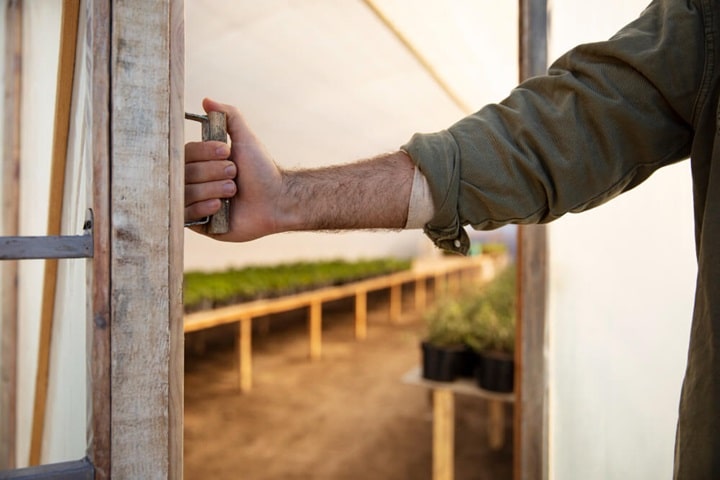
Temperature and humidity go hand-in-hand in a polytunnel. Warm air holds more moisture, and in a closed environment, that can spell trouble – especially fungal diseases like botrytis or powdery mildew.
Effective ventilation is crucial for cooling, as we have discussed above. It is also important for optimal plant health.
Humidity can be measured using a hygrometer – aim for a relative humidity of around 50–70% for most crops.
Temperature control in a polytunnel is about understanding your plants, your local climate, and your structure. While weather can be unpredictable, the more you learn about your specific tunnel’s behaviour, the better you’ll become at tweaking things to suit your crops’ needs.
Start with observation, track conditions carefully, and respond using the range of strategies available – from passive heat sinks to smart sensors. With some trial and error, you’ll find your rhythm – and your crops will thank you for it.
FAQs
What’s the risk if a polytunnel gets too hot?
High temperatures can cause poor pollination, wilting, bolting in leafy crops, and increased risk of pests and disease. Overheating stresses plants, reducing yield and quality. Leafy greens may become bitter, and fruiting crops may drop flowers.
How do I measure the temperature inside my polytunnel?
Use a combination of minimum/maximum thermometers, digital probes, or Wi-Fi-enabled smart sensors. For the best accuracy, place one:
Near the canopy level of your crops.
In the soil or at root depth.
High in the tunnel to monitor rising heat.
Recording these readings daily helps you spot trends and make better decisions.
Do I need to heat my polytunnel in spring or autumn?
It depends on what you’re growing. For early seedlings, some heat – even just at the root level – is beneficial. For autumn crops, heating isn’t essential if you stick to hardy varieties. A well-insulated tunnel and passive measures like thermal mass may be sufficient.
Sources
Cutmore, A., (2024) 8 outdoor heating options to take your garden from day to night. Good Homes. [online] Available at: https://www.goodhomesmagazine.com/garden/outdoor-heating-options/ [accessed 20/05/2025]