

Spring heralds a vibrant display of blooms, rejuvenating gardens after the dormancy of winter. For UK gardeners, selecting the right plants ensures a great start to the gardening year, bringing in pollinators and other wildlife that will help in a garden over the warmer months to come.
Choosing Spring Flowers
Choosing the right spring-flowering plants for your garden depends on several factors, including soil type, light levels, and climate conditions.
In the UK, gardens can range from damp, shaded woodlands to dry, sun-drenched borders, so selecting plants suited to your specific environment ensures healthy growth and a long flowering season.
Native plants are particularly beneficial, as they are well adapted to local conditions and support wildlife, though there are also, of course, many non-natives that thrive in the conditions different UK gardens can provide.
When choosing bulbs, perennials, shrubs, or trees, consider how they will fit within the wider garden design, whether as focal points, ground cover, or companion plants that provide year-round interest.
Another important factor is bloom time and succession planting. Some plants, such as Snowdrops (Galanthus nivalis) and Lesser Celandine (Ficaria verna), emerge as early as late winter, while others like Bluebells (Hyacinthoides non-scripta) and Red Campion (Silene dioica) flower later in spring.
By selecting a variety of plants with different blooming periods, you can create a garden that remains colourful and inviting throughout the season. Combining bulbs like Daffodils (Narcissus spp.) with herbaceous perennials such as Primroses (Primula vulgaris) ensures a prolonged display.
Meanwhile flowering shrubs and trees, such as Hawthorn (Crataegus monogyna) and Wild Cherry (Prunus avium), provide structure and height.
For those growing in more controlled environments, such as polytunnels, spring flowers can be started earlier or extended beyond their natural season. Hardy annuals and some perennials, including Sweet Violets (Viola odorata) and Cuckooflower (Cardamine pratensis), benefit from the added warmth and protection, allowing them to establish well before being moved outside.
Polytunnels are particularly useful for protecting delicate young plants from late frosts, ensuring that they reach their full potential when planted out in spring beds. By carefully selecting plants suited to your garden’s conditions and planning for succession flowering, you can create a vibrant, wildlife-friendly spring display that thrives year after year.
Spring Flowering Bulbs
1. Snowdrop – Galanthus spp.
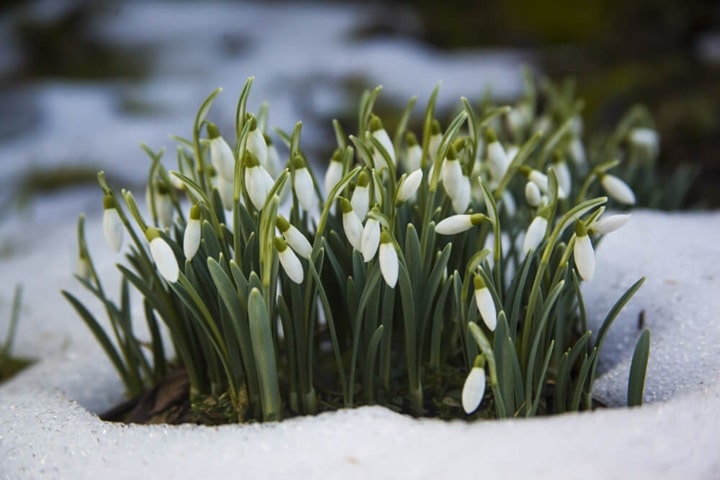
Snowdrops are among the earliest bloomers, often emerging in late winter. They prefer moist, well-drained soil and partial shade, making them ideal for woodland gardens. Plant snowdrop bulbs in the autumn for a delicate white display as winter wanes.
Since they thrive in dappled shade and moist, well-drained soil, they create a naturalistic effect when planted in drifts under trees like hazel (Corylus avellana) or alongside native perennials such as wood anemones (Anemone nemorosa) and primroses (Primula vulgaris).
In lawns and wildflower meadows, snowdrops can be naturalised by planting in irregular clusters, allowing them to spread over time. When combined with crocuses and early daffodils, they provide a tapestry of seasonal interest. Because their foliage dies back quickly, they work well in areas of the garden where mowing can be delayed until after the leaves have fully withered, ensuring strong flowering in the following year.
Snowdrops also bring elegance to formal garden settings, particularly in rock gardens, raised beds, or along pathways where their delicate blooms can be appreciated up close. Planted at the front of borders or around the base of evergreen shrubs, they create striking contrasts against dark foliage. They are also well suited to container planting, where they can be moved into prime positions during flowering and tucked away after they have finished blooming.
2. Daffodil – Narcissus spp.

Daffodils are hardy perennials that bloom from late winter to early spring. They thrive in well-drained soil and can tolerate both full sun and partial shade. Planting occurs in autumn, and once established, they require minimal maintenance.
One of the best places to use daffodils is in mixed borders and flower beds. Their tall stems make them ideal for planting at the front or middle of borders, where they can be paired with other early spring perennials like crocuses or primroses, creating a vibrant patchwork of colour.
Daffodils work particularly well when grouped in drifts, providing a bold contrast against evergreen foliage or alongside the fresh green leaves of emerging plants. They also work as companions in fruit tree guilds, as spring ephemerals, or around the drip lines of trees in a forest garden.
Another great location for daffodils is in lawns. Planting them in grassy areas, either in naturalised drifts or in smaller, more formal groupings, can provide an eye-catching spring spectacle. Daffodils in lawns work well because their foliage dies back early in the season, allowing the grass to return to its normal height before the first mow. They can also be used around the edges of garden paths or along driveway borders, where their cheerful blooms greet visitors and brighten up the walkway.
Daffodils are also well-suited to containers and pots, especially if you have a patio or balcony that needs a splash of spring colour. In these settings, they can be grown alone or mixed with other spring-flowering plants such as tulips or hyacinths. By planting daffodils in pots, you can also move them around the garden to highlight different areas, creating a dynamic and ever-changing display as the season progresses.
3. Tulip – Tulipa spp.
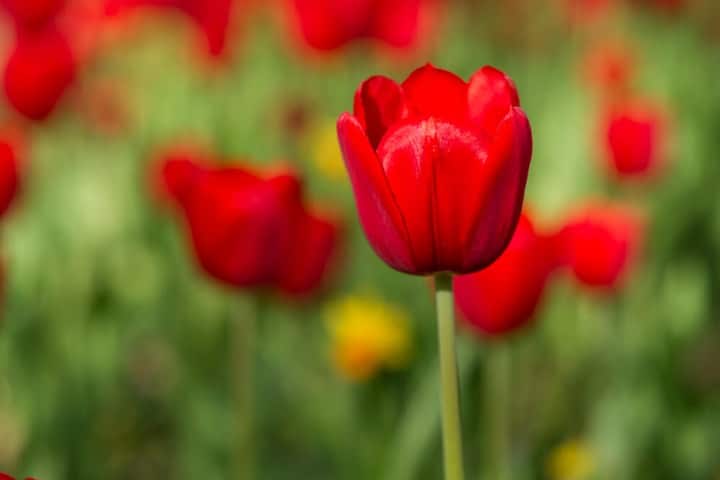
Tulips are quintessential spring bulbs, offering a spectrum of colours and forms. Blooming from March to May, they prefer well-drained loamy soil and full sun, though they tolerate partial shade. Planting occurs in autumn, allowing roots to establish before winter.
They work brilliantly in mixed borders, where their bold, elegant blooms can be paired with early spring flowers like daffodils or hyacinths. For a striking effect, plant them in formal garden beds or cut flower gardens where their structured shape adds drama.
Tulips also shine in containers and pots, making them ideal for patios, balconies, or entrances. Planted in lawns, they create natural-looking drifts, while along garden pathways, their vibrant colours provide a welcoming touch and guide the way in spring.
4. Primrose – Primula vulgaris
Primroses are native to the UK and bloom from March to May. They thrive in partial shade and prefer moist, well-drained soil rich in organic matter. Their early nectar-rich flowers are beneficial for pollinators.
5. Pulmonaria – Pulmonaria spp.
Pulmonaria, or lungwort, blooms in early spring with clusters of pink or blue flowers. They thrive in partial shade and moist, well-drained soil. Their spotted foliage adds visual interest even after flowering.
6. Lenten Rose – Helleborus orientalis
Lenten roses are evergreen perennials that bloom from late winter to early spring. They prefer partial to full shade and well-drained soil. Their long-lasting blooms add colour to shaded garden areas.
Edible Spring Flowers
7. Viola – Viola spp.
Violas, including pansies and violets, bloom in early spring and are known for their edible flowers. They prefer cool temperatures, partial shade, and moist, well-drained soil. Their blooms can be used to decorate salads and desserts.
8. Borage – Borago officinalis

Borage is an annual herb that produces star-shaped blue flowers in late spring. It prefers full sun and well-drained soil. The edible flowers have a cucumber-like flavour and are often used in salads or as garnishes.
9. Chive – Allium schoenoprasum
Chives are hardy perennials that produce purple pom-pom-like flowers in late spring. They thrive in full sun and well-drained soil. Both the leaves and flowers are edible, adding a mild onion flavour to dishes.
Spring Flowering Shrubs
10. Chaenomeles – Chaenomeles spp.
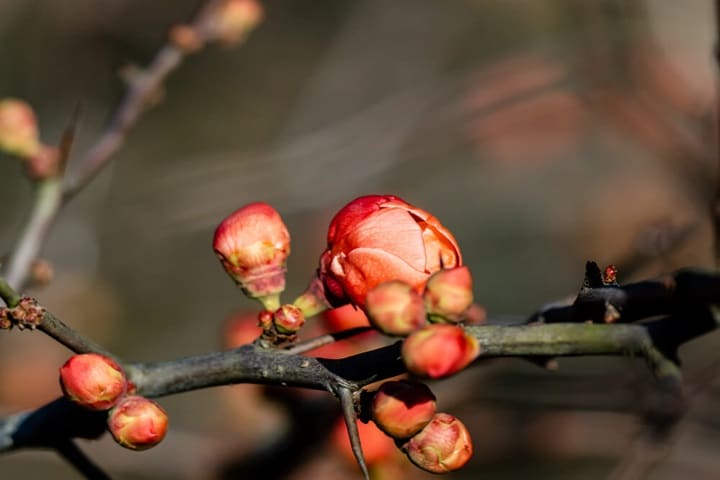
Chaenomeles, or flowering quince, is a deciduous shrub that blooms in early spring with vibrant red, pink, or white flowers. It prefers full sun to partial shade and well-drained soil. The plant is also valued for its edible fruit, which can be used in jellies and preserves.
11. Blackthorn (Prunus spinosa)
Blackthorn, famous for its early spring white blossoms, blooms as early as March before its leaves appear. It grows well in a variety of soils, including chalk and clay, and prefers full sun or light shade. This spiny shrub is essential for wildlife, offering nectar for early pollinators and sloes in autumn for birds and gin enthusiasts alike.
12. Hawthorn – Crataegus monogyna
Hawthorn, also known as May Tree, is one of the most iconic UK-native flowering shrubs. It produces clusters of white or pink, highly fragrant flowers in May, attracting pollinators. It thrives in full sun to partial shade and prefers well-drained soil. Hawthorn is often found in hedgerows and woodland edges, providing shelter and food for birds and insects.
Trees With Beautiful Blossom in Spring
13. Goat Willow (Salix caprea)
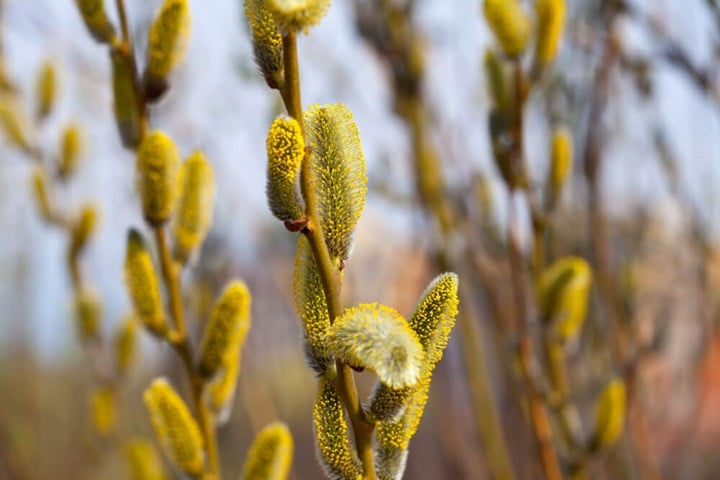
Goat Willow, or Pussy Willow, is one of the earliest trees to flower in spring, with its silky catkins appearing as early as February. It thrives in damp conditions and is ideal for boggy areas. The catkins provide an essential early nectar source for bees.
14. Wild Cherry (Prunus avium)
Wild Cherry is a stunning UK-native tree that bursts into blossom in April with clusters of fragrant white flowers, followed by red cherries in summer. It prefers well-drained soil and thrives in full sun to light shade. This tree is highly attractive to bees and birds.
15. Rowan (Sorbus aucuparia)
Also known as the Mountain Ash, Rowan produces delicate white flower clusters in late spring, followed by bright red berries in autumn. It grows well in various soil types and tolerates partial shade. Rowan is a great choice for wildlife-friendly gardens.
Further reading:
- Planting bare-root trees
- Garden maintenance jobs in spring
- How to plant spring bulbs
- What to plant in March
FAQs
Can spring flowering plants grow in shaded areas?
Yes, of course, many spring-flowering plants thrive in shaded areas. It is important to choose the right plants for the right places.
Many native UK plants thrive in shaded areas, bringing early-season colour and supporting wildlife. Primrose (Primula vulgaris) is a well-known spring bloomer, carpeting woodlands and shaded garden borders with pale yellow flowers from March onwards.
Wood Anemone (Anemone nemorosa) is another classic woodland species, producing delicate, star-shaped white flowers in early spring, often forming dense carpets beneath trees.
Lesser Celandine (Ficaria verna) appears even earlier, sometimes in late February, with its bright yellow flowers lighting up damp, shaded ground.
Bluebell (Hyacinthoides non-scripta), one of the most recognisable spring flowers, thrives in deciduous woodlands, covering the ground in a sea of blue from April to May.
Red Campion (Silene dioica) provides splashes of pink in partially shaded hedgerows and woodland edges from late spring into early summer.
Another important shade-loving native is the Dog Violet (Viola riviniana), a small but vital plant for butterfly species, with its delicate purple-blue flowers blooming from March to May in shaded and damp soils.
Wild Garlic (Allium ursinum), also known as Ramsons, produces clusters of starry white flowers in April and May, thriving in damp woodlands and shaded riverbanks, where its edible leaves create a strong garlic aroma.
Finally, Cuckooflower (Cardamine pratensis), a delicate pale lilac wildflower, appears in damp meadows and shaded areas from April, supporting early pollinators and adding soft colour to naturalistic planting schemes. These native species not only brighten shaded spaces but also play a vital role in supporting UK biodiversity.
What are some tips for maintaining spring flower beds?
1. Mulch and Feed Early
Apply an organic mulch, such as compost or well-rotted manure, in early spring to help retain moisture and suppress weeds. A balanced slow-release fertiliser supports healthy growth.
2. Deadhead Spent Flowers
Regular deadheading encourages prolonged blooming and prevents plants from using energy to set seed too early. This is particularly beneficial for tulips, daffodils, and primroses.
3. Maintain Moisture Levels
Spring can have unpredictable weather, so ensure plants receive adequate water, especially during dry spells. Water early in the morning or late in the evening to reduce evaporation.
4. Encourage Pollinators
Plant a variety of native and nectar-rich flowers to attract bees and butterflies. Avoid pesticides that may harm beneficial insects.
5. Divide and Thin Perennials
Early spring is a great time to divide overcrowded perennials like primroses and lungwort. This helps maintain vigour and encourages healthy growth.
6. Support Tall and Climbing Plants
Some spring bloomers, such as climbing clematis and taller perennials, may need staking or trellises to prevent them from toppling over in strong winds.
7. Plan for Succession Planting
To ensure continuous colour, layer different plant species that bloom at different times. Mixing bulbs, perennials, and shrubs creates a dynamic and visually appealing garden.
Sources
Mellor, C., (2023) 10 ways to help wildlife in spring. Woodland Trust. [online] Available at: https://www.woodlandtrust.org.uk/blog/2023/03/10-ways-to-help-wildlife-in-spring/ [accessed 26/03/2025]