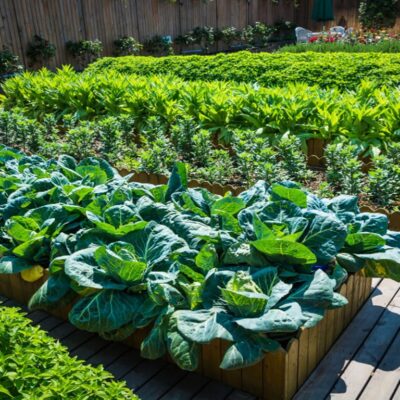
Bare root trees offer UK gardeners a cost-effective and efficient way to grow a variety of trees, whether they are fruit-bearing, nut trees, or ornamental species.
This guide will walk you through every stage of the process of how to plant bare root trees, from understanding their advantages and making the right purchasing decisions, to planting and aftercare.
Quick Facts
- Best planting time: Late autumn to early spring (when the tree is dormant).
- Main advantage: Cost-effective and better root development.
- Main drawback: Limited planting window.
- Planting timeline: Ideally, plant within a day or two of receiving the tree.
- Growth: Bare root trees often establish more quickly than container-grown counterparts.
- Watering: Essential after planting and during dry periods in the first year.
- Mulch to reduce water losses and protect young trees.
Advantages of Planting Bare Root Trees
Bare root trees are generally cheaper than potted trees. Because they are grown in open fields and dug up for sale during dormancy, they avoid the costs associated with pots, soil, and additional maintenance.
Since they do not come in plastic pots or require so many resources, bare-root trees are also a sustainable choice. And they tend to be lightweight and easy to transport compared to their container-grown counterparts.
Often, this is the best way to obtain trees you need to create a more eco-friendly and sustainable garden, and a wider range of fruit trees and native species is typically available when you opt for bare root trees.
Bare root trees also have strong root development – often better than trees purchased in pots. Without the restrictions of a pot, the roots of bare root trees develop more freely, leading to better establishment in the ground. They often establish faster than potted trees as a result of this superior root structure.
Drawbacks of Planting Bare Root Trees
Bare root trees can only be planted during the dormant period – while container grown trees can potentially be purchased and planted out over a greater period of time. Bare root trees can only be planted between around November and March. This means you have a limited timeframe in which to get them in the ground.
Once you receive bare root trees, they need to be planted fairly quickly to prevent the roots from drying out and the tree from suffering damage. You can’t delay planting them for weeks or months as you might with a potted tree.
Bare root trees don’t have the same protective area of soil around their roots as pot grown specimens, so they are more susceptible to drying out if not handled properly before planting.
Are potted trees better?
Potted trees offer flexibility in terms of planting time because they come with a root system already established in soil. However, this benefit it typically outweighed by the downsides.
They tend to be more expensive, bulkier, and may take longer to establish due to being root-bound in the pot. While they do have some advantages, particularly if you’re planting outside the bare root season, they often don’t grow as robustly in the long term compared to bare root trees. So on the whole, it is best to choose bare root trees, in most cases, where possible.
What time of year should I be planting bare root trees?
Bare root trees must be planted during the dormant season, which in the UK typically runs from late autumn (November) to early spring (March). During this period, the trees are not actively growing, allowing them to be transplanted with minimal stress.
Avoid planting bare root trees during periods of hard frost or waterlogged soil. If the ground is frozen or very wet, it is best to store the trees temporarily rather than planting in unsuitable conditions, though if you can you should plant out as soon after you receive the tree or bring it home as possible.
Choosing Bare Root Trees
When selecting bare root trees, you should of course consider your local climate, soil type, and the purpose of the tree. Look for trees that are disease-resistant, appropriate for your hardiness zone, and suitable for the specific growing conditions of your site (e.g., sunny, shaded, well-drained soil).
It’s also essential to inspect the quality of the tree before purchasing. Look for healthy, firm roots with no signs of rot or damage. The tree itself should be well-branched, typically with a straight, strong trunk.
Ordering Bare Root Trees
When ordering bare root trees, it’s important to source them from reputable nurseries that specialise in bare root stock. These nurseries will dig up the trees when they’re dormant and ensure they’re shipped to you promptly. Be sure to order well in advance, as many popular varieties sell out quickly.
You should also plan for delivery close to an ideal planting time, when you will be around and available to plant out, to avoid the need to store the trees for too long.
Do I need to plant bare root trees straight away?
Ideally, yes. Bare root trees should be planted as soon as possible after you receive them, preferably within 48 hours.
If immediate planting is not possible, store the trees in a cool, dark place, and keep the roots damp by wrapping them in moist material, like hessian or newspaper.
Alternatively, you can “heel in” the tree temporarily by digging a shallow trench in a sheltered spot, laying the tree in it at an angle, and covering the roots with soil. This is a good solution if you cannot plant in your intended final growing position right away.
How to Plant Bare Root Trees
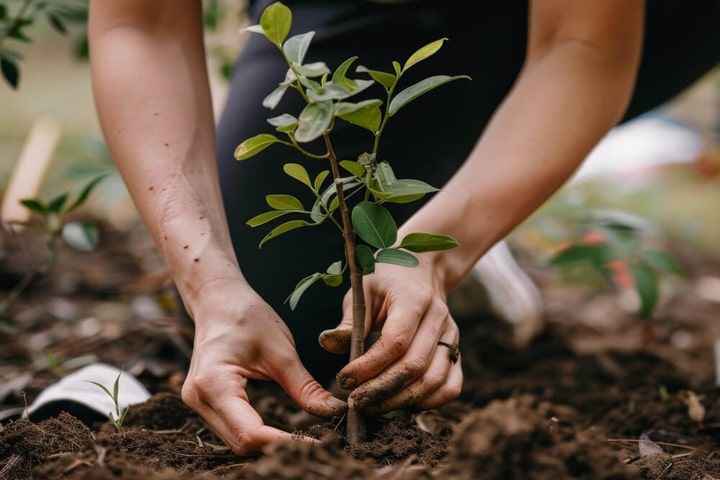
Once you’ve chosen your tree and prepared your planting site, follow these steps to ensure successful planting.
Equipment Checklist
- Spade or shovel
- Garden fork
- Tree stake (usually 5-6 feet tall)
- Tree ties
- Watering can or hose
- Bucket (for soaking the roots)
- Mulch (optional)
- Pruning shears (for damaged roots or branches)
1. Prepare the planting site (making sure the planting hole is the right depth)
Choose a site with appropriate light levels for the tree species and where the soil drains well. Avoid waterlogged areas for most trees.
Dig a hole that is wide enough for the roots to spread comfortably and deep enough. Generally, the hole should be around twice the width of the root system and just deep enough so the tree is able to be positioned to sit at the same depth it was previously planted.
Loosen the soil at the base of the hole with a garden fork to improve drainage and encourage root penetration, especially if there is a heavy clay soil where you live.
2. Install your stake
Place your tree stake into the ground before planting. This ensures you won’t damage the roots when you install it later.
The stake should be positioned on the windward side of the tree and driven deep enough to remain stable. Stakes should be around one-third the height of the tree and should be installed at an angle to give the tree support against prevailing winds.
3. Soak your tree’s roots, place the tree in the hole, and backfill
Before planting, soak the tree’s roots in a bucket of water for about 30 minutes to an hour. This helps rehydrate the roots and ensures they have the best chance of successful establishment.
In some cases, it may be beneficial to sprinkle suitable mycorrhizae into the base of the planting hole to promote a healthy fungal ecosystem to support your new tree.
Next, position the tree in the hole, ensuring that it is at the right depth.
Begin backfilling the hole with the soil you dug out, working it gently around the roots. As you backfill, ensure there are no air pockets by lightly tamping down the soil. Avoid compacting the soil too firmly, however, as this can restrict root growth.
4. Water your tree
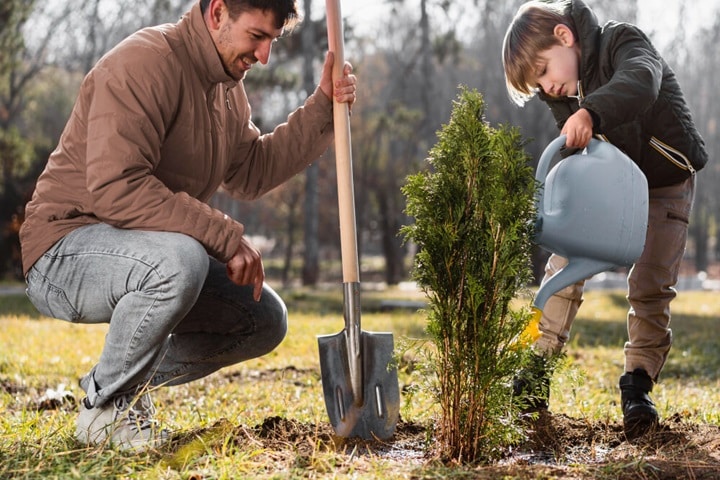
Once the tree is in place, water it thoroughly. This helps settle the soil around the roots and provides much-needed moisture. Even if the weather is cold or wet, watering is critical at this stage and it is important to make sure you do not just wet the surface but get water to the roots where it is needed.
5. Attach the tree tie
Secure the tree to the stake using a tree tie, ensuring it is snug but not so tight that it constricts the trunk. The tie should be attached about one-third of the way up the tree and should allow for some movement since this encourages the tree to develop a stronger trunk.
After planting
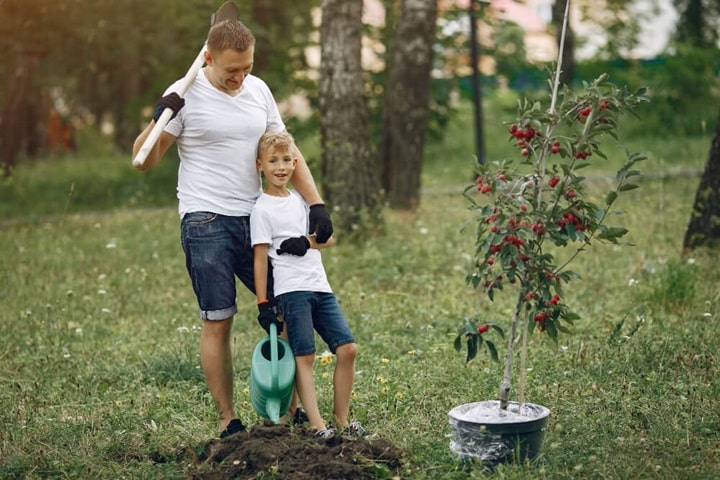
- Apply a 2-3 inch layer of mulch around the base of the tree, keeping it a few inches away from the trunk. Mulch helps retain moisture, regulate soil temperature, and suppress weed growth.
- Water the tree regularly, especially during dry periods in its first growing season. After the initial watering, aim to keep the soil moist but not waterlogged.
- Periodically check the stake and tie to ensure they are not damaging the tree. Remove the stake after the first growing season or when the tree is strong enough to support itself.
- Prune the tree to remove any dead, damaged, or diseased branches. You may also occasionally want to shape the tree at this time, depending on its growth habit and your preferences.
- Create guilds of beneficial companion plants around fruit trees and other key trees in order to maximise the chances of success by creating biodiverse, stable and resilient ecosystems on your property.
Whether you’re planting bare root trees, fruit trees or ornamental species, the rewards of planting bare root stock are well worth the effort and time. The best time to plant a tree is 20 years ago, the next best time is today!
Further reading:
Want to learn more about growing trees and how to plant bare root trees? Try our tips here:
FAQs
What is the best time to plant bare root trees?
The ideal time to plant bare root trees in the UK is from November to March, during the dormant season. This period allows the tree to establish its roots before it bursts into new growth in the spring.
Do bare root trees need to be soaked?
Yes, bare root trees should ideally be soaked in water for 30 minutes to an hour before planting. This helps to rehydrate the roots and give the tree the best chance of establishing successfully.
How long can you leave bare root trees before planting?
It’s best to plant bare root trees as soon as possible, ideally within 48 hours of receiving them. If you can’t plant them right away, store them in a cool, dark place with the roots wrapped in moist material. Alternatively, heel them in temporarily by covering the roots with soil in a sheltered spot.
Sources
Neveln, V., (2024) A Guide to Pruning Plants for Healthier Trees, Shrubs, and Flowers. Better Homes and Gardens. [online] Available at: https://www.bhg.com/gardening/trees-shrubs-vines/care/what-to-prune-when/ [accessed 27/09/24]