

 Growing trees can be an extremely rewarding experience. Some trees, however, will grow faster than others. There are a number of reasons why you may wish to grow fast growing trees in your garden, rather than opting for slower-growing varieties. In this guide, we will explore some of these reasons, before looking into where and how these trees should be grown, including the option to grow in fruit cages, and discussing some of the fast-growing trees that UK gardeners could consider.
Why Might You Want To Grow Fast Growing Trees?
When considering growing trees in your garden, or on your farm, it is important to think about why fast growing trees could be right for you. You should begin by considering your reasons for choosing a fast growing variety. For example, you might want to grow fast growing trees for:
Shade
On a sunny site, it may be beneficial to quickly create shade to enhance a seating area or to protect other plants. Shade can reduce water loss during the summer months, and can prevent certain plants from bolting in hot weather. Areas of shade can also help to increase the natural biodiversity on a site, providing shelter and a wider range of habitats for plants and wildlife.
Windbreaks
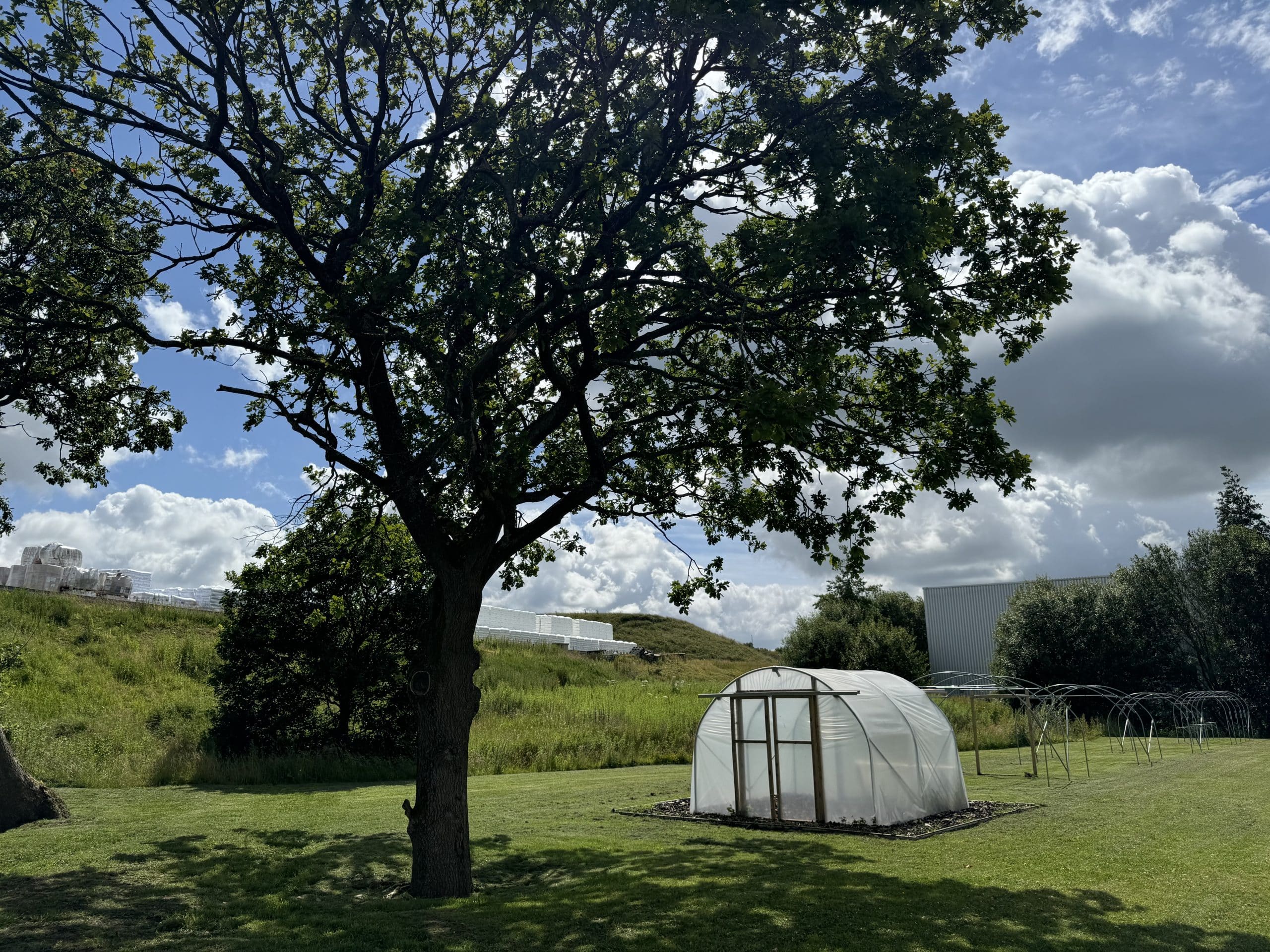
Shelter can also be required on exposed, windy sites. Fast growing trees can allow you to establish a wind break more quickly. A wind break or shelter belt can be essential if you wish to erect a polytunnel, or establish a productive growing area for food where high winds can be a problem.
Soil Stabilisation
You may also wish to quickly establish tree cover on a site to stabilise the soil. This could be a priority, in particular, on steeply sloping or very waterlogged sites. Trees can help to prevent run-off, and reduce water logging or flooding problems.
Privacy
Especially in an urban setting, privacy can be an important consideration. If your garden is overlooked by neighbours, quickly erecting privacy screens of fast growing trees could be a priority to improve the amenity of the space.
Speedy Food Production
Some fast growing trees are also essential components of an edible garden. Some fruit trees will grow, and produce a yield, more quickly than others, and allow you to produce food to feed yourself and your family much faster.
Firewood or Timber
Food is not the only valuable yield that trees can provide. You may also want to grow quick growing trees to produce fuel, or timber for projects around your home.
Where and How To Grow Fast Growing Trees: Getting Started
Choosing Your Fast Growing Trees
Once you have established your reasons for wanting to grow fast-growing trees, one of the next steps is to begin choosing the right trees for your needs. Of course, the trees that will be best for you will depend on what exactly you wish them to provide. However, when choosing any trees for your garden, there are also plenty of more general things to consider, including:
- The location in which the trees are to be planted and the general properties that you need them to have.
- The amount of sunlight available in the chosen location.
- Soil conditions/ moisture levels in the chosen planting location.
- Whether you want deciduous or evergreen trees, or a mixture of both.
- How tall you would like your chosen trees to grow.
Creating a Tree Nursery Area
If you wish to grow a number of trees, you could consider creating a nursery area, where you can get your trees started before planting them out to their final growing position when they are a little more established and less likely to be killed off by weather conditions or pests. A vegetable cage can be used to offer your nursery trees extra protection, and make it easier to grow them to maturity.
Growing Fast Growing Trees From Seed
Another decision to make when creating your tree growing area is whether you will grow your trees from seed, or choose saplings. Of course, it will be much quicker to grow trees from saplings. However, if you require a large number of trees, or time is not an issue, it can be cheaper to grow many varieties from seed. Tree seeds sometimes require a period of cold in order to germinate, though exactly how to grow from seed will depend on which type of tree or trees you have chosen to grow.
Planting Bare Root Saplings or Pot-Grown Saplings
Most UK gardeners or farmers will choose to grow trees from saplings. Saplings can be bought as bare root saplings, or pot-grown examples. The former is usually cheaper. Bare root saplings can be found online or at certain plant nurseries. These will have to be planted as soon as possible so the roots do not dry out. With both bare root and pot-grown saplings, it is a good idea to create a nursery bed where young trees can become established, though you can also simply plant these directly into their final growing positions.
When planting saplings, make sure that the area where they are to be planted has been weeded thoroughly, and amended where necessary with plenty of organic matter. Dig a hole large enough to comfortably accommodate the roots, then place the sapling into the hole, making sure that the tree is upright and soil is firmed well around the base. Plant saplings to the same level that they were planted at previously. Mulch well around their trunks. Also take care not to mound mulch around the base, as this can cause rotting.
Saplings may also require some additional support, in the form of a stake, which should be tied firmly, though not too tightly, to the main trunk. In addition to providing a cage or netting, you could also consider protecting tender saplings with collars. This can be a good idea where pests such as deer or rabbits could pose a problem.
Make sure that you keep saplings well watered throughout their early stages of growth. Monitor them carefully to keep a watch for pests and diseases. Once established, fast growing trees will usually require little care, but until they are established, it is important to keep an eye on them and make sure that they remain healthy.
Fast Growing Trees UK Gardeners Should Consider
There are, of course, a huge range of fast growing trees to choose from in the UK. Below you will find some suggestions which could help you narrow down your choices for your particular needs:
Trees For Shade:
A beautiful beech tree could make a beautiful shade tree for your garden. However, there are also a number of other attractive ornamental and fruiting deciduous trees that could do a wonderful job in this respect. Combining functions and choosing a tree, such as an apple tree for example, that provides an edible yield as well as shade could be a good choice for a garden. This can be especially beneficial where space is limited.
Trees for Wind Breaks:
A wind break can help to protect a polytunnel or other growing areas from strong winds. Rows of mature trees or windbreak hedges will ideally have a mixture of evergreen and deciduous trees. Poplars, cypress trees, alders, sea buckthorn, whitebeam and small-leaved lime could all be good options.
Trees for Soil Stabilisation
While many trees can provide excellent soil stability, certain trees are particularly efficacious for sloping sites. Alders and willows are both fast growing trees that are excellent for stabilising river banks, reducing waterlogging on wet sites and for other bioengineering work.
Trees For Privacy:
For privacy, you can plant fast growing evergreen trees. Various cypresses and pines are valuable for this purpose, as are holly, cotoneaster and other shrubby tree species. For best results, privacy hedges can combine such evergreens with fast growing deciduous trees such as rowan, beech, hornbeam or hazel.
Quick Growing Trees With Edible Fruits:
Many traditional fruit trees can also be quick growing. The type of rootstock will determine how quickly a fruit free will grow. For example, it can be a good idea to look at MM106 for Apples, BA29 for Pears and St Julien for Plums. Trees on these rootstocks will grow and establish relatively quickly in comparison to other varieties.
Trees for Firewood or Timber:
Willow is one of the fastest growing trees used in a coppicing system. Willow is commonly harvested for use in basketry or other crafts. Hazel is also a swift growing wood for crafts and timber. Other fast growing trees that are often coppiced for firewood include ash, hawthorn, sycamore and alder.
These examples should inspire you when you are selecting your own fast growing trees. Though there are, of course, plenty of other options, these suggestions should act as a good starting point when it comes to making your own choices for your garden or farm. Let us know which trees you decide to grow, and how you get on when growing them, in the comments below.