

In recent years, kitchen garden ideas and designs have grown in popularity as more people embrace the joys of homegrown produce. Whether you have a sprawling backyard or a compact patio, a well-planned kitchen garden can provide fresh, flavourful ingredients just steps from your kitchen.
What Is The Difference Between A Kitchen Garden And A Vegetable Garden?
Kitchen gardens are usually vegetable gardens – but not all vegetable gardens are kitchen gardens.
A kitchen garden, also known as a potager, is typically designed for practicality and aesthetic appeal. It’s a space close to your kitchen where you grow a diverse mix of edible plants, including herbs, vegetables, and sometimes fruits, in a compact and visually appealing layout.
A vegetable garden, on the other hand, can also be larger and focus primarily on high-yield crops, often in rows or adhering to other utilitarian designs.
Kitchen gardens emphasise convenience, beauty, and growing a variety of crops for immediate use, whereas vegetable gardens aim primarily to produce food in bulk, often for preservation or larger families. Vegetable gardens may also be market gardens, or for broader commercial use.
What Are The Advantages Of Having A Kitchen Garden?
- Freshness and Flavour: Harvesting ingredients just before cooking ensures maximum freshness and taste.
- Convenience: With your kitchen garden close to your home, gathering ingredients for meals is quick and easy.
- Cost Savings: Growing your own produce reduces grocery bills.
- Environmental Benefits: Growing food at home or locally reduces your carbon footprint and can promote biodiversity.
- Health and Wellbeing: Gardening is a rewarding physical activity that can reduce stress and improve mental health.
- Aesthetic Value: A well-planned kitchen garden enhances the beauty of your outdoor space.
How Do You Plan A Kitchen Garden?
Planning a kitchen garden is very important. Without adequate planning, it is easy to run into a range of common pitfalls and problems as you create and use the space. Here are a few tips to help you plans the space properly and come up with a good kitchen garden design:
Understand the Space and Your Needs
Begin by assessing the available space. Identify areas with the best sunlight exposure and consider how much fresh food your household will consume. A small family might only need a few square metres, while larger families may require a more extensive layout.
Let The Climate, Micro-Climate And Weather Inform Your Kitchen Garden Plan
The UK’s temperate climate supports a wide variety of crops, but understanding your local micro-climate is crucial. Areas sheltered from wind and with good sun exposure will help sensitive crops thrive. Rainfall patterns, frost dates, and prevailing winds should also influence your garden’s layout and choice of plants.
Understand the Basics of the Gardening Year Where You Live
In the UK, the growing season typically runs from late March to October. However, hardy crops like kale, chard, and spinach can extend the season into the winter months. Familiarise yourself with crop rotation principles to maintain soil health and prevent pest issues.
If you have a polytunnel as part of your kitchen garden, you can potentially extend the season dramatically, and grow food far more easily all year round.
By understanding what to sow, grow and harvest when, year round, you can significantly increase yield and avoid a number of common problems.
Get the Core Elements for Maintenance in Place from the Beginning
Install a rainwater harvesting system if you do not already have one in place, and think about how you will irrigate/water your garden from the outset.
Ensure that you have a good composting system in place, and consider planting mulch-making plants, so that you can maintain the soil health and fertility in your growing areas over time.
Decide Between Ground Growing, Raised Beds and Containers
Ground growing is deal for larger gardens and traditional crops. However, it requires good soil preparation and typically more regular weeding than other options.
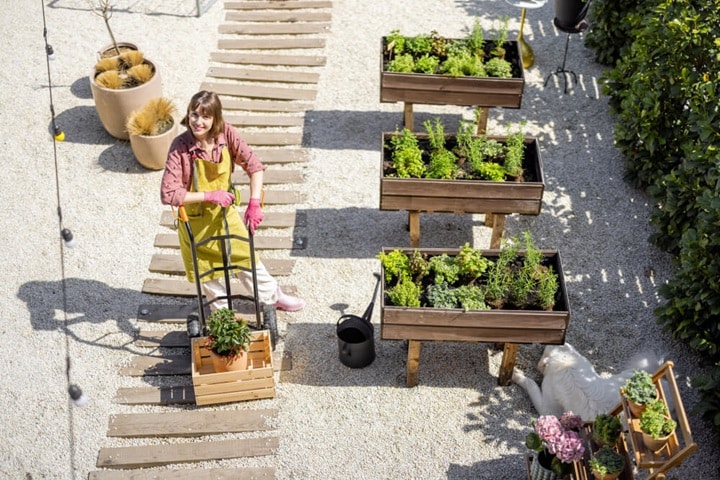
Raised beds are great for improving soil quality and drainage, while also reducing the strain on your back during gardening. However, raised beds can dry out more quickly. Choosing the right raised bed design can be crucial to success.
Containers are perfect for small spaces or patios, offering flexibility to move plants as needed for better sun exposure. However, plants in containers need to be watered far more frequently than those in the ground, and plants can be more susceptible to issues like frost damage.
Make Sure Growing Areas are Practical and Easily Accessible
Plan pathways wide enough for easy access. Place taller crops, like tomatoes and climbing beans, at the back or edges of beds to prevent shading smaller plants. Ensure beds and containers are positioned where they’re easy to reach and maintain.
When Should I Plant My Kitchen Garden?
Planting times depend on the crops you choose and their specific requirements.
In the UK, many seeds can be started indoors in early spring (February-March) before transplanting outside when the risk of frost has passed, usually around late April to early May.
Succession planting allows for a steady harvest throughout the season, and with a polytunnel, there are crops you can sow and plant almost any month of the year.
Growing A Kitchen Garden Design In Raised Beds Or Containers
Layout Tips For Raised Beds
Here are a few tips for raised bed sizing, shaping and layout:
- Keep beds no wider than 1.2 metres to allow easy access from both sides.
- Leave at least 45-60 cm between beds for comfortable navigation between them.
- Design the kitchen garden to maximise edge – the most productive joining part between two ecosystems. Maximise edge by having spiral form or tiered beds, irregular shaped growing areas, or more, smaller, rectangular beds rather than one big one.
- Group plants with similar water and nutrient needs together to simplify their care and create a lower-maintenance kitchen garden.
Selecting and Placing Containers
- Match the container size to the plant’s needs. Consider the root form, growth habits and eventual size (above and below the soil) of the plants you wish to grow.
- Consider the material a container is made from carefully, since different materials have different characteristics when it comes to water and heat retention, weight, durability, sustainability, etc…
- Place containers on sunny patios or near walls to create a warm micro-climate.
Easy Kitchen Garden Crops To Grow
Kitchen garden crops most commonly include a range of familiar vegetables, fruits and herbs. Most kitchen gardeners will begin by growing some annual/biennial crops. Some beginner-friendly options include:
- Leafy Greens: Lettuce, spinach, and kale grow quickly and can be harvested repeatedly.Root Vegetables: Radishes, carrots, and beets thrive in well-drained soil.
- Herbs: Parsley, basil, and chives are low-maintenance and add flavour to meals.
- Climbing Vegetables: Pea and bean varieties maximise vertical space.
Perennial, Low-Maintenance Kitchen Gardens
In your kitchen garden, remember that you do not need to stick to the common annual/ biennial vegetable crops. You can also grow perennial versions of those common crops, like perennial cabbage family crops and perennials in the onion family.
It can also be very rewarding to consider other perennial crops, like strawberries, asparagus and rhubarb, to name a few common examples.
We can also shake up the concept of the kitchen garden entirely, and create a diverse and layered perennial planting scheme – either a polyculture perennial bed or border, or even a full food forest. Food forests or forest gardens are one of the most sustainable growing systems, and produce huge amounts of food, even in relatively small spaces.
Even inside a polytunnel garden, a dwarf fruit tree and guild planting with beneficial perennial plants can be a wonderful idea.
Layout Tips For Perennial Growing Areas
- Perennials should have dedicated growing areas to avoid disturbing their root systems.
- Companion plant and create polycultures of perennial plants to create functioning ecosystems.
- Layer plants to maximise yields and photosynthesis.
- Apply organic mulch to retain moisture and suppress weeds.
Pest Control For Your Kitchen Garden
Integrated Pest Management (IPM) techniques can help protect your crops: Integrated Pest Management (IPM) is an environmentally friendly approach to protecting crops that minimises the use of chemical pesticides.
This strategy combines multiple techniques to prevent and manage pest issues effectively, ensuring a healthy and productive kitchen garden.
One of the most straightforward methods is using physical barriers. Items such as cloches, netting, or horticultural fleece can shield plants from common pests like cabbage white butterflies, which often target brassicas.
These barriers are especially useful during vulnerable growth stages, providing a simple yet effective way to keep pests from laying eggs or feeding on plants.
Another essential component of IPM is fostering a garden ecosystem that supports natural predators.
Beneficial insects, such as ladybirds, hoverflies, and lacewings, play a crucial role in controlling populations of aphids and other harmful pests. You can attract these helpful insects by planting a variety of flowering plants that provide nectar and pollen, or by creating habitats such as insect hotels.
This method not only reduces pest numbers but also promotes biodiversity in your garden.
Finally, companion planting is a powerful tool for deterring pests and improving plant health.
Certain plants release natural chemicals that repel specific pests or mask the scent of neighbouring crops, making it harder for pests to locate their targets.
For instance, garlic is known to deter aphids, while nasturtiums can attract aphids away from more valuable crops, acting as a sacrificial plant. Similarly, calendula emits a scent that repels whiteflies and other pests.
Combining these IPM techniques creates a robust defence against pests while reducing the need for chemical interventions, ensuring your kitchen garden thrives in a sustainable way.
FAQs
What are some environmentally friendly practices I can implement in my kitchen garden?
Compost kitchen waste to create nutrient-rich fertiliser.
Use organic seeds and avoid chemical pesticides.
Harvest rainwater and use mulch to conserve water.
Incorporate native flowers to support pollinators.
What are some essential features to include in a kitchen garden design?
A well-planned irrigation system for easy watering.
Clear, accessible pathways for maintenance.
Vertical supports like trellises to maximise space.
A composting area for sustainable waste management.
A seating area to enjoy the beauty of your garden.
Sources
Creative Vegetable Gardener. (2020) How to Compare Vegetables to Decide What’s Worth It to Grow. [online] Available at: https://www.creativevegetablegardener.com/how-long-do-vegetables-take-to-grow/ [accessed 05/01/2025]