

The process of photosynthesis is one of the most important on our planet. It is essential not only for plant life but by extension, for all life on earth. So why do so many gardeners know so little about it?
You don’t have to be an environmental scientist or an expert botanist to learn a little more about this process, and how we ourselves can play a role in maximising the amount of it that is taking place in our gardens.
Quick Facts about Photosynthesis
Photosynthesis, in short, is the biological process by which green plants, algae, and some bacteria convert light energy into chemical energy in the form of glucose (plant sugars).
This process occurs in the chloroplasts of plant cells, where chlorophyll, the green pigment, captures sunlight. During photosynthesis, carbon dioxide from the air and water from the soil are combined in the presence of light to produce glucose and oxygen.
Glucose serves as the primary energy source for the plant, fuelling its growth and metabolism, while oxygen is released into the atmosphere as a byproduct, supporting life for many organisms, humans included.
As gardeners and farmers, we should think about the role that we play in shaping our environment, and how this affects the quantity and quality of the photosynthesis taking place.
Many of the decisions that we make impact how many plants are in our spaces, and the efficiency with which they can photosynthesise and grow. By understanding just a little more about this process, we can learn how to, to put it simply, help plants so they can help us.
The Five Keys to Photosynthesis
To begin to understand the process a little better, we first need to understand what is needed for photosynthesis to take place. The five keys to photosynthesis are:
- Sunlight
- Carbon dioxide (CO2)
- Water
- Nutrients
- Soil Organisms
Sunlight

Sunlight, of course, plays a crucial role in photosynthesis as the primary source of energy for the process. Chlorophyll, the green pigment found in chloroplasts of plant cells, absorbs sunlight during the light-dependent reactions of photosynthesis.
This absorbed light energy is used to power the conversion of carbon dioxide and water into glucose and oxygen. Sunlight provides the energy needed to split water molecules, releasing oxygen as a byproduct.
Without sunlight, photosynthesis cannot occur, as it provides the driving force for the synthesis of glucose, the primary source of energy for plants and ultimately for many ecosystems.
Of course, different plants differ in their light requirements, but when plants are exposed to either too much or too little sunlight, their photosynthetic activity may decrease or stop completely.
Plants that get too little light can grow leggy, be slower to grow and mature, or even fail to do so. Many will not tend to flower or fruit as effectively and yields from crops will be reduced.
Plants have mechanisms to shield themselves from excessive sunlight, but these defences have their limits. When plants are exposed to too much sunlight, they can suffer physical damage such as sunburn on their tissues, including fruits.
Additionally, dehydration and oxidative stress may occur. While oxidative stress is a natural process, plants produce antioxidant compounds to counteract it. However, if oxidative stress becomes too severe, it can hinder photosynthesis and disrupt plant functions.
Carbon Dioxide (CO2)

Carbon dioxide plays a vital role in photosynthesis as one of the essential reactants. During the light-independent reactions of photosynthesis, carbon dioxide molecules from the atmosphere are combined with water and ATP (adenosine triphosphate generated during the light-dependent reactions) to produce glucose.
This process, known as carbon fixation, occurs in the chloroplasts of plant cells. Carbon dioxide serves as the primary source of carbon atoms for building organic molecules, including sugars and carbohydrates, which are essential for plant growth and development.
RuBisCo (ribulose-1,5-bisphosphate carboxylase-oxygenase) initiates the process of carbon dioxide fixation from the atmosphere, marking the first step in photosynthesis. However, RuBisCo is not particularly efficient in performing this task.
This inefficiency stems from its evolution during a period when the atmosphere contained high levels of carbon dioxide and minimal oxygen. As oxygen levels increased due to photosynthesis, RuBisCo failed to adapt to the changing atmospheric conditions, unlike other mechanisms within plants.
To compensate for its inefficiency, plants produce a large quantity of RuBisCo in their leaves. The most effective way to enhance RuBisCo’s carbon fixation rate is by elevating the carbon dioxide concentration surrounding the plant.
Without an adequate supply of carbon dioxide, photosynthesis cannot proceed efficiently, limiting plant productivity.
As you are no doubt aware, we humans have dramatically increased the amount of carbon dioxide in the atmosphere, causing climate change and impacting many natural systems.
Overall, while elevated CO2 levels can stimulate plant growth and productivity in many cases, the specific effects can vary depending on factors such as plant species, environmental conditions, and nutrient availability.
Additionally, the long-term implications of rising CO2 levels on plant ecosystems and agricultural productivity remain areas of active research and debate.
Water

Water plays a crucial role in photosynthesis as both a reactant and a source of electrons. Water, in the right quantity, is essential for powering the light-dependent reactions of photosynthesis and facilitating the production of ATP and oxygen.
A critical phase of photosynthesis involves the splitting of water molecules, releasing the oxygen vital for respiration. Water also serves as a conduit for nutrients and a vital component of plant cooling mechanisms.
Imbalances in water supply, whether too much or too little, profoundly affect a plant’s ability to conduct photosynthesis.
During water scarcity, like in drought or due to insufficient irrigation, guard cells encasing stomata fail to open, impeding carbon dioxide intake and water loss.
Stomata, responsible for this gas exchange, facilitate a negative pressure gradient, aiding water uptake from roots. Conversely, water deficiency prompts stomatal closure, halting photosynthesis and risking overheating.
Excessive water, from flooding or poor drainage, similarly prompts stomatal closure and other photosynthesis-inhibiting consequences, such as soil oxygen deficiency. Ensuring soil aeration and adequate drainage becomes pivotal to prevent waterlogged soils.
Soil Organisms

Microbes in the soil rhizosphere or root zone play a crucial role in supporting photosynthetic activity throughout a plant’s lifecycle. They contribute to the plant’s overall health, productivity, pollination, and often act as a protective shield.
Soil microbes support photosynthesis by enhancing soil quality, aiding nutrient uptake, and fostering plant health. They decompose organic matter, releasing nutrients like nitrogen and phosphorus essential for plant growth.
Additionally, certain microbes form symbiotic relationships with plants, such as mycorrhizal fungi, which extend the plant’s root system, improving water and nutrient absorption.
By enhancing soil structure and nutrient availability, soil microbes indirectly support photosynthetic activity, ensuring healthy and productive plant growth.
A healthy soil full of life is a crucial ingredient for the healthy cycles in our gardens to continue as they should.
Nutrients
Scientists have identified 17 essential macro- and micronutrients crucial for plant survival. These nutrients play vital roles in photosynthesis and overall plant growth. For instance, magnesium is a component of the chlorophyll molecule, essential for photosynthesis.
A deficiency in magnesium can hinder chlorophyll production, impacting photosynthetic efficiency. Potassium aids in the diffusion of carbon dioxide into chloroplasts, facilitating photosynthesis. Nitrogen, essential for DNA and RNA, plays multiple roles in photosynthesis.
Micronutrients like manganese also contribute; manganese assists in solar-powered reactions that lead to the splitting of water molecules during photosynthesis.
It is important to remember that factors in the environment like temperature and humidity, and characteristics of the soil like pH, can impact nutrient availability and the plant’s ability to uptake the nutrients it needs.
How Plants Make Their Own Food
The above should allow you to understand a little more about the process of photosynthesis through which plants make their own food (and provide services for us in the process).
Under optimal conditions, leaves generate an excess of sugars through photosynthesis beyond immediate requirements. This surplus is transformed into starch and stored for future needs. Starch may be stored in granules within stems and roots or in specialized storage organs like bulbs and tubers.
The Importance of Colour of Light
Chloroplasts found in leaves house light-absorbing pigments that capture various wavelengths of light. Among these, blue light is known to promote growth, while red light is crucial for flower production. Both blue and red light are absorbed by the green pigment chlorophyll, which is predominant in chloroplasts.
Maximising Photosynthesis in the Garden
Maximising photosynthesis is about both increasing the number and diversity of plants in your garden, and creating the ideal environmental conditions so that the plants you grow can each photosynthesise as efficiently and effectively as possible.
To maximise the about of photosynthesis overall going on in your garden you can:
- Create diverse and layered planting schemes.
- Keep living roots in the soil in all growing areas for as much of the time as possible.
- Maximise edges and use marginal spaces.
- Reduce areas of paving etc. to increase space for living plants.
- Use vertical growing methods and other ideas to increase plant count in a given area.
- Let more light into specific areas with well placed mirrors or other features which reflect light.
To ensure plants can photosynthesise as efficiently and effectively as possible you can:
- Choose plants suited to your area and specific location.
- Ensure that plants get optimal light levels – not too much sunlight and not too little. (Create a sun map and undertake jobs like judiciously pruning to let light through, or providing shade where necessary.)
- Make sure we manage water wisely,within the plants and soil in our gardens and through irrigation systems, ensuring that plants get sufficient water but not too much.
- Protect and promote a healthy soil ecosystem, ensuring a healthy population of micro-organisms and other soil life.
- Generally provide optimal care for plants (feeding, mulching, weeding, cutting back where necessary, etc…) to make sure they remain as healthy and effective as possible.
Photosynthesis and Ventilation in Polytunnels
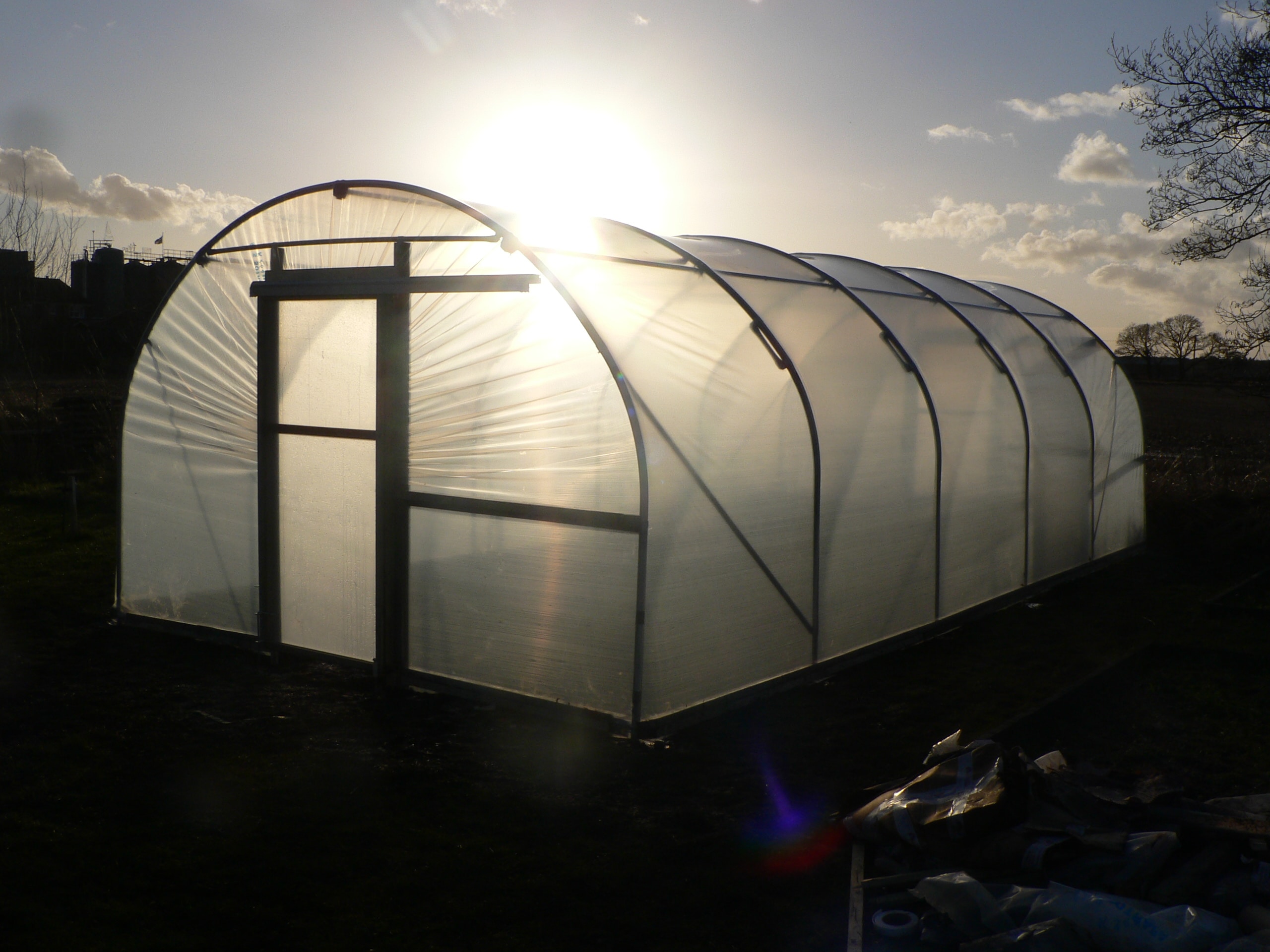
Proper ventilation is crucial, especially in warmer months, as it can prevent various plant issues like wilting, leaf curling, and mould growth.
To ensure sufficient ventilation, prioritize opening commercial polytunnel doors and side vents early in the morning and leaving them open throughout the day in summer.
This promotes optimal air circulation within the tunnel and among the plants, which is essential for maintaining ideal conditions for photosynthesis, helping to create optimal water availability and maintaining soil and plant health. Adequate ventilation helps regulate temperature and ensures a steady supply of CO2.
FAQs
How do you maximize plant photosynthesis?
To maximise the amount of photosynthesis taking place overall on your property, create diverse and layered planting plans, and take steps to make the most of all the space available to you for growing plants. To make sure plants can photosynthesise as well as possible, place them in the right locations, with the right environmental conditions, and keep them as healthy and happy as possible.
How can you maximize the rate of photosynthesis?
To maximise the rate of photosynthesis in individual plants, look to sunlight, CO2, water, nutrients and soil organisms, ensuring optimal conditions for optimal plant health.
What is the best way to achieve maximum photosynthesis?
Achieving maximum photosynthesis involves optimizing several key factors relating to the environmental conditions, plant health and garden practices.
How do farmers make the most of photosynthesis?
To make the most of photosynthesis, farmers choose crop varieties that are well-suited to local growing conditions and have high photosynthetic efficiency. They pay attention to planting density, soil management, irrigation, fertilization, and the timing of harvests. Weeds, pests and diseases will all be carefully controlled.
In controlled environments such as greenhouses or polytunnels, farmers also regulate temperature, humidity, and CO2 levels to optimize photosynthetic activity and crop growth.
Sources
Cho, R., (2022) How Climate Change Will Affect Plants. State of the Planet. [online] Available at: https://news.climate.columbia.edu/2022/01/27/how-climate-change-will-affect-plants/