Did you know that those eggshells you throw away can actually nurture your garden? Discover the surprising benefits that eggshells offer to plants and soil alike.
Whilst eggs are an amazing superfood, you can either use their leftovers for additional needs in the garden. Eggshells are more than just kitchen waste; they are a rich source of calcium and other essential nutrients beneficial for your garden. In this article, we will explore how eggshells for plants can be transformed into effective fertilisers, pest deterrents, and innovative plant pots.
Key points:
- Recyclable Gardening: Are you looking for more sustainable gardening methods? Learn how eggshells can be recycled for multiple gardening needs.
- Eggshell Fertiliser: Learn how to make and use eggshell fertiliser to enrich your soil.
- Pest Control: Discover the pest deterrent properties of eggshells and how to apply them.
- Seed Starting Pots: Use eggshells as biodegradable pots for starting seeds.
- Composting with Eggshells: Integrate eggshells into your composting routine to boost nutrient content.
- Environmental Benefits: Understand the ecological advantages of recycling eggshells in gardening.
What is Egg Shell Fertiliser?
Rich in calcium carbonate (around 96%) – essentially lime – egg shells can revitalise your soil, improving its quality and fertility. With growing concerns towards climate change and environmental awareness, the idea of using egg shells as a sustainable alternative to mined limestone in fertilisers has gained popularity with gardeners. Home gardeners can contribute to this green initiative by transforming their kitchen waste into valuable garden amendments.
Creating Your Own Egg Shell Fertiliser
Making egg shell fertiliser is straightforward and environmentally friendly.
The process involves cleaning the egg shells, baking them to eliminate organic residues, and then grinding them into a fine powder. This homemade fertiliser can be a small yet impactful way to enrich your garden soil with calcium and reduce kitchen waste.
You may have heard of a poached egg plant – but why does it have that name? Find out now in our growing guide.
Are Eggshells for Plants Good?
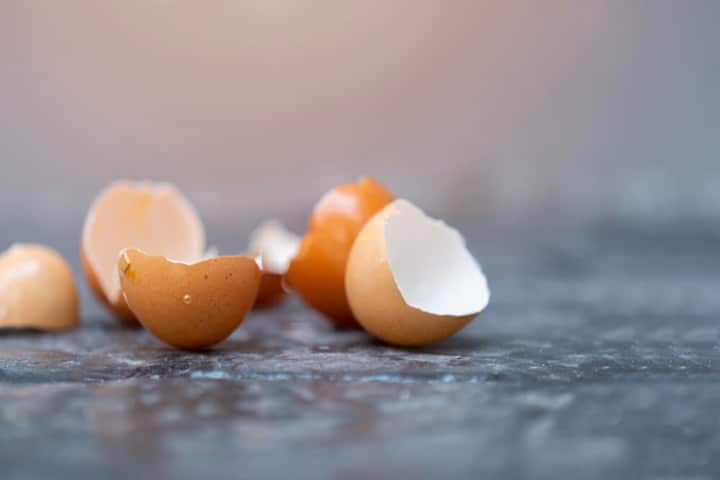
Indeed, egg shells are excellent for plants. They provide a slow-release form of calcium, crucial for the cellular structure of plants and commonly associated with robust growth and health. Egg shells also contain trace amounts of other minerals like magnesium and potassium, making them a well-rounded supplement.
Plant Health with Egg Shells
Incorporating egg shells into your garden isn’t just about improving soil—it’s about targeting specific plant needs.
Calcium-rich egg shells are particularly beneficial for preventing blossom end rot in tomatoes and bitter pit in apples, conditions often linked to calcium deficiency. Regularly adding crushed egg shells to the soil around these plants can help ensure they absorb adequate calcium for healthy development.
Composting with Egg Shells
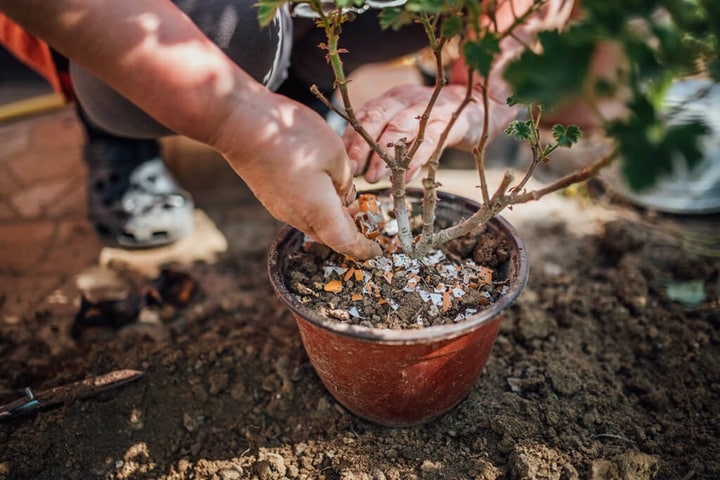
Are eggshells good for the garden overall?
One of the simplest ways to use egg shells is by adding them to your compost bin. This not only aids in nutrient recycling but also improves the mineral content of the compost. For effective composting, rinse and crush the egg shells before adding them to your pile, ensuring they break down more quickly.
Are rats causing a problem with your compost? Find out what to do with rats in compost bins.
Eggshells as Pest Deterrents
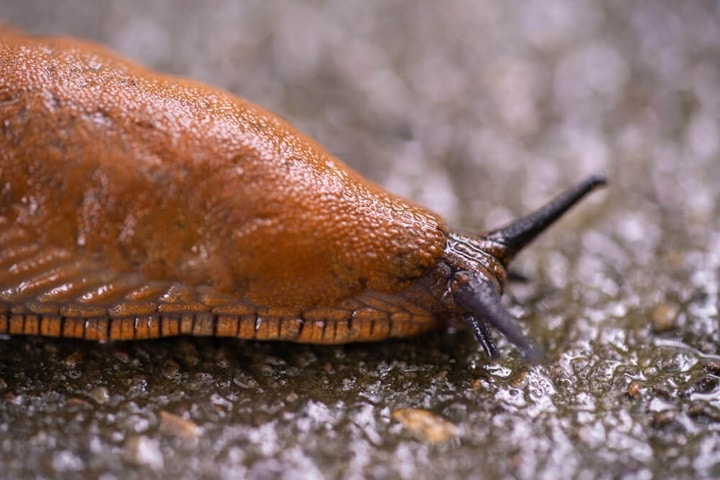
While using eggshells as pest deterrents for slugs and snails is heavily debated, they can still play a role in your organic pest control strategy. The sharp edges of crushed egg shells can act as a physical barrier, deterring soft-bodied pests from reaching your plants.
Instead, find out what eats slugs if you are not afraid to let nature take its course with gardening.
Eggshells for Birds
Ground eggshells are invaluable for birds, primarily as a calcium source. This mineral is essential, especially for female birds during the breeding season, as it provides the most nutrients for an eggshell’s composition. Insufficient calcium can result in weak eggshells, increasing the risk of breakage and potentially causing health issues for the birds. Consuming ground eggshells allows birds to boost their calcium levels effectively.
Birds lack teeth and instead rely on a specialised stomach part called the gizzard to grind their food. They typically consume small stones or sand to aid in digestion. Ground eggshells can also fulfil this role, acting as grit to help birds process their food more efficiently.
How to Safely Offer Eggshells to Birds
To ensure safety and prevent the risk of bacterial transmission, it’s crucial to sterilise eggshells before offering them to birds.
This sterilisation can be achieved by baking the shells at a low temperature for about 20 minutes. Once cooled, the eggshells should be finely crushed. These prepared eggshells can then be either placed in a feeder or sprinkled around your bird feeding area to provide an easy calcium boost for your feathered visitors.
Can You Use Egg Shells on All Plants?
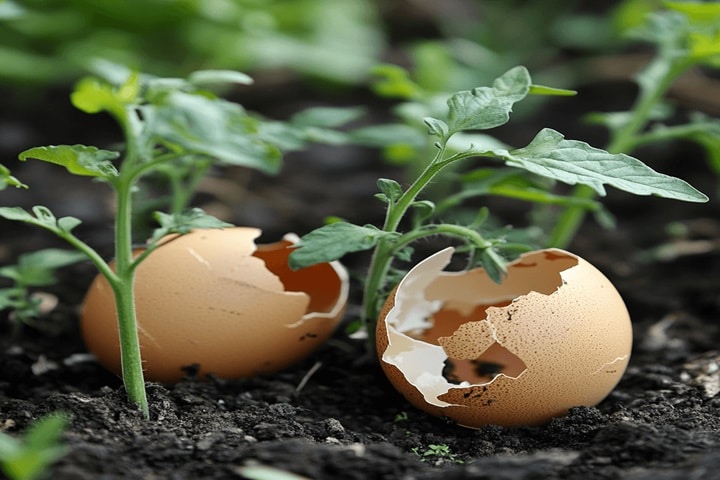
While egg shells are useful for many plants, they are not suitable for all.
Acid-loving plants like blueberries and rhododendrons may not thrive with the addition of alkaline egg shells to their soil. It’s important to consider the specific needs of your plants and possibly conduct a soil pH test before widespread application.
Clay soil is another effective tool to use here if you want to boost the growth of your acid-loving plants, as we answer the question – is clay soil acidic?
Eggshells for Germination: Starting Seeds the Sustainable Way
Egg shells offer an eco-friendly solution for starting seeds. These natural ‘pots’ provide calcium directly to the roots of growing seedlings. Once the seedlings are sturdy enough, the whole eggshell can be planted into the garden soil, where it will decompose and continue to supply nutrients. This method is particularly effective for small plants like herbs and flowers.
Step-by-Step Guide to Using Eggshells for Seedlings
- Preparation: Start by saving your eggshells from kitchen use. Clean and halve them carefully to use as seed pots.
- Drainage: Pierce a small hole in the bottom of each shell for water drainage using a needle.
- Filling: Spoon seed compost into each shell, which facilitates the unrestricted growth of the roots.
- Sowing: Place seeds into the compost and gently press them down. Herbs like basil, parsley, and chives are ideal for this setup.
- Care: Keep the eggshell planters on a windowsill and mist them regularly with water. Once the seedlings grow a few inches tall, they are ready to be transplanted outdoors into larger pots or directly into the garden.
Creating a Water-Soluble Calcium Solution
Another innovative use of egg shells is in making a calcium-rich solution for watering plants. By crushing the shells into a fine powder and dissolving them in water, you create a readily absorbable form of calcium that can significantly benefit plant health.
Making Eggshell Tea
If you’re looking for a simple way to provide your plants with a boost of nutrients, consider making eggshell tea. This easily absorbed solution is perfect for houseplants and can be made without the need for grinding the eggshells into powder.
- Preparation: Start by thoroughly rinsing and drying your eggshells to remove any organic matter.
- Boil Water: Heat water in a kettle until it reaches a boil.
- Add Eggshells: While the water is heating, crumble the dried eggshells by hand and add them to the boiling water once ready.
- Steep the Mixture: Remove the pot from the heat and let the eggshells steep in the water, much like brewing a pot of tea.
- Strain and Use: Once cooled to room temperature, strain the mixture to remove the eggshell pieces. The remaining nutrient-rich tea is ideal for watering your plants, providing them with a healthy dose of calcium.
Use Egg Shells for Plants Today
In conclusion, egg shells for plants are a highly effective method for you to use in your garden for a variety of solutions, from fertiliser, to deter pests, and more, thereby answering the question – are egg shells good for plants? So, next time you have used some eggs for a particular recipe in the kitchen, hold onto those shells, because they could provide more wonders for your garden than you expect.
Do you keep chickens in the garden? Why not use our polythene tunnels to keep them warm in the winter alongside their eggs.
FAQs
Can you put eggshells on top of soil?
Yes, you can put eggshells on top of soil. They gradually break down and provide calcium, which is beneficial for plant growth.
Can you put too many eggshells in your garden?
Yes, adding too many eggshells can lead to an excess of calcium, which might inhibit the absorption of other essential nutrients by plants.
Are eggshells good for potted plants?
Yes, eggshells are good for potted plants. They help in providing calcium, but should be used in moderation to avoid nutrient imbalance.
Sources
Rhoades, J., (2021) Acidic Soil Flowers And Plants – What Plants Grow In Acidic Soils. Gardening Know How. [online] Available at: https://www.gardeningknowhow.com/garden-how-to/soil-fertilizers/acid-loving-plants.htm [accessed 15/08/24]
BBC Good Food. (2020) Egg Recipes. [online] Available at: https://www.bbcgoodfood.com/recipes/collection/egg-recipes [accessed 15/08/24]