


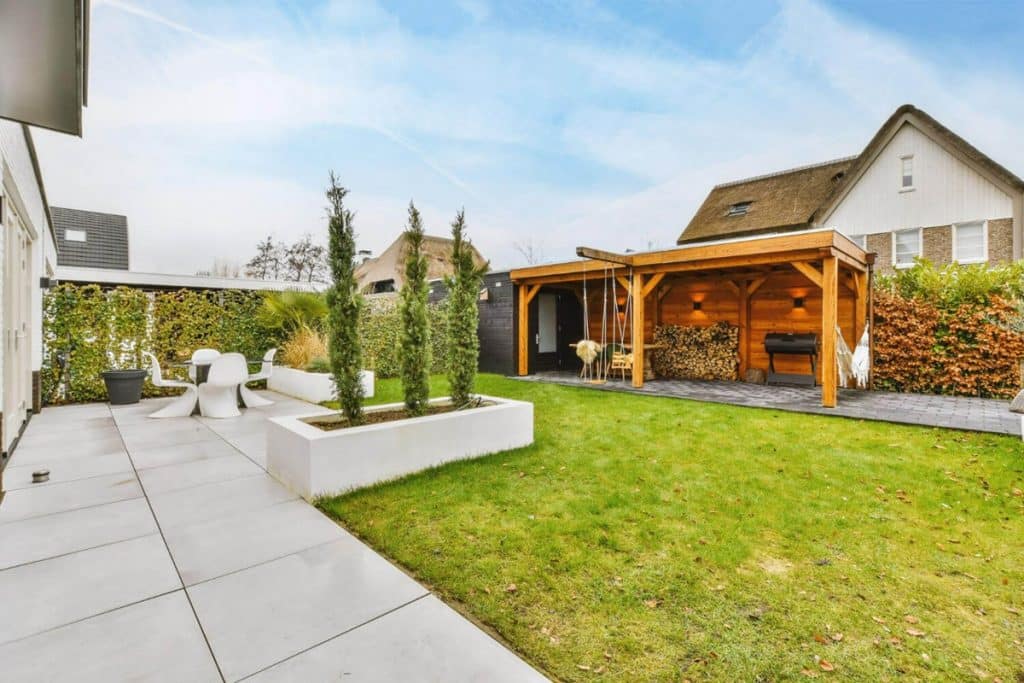
In some ways, creating a new build garden is much the same as creating a garden for any other home. But when you have a new build you are usually starting completely from scratch, and that brings both opportunities and challenges. In this article, you will find out about my preferred new build garden ideas and designs, and how you can better optimise your new build garden to look more mature.
Table of Contents
1. How to Design a Garden for a New Build House
New build garden design involves taking advantages of the opportunities that a new build property brings to do precisely what you want when it comes to the garden, while overcoming some of the challenges that are often found on a new build site. Below, I share my insights as a garden designer to help you to do just that.
2. Getting Started With New Build Garden Design
I have written many times before about the importance of designing for a specific time and place – making choices specific to you, your household, and the specific garden site.
Getting started with a new build garden design you should follow the same approach as you would use for other gardens – as a permaculture designer, I recommend reading further about a permaculture approach for more general tips.
However, this article is about honing in on the specifics of new build properties and the garden space they usually provide. And it is about thinking specifically about the best strategies and important things to think about for a garden of this type.
3. My Tips for a New Build Garden
- Decide what type of garden you want and determine your overall goals.
- Be realistic about the strengths and weaknesses, opportunities and challenges of the space.
- Understand what can and cannot be achieved overnight.
- Make sure you get the basics in place before you begin planting.
- Build your garden from the ground up, beginning with the soil.
- Create plans to work from, thinking holistically.
- Think long term, imagining what the garden will look like a year,and 20 years, from now.
Types of Garden for a New Build Property
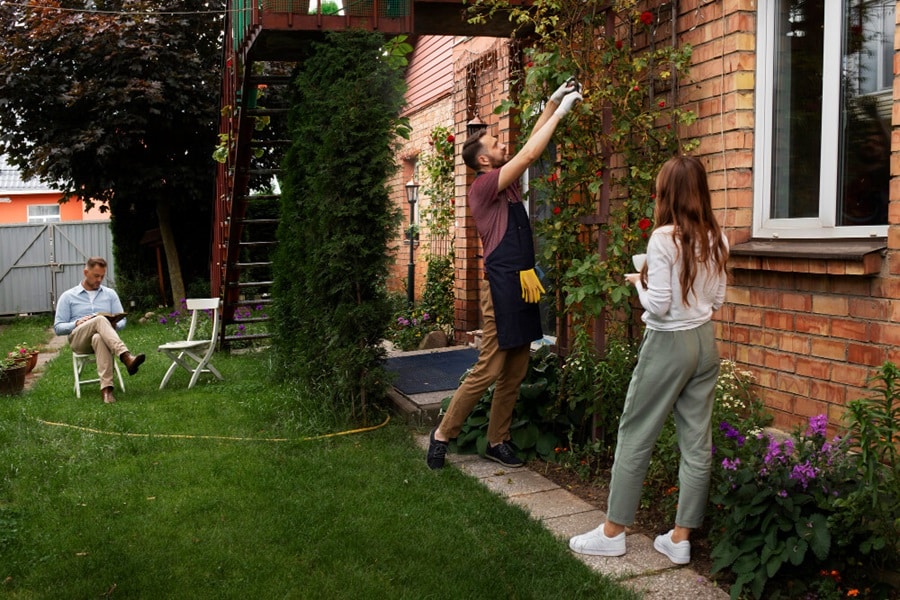
Before you even set down any ideas for your new garden, it is a good idea to do some brainstorming and to bring your ideas some form and clarity by deciding what exactly it is that you are aiming to achieve.
4. What is your function for a new build home garden?
When you are starting with a more or less blank slate as you are with a new build property you have the opportunity to build the type of garden you have been dreaming of – one that can really meet the needs of you and your family.
For example, you might wish to grow your own and a productive garden might be high on your list of goals. You might be focused on what you can do for the wildlife in your area through the choices you make in your garden. You might also wish to create a garden that is an extension of your home – somewhere you can relax, entertain, play etc…
Deciding your goals and what type of garden you want to create can help to clarify your thoughts and make sure that you set out in the right direction.
5. The Benefits and Disadvantages of a New Build Garden
It is important for any garden but especially for a new build garden where you are usually going to be starting from square one to make sure that you have a clear picture of the strengths, weaknesses, opportunities and challenges of the space.
This is important so that you can take advantage of the positives and overcome any disadvantages as you design your garden.
The core benefit of a new build garden space is that it is largely a blank canvas – often entirely laid to lawn or even just bare soil. This means that you do not need to work from someone else’s starting point and so can build your own ideal garden from the ground up.
Unfortunately, new build gardens can often be smaller than you may like. But a small garden presents plenty of opportunity as well as challenges. With a small garden, you may be able to do more as you will have more time and likely more money to spend per square metre.
New build gardens are sadly also often spaces that have been damaged by construction. They may be badly compacted by machinery. They may have only a thin layer of soil over construction rubble, or very little healthy topsoil at all. Issues with the soil of course bring many of the main challenges with a new build garden.
6. Understanding Timescales for a From-Scratch Garden
If you have a new build home, you may crave a mature garden and want to get to that point as quickly as possible. But mature gardens take time to establish and settle in well, and so it is important to be realistic about what can sustainably be achieved over a certain time frame.
In permaculture, we often talk about the value of patience, and use small and slow solutions rather than rushing on and trying to achieve everything all at once. It is best to build slowly onto firm foundations when creating a garden so that you do not run into problems down the line.
To give one example, buying in mature trees and shrubs can be one way to move more quickly towards a mature and lush garden.
But the larger they are, the more challenging it can be for trees and shrubs to establish themselves successfully, and they can be vulnerable to a range of problems that can arise. Buying in large plants can be expensive too.
So rather than purchasing large trees and shrubs, you might consider adding smaller ones that will take longer to fill the space, but which are more likely to become better established over time.
7. Basic Garden Features and Necessities
One crucial thing to remember is that new build garden design is not all about the plants. In fact, there are many other things to think about before you even begin to think about layout and planting. Before you begin creating growing areas in your new build garden, you should make sure that you have the basic garden features in place.
For me, those basic garden features definitely include two key things that will ensure the longterm success of the garden. Namely, a rainwater harvesting system, and a composting system.
Beyond these basic sustainable ingredients for a healthy organic garden, of course, there are many other garden features and elements that most gardens will need.
8. Create a garden path
Think about pathways and access.
9. Garden Privacy – look to your boundaries
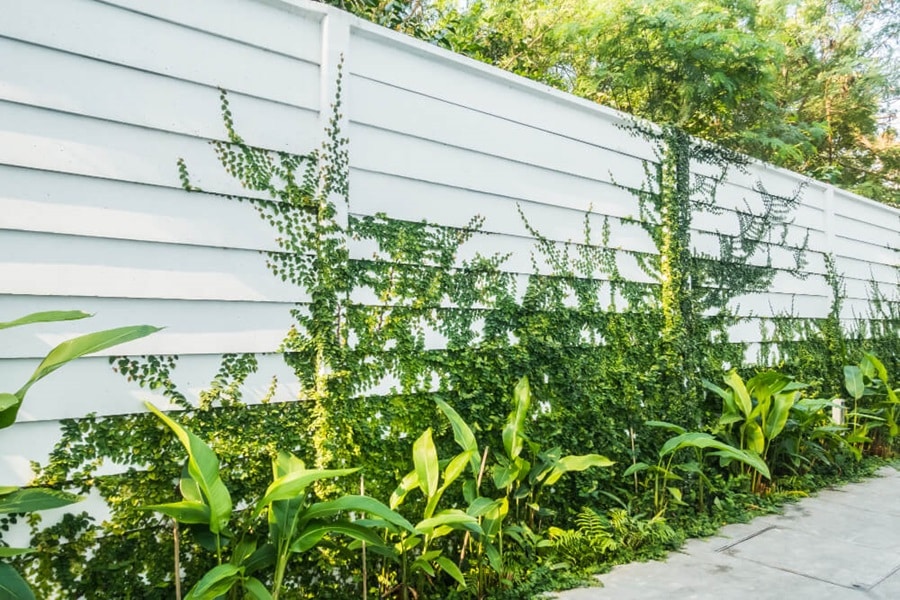
Look at the garden boundaries and see what you might need to add or change when it comes to fences or other partitions. Unfortunately, since new houses are often placed very close to one another, it is common to feel overlooked and that a new build garden is lacking in privacy.
Planting will often solve any problems with feeling overlooked, so don’t be tempted to choose only man-made constructions for the edges of your new build garden.
10. Dark fence paint colours
If existing fencing or walls feel oppressive, planting will of course help to obscure them. Painting them dark colours can also help push them back, as can adding mirrors to reflect greenery back at you and make the space feel bigger.
11. Build a patio and hard landscaping
Consider surfacing and materials for any patio, decking or other ground treatments you might add. Of course, the plants are the most important parts of a good garden design, but a patio or other paved or decked areas can ensure that your garden is also an extension to your home and a liveable space.
12. Garden buildings
Consider what garden buildings and structures you might require or desire, from greenhouses and polytunnels to summerhouses, home offices or sheds.
Think about how different areas of the space might be used to fulfil different goals and meet different needs.
13. Improving the Soil in a New Build Garden
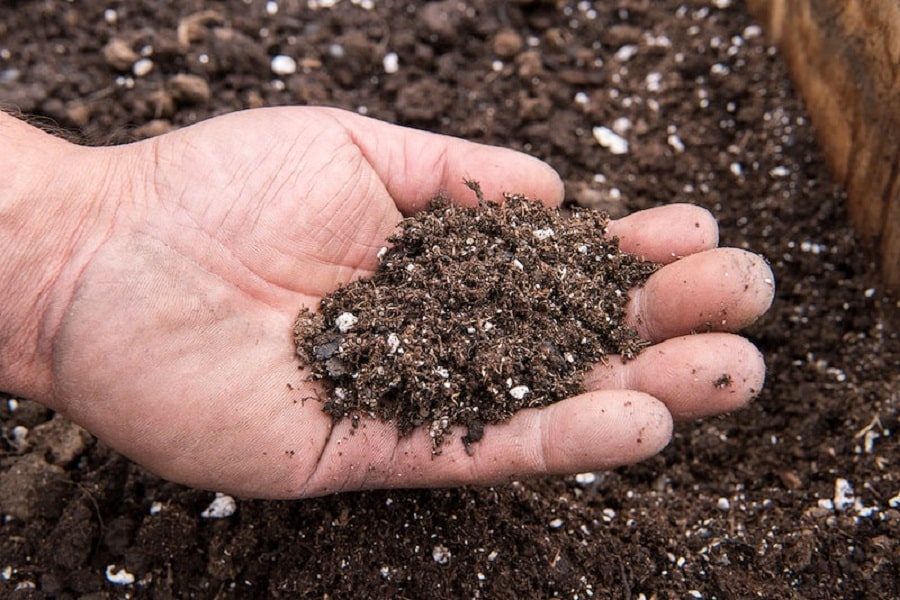
As mentioned above, the soil in a new build garden can often leave a lot to be desired. So one of the primary things to think about as you set about creating your new garden is how you can improve the soil and create healthy new growing areas where the plants that you wish to grow can thrive.
We also have a helpful guide on how to improve poor soil for you to check out now.
14. Work with clay soil and tackle compaction
Sadly, many developers scrape off topsoil in a construction zone and sell this, leaving home owners with the clay subsoil below, which has poor drainage and lacks the topsoil’s structure and ecosystem. Compaction is often an issue.
It will often take time to rebuild the topsoil on the site, and ensure long-term fertility.
The primary ways to improve the soil in a new build garden involve adding plenty of organic matter, rebuilding topsoil, and planting for soil health and fertility. With the right organic gardening approaches and planting plans, you can begin building soil and soil health more quickly than you might think.
15. Start a veg garden or other edible garden area
Of course, you will need to think about which types of growing area you will have in your garden and where these will be positioned in order to start improving the soil in these key areas. You might start a traditional veg garden, or a perennial edible planting scheme such as a forest garden.
16. Work with raised beds
Due to the fact that the soil can often leave a lot to be desired in a new build garden, growing in raised beds can often be a good idea. Raised beds filled with layers of organic matter allow you to compost in place, and create nutrient rich and healthy new planting areas in a new garden.
17. Plant up borders
Sheet mulching paves the way for in-ground perennial planting, of trees, shrubs and herbaceous plants in beds or generous borders, that will help to build a healthy and biodiverse ecosystem in your new build garden.
18. Layout and Planting
With the basics in place, you can begin to hone in on and hammer out the details when it comes to the layout and planting plans.
19. Create a mini grove
Starting with tree placement and planting can often be a good idea. Consider placing small trees alone, or in small groups to create a restful mini grove.
Silver birches, for example, can be ideal for such a scheme. Multi-stemmed hazel or other similar multi-stemmed specimens can also help create a mini grove feel if you only have space for a single tree/ shrub.
Fruit trees can also be a wonderful choice, as can many other shrubs, ornamental grasses and more to create privacy and a thriving ecosystem in a new build garden.
20. Add fast-growing plants
It can be tempting to add plants that grow as fast as possible to create a quicker effect in a new build garden. But this is not always the best strategy and fast-growing plants may be much harder to maintain over time.
Some may quickly outgrow their allotted space. For example, some hedgerows like those of leylandii or other conifers may quickly become problems, even though, initially, they do solve privacy problems. There are other, better strategies to make your garden feel mature more quickly.
As you plan the layout and make planting plans for your new build garden, don’t neglect the broader patterns at play. Think about how your new build home will interact with the outside space and how you can begin to help the two spaces feel more like one. And be sure to consider every element and every plant you plan to place within its broader context.
21. Long-term Thinking for a New Build Garden
As you choose plants and fill out your garden, another very important thing to consider is that a garden should be an evolving, ever-changing space. Don’t try to create a garden that will remain static over time.
A new, new build garden will look new – and may not yet look quite as full and lush as you desire. But this leaves some space for things to alter, expand, improve and grow, which is essential for sustainable, long-term success. Think long term when you make your choices, so that your garden can change and just continue to get better and better over the years.
FAQs
How can I improve my new build soil?
Take a no dig approach, add organic matter, and use plants to gradually build fertility and a healthy ecosystem over time.
How do I design a new garden layout?
Think carefully about the site and what you want to achieve. I recommend that you follow a permaculture design approach, or consult and employ a professional permaculture garden designer.
Should my new build garden be level?
A level site is the norm, however, the new build garden may also slope slightly away from the home to aid drainage. Just remember when planning your garden that water flows downhill as this impacts some design decisions.
How do you improve clay soil in a new build?
Limit traffic and don’t step on beds, address existing companion with planting and add plenty of organic matter.
Sources
Townsend, S., (2023) 10 Garden Design Mistakes and How to Avoid Them. Gardens Illustrated. [online] Available at: https://www.gardensillustrated.com/garden-design/garden-design-mistakes-avoid [accessed 14/12/23]