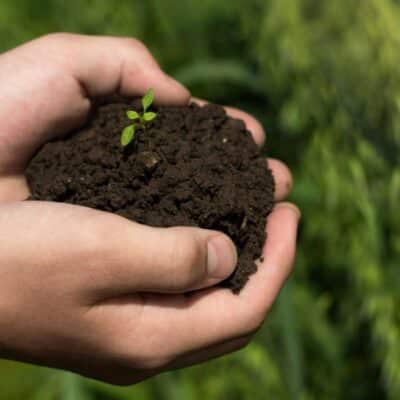
The soil is a whole world – one that teems with life. Fortunately, when we are faced with poor soil, there are many things that we can do to change things for the better.
One of the most important things to remember as an organic gardener is that everything comes back to the soil. All too often, we overlook or dismiss the secret world that lies below our feet. But what we sometimes think of a ‘dirt’ is truly so much more. Understanding this is the key to improving poor soil and making the most of our gardens.
The Basics to Healthy Garden Soil
A healthy garden soil is one that is well-balanced, and well suited to healthy plant growth. We always need to remember that the soil is home to plant roots – the place from which those plants obtain the water and most of the nutrients that they need.
It is important to understand that healthy garden soil is made up of several key components:
- Mineral particles (whose size determines what type of soil you have – sand, silt or clay).
- Air and water.
- Organic matter.
- Living organisms (earthworms, fungi, bacteria, nematodes etc…).
Of course, each of these components of a healthy soil acts upon and is influenced by the others. The size of the mineral particles is not something we can alter as gardeners. but we can manipulate organic matter content in order to overcome any challenges that come from the other three areas.
What is Organic Matter?
Organic matter is material containing carbon which derives from living things. In general terms, it is dead plant or animal matter, and animal waste.
Soil organic matter is organic matter is one component of a healthy, living soil. And gardeners add organic matter to improve the soil and add fertility.
What Does Organic Matter Do for the Soil?
Organic matter when added to the soil:
- Increases soil organic carbon.
- Increases the nutrients within the soil, making it more fertile for plant growth.
- Improves water retention in free-draining, sandy soils
- And improves drainage in heavy, clay soils.
- Creates an environment where soil life can thrive, boosting biodiversity in the soil ecosystem.
When laid over the surface of the soil as a mulch, organic matter additionally protects the soil below it, conserves soil moisture by reducing water lost to evaporation, and helps to suppress weed growth.
When to Improve Soil
There are many reasons why the soil in a garden or on a farm may have become damaged or degraded.
But wherever this has occurred, it is imperative that we strive to put things right. Without healthy soil we cannot hope for healthy plant growth and will not be able to increase the yields of edible and other useful crops that we grow.
It is important to understand that trying to improve poor soil is not something that is done overnight. Rather, soil improvement should be viewed not as a one-and-done job, but as a process that we continually follow over time.
Adding organic matter to the soil each year is obviously often a major component in this process. But precisely how and when we do so depends on the specific situation.
And it is also important to understand that adding organic matter, while often the most important step, is not the only strategy we might employ to improve poor soil.
Step-by-Step Guide to Improve Poor Soil
This three step process can help you to troubleshoot poor soil by looking at the problem, getting to know the soil better, then seeking solutions tailored to the specific soil problems you face.
1. Identify problems
First of all, it is important to understand what problems you face with your soil. For example, poor soil might be:
- Compacted.
- Suffering from erosion.
- Nutrient poor or deficient in particular nutrients.
- Extremely acidic or alkaline in pH.
- Too free-draining.
- Too moisture-retentive/ prone to waterlogging.
Sometimes, of course, you may be faced with a more complex mixture of some of the issues above.
But whatever the reason why your soil is poor, identifying the issue is the first step in working out how best to tackle the problem or problems.
2. Deepen Your Understanding of Your Soil
Starting from the problems you face, you should next delve a little deeper. You may understand the issue but you might need to deepen your understanding of the soil in order to understand the root cause or causes of that problem.
To understand your soil in even the most basic terms, you obviously need to know:
- The broad soil type in your garden (sand, silt, clay, chalk, peat, loam).
- How moisture retentive or free-draining it is.
- How fertile and rich in organic matter is currently is.
- The ph level of the soil.
Obviously there are tests that we can do to learn more about the soil on our properties. We can also learn about the soil where we live by observing how it alters throughout the year, and by looking closely at the plants that grow there already.
3. Find Solutions
Finally,we can look at the different problem areas to find solutions to the problems we face when it comes to our poor soil.
To help you in this process, here are some solutions to improve poor soil by:
- Eliminating Compaction & Erosion
- Adding Organic Matter
- Regulating pH and Making Mineral Additions
- Addressing Specific Nutrient Deficiencies
- Improving Soil With Plants
4. Eliminating Compaction & Erosion
As with any improvement strategy, the first thing is to do no harm. Unfortunately, many traditional practices in gardening and farming can do a lot more harm to the soil than good.
Digging and tilling disturb the precious soil ecosystem and can lead to its degradation. Even stepping on growing areas can lead to compaction issues and/or erosion, as can water management issues or leaving the soil bare and devoid of mulches or living plants.
Avoiding these things – taking a ‘no dig’, minimal disturbance approach can help to protect and improve soil even without taking any additional measures.
5. Adding Organic Matter
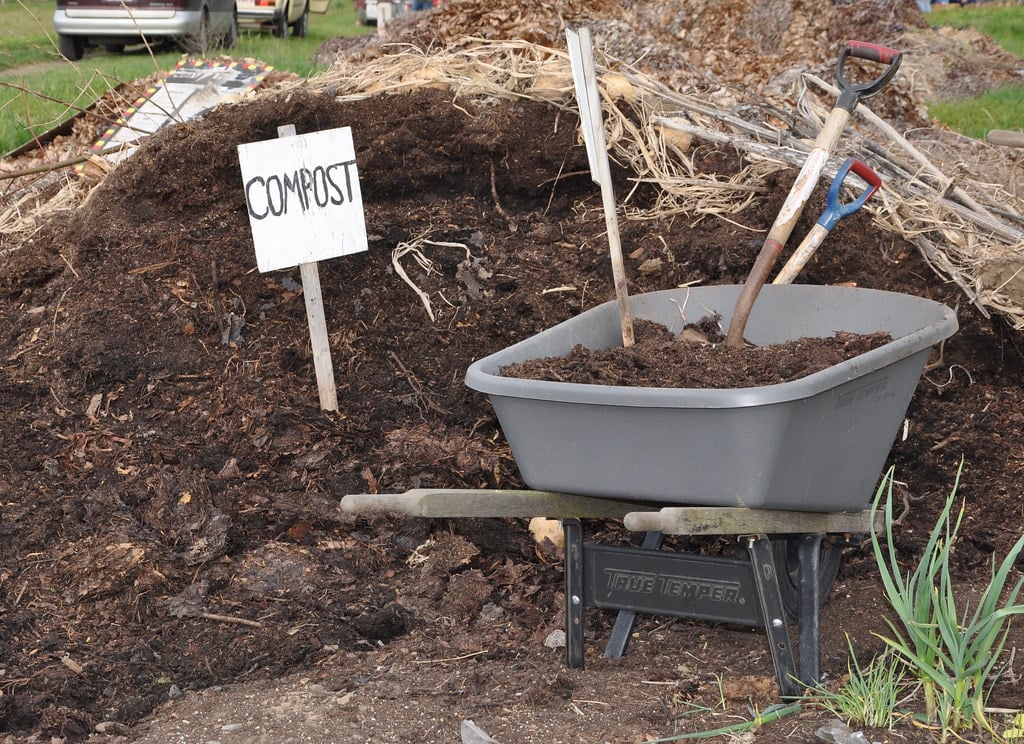
Of course, adding organic matter is the main way in which many of us can improve the poor soil in our gardens. Adding organic matter usually means adding it as a mulch over the surface of the soil in no dig gardening systems.
Organic mulches are most commonly applied in the spring and autumn, though we may also chop and drop in the summer months too. And we may also add organic matter through the natural die-back of green manures sown to cover the soil over the winter months. So adding organic matter is something we should be thinking about all year round.
Of course, we need to choose the right mulches to add at the right times. And this can be a somewhat more complicated business.
6. Regulating pH and Mineral Additions
It is almost always better to make the most of the soil that you have rather than trying to alter the soil to suit your planting preferences. If you have a somewhat acidic soil, or a somewhat alkaline one, you should typically try to choose plants suited to the growing conditions rather than trying to alter the pH across your growing areas.
However, occasionally, extremely acidic or extremely alkaline soils may detrimentally affect plant growth to the degree that amending the soil is the best course of action. In such cases, mineral additions such as lime for acidic soil, for example, could be beneficial to improve poor soil performance.
Phosphorus is rarely in short supply in soils in the UK. But where it is, mineral rock additives can help to redress the issue.
7. Addressing Specific Nutrient Deficiencies
We may also occasionally make other additions to poor soil where there are specific nutrient deficiencies. For example, where there is a shortage of calcium, we may add crushed eggshells or another good calcium source to the area…
Knowing How To Improve Poor Soil With Plants
Most importantly of all, perhaps, aside from adding organic matter, among the other important strategies to improve poor soil, it is important not to overlook how plants can be used to improve poor soil.
First of all, just having plants, any plants, in the soil rather than leaving it bare can help to reduce soil issues, and will protect degraded soil to allow it to recover. We should always aim to have a living root in the soil of our growing areas over as much of the year as possible.
But specific living plants can also help to improve poor soil in a range of different ways. For example, they can:
- Break up compacted soil with their thick taproots and strong root systems.
- Anchor soil prone to erosion with their roots and with ground cover.
- Contribute natural ‘mulch’ each year through leaf fall and die back.
- Fix atmospheric nitrogen in the soil with the aid of bacteria in their roots.
- Creating habitat for ground-dwelling wildlife that is part of the soil ecosystem.
These are just some of the ways plants can aid the soil and help to improve poor soil in your garden when they are used in the right places and in the right ways. Learn more about how to reuse compost today with First Tunnels.
FAQs
How can we improve poor quality soil?
To improve poor quality soil, consider the following steps:
Organic Matter Addition: Incorporate compost, aged manure, or leaf mould compost to enhance the soil structure and provide essential nutrients.
Soil Testing: Test the soil to determine its pH and nutrient levels. This will guide you on the necessary amendments.
Crop Rotation: Rotate crops annually to prevent soil-borne diseases and reduce nutrient depletion.
Mulching: Apply a layer of organic mulch to conserve moisture, suppress weeds, and improve soil health.
Avoid Over-tilling: Excessive tilling can break down soil structure. Use minimal tillage methods to preserve soil health.
What is the fastest way to add nutrients to soil?
The fastest way to add nutrients to soil is by applying a balanced liquid fertilizer or water-soluble granular fertilizer. These fertilizers are quickly absorbed by plants and provide immediate nourishment. Additionally, compost tea, fish emulsion, and worm castings can be used as quick organic solutions.
How can I make my soil richer?
To make your soil richer:
Compost Addition: Regularly add well-decomposed compost to your soil. It introduces beneficial microorganisms and nutrients.
Green Manures: Grow cover crops like clover or legumes and then till them into the soil. They add organic matter and fix nitrogen.
Worm Farming: Introduce earthworms or set up a worm farm. Worm castings are rich in nutrients and improve soil structure.
Natural Fertilizers: Use natural fertilizers like bone meal, blood meal, or seaweed extracts to provide specific nutrients.
Maintain pH Levels: Ensure the soil pH is optimal for plant growth. Lime or sulfur can be added to adjust pH levels.
What are 5 ways to increase soil fertility?
Organic Matter Incorporation: Add compost, manure, or other organic materials to boost nutrient content and improve soil texture.
Cover Crops: Planting cover crops like legumes can help fix nitrogen in the soil.
Natural Fertilizers: Use organic fertilizers derived from plant and animal sources to replenish nutrient levels.
Soil Conservation: Implement practices like contour plowing, terracing, and agroforestry to prevent soil erosion and maintain fertility.
Regular Soil Testing: Periodically test the soil to monitor nutrient levels and make informed decisions about necessary amendments.
Sources
JIC. (n.d.) How do plants fix nitrogen? [online] Available at: https://www.jic.ac.uk/advances/how-do-plants-fix-nitrogen/ [accessed 14/12/23]