

When growing root crops in a garden, many gardeners will stick to the favourite carrots and parsnips. But today, there is a growing interest in other root crops. Two interesting options to consider are salsify and scorzonera.
In this guide, we will explain what these two crops are and how to grow and use them, so read on to find our how you can expand your root crop repertoire.
Salsify

Salsify, Tragopogon porrifolius, is a frequently encountered biennial wildflower indigenous to southeastern Europe and northern Africa.
The roots and young shoots of T. porrifolius are edible after boiling. Additionally, freshly grown leaves can be consumed either cooked or raw. This plant has a historical significance as it was cultivated for culinary purposes, with mentions in classical texts such as those of Pliny the Elder.
People started to grow salsify for culinary use in Europe in the 16th century, primarily in France and Italy.
Initially prized for its flowers in the UK, it later gained mild popularity as a vegetable in the 18th century before waning in appeal. It is still grown and consumed, however, mostly in France, Germany, Italy, and Russia.
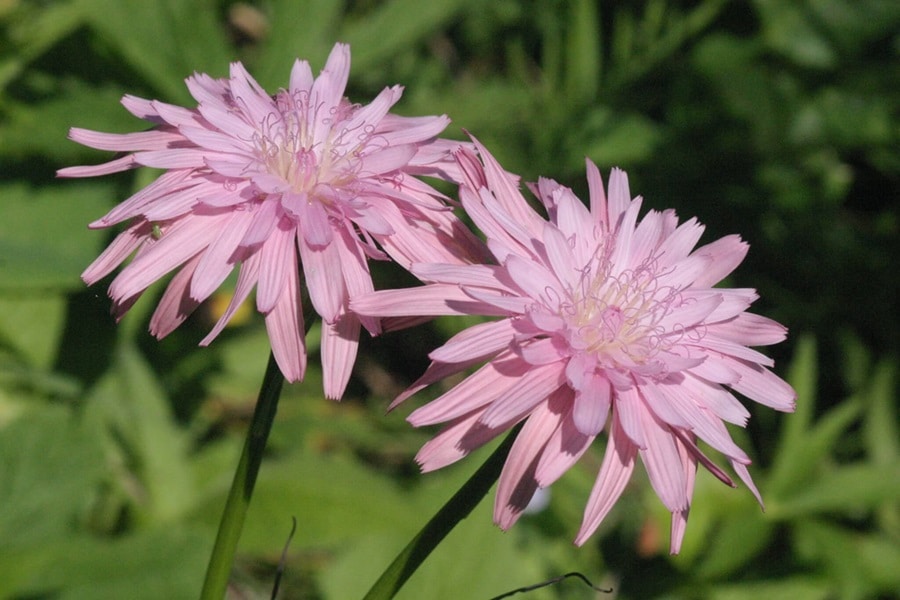
This plant features a lengthy, usually unbranched stem and leaves resembling grass. During its initial year, it establishes roots and yields edible leaves. Subsequently, from May to September of its second year, it develops a flowering head roughly 5cm in diameter, showcasing a purple bloom encircled by green bracts.
Scorzonera
In contemporary agriculture, Spanish salsify (Pseudopodospermum hispanicum) has increasingly supplanted Tragopogon porrifolius as a cultivated crop. This is because this plant typically has roots that are larger and/or have better shape.
Often referred to as black salsify or Spanish salsify, this is a perennial plant belonging to the sunflower family (Asteraceae). It’s also known by various other names such as black oyster plant, serpent root, viper’s herb, viper’s grass, or simply scorzonera.
Like purple salsify (Tragopogon porrifolius), which is also a member of the sunflower family this plant is grown as a root vegetable. The leaves, young flower stems, unopened flower buds, and flower petals of Pseudopodospermum hispanicum are also all edible.
Originating from Southern Europe, it is cultivated as a root crop primarily in Southern and Central Europe.
Growing Salsify and Scorzonera
Both Tragopogon porrifolius and Pseudopodospermum hispanicum can be grown successfully here in the UK. They can be relatively easy crops to grow, offering something a little out of the ordinary for home growers.
If you have decided to grow one or both of these crops in your garden, then it is important to understand their lifecycles. Salsify is a biennial usually grown as an annual, but Scorzonera is a perennial crop, which can remain in the garden over several years.
The young root of Salsify is typically harvested in its first year and utilized as a vegetable. If allowed to flower, the plant produces attractive, purple-pink round flowers that resemble dandelions, measuring between 3-5cm in diameter, in its second year.
To start growing salsify, your initial step is to acquire salsify seeds. You might opt for a named cultivar, known to yield slightly larger roots. Some choices include ‘Sandwich Island’ and ‘Scorzobianco’.
Some scorzonera varieties to consider are ‘Black Russian’, ‘Duplex’, ‘Giant Black’ and ‘Russian Giant’.
How to Propagate
Tragopogon porrifolius is typically grown from seed, which is direct sown where the plants are to grow in April or May once the soil has warmed. Sow fresh seeds in drills or holes around 1cm deep, with rows around 30cm apart, aiming for around 10cm between plants. Salsify can also be sown into pots with a diameter and depth of at least 30cm.
Pseudopodospermum hispanicum can be easily cultivated from seeds planted directly in the ground either in autumn or spring, preferably using fresh seeds. Alternatively, it can be grown in pots and then transplanted outdoors in the spring.
Older Scorzonera plants can also be divided in autumn for propagation.
Hardiness
Salsify is hardy in most places throughout the UK, with a hardiness rating of H4 meaning that it can comfortably cope with temperatures that drop to minus 5 or minus 10 degrees C. Scorzonera is hardy to around minus 20 degrees C..
Soil Conditions, Location and Cultivation
When choosing where to grow either salsify or scorzonera, it is important to select the right location, where the soil and other environmental conditions are correct for successful cultivation.
Select a sunny or only lightly shaded location with well-draining soil that is deep enough to accommodate the roots, which can reach up to 30cm in length. Prior to planting, clear the area of as many stones as possible and loosen heavy soil with a fork. Add homemade garden compost or other organic matter to improve the soil.
Successful cultivation of salsify hinges on maintaining consistent moisture levels without allowing waterlogging or compaction.
The taproot thrives in moist, loose soil rich in organic matter. While salsify is not excessively demanding in terms of water and nutrients, ensuring the soil retains moisture is crucial. If drought conditions occur and soil moisture levels drop, there’s a risk of the plant prematurely flowering and setting seed, a process known as bolting.
Height
Salsify will typically grow to around 1.2m in height, while scorzonera, though they can become taller, up to 1m or so, are typically around 60cm tall.
Spacing
Spacing should be 10-30cm between plants, depending on stage of growth and which you are growing. Remember that young shoots and leaves of plants that are thinned are edible and so can be eaten rather than just thrown on your compost heap.
Pests and Diseases
Salsify and scorzonera are both relatively trouble-free plants and do not suffer from a great many pests or diseases. However, slugs and snails may be an issue, particularly during early stages of growth. Wireworms may also occasionally cause minor damage by burrowing into the roots.
Some also report that scorzonera can help with pest problems – repelling carrot fly and therefore of benefit as a companion plant for carrots, parsnips and other crops plagued by these pests.
White blister is a disease that can affect these crops on occasion. This can reduce vigour and cause distorted growth. It is caused by fungus-like organisms and is more likely to occur in wet conditions. Growing undercover in a polytunnel may help reduce the chances of this problem during wet summers.
Overcrowding salsify can also increase the prevalence of fungal infections like rusts and powdery mildew. So take care to space correctly at different stages of growth.
Harvesting and Yield
If your intention is to harvest the roots or let the plants continue into a second season, it’s advisable not to harvest too many leaves. However, during the initial summer, occasional harvesting of leaves is possible. These leaves make a delightful addition to salads, offering a subtly sweet flavour.
Salsify roots are typically ready for harvesting from late September onwards. They can remain in the ground and be dug up as needed throughout the winter and into early spring. Frost exposure aids in sweetening their flavour, much like parsnips.
When it comes time to harvest the roots, employ a garden fork and gently manoeuvre the roots out of the soil with great care. Due to their delicate nature, exercise caution during the harvesting process, as the roots are prone to snapping and may bleed if cut. Using a fork to gently ease them out of the ground is preferable to pulling them up.
Starting from autumn, it’s advisable to shield the tops of the plants from frost by applying a layer of straw or fleece.
In regions with very cold temperatures or where soil tends to become waterlogged, it’s recommended to lift and store the roots in sand or sawdust. They can be kept in a cool, frost-free environment such as a garage or cellar. However, the roots can be kept in the ground in most UK gardens.
When roots are overwintered in the ground, new shoots emerge in spring. To harvest these shoots for use similar to asparagus, trim back old foliage to within 2.5cm of the soil early in the season. As the new shoots appear, earth them up like potatoes or cover them with a mound of straw or bracken mulch to exclude light, a process known as blanching.
Blanching enhances tenderness. Aim to mound up over the shoots to a height of 12-15cm. Once shoots emerge above the mound, carefully clear the soil or mulch and cut off the blanched shoots at the base.
Spring leaves, if desired, can be harvested when they reach 15cm tall without blanching, though they are less tender.
If the plants are left to grow into their second year, enjoy the flowers, which can be added to salads. Alternatively, allow the plant to set seed, then collect and sprout those seeds for a nutritious addition to your homegrown diet.
During harvest, when digging up Scorzonera plants, it’s feasible to leave a 5cm stub of the root intact and replant the crown, allowing it to regrow for future harvests in subsequent years. Remember, these are perennial plants.
How to Cook Salsify and Scorzonera
Salsify roots have a tough, inedible skin. Peeling them can be challenging because uncooked roots release a sticky latex. Therefore, it’s best to cook the roots first and then peel them.
To savour the delicate oyster-like taste of salsify, start by steaming the roots, then peel them before serving with butter as a delightful side dish. Similar to other winter root vegetables, they lend themselves well to various cooking methods like mashing, roasting, or sautéing, and can enhance the flavour of hearty dishes such as soups and stews.
Scorzonera roots have what has been described as a sweet and agreeable flavour. Its taste is often likened to that of asparagus or artichoke hearts, with a subtle sweetness reminiscent of oysters. These too are steamed or boiled for 15-20 minutes before they are peeled, and are then often roasted for a side dish or as part of another recipe.
FAQs
What is scorzonera used for?
Scorzonera is mainly utilized as a root vegetable in culinary applications. Renowned for its earthy and subtly sweet flavour, it finds its way into soups, stews, or as a roasted side dish. Its nutritional benefits are also valued, particularly due to its notable levels of potassium and fibre and while in growth, it is also sometimes used as a companion plant for carrots and other crops bothered by carrot flies.
Is scorzonera a perennial?
Indeed, scorzonera is a perennial plant, cultivated primarily for its edible roots. Capable of enduring in the ground across multiple growing seasons, though it is commonly harvested on an annual basis.
How do you grow scorzonera in the UK?
To grow scorzonera in the UK, select a sunny location with well-drained, fertile soil. Sow seeds directly in spring, spacing them 10-30cm apart and 1cm deep. Keep the soil consistently moist until germination, which typically takes 2-3 weeks.
Thin seedlings if needed once they reach 5cm tall. Provide regular watering throughout the growing season. Mulch around plants to suppress weeds and retain moisture. Harvest the roots between late autumn or early spring, gently lifting them with a garden fork.
How do you eat scorzonera?
Scorzonera is typically prepared by first peeling its tough outer skin, ideally after cooking to avoid its sticky latex. The peeled roots can be boiled, steamed, roasted, or sautéed until tender.
Once cooked, scorzonera can be enjoyed as a side dish, seasoned with butter, salt, and pepper. Its earthy flavour pairs well with herbs like thyme or parsley. Scorzonera can also be incorporated into various dishes such as soups, stews, gratins, or salads to add depth and texture.
Sources
Great British Chefs. (2018) How To Cook Salsify. [online] Available at: https://www.greatbritishchefs.com/how-to-cook/how-to-cook-salsify [accessed 22/05/24]