

Do you want to be more self-sufficient on your farm or in your garden? In this guide, we’ll help you to think through what it actually is that you want to achieve, and help you take the first steps towards a sustainable and more self-sufficient way of life with self sufficient farming.
What is Self Sufficiency?
Self-sufficiency involves being able to meet all basic needs without relying on external assistance. But precisely what people mean when they talk about self-sufficiency in a garden or on a farm can vary significantly.
Some people may consider self-sufficiency only in the context of food, while others will look more broadly and consider self-sufficiency in other areas, including but not limited to water, energy, and materials and other inputs used in ongoing maintenance and care of themselves, and their plants and animals. For some, financial self-sufficiency might be the major goal.
Few farmers and gardeners in the UK achieve true self-sufficiency in all areas. But many have self-sufficiency as a goal and have made great strides towards that true autonomy – creating closed-loop systems with little to no waste, and having to purchase only very few items day to day.
If you want to become more self-sufficient then you may wonder how you can move closer to your goal.
In this guide, we cannot give you all the answers. But we can guide you through some of the key things to think about, and help you to move in the right direction – taking slow, small steps towards your ultimate goals.
How Many Acres Do You Need For Self Sufficent Farming?
One of the first things to think about is how much land you will need to achieve the type and level of self-sufficiency that you are aiming for. What acreage do you require to be self-sufficient in certain areas such as food, energy, etc..?
First things first, it is important to understand that how much land you need will depend very much on the characteristics of available land, the climate and geographical location.
An acre of valuable, fertile farmland in an area of abundant rainfall can obviously provide more in terms of typical crop yields than an acre of desert or an extremely acidic bog, or other less ideal farming or gardening environments.
Self-sufficiency can encompass everything that someone needs to survive – including water, food, shelter, and energy. It can also be understood more narrowly in terms of food production alone.
To be entirely self-sufficient in the UK, it is typically stated that 5 acres of reasonably fertile and productive land with good water resources is sufficient space to allow an average family to become self-sufficient.
Which food growing systems are optimal for individual self-sufficiency depends on the location, preferences of the individual, and on which resources are abundant, and which are in short supply.
How Many Acres For Vegetables?
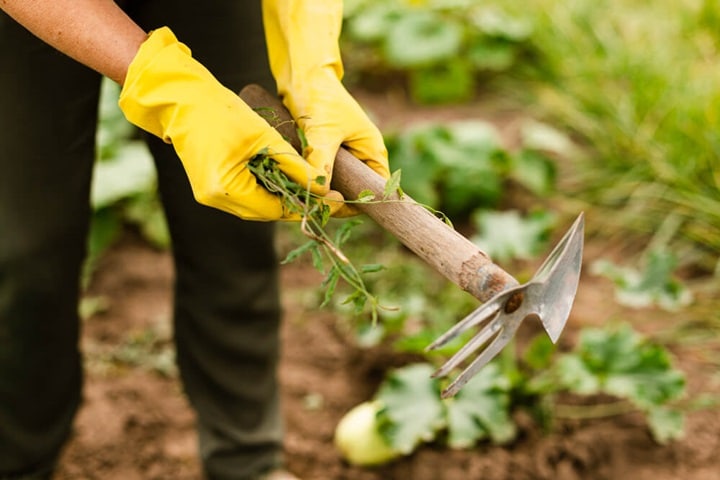
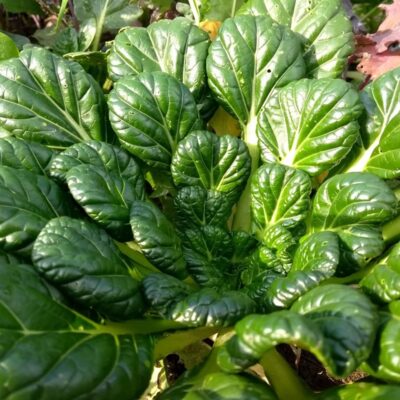
The easiest foods in which to become self-sufficient are fruits and vegetables. There are a number of different ways to grow these, and choosing the right one or ones can be an interesting challenge.
Forest Gardening
Forest gardens are low-maintenance, high yield systems that mimic the natural forest ecosystem but incorporate a range of useful & edible plants that work harmoniously together. There are examples of forest gardens of less than 1/5 acre producing a yield of over a tonne each year.
Forest gardens can supply a significant proportion of the annual calories required for one person, and could almost entirely meet nutritional needs for a vegan diet. The only thing a vegan diet cannot provide is vitamin B12. (Keeping chickens or ducks for eggs could meet this nutrient requirement.)
The low maintenance qualities of working with nature and creating a forest garden in this way generally mean that self-sufficiency is truly achievable with the manual input of just one person.
Annual Polyculture Vegetable Gardens
The perennial planting of a forest garden is often accompanied by growing area or areas of annual polycultures, in which a range of familiar annual crops can be grown. Polycultures (incorporating more than one type of plant in a bed, rather than growing traditional mono-crops in rows) can help to reduce the space required for annual vegetable crops/ herbs.
As a general rule, it is often stated that to produce the requisite number of calories from vegetables/ grains and achieve a balanced vegetarian diet you will require 0.44 acres. However, many gardeners have shown that it is possible to grow enough food for a balanced vegetarian diet in far less space.
Potentially, in just a well-managed 1/10th of an acre (400 sq ft – 20×20 ft), you can grow all the vegetables you need for a healthy, balanced diet. (Though in this small a space, more land will likely be required to supplement the diet with grains, eggs, dairy, fish or meat.)
In a garden where space is an issue,an individual can make the most of their space by growing vertically, as well as making use of the horizontal area. This is one of the key strategies for increasing yield and allowing for self-sufficiency, even in the heart of cities.
An aquaponics system is one form of growing that can lend itself to growing annual polycultures and to vertical growing to maximise space. The added benefit is that such a system can yield fish as well as plant edibles.
Adding Grains?
Grains generally take a lot more space to grow than fruits and vegetables. Growing high quantities of grains is usually a challenge when it comes to self-sufficiency. So it is generally better to restrict this part of the menu and include only small quantities of grain in the home-grown diet.
The average person eats around 1.5 lbs of wheat per week. In order to maintain that amount you will need at least 3,003 sq ft (over 2/3 of an acre) of wheat for annual requirements. If you also need some wheat for animals, you will need more. Large amounts of land are also required to produce other grains, such as millet, sorghum, oats, rye etc..
Whether or not grains will be grown as part of self-sufficiency largely depends on whether these are required for livestock. If they are not, growing more than the odd row or two for a few loaves here and there is generally not worthwhile. (It is also worthwhile bearing in mind that processing grain can be labour intensive and, at larger scale, can require expensive equipment.)
Adding Livestock?
Obviously, if you wish to keep animals for eggs, milk and/or meat then there are further complexities to becoming self-sufficient and additional land will be required, not only to house and graze the animals you keep, but also to grow the food that they will need. You might buy in food, of course, but then you cannot call yourself entirely self-sufficient.
Chickens and certain other small animals can be kept in gardens and other relatively small spaces. For chickens you need, as an absolute minimum, 8-10 sq ft per bird in an outside run and a coop with 2-3 sq ft per bird. Three hens – the minimum you should really keep – will easily give one person enough eggs through the year.
To be self-sufficient – for three hens you will need to grow 273.75 lbs grain. This could be grown (depending on location etc.) on less than 1/10th acre, or around 4,000 sq ft. (This can be further reduced by giving access to good forage and feeding scraps and other extras from the garden.)
Obviously, for larger livestock, a lot more land will be required.
Planning a Self-Sufficient Farm or Garden
Careful thought should go into selecting a site and/or preparing and designing for self-sufficiency on an existing property. Here are some tips to help you make sure you set out in the right direction:
Careful Planning and Preparation
- Make sure you think about water when choosing a site or determining your options. Make use of natural rainfall and calculate carefully how much water you can collect and the rainfall expected in your area to determine what, and how much, you can realistically achieve.
- Be realistic, also, about the space/ amount of land available and while you can certainly do a lot with small, multi-functional spaces, you need to be careful not to try to do too much.
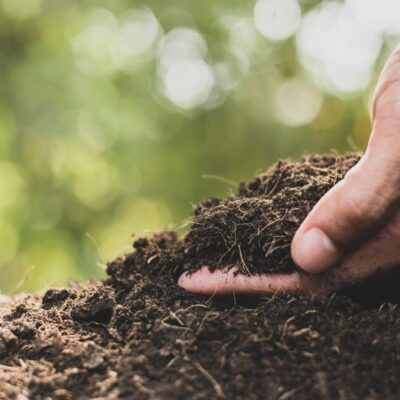
- Plan carefully for long-term fertility, not only for short-term gains. Take care of the soil and take steps to integrate composting systems and other important organic gardening methods into your plans.
Mapping (and Changing) Eating Habits
- Make sure your plans take into account what you and your family members actually eat, and map the quantities of certain key crops that you currently eat to determine potential in each case for self-sufficiency.
- But while you should start with what you currently eat, there may also often be potential to consider changes and substitutions, broadening your home-grown diet to make it easier to fulfil your needs where you live.
Selecting Staple Crops
- Determine staple crops and begin with these when determining your growing plans. Think about which crops can meet key nutritional requirements for protein and carbs as well as a range of vitamins and minerals essential for good health.
- Make sure you devote enough space to key crops before you focus on less important yields and on adding variety to your homegrown diet.
Choosing Growing Methods for Optimal Yields
- Make sure that you carefully consider your specific situation when choosing which growing methods to use. What works well in one location may not necessarily be the best solution in another.
- Think about features like greenhouses and/or polytunnels that might be added to maximise yields and enable year-round growing.
Maximising Use of Space
- Embrace multi-functionality and diversity.
- Layer in space and time.
- Think vertically as well as horizontally, etc…
How To Get Started With Self-Sufficient Farming (Step by Step)
- Analyse and ascertain the potential of your site and determine what can realistically be achieved.
- Make your plans, putting together a holistic design rather than starting out blind.
- Start by implementing the basics, relating to water, access and energy.
- Obtain any tools and equipment you may require.
- Continue to hone useful skills for self-sufficiency, including gardening/ farming skills but also other skills and knowledge in preparation and cooking, food preservation, natural medicine, plant lore, and other practical skills.
- Set up systems for long-term success, such as rainwater harvesting and composting systems.
- Define key growing areas and plan your year-round planting/ sowing schedules.
- Integrate livestock if you plan on doing so, and implement a rotational grazing schedule or other sustainable plans.
FAQs
Can you be self-sufficient with a garden?
Yes, in certain ways. Even with an average sized garden, you can potentially be self-sufficient when it comes to fruit and vegetables, even if you need to buy in other things. However, to be entirely self-sufficient in foods and fuels, it is likely you will struggle with anything under 5 acres for a family.
How much to plant to be self-sufficient?
To be self-sufficient, the amount to plant varies based on your household size and dietary needs. Of course you will need to decide which crops to grow and plant according to expected yields and how much you and your household expect to use.
How much land do you need to be self-sufficient in the UK?
In the UK, you typically need about 1 to 2 acres of land per person, or 5 acres per average family to be fully self-sufficient, including space for growing vegetables, fruits, grains, and raising small livestock. However, it’s possible to achieve a high degree of self-sufficiency on smaller plots with intensive gardening techniques.
Sources
Malek, P., (2024) Acreage calculator. Omni Calculator. [online] Available at: https://www.omnicalculator.com/conversion/acreage