

Composting is something we should all be doing in our gardens. But as with every gardening endeavour, there are times when things do not go entirely to plan. Rats in compost bins or compost heaps are one issue that you might encounter.
What are the signs of a rat infestation?
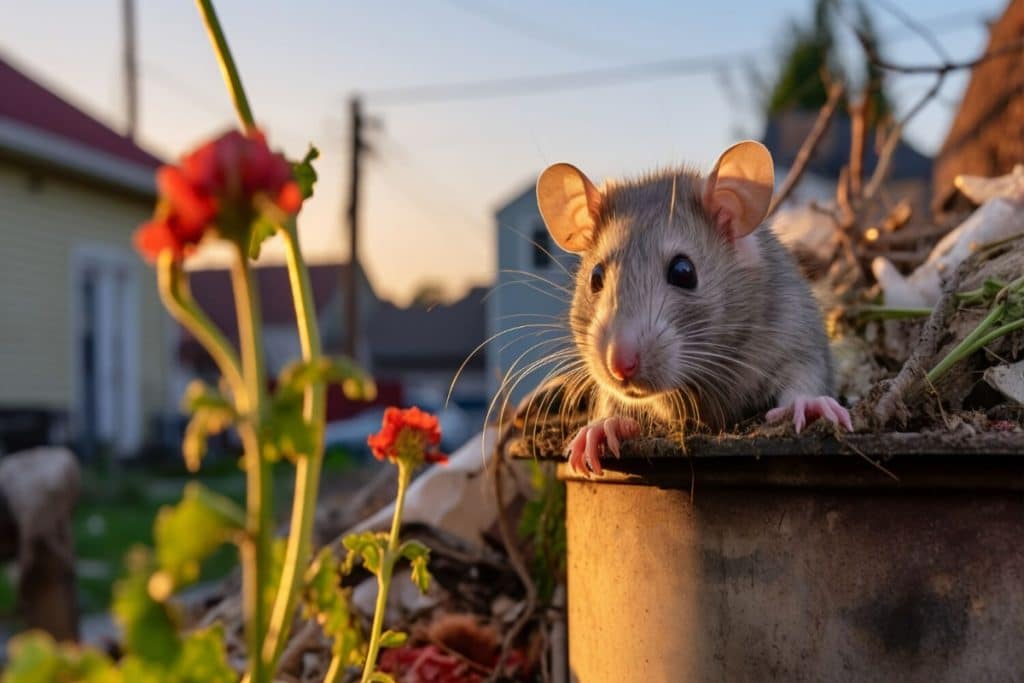
If there are rats in compost bins, you may see them coming and going. However, rats might not always be seen. Instead, you may simply see the holes that they have made and perhaps chew marks or holes in a composting container.
Rat tunnels are usually marked by round entrances around 3cm in diameter. You may see a hole like this at or near the base of your compost heap.
Which container should I use to stop rats in compost bins?
Whether or not you use a container for your compost will depend on which method you have chosen, what precisely you wish to compost, and the options available to you in your particular garden.
An open heap or bin is of course common for cold composting. But such a system will of course be more vulnerable – more likely to be scavenged from by rats and other wildlife, or even to become home to rats.
If there are rats around, and you have an open heap or pallet bin, you may need to think about securing the base to stop rats from tunnelling underneath, and will also need to be more careful about what you add to it.
Where rats are an issue, it is usually best to choose an enclosed composting bin of some kind – something sturdy which rats are less likely to break into. The bin should ideally be closed on all sides, including the base. Bins without a base should be placed on a gravel or shingle base with a thick wire mesh to stop rats from tunnelling in from below.
Which compost ingredients attract rats?
Any food scraps can potentially attract rats to compost bins. Cooked food, potato peels, egg shells and particularly pungent ingredients like meat, fish or dairy, however, are particularly appealing to rats and are most likely to attract them.
So, if you have an open heap or pallet bin type system, it is best to avoid adding any of these items to your composting system, and, perhaps, composting any food scraps separately, in a closed container, compost tumbler, worm-bin or hot-composting system.
You might also consider fermenting food scraps first in a bokashi system before you add the material to your main composting system, especially if the system is not an enclosed one.
Why do rats like compost?
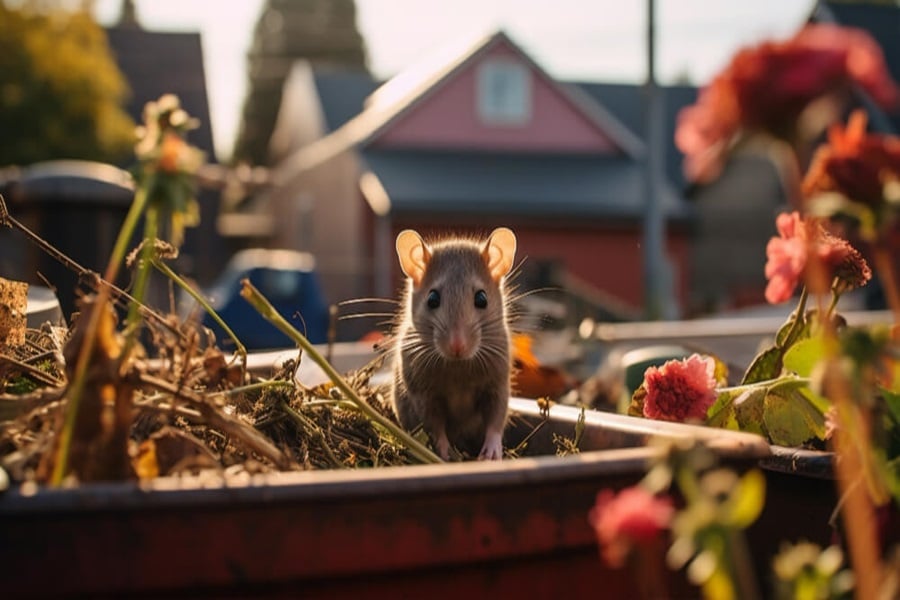
One thing to remember, however, is that even if you withhold their favourite foods and do not add the ingredients above to your composting system, a compost heap or open bin can still be a very appealing place for rats.
Even without human food scraps, rats can often still find plenty of food in a composting system. They may eat worms, slugs and other creatures that live within the ecosystem of the compost heap or bin.
Warm and cosy, undisturbed compost heaps and open bins are very enticing to rats, not only because of the food they contain but also because they are easy to burrow within and offer comfortable temperatures, especially during colder weather conditions – rats may even wish to take up residence.
So, how can you reduce the appeal of your compost heap for ratty residents, and encourage them to move on elsewhere?
Avoid wet and soggy compost heaps
One of the first things to remember is that if your composting system is stinky, it is far more likely to attract rats from far and wide. Maintaining a healthy heap or bin should mean that your compost is practically odour free.
If compost becomes smelly, this is often a sign that it is out of balance. Perhaps you have made one of the common composting mistakes. The problem may be caused by:
- Too much water, or poor drainage.
- Compaction of the compost.
- Too much nitrogen-rich ‘green’ material and not enough carbon rich ‘brown’ material.
- Or too much nitrogen-rich material added at the same time.
All of these issues can mean that there is not enough air (oxygen) within the system. When this happens, aerobic composting can no longer take place and the system switches to an anaerobic one – which causes more smells.
An anaerobic composting system stinks, and that stink can attract rats far more than an aerobic system that is functioning as it should.
To make sure that your compost is not wet and soggy, cover it so it is not flooded during heavy rain. Though it can be beneficial to water the compost during prolonged dry spells to keep decomposition going, take care not to overdo it.
Make sure you add plenty of carbon rich material as well as nitrogen rich materials, and do not add too much nitrogen rich material (like grass clippings, for example) all at once.
Turn your compost
To make sure that there is enough oxygen within the composting system, so that you have aerobic conditions for composting and not an anaerobic situation, it can be a good idea to turn compost regularly.
While for fungal compost, we may wish to leave compost unturned, in most composting situations it is a good idea to turn (or tumble) the compost to prevent it from becoming compacted and to make sure there is air throughout the heap or bin.
Turning not only aerates the mix, it can also help to speed decomposition and generate more heat inside, and rats are not going to take up residence in a hot composting system.
Limit what you compost
What you can and cannot compost, and which compost ingredients could be a problem because they attract rats, depends on which composting system you have adopted.
Whether the composting area is open or enclosed, whether and how often it is turned, and the temperatures reached within the heart of the composting area, are all factors that go into determining what you should compost, and what you may wish to avoid placing within the system.
Rat proof your compost pile
If you wish to expand the materials that you can compost without risking attracting rats, then you might wish to think about steps you can take to keep rats away with physical barriers. Around any composting system, you might consider adding a sturdy galvanised wire mesh. This would have to be thicker than chicken wire, which rats can chew through,
Hot composting
Hot composting can deter rats from taking up residence in a heap and, as long as the heap gets hot enough, can neutralise fears about pathogens that rats can spread.
When the temperature within a composting system gets above 37 degrees C., this kills Leptospira bacteria in rat’s urine that causes Weils disease. This is reassuring as in a hot composting system, temperatures should rise well above this temperature – to between 40 and 60 degrees C.
Note, however, that once the hot compost cools and is left to finish decomposing, temperatures will drop and Leptospira could survive – so it is still best to prevent rats from accessing the compost altogether.
Other ways to deter rats in compost bins include:
- Keep compost moist as when the heap is too dry, it could become a good shelter and nesting site for rats.
- Make sure the compost heap is in a location where there is plenty of noise and activity so rats are less likely to take up residence as they will be frequently disturbed.
- Keep a composting area away from known rat hangouts, and in the open away from walls, fences or hedges, since rats prefer to keep to shady side areas where they cannot be seen.
Five Ways to Rat-Proof Your Compost Bin

- Choose a sealed composting system, that is enclosed on all sides.
- Or add rat-proof mesh to all sides of your current system.
- Consider fermenting or composting food waste separately to avoid rat attraction.
- Keep the compost functioning perfectly to avoid unnecessary smells, or making the heap more appealing to rodents.
- Place the composting system in the open, where regular human activity takes place.
Considering Other Rat Attractants
One thing to remember as you try to keep a composting area rat-free is that rats live close to us, and there are other things that will attract them to your garden. Being aware of other potential attractants can help us avoid drawing them in, and ensure that we can continue to live and let live.
Try to feed wild birds, chickens or other domestic livestock, for example, in such a way that you are not also giving rats a free meal.
Adding cayenne pepper to bird seed etc. can help deter rats and other rodents from sharing in the feast, without affecting the birds at all. Also, try to avoid leaving any food out at night.
Can you completely stop rats in compost bins?

Remember, it is highly unlikely that you will be able to entirely stop rats in compost bins as well as your garden. Nor should you necessarily wish to.
Most of the time, we live alongside rats without even knowing it, and can live and let live. If you worry about disease, wear gloves for gardening, and remember that in any case, you should always wash your hands after gardening.
As ecologically friendly gardeners, we should know that rats are a part of the ecosystem, and as such, have as much of a place here as we do. But we can and should take steps to make sure we are not drawing them unnecessarily close to areas of human habitation through our composting and other efforts we make in our gardens.
FAQs
Does compost attract rats?
Compost can attract rats through smell, especially if things get out of balance or if you add certain smelly kitchen scraps to your composting system. An open heap or bin is more likely to attract rats, and they may not just eat there but might also move in.
However, don’t let this put you off composting altogether. We can use enclosed bins, be careful what we compost, choose the right system and compost correctly and with care to reduce the attractiveness of a compost heap to rats.
What is the best compost bin to deter rats?
To deter rats, it is best to choose a compost bin that is entirely enclosed, with a solid base and sides, a lid that closes fully, with gaps no larger than a centimetre or so. A compost tumbler that lifts compost up off the ground can also potentially help keep rats away.
Do rats eat worms in compost?
Rats may indeed eat worms and other creatures living in compost as well as the food scraps we add for decomposition. Though they are unlikely to be attracted by these food sources alone and are usually drawn in by food scraps, smells, or the fact that the compost heap would make a good habitat for them first of all.
Sources
Munro, J., (2023) Five Composting Mistakes That Could Be Atttracting Rats. The People’s Friend. [online] Available at: https://www.thepeoplesfriend.co.uk/2023/01/28/five-composting-mistakes-that-could-be-attracting-rats/ [accessed 26/04/24]