

Creating a terrace garden can be key to making the most of a sloping outside space. With the right design, you can turn what may have seemed like a disadvantage into a positive, and create an interesting, textured, beautiful and productive terraced garden.
Beginning with some basic, practical tips, looking at materials and the different elements that you might want to include in a terrace garden, this guide aims to inspire you to create a terrace garden where you live, and reshape it with these terraced garden ideas.
KEY TAKEAWAYS
- Maximise Sloped Spaces: Terracing transforms slopes into practical and beautiful garden levels, making uneven ground more accessible and usable.
- Blend with Existing Features: Work with current walls or structures by matching materials for cohesion or using contrasting textures for a striking effect.
- Choose Materials Wisely: Select durable, weather-resistant materials like natural stone, timber sleepers, or composite decking for stable, long-lasting terraces.
- Optimise Planting by Sunlight and Orientation: Use sunlit terraces for herbs and vegetables and shaded spots for shade-loving plants, enhancing productivity.
- Incorporate Extra Features: Adding raised beds, water features, or polytunnels extends functionality and beauty, making the terrace garden both productive and enjoyable year-round.
Practical Terraced Garden Ideas – Design Tips:
1. Work With Existing Walls
Begin by looking at what is already there. In some terraced gardens, an existing wall may already serve as a foundational element, such as a wall at the back or front of the house, a boundary fence, or another structural feature. Other terraces may be freestanding, designed solely to connect the different levels within a garden space.
When incorporating existing walls into your design, consider using materials that either harmonise with the look of your home or provide a striking contrast.
2. Consider Slope
The first step in designing a terrace garden is to understand the natural slope of your garden. Terracing a steep slope will require more structural work, but it will give you opportunities to create distinct levels. In contrast, a gentle slope might only require a few subtle steps or shallow beds.
Steeper terraces often benefit from taller retaining walls, which can serve as borders and hold soil in place. For smaller gradients, low walls or raised beds can work well to divide the space while maintaining accessibility.
3. Understand Orientation
The orientation of your garden plays a significant role in determining the characteristics of the site, the plants and features you should consider including, and the best layout.
A south facing slope will receive the most light here in the UK, while a north facing one will be the most shaded. West facing terrace gardens get afternoon and evening sun, while east facing ones catch the sun in the morning.
Terraced gardens are usually split into multiple levels, which means different levels may receive varying amounts of sunlight. Consider creating a sun map so you can determine how sun falls on the space throughout each day and throughout the year and how sun might be blocked by your home, or other nearby buildings or trees.
This can be even more crucial in a steeply sloping/ terraced space where there can be even more complexity in this regard and one tier (typically those higher up) may receive a lot more sun than another.
4. Think About Water
Sloped gardens often create unique water flow challenges. When designing terraces, consider how water will move through the garden, and add drainage channels if necessary to avoid pooling or erosion on certain levels. Rainwater harvesting is another smart addition, allowing you to capture runoff at the highest level and distribute it as needed.
With the right water management and planting schemes, you can retain water or allow excess water to drain away, and prevent waterlogging, or runoff and erosion. Terracing a slope can already help slow water flow downhill, and allow for infiltration into the soil. Terraces might also be combined with other sustainable water management features, like on-contour swales, or vegetated swales, for example to either keep more water around, or gently direct water to different parts of your space.
5. Retaining Wall Ideas and Tips
For those with steeper slopes, building into the gradient requires a strategic approach. Creating multiple levels with retaining walls is often the most practical method, as it allows you to step down gradually. Excavation may be needed on steeper terrains to create a flat foundation for each level.
Be sure to check local regulations if you plan on building larger retaining walls or significantly altering the landscape.
In the UK, natural stone is a popular choice for a traditional aesthetic that blends well with local landscapes. Stone walls are not only sturdy but also age well, providing a timeless appearance.
In some cases, stone retaining walls might not be sufficient and gabions filled with rock and stone might be used to hold back a slope. Reclaimed bricks or blocks might also sometimes be used to create low retaining walls for a terrace garden.
Logs or railway sleepers offer a rustic look and can be an affordable solution for smaller retaining walls. Be mindful to use treated wood if opting for timber, as this will protect it from the UK’s often wet and unpredictable weather. Organowood is an eco-friendly and sustainable products to preserve wood outdoors.
Material Matters: Choose Surfaces Carefully
The materials you choose for retaining walls and surfaces have a major impact on the overall look and durability of your terrace garden.
Groundcover for Slopes and Terraces
Choosing groundcover plants for sloped areas between terraces or exposed soil on each level is important to prevent soil erosion and add beauty to your design.
In some cases, slopes between more level areas might be covered with grass, or with more varied planting or wildflowers, or more formal ornamental planting. Choosing varied plants with a variety of root depths can help with slope stability and also bring greater biodiversity to your garden.
Hardy plants like creeping thyme, sedum, and creeping Jenny can create a dense mat over the soil or retaining structures, preventing erosion while adding a burst of green or colourful flowers. Groundcover plants also reduce the need for weeding and add visual interest between levels. Just be sure to think about the growing requirements of different plants and choose the right ones for the right places.
Use Decking to Pull Everything Together
Decking can serve as a unifying surface that connects various levels of your terrace garden. It’s a practical choice, especially if you plan to add seating or dining areas to the space. Hardwood decking is durable and can be used to create pathways, steps, or platforms on each terrace. Avoid composite decking, however, if you want to have a sustainable and eco-friendly space.
Use Tiles or Natural Stone for Contemporary Cool but Consider Permeability
Tiles or natural stone slabs can provide a sleek surface for walkways or patio areas within a terraced garden. Porcelain tiles, in particular, offer a contemporary feel, and sandstone or limestone are popular choices for a more natural look.
In the UK, where rainfall is frequent, it’s crucial to consider permeability: select tiles or pavers with permeable qualities, or set them within gravel beds to allow rainwater to filter through. Incorporating too many impermeable paved areas can cause issues with water management in your terrace garden.
Planting Choices for Terrace Gardens
- Introduce Natural Elements for Shade and Shelter
When exploring terraced garden ideas, you will find that it is often possible to introduce natural elements like small trees or shrubs for additional shade or windbreaks. Small, hardy trees like silver birch or Japanese maple can add height and a focal point without overwhelming the space.
For more extensive shading, create a trellis or pergola on one of the terraces and grow climbers such as honeysuckle or clematis over it. These elements will help reduce wind exposure, protect delicate plants, and provide natural shelter.
- Create Privacy With Small Trees and/or Shrubs
If privacy is a concern, strategically placing small trees or shrubs can act as natural screens between terraces. Choose plants that are native to the UK and adapt well to pruning, such as yew or holly. These options can create hedges or even be grown as standalone shrubs for a layered effect, offering privacy and a buffer against noise.
- Design a Small Herb or Vegetable Garden
A terrace garden presents an excellent opportunity for growing herbs and vegetables, especially on the sunniest level. Raised beds allow for good drainage and create a neat area for kitchen gardening. Mediterranean herbs like rosemary, thyme, and oregano can thrive on a sunny terrace, while leafy greens, radishes, and carrots can grow well in slightly shaded areas.
- Include Raised Beds
Raised beds are ideal for creating defined planting zones in a terrace garden. They are especially useful in sloping gardens as they provide a way to retain soil and prevent erosion. Raised beds can be built from materials like timber, bricks, or even metal, depending on the desired aesthetic.
These beds can also be filled with layers of organic matter topped with compost-rich soil, giving plants a nutrient-dense environment that’s particularly beneficial for vegetable gardening.
- Vertical Gardening and Planting Into Retaining Walls
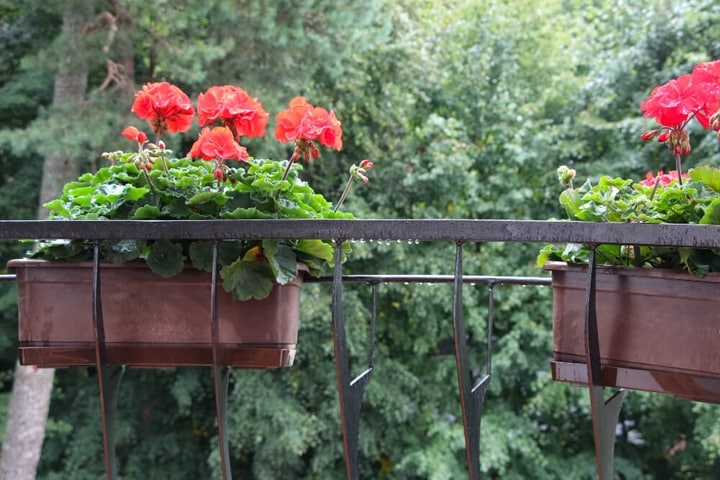
Retaining walls provide an excellent opportunity for vertical gardening. Planting small flowers, herbs, or trailing plants directly into gaps in retaining walls adds interest to vertical spaces and softens hard lines.
Wall planters, pocket planters, or even trellises can be attached to the walls to create additional planting areas.
Additional Features for Terrace Garden Design
1. Introduce a Water Feature
Adding a water feature to a terraced garden can create a relaxing atmosphere and a focal point. Small ponds, cascading water walls, or even a simple fountain can be nestled into a terrace level to create tranquillity. Consider positioning the water feature on a lower level to catch excess runoff and prevent water from flowing onto upper terraces. Water features can also attract wildlife, adding another element to improve the biodiversity of your garden.
2. Create Outdoor Dining Spaces
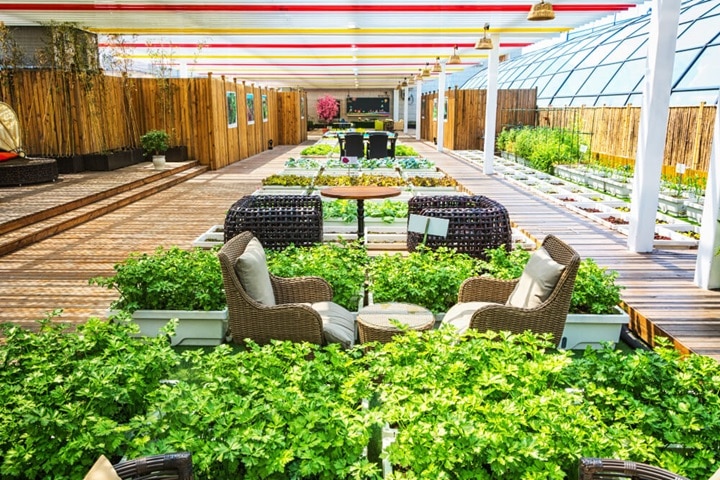
A terrace garden can be a wonderful space for outdoor dining. Choose a flat, accessible terrace and set up a small dining area with outside furniture – seating and a table. With the right choice of furniture, lighting, and perhaps a nearby herb garden, you can create a space that’s perfect for meals or gatherings during warmer months.
3. Add Shade with a Parasol
Terraced gardens often benefit from shaded areas where you can relax during warm weather. A simple parasol can provide shade on a dining terrace, even if you do not want to consider a more permanent option, like a pergola clad with climbing plants.
4. Add a Fire Pit for Warmth and Ambience
For cooler UK evenings, adding a fire pit to your terrace garden can extend the usability of the space and provide a cosy focal point. Fire pits come in many sizes and styles, making it easy to find one that fits both your garden and budget – you can even take a DIY route and construct your own.
5. Add a BBQ Area for Summer Gatherings
An outdoor BBQ area on a terrace can add versatility to your garden, making it ideal for hosting summer gatherings. Install a small BBQ station, either with a portable grill or a built-in setup, on a stable, well-ventilated terrace.
6. Building Into a Slope in a Terrace Garden
Thinking big, those with larger terrace gardens may be able to consider creating buildings that are partially earth-sheltered and built into the slope. For example, it might be possible to create a summerhouse or greenhouse built into a sunny sloping site as part of a terrace design. A root cellar might be built into a north-facing and shaded site.
7. Incorporating a Polytunnel in a Terrace Garden
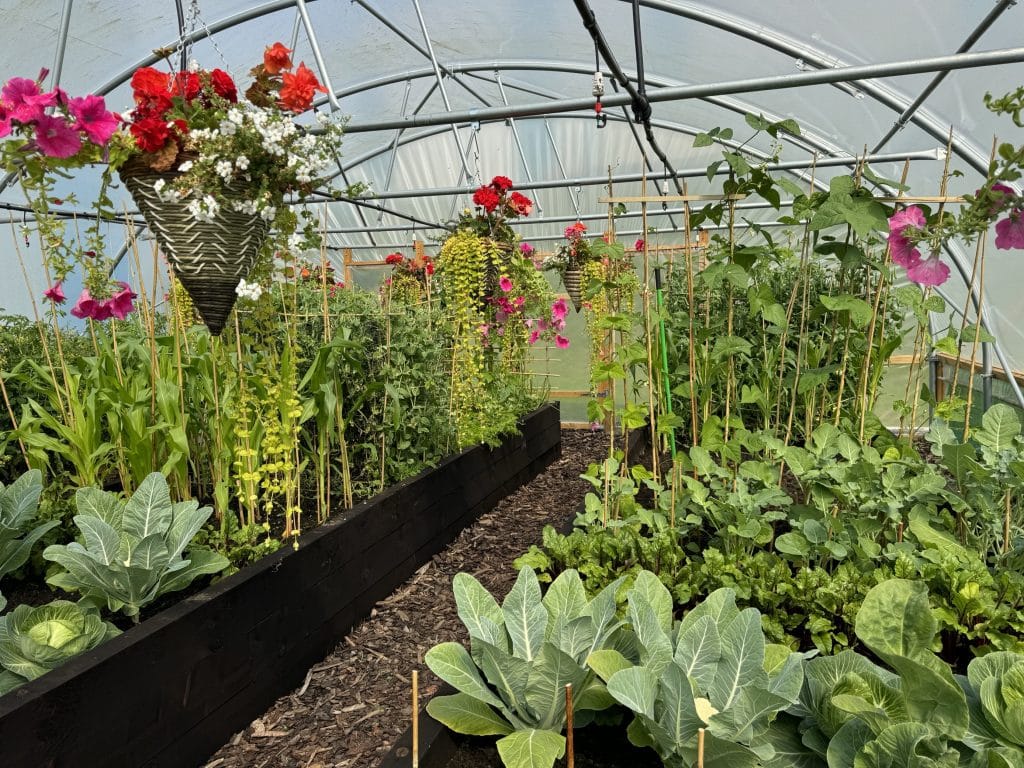
Polytunnels are a valuable addition for UK gardeners interested in extending their growing seasons. When incorporating one into a terrace garden, consider the polytunnel’s orientation and placement for optimal sunlight. Placing the polythene tunnel on a level, accessible terrace ensures stability and allows for easy access.
If you have limited space, a smaller polytunnel or mini-greenhouse can still provide shelter for tender plants and seedlings.
By following these steps and adding your personal touch, you can turn a sloping garden into a beautiful, productive terrace garden. From choosing the right materials to creating a space that’s both practical and inviting, there’s no end to the creative possibilities of a terrace garden.
Be inspired with more of our garden ideas, including:
- Let roses guide the way – rose garden ideas
- Don’t shy away from rustic garden ideas
FAQs
How do I arrange my terrace garden?
Start with the layout of your levels, keeping in mind sunlight, slope, and access. Arrange planting beds, seating areas, and decorative elements based on the function of each terrace and how often you’ll need to access them.
How do I improve the slope in my garden?
Improving a slope involves thinking about the characteristics of the specific slope, managing water, and sometimes stabilising it with terraces, retaining walls, and ground cover plants.
How do you terrace a garden?
Terracing involves creating flat, stable levels by building retaining walls or using materials like timber sleepers. Each level is stabilised with materials and then filled with soil, ready for planting or other uses.
Sources
Harbour Lifestyle. (2023) Best Garden Furniture to Leave Outside: A Comprehensive UK Guide. [online] Available at: https://www.harbourlifestyle.co.uk/blogs/news/best-garden-furniture-to-leave-outside [accessed 14/11/2024]