

Hardy Asian Greens To Sow in Autumn in Your Polytunnel
Growing hardy Asian greens in your polytunnel in autumn can give you access to green leafy vegetables through the winter and into spring. There are a number of different crops that can allow you to go beyond kale and explore some different and often very flavoursome options.
Here are some of the interesting Asian Brassica subspecies to consider growing in your polytunnel garden this year:
Chinese Cabbage/ Napa Cabbage – Brassica rapa ssp. Pekinensis
Referred to either as Chinese cabbage or Napa cabbage, this option originated in China, in the region of Beijing. It is widely used in East Asian cuisine and, since the 20th Century, has been a crop grown throughout Europe, America and Australia. You may simply have heard it referred to in the UK as winter cabbage.
Though typically sown in late summer for an autumn crop, with some protection in a polytunnel this can often also be sown a little later and can withstand cold conditions as long as they are not exposed to long periods of sub-zero temperatures.
Pak Choi/ Bok Choi – Brassica rapa ssp. Chinensis
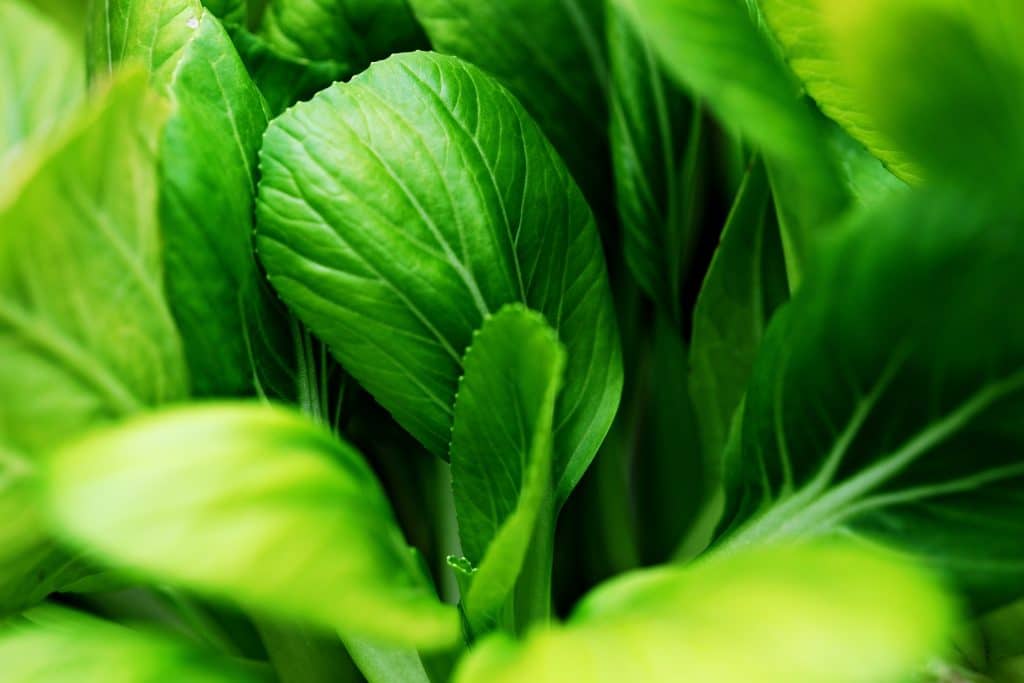
Closely related to the above, this plant does not form heads but rather has green leaves gathered above a bulbous base. It has been cultivated in China since at least the 5th Century CE.
The name pak choi is used in British English, and bok choi is used elsewhere. This name comes from the Cantonese for ‘white vegetable’. In Cantonese, this plant is most commonly referred to as ‘little white vegetable’, while the Napa cabbage, above, is called the ‘big white vegetable’.
There are a number of different varieties to consider growing today, including not only options with green leaves and white stem, but also with vibrant purplish hues on the leaves or leaf veins. There are also options with flatter or more wrinkled leaves, which can add some great variety to salads and stir fries.
Tsoi Sim/ Choy sum – Brassica rapa var. parachinensis
Another closely related brassica, this is also sometimes referred to as Chinese flowering cabbage. It is known in Cantonese as ‘heart of the vegetable’, and is commonly used in Chinese cuisine.
This green leaf vegetable bears yellow flowers. It is similar to lai gan, (Chinese broccoli) which can also be sown in autumn, though this is typically sown earlier in late summer for an autumn early winter crop.
Tsoi sim is a cultivar with flowering shoots and leaves from Japan. It can give a harvest in as little as a month or so, and the leaves and flowering shoots can be eaten raw or cooked in a range of recipes. The best time to harvest is as the flower bus appear, but just before they open. Sow under cover in autumn and you will be able to enjoy harvesting these over the winter months.
Tatsoi – Brassica rapa subsp. narinosa
Another relative is Tatsoi, which comes from the Cantonese for ‘drooping vegetable’. This plant forms thick rosettes of dark green spoon-shaped leaves, and has a subtle but distinctive taste.
This is a particularly hardy green vegetable – able to withstand temperatures down to around minus 10 degrees C. It has been known to grow and be harvested from beneath a layer of snow. You can use this leafy green as an alternative to spinach, and it can provide plenty of fresh greens through the winter months.
Mizuna – Brassica rapa var. niposinica
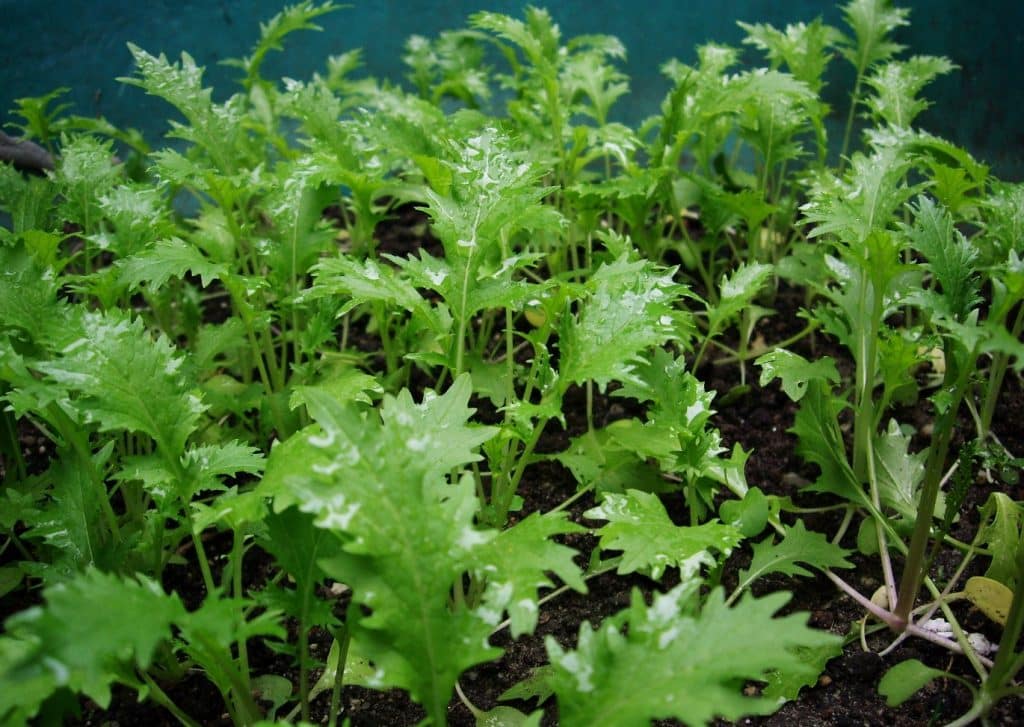
This Japanese salad green is an excellent crop for fresh winter salads. The leaves are frilly in form, and though usually green, can also be purple in colour. This plant can also cope well in the cold and won’t bolt in any extreme temperatures.
Plant this for useful, hardy Asian greens with a mildly spicy flavour can be ready to harvest in as little as 2-3 weeks, and can be successionally sown for cropping pretty much year-round under cover.
Mibuna – Brassica rapa var niposinica
Another variant of the same plant, mibuna has narrow, long, oval leaves rather than the frilled ones of mizuna.
But the taste is similar and this is also a very useful salad crop that will grow quickly and enliven your salads. It too grows well in cooler weather, when it is not likely to bolt as it can in the heat of the summer.
Mispoona – Brassica rapa Hybrid
Introduced in 2006, this new vegetable hybrid was introduced in 2006. It was created by crossing tatsoi with mizuna, and combines the large leaves of the former with the bolt-resistance of the latter. You might be amazed by the size of the rosettes of dark green leaves that this plant produces.
It can be sown through spring, or after midsummer and through into the first part of the autumn, and is very tolerant of different times of sowing.
Komatsuna – Brassica rapa var. perviridis
This vegetable from Japan and Korea has mild, delicious leaves that are very versatile for use as a cooked leaf like kale or chard, or for raw use in a salad. This is another of the hardy Asian greens that can easily make it through the winter months. In fact, you can grow it all year round, and harvest small after around 30 days or when it grows more mature after around 70 days for larger leaves.
Though the main sowings for these hardy Asian greens are in spring and summer, you can also sow this crop in late summer or autumn and they will grow over the winter months in an unheated polytunnel.
Zha Cai/ Wa Wa Ga Choi – Brassica juncea, ssp, tsatsai
This is a stem vegetable on the whole (though the leaves are also edible). It is grown for its weird knobbly stem which swells up a little like a kohlrabi but makes lots of smaller bumps rather than one big one. The stem and leaves can be used sliced up in salads, grated in coleslaw type recipes, cooked, stir-fried or even pickled. They have a not overpowering spice to them, but are generally quite mild in taste.
Sown in spring, this plant has a tendency to bold. But when sown in autumn in a polytunnel it can overwinter and the stem will have swollen in around 3 months. Though leaves will be ready in just 4-5 weeks.
Mustards – Brassica juncea ssp.
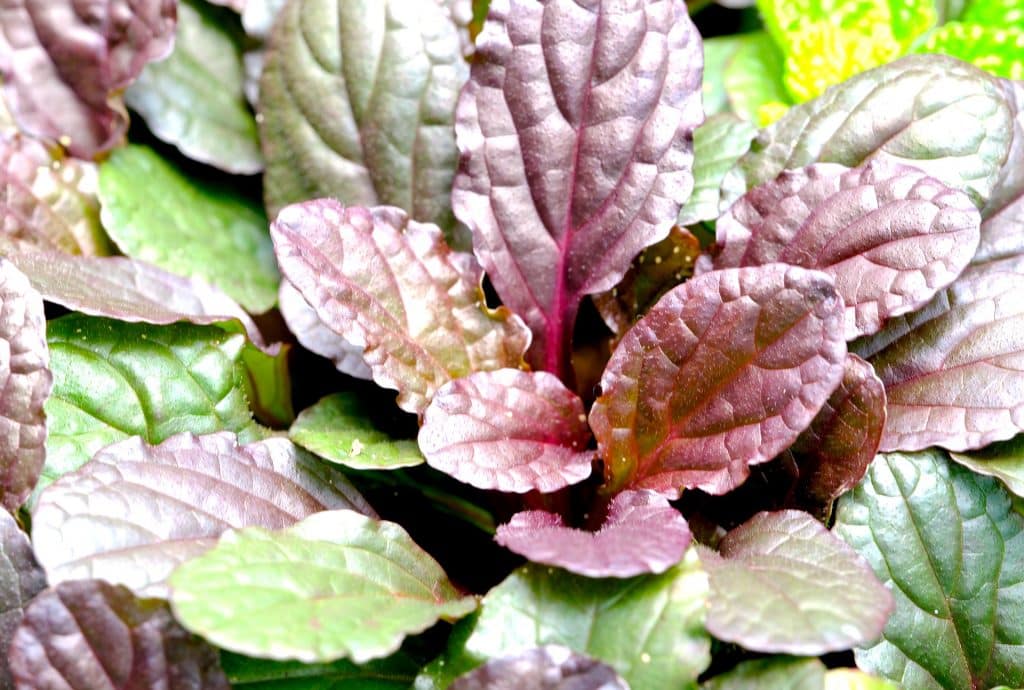
Among all the hardy Asian greens for autumn sowing and overwinter growing, mustards are the largest and perhaps most useful group. They are ideally suited to winter growing and can cope very well with the cold. Another bonus is that they are largely untroubled by pests.
There are a wide range to choose from with different characteristics when it comes to their leaf shape and colouring. Some have very large leaves, others purple colouration, for example. They can also vary in how spicy they become and taste a little different to one another when raw.
Typically, mustards grown for greens are spicy when raw. But are arguably even more useful when cooked, when they lose much of their spiciness and can be used just like spinach or chard.
Seeds of mixed mustards for mustard greens are often readily available, and there are also a number of heritage named varieties to consider, including the excellent ‘Green wave’ and ‘Osaka purple’ – both of which I have sown even as late as October with good results.
Exploring a range of hardy Asian greens can help you make sure that you can enjoy a more varied and interesting home-grown diet from your polytunnel – even through the coldest part of the year. If you are interested in exploring some other Asian greens check out this article on our blog.
Some other winter crops may not always to do well in an unheated polytunnel during extremely cold winters. But even here in Scotland, and even during extreme weather events when we get temperatures well below zero, inside my polytunnel I find that Asian greens are among the plants I grow most likely not just to survive, but to thrive.
So if you are done with your summer crops, make sure your polytunnel fills back up again with plenty of leafy greens and other hardier crops that can cope right through the winter months – and consider growing one or more of the hardy Asian greens mentioned above.
References:
https://familygardenlife.com/asian-greens-best-autumn-crop/
https://www.motherearthnews.com/organic-gardening/asian-greens-types-z10m0hir/#axzz39aeOnk13