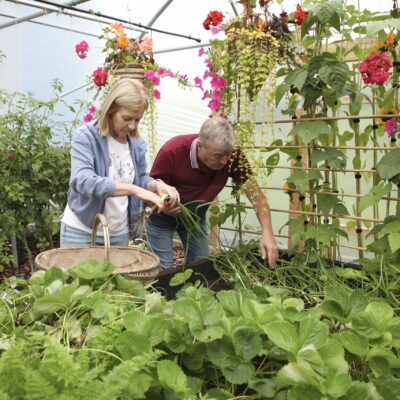


Worried about rising food prices and unpredictable weather? A survival garden gives you more control over what you eat, and a polytunnel makes that possible across more of the year. As a permaculture garden designer, I often work to help others create resilient gardens that will help to support them not just for a single season, but year after year.
In simple terms, a survival garden is a food-first growing system. It focuses on reliable crops, steady harvests and practical resilience rather than aesthetics. In the UK climate, where cold, wind and excess rain can limit growing time, a polytunnel becomes a powerful tool for extending seasons and improving consistency.
If you are new to this approach, it also helps to explore the wider idea of self-sufficiency.
Key Takeaways
- A survival garden prioritises calorie-dense, reliable crops
- A polytunnel extends the UK growing season significantly
- 25–50 m² can meaningfully supplement a household diet
- Layout and crop planning determine productivity
- Season extension reduces reliance on supermarkets
Step 1: What Is a Survival Garden and Why Use a Polytunnel?
A survival garden is designed to feed you first. It focuses on staple crops, continuous harvests and long-term soil health. The goal is not perfection. It is reliability.
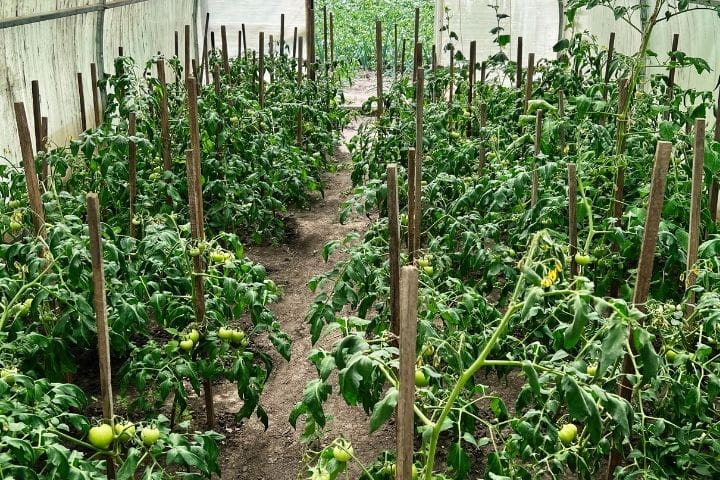
In the UK, growing outdoors alone can be limiting. Weather swings, cold springs and wet summers can all reduce yields. A polytunnel helps balance those challenges by creating a more stable environment.
Polytunnels can transmit over 90% of available light and, when managed well, hold warmth and reduce frost risk. This allows you to sow earlier, harvest later and grow crops that would otherwise struggle.
There are also financial benefits. Growing your own produce can save significant amounts on food bills. With its focus on high calorie crops and necessities for the long term, savings from a survival garden can be even more significant.
Survival garden vs a typical veg patch
- Purpose
Survival garden: food security
Veg patch: variety and enjoyment
- Crop choice
Survival garden: staples and storage crops
Veg patch: mixed seasonal crops
- Mindset
Survival garden: planning and preservation
Veg patch: flexible and seasonal
Polytunnel for food security: pros and cons
| Pros | Cons |
|---|---|
| Protection from weather | Requires ventilation management |
| Longer growing season | Initial setup effort |
| More reliable yields | Needs regular monitoring |
| Better control over conditions | Watering demand can be higher |
A polytunnel does not replace good gardening practice. It strengthens it.
-
Step 2: Plan Your Space, Site and Food Security Goal
Start by deciding what you want to achieve. Are you looking to supplement your meals or move towards self-sufficiency?
In my experience, being realistic at this stage makes everything easier later.
-
Space and expectations
| Goal | Suggested growing area | What this means in practice |
|---|---|---|
| Supplement household food | 25–50 m² | Regular fresh produce |
| Significant self-reliance | 100–250 m² | Staples and storage crops |
Larger setups allow for more staple crops and rotation space. If you are aiming higher, it is worth exploring larger growing structures:
-
Site checklist
- Full sun for most of the day
- Shelter from strong winds
- Good drainage underfoot
- Easy access to water
- Close enough for daily visits
Orientation matters too. Position your tunnel to capture maximum sunlight and allow airflow through doors or vents.
Planning permission is often not required for domestic polytunnels, but it is always worth checking local guidance.
-
How much work is involved?
A survival garden is productive, but it does need attention.
- Daily: watering, harvesting, ventilation checks
- Weekly: sowing, pest checks, tying in plants
- Seasonal: soil feeding, clearing and replanting
In order to reduce the amount of work required, I would recommend exploring the options within perennial food production, as well as growing typical annual crops. These can provide higher yields with a lot less effort over the longer term.
Step 3: Design the Layout (Beds, Paths, Access and Rotation)
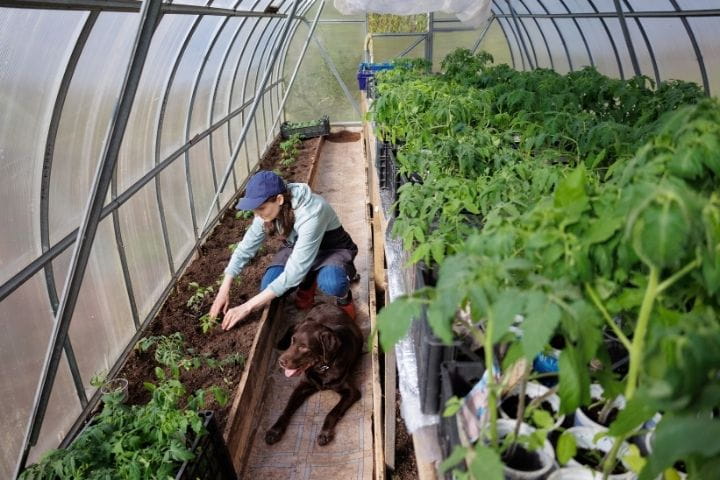
A clear layout makes your tunnel easier to manage and more productive.
I tend to keep things simple with permanent beds and defined paths. This protects soil structure and keeps access easy.
-
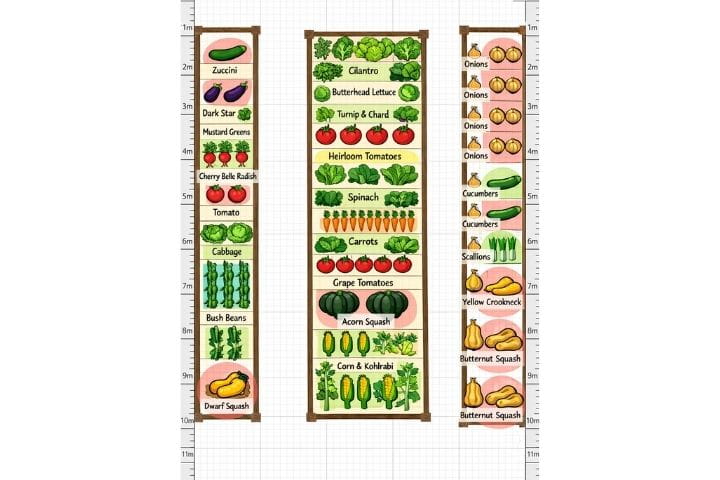
Layout rules that work
- Keep beds narrow enough to reach from both sides
- Allow paths wide enough for a wheelbarrow
- Place taller crops where they will not shade others
- Keep entrances clear for airflow
Crop rotation is especially important in a polytunnel, where conditions stay warm and pests can build up more easily.
-
Simple rotation checklist
- Group crops by family
- Move each group to a new bed each year
- Avoid repeating the same crop in the same soil
- Follow heavy feeders with lighter crops
A more natural, permaculture approach can work well here too, blending structure with diversity.
Step 4: Build Soil Fertility and Resilience
Healthy soil is the foundation of any survival garden.
A no-dig approach works well in a polytunnel. Instead of disturbing the soil, you feed it from the top and let natural processes do the work.
-
Core practices
- Add compost regularly
- Mulch to retain moisture
- Avoid leaving soil bare
- Feed soil life, not just plants
Polytunnels can dry out faster than outdoor beds. Mulching helps keep moisture levels stable and reduces watering needs.
-
Soil care checklist
- Kitchen scraps and garden waste for compost
- Leaf mould and straw for mulch
- Seasonal top-ups in spring and autumn
- Avoid excessive nitrogen-heavy feeds, always use only organic inputs.
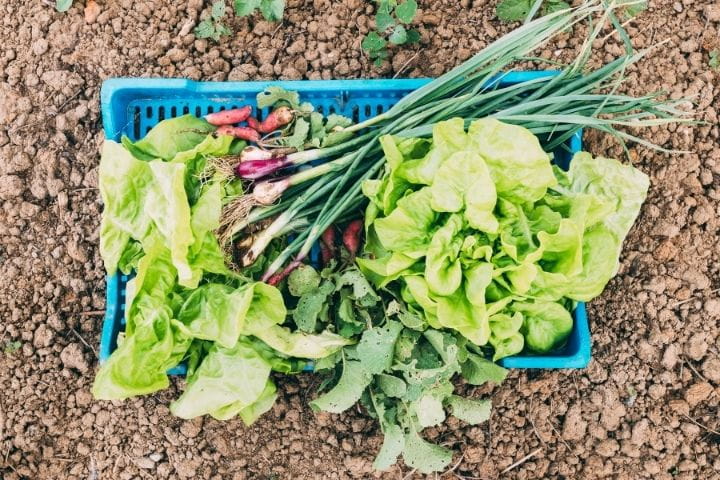
Step 5: Choose Crops by Survival Function
A survival garden is about balance. You need calories, nutrients and crops that store well.
In an annual vegetable garden:
- Staples provide calories
- Beans and peas (and other legumes for pulses) add protein
- Greens deliver micronutrients
- Roots offer long-term storage
Perennials for long-term survival:
Perennial crops are a valuable part of any survival garden because they come back year after year with minimal input. Once established, they provide reliable harvests and help stabilise your growing system, especially when annual crops fail or need replanting. I like to think of them as a safety net that quietly produces food in the background.
Good options for UK polytunnels include rhubarb, asparagus and perennial herbs such as chives and thyme. In sheltered conditions, you can also experiment with perennial kale or sorrel for regular leafy harvests. These crops require patience at the start, but over time they reduce workload and improve resilience, making them well worth including in your overall plan.
Dwarf fruit trees and fruiting shrubs can also work wonderfully in a polytunnel, providing vitamins and options for canning, drying and more…
Plan with the expectation that not everything will succeed. I always grow at least two staple crops rather than relying on just one, and I mix fast-growing vegetables with slower, longer-season crops to spread risk. Staggering sowing dates also helps, as it avoids everything maturing at once or failing at the same time.
Most importantly, do not depend on a single food source. And always grow what you will actually eat, which sounds simple but is often overlooked in practice.
Step 6: Extend the Season
A polytunnel creates a microclimate that can stretch your growing season at both ends of the year.
With simple adjustments, you can grow almost continuously.
Practical ways to extend the season
- Add insulation such as bubble wrap or additional cloches/ row covers in colder months
- Vent daily to control humidity
- Use shading in peak summer
- Incorporate thermal mass to even out temperatures year-round
- Sow little and often for continuous harvests
Polytunnels can remain frost-free with insulation and good management, while still allowing strong light levels through the cover.
Step 7: Build a Low-Waste Water Plan
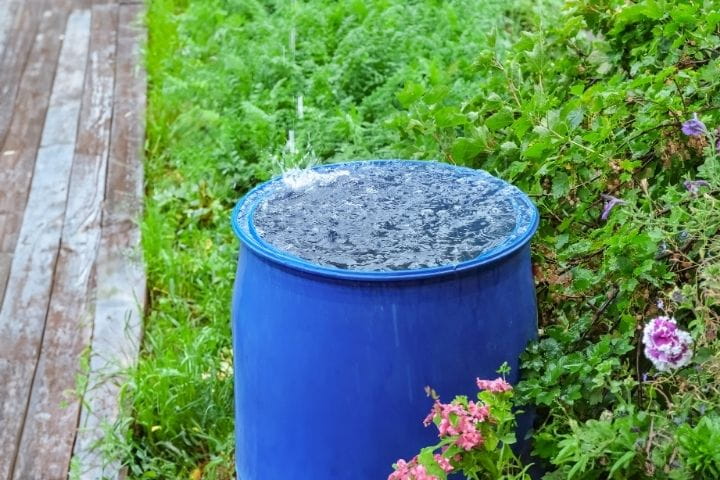
Water management is essential in a polytunnel because rainfall does not reach your crops. Getting this aspect of gardening right is one of the most important keys to success in polytunnel gardens.
Sustainable watering approach
- Collect rainwater where possible
- Use mulch to reduce evaporation
- Water deeply rather than little and often
- Consider drip irrigation for efficiency
Routine checklist
- Check soil moisture daily in warm weather
- Water in the morning where possible
- Watch for signs of stress or overwatering
- Adjust with the seasons
Step 8: Harvest, Store and Preserve
Growing food is only half the system. Storing it properly is what makes a survival garden work.
| Method | Best for | Storage life |
|---|---|---|
| Freezing | Beans, peas, greens | Months |
| Drying | Herbs, some fruits | Long-term |
| Fermenting | Cabbage, roots | Months |
| Root storage | Potatoes, carrots | Winter |
| Pressure canning | Low-acid vegetables, soups, beans | 1 year or more |
Common Survival Garden Mistakes in a Polytunnel
Keep an eye on these common issues:
- Overplanting and reducing airflow
- Ignoring ventilation needs
- Growing too many short-term crops
- Failing to plan for storage
- Not sowing successively
A survival garden in a polytunnel is not about perfection. It is about building a system that works reliably in your conditions.
Start small, focus on soil health and grow a mix of crops that feed you well. Over time, you will create a space that is productive, resilient and far more in tune with the natural cycles around you.
Frequently Asked Questions
How big does a survival garden need to be in the UK?
Around 25–50 m² can supplement your diet. Larger areas allow for more self-sufficiency.
What vegetables grow best in a polytunnel in winter?
Hardy greens such as spinach, winter salads and some brassicas perform well.
Do I need planning permission for a domestic polytunnel?
Often no, but always check local guidance to be sure.
How do I prevent blight inside a polytunnel?
Maintain good airflow, avoid overcrowding and water carefully to reduce humidity.
Sources
Self-Sufficient.co.uk (n.d.) Why Buy a Polytunnel. Available at: https://www.self-sufficient.co.uk
Which? Gardening (n.d.) Cost savings of growing your own produce. Available at: https://www.which.co.uk
Growseed (n.d.) The Ultimate Guide to Building a Self-Sustaining Survival Garden in the UK. Available at: https://www.growseed.co.uk