

Hotter summers and hosepipe bans don’t have to mean empty beds. With the right drought tolerant crops and a thoughtful approach to watering, you can still harvest reliably, even during a dry spell.
As a UK grower, I’ve seen how quickly conditions can shift. One season brings persistent rain, the next prolonged dryness. The key is not to fight those patterns, but to work with them. Many crops are naturally adapted to cope with lower water availability, especially when we support them with good soil and sensible growing practices.
In this guide, I’ll share how drought affects plants, how to reduce stress during dry weather, and which drought tolerant crops are most reliable in UK gardens and for water-wise polytunnel gardens.
Key Takeaways
- Drought tolerant crops cope with dry spells through deep roots and efficient water use
- Young plants always need consistent moisture to establish well
- A 5–8cm mulch layer can significantly reduce evaporation
- Deep, infrequent watering builds stronger root systems
- Growing under cover allows better control of water and reduces stress
- Perennial crops as well as annual ones are worth considering in a low-water-use polytunnel garden.
Understanding Drought Stress in the Garden
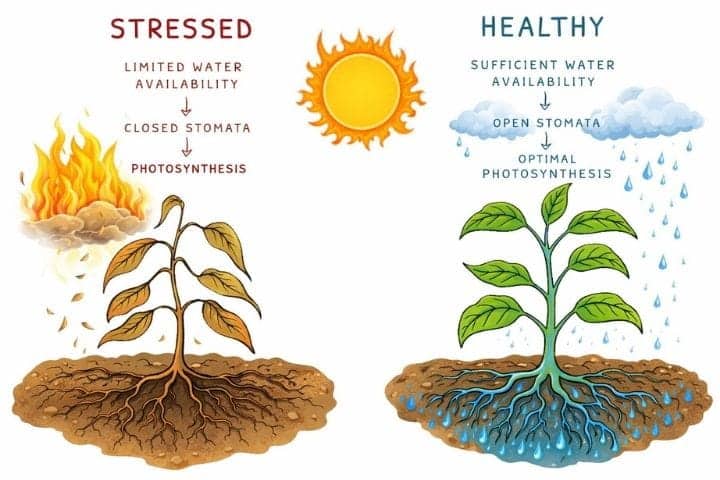
Drought stress occurs when a plant loses more water through its leaves than it can take up through its roots. In warm, breezy conditions, this imbalance can happen surprisingly quickly, even in soils that seem reasonably moist.
Plants lose water through transpiration, a natural process where moisture evaporates from leaf surfaces. When soil moisture is limited, or roots have not developed deeply enough, plants struggle to replace that loss.
Common signs of drought stress include:
- Persistent wilting, especially beyond the heat of the day
- Leaf curl or a dull, grey-green appearance
- Blossom drop on crops like tomatoes and beans
- Smaller fruits or reduced yields
It’s important to distinguish between temporary wilting and true stress. Many plants will droop slightly in the afternoon heat and recover overnight. But when stress continues over several days, growth slows and yields suffer.
From my experience, the underlying factor is almost always root depth. Plants with deeper, well-established root systems are far better able to cope with dry conditions.
Water-Wise Gardening Techniques That Reduce Crop Stress
When water is limited, the aim is to use it carefully and keep as much as possible in the soil where plants can access it.
Practical techniques I rely on:
- Water deeply once or twice a week rather than little and often
- Always water at soil level, avoiding wetting the leaves
- Water early in the morning to reduce evaporation
- Group plants with similar water needs together
- Build soil organic matter to improve water retention
- Mulch Is Essential
Applying a 5–8cm layer of organic mulch is one of the simplest and most effective steps you can take. It reduces evaporation, keeps soil temperatures more stable and improves overall soil health.
In my own growing spaces, I rarely leave soil bare. Even a simple mulch of compost or leaf mould makes a visible difference during dry spells.
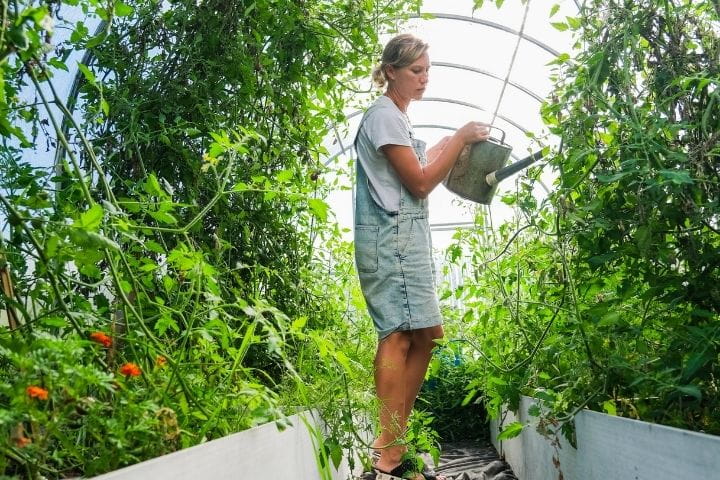
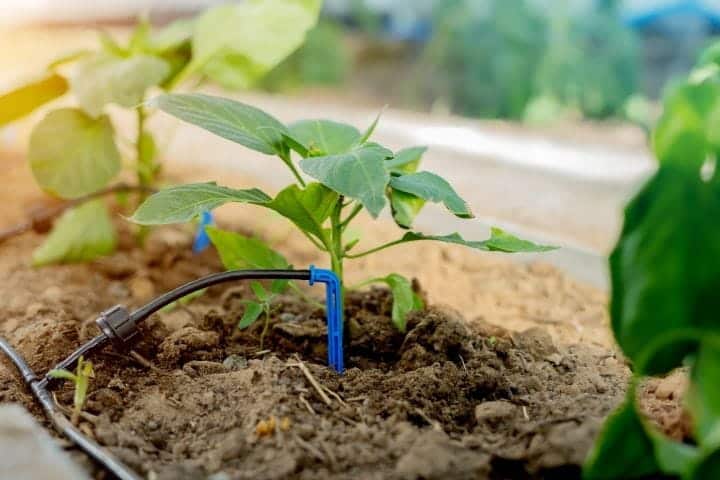
Where possible, drip irrigation or seep hoses can deliver water directly to the root zone. Under cover, this becomes particularly efficient, as you are no longer relying on rainfall and can apply water precisely where it is needed.
Annual Vegetables That Cope Well in Dry Conditions
Some annual crops are surprisingly resilient, particularly once they have established a strong root system.
- French beans and runner beans develop deeper roots than many people expect. Once established, they cope well with moderate dryness, though consistent moisture early on is essential.
- Sweetcorn forms an extensive root network that allows it to draw moisture from deeper soil layers. It benefits from good initial watering but becomes more resilient as it matures.
- Courgettes help themselves by shading the soil with large leaves. This reduces evaporation around the base of the plant and helps conserve moisture.
- Tomatoes, especially when grown under cover, can develop deep, efficient root systems. In a polytunnel, controlled watering encourages steady growth without the fluctuations of outdoor conditions.
- Chickpeas are naturally adapted to drier climates and can perform well in UK summers, particularly in well-drained soils.
- Peppers and chillies thrive in warmth and cope well with lower watering levels, especially when sheltered from wind.
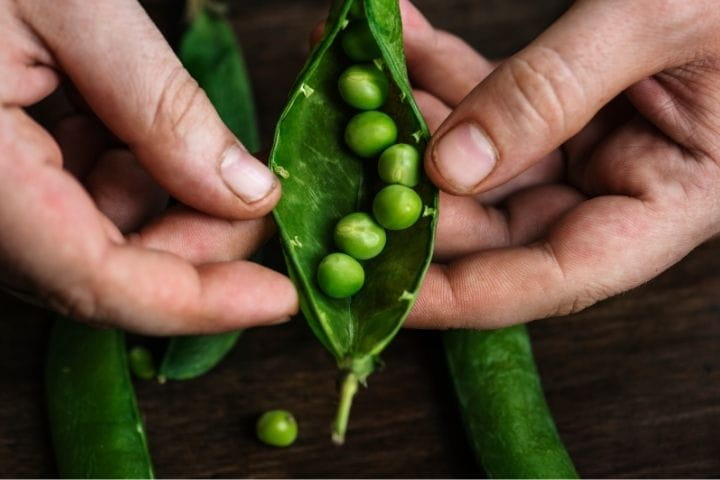
Dryland grains and pulses:
Crops such as chickpeas and lentils are well suited
to growing under cover. They prefer warm conditions and can cope with relatively dry soil once established. In a polytunnel, they benefit from reduced wind stress and more consistent temperatures, which helps steady growth.
Millet and sorghum can also be grown on a small scale, especially in larger structures. Their natural drought tolerance comes from efficient root systems and growth habits that make the most of limited water.
The key, again, is restraint. These crops do not need frequent watering. In fact, overwatering can reduce resilience and lead to weaker root development.
All Drought Tolerant Crops Need Water When Young
It’s worth emphasising that no crop is drought tolerant from the start. The first few weeks are critical.
During this establishment phase, consistent moisture allows roots to develop properly. If plants are overwatered, roots often remain shallow. If watered deeply but less frequently, they are encouraged to grow downwards, which improves resilience later on.
Perennial Drought Tolerant Crops for Long-Term Resilience
Perennials offer a different kind of reliability. Once established, they tend to cope with dry conditions far better than annual crops.
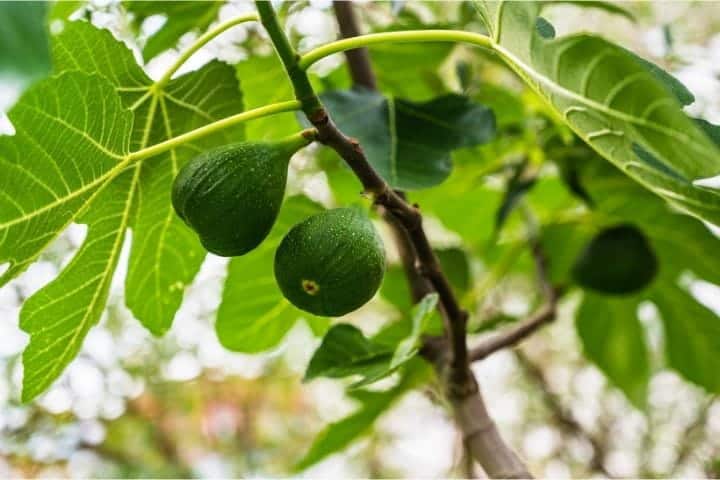
Fruit trees:
Growing fruit trees in a polytunnel gives UK gardeners a real advantage in dry conditions. By sheltering plants from wind and controlling exactly how water is applied, you create a much more stable environment. In my experience, this not only reduces drought stress but also improves fruit quality and reliability year to year.
- Figs are often the first choice for drought-tolerance, but there are several other fruit trees that perform well under cover in UK conditions. The key is to choose compact or trained forms that suit the space and benefit from the extra warmth.
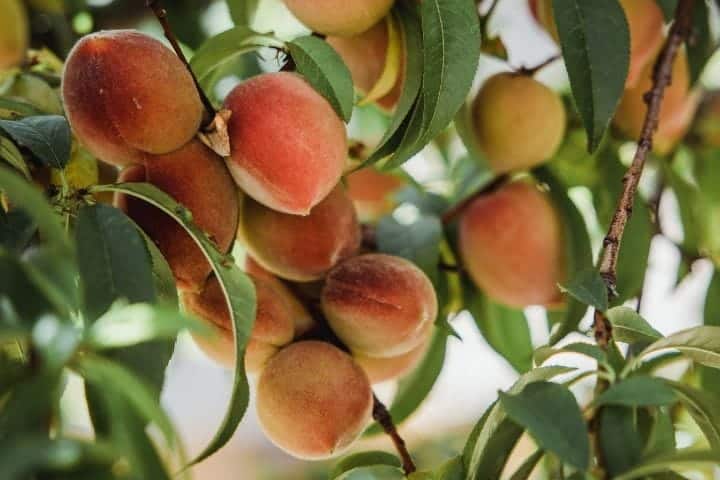
- Peaches and nectarines are excellent options for polytunnels. They benefit from the warmth and protection from rain, which also helps prevent issues like leaf curl. Once established, they cope reasonably well with lower watering levels, especially with good mulching.
- Apricots can also do well under cover. They flower early and are vulnerable to spring frosts outdoors, so a polytunnel provides both protection and more consistent moisture control.
- Cherries, particularly on dwarfing rootstocks, can be grown successfully in polytunnels. Sweet cherries benefit from the shelter, which helps reduce fruit splitting caused by rain.
- Mulberries are another interesting option. They are naturally resilient and cope well with dry conditions once established, though they do need space.
In all cases, the approach to watering is crucial. Focus on deep, infrequent watering to encourage strong root systems, rather than shallow, frequent applications. A thick organic mulch, around 5–8cm deep, helps retain moisture and build soil health over time.
Under cover, fruit trees are not exposed to rainfall, so every drop of water is applied intentionally. This makes it much easier to balance moisture levels and avoid both drought stress and overwatering, something that is much harder to achieve outdoors in a typical UK summer.
Mediterranean herbs:
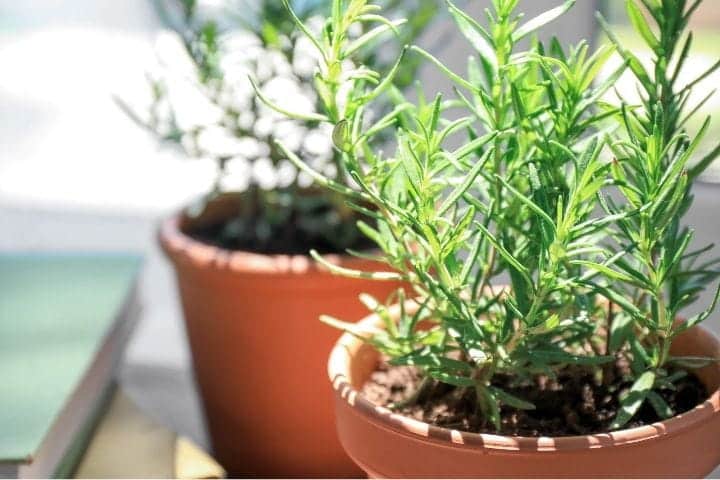
Mediterranean herbs are naturally at home in a polytunnel environment. The combination of warmth, shelter and controlled watering closely mimics the dry, sunny conditions they evolved in.
Rosemary, thyme, sage and oregano all thrive under cover, particularly when grown in well-drained soil. In fact, I’ve found they often perform better in a polytunnel than outside in the UK, where winter wet can be more damaging than summer drought.
These herbs are adapted to conserve water. Their small, often waxy leaves reduce moisture loss, and their roots efficiently access what water is available. In a polytunnel, this means they need very little irrigation once established.
The most important thing is not to overwater. In enclosed growing spaces, it is easy to assume plants need more water than they do. With Mediterranean herbs, less is often more. Allowing the soil to dry slightly between watering encourages stronger growth and more concentrated flavour.
Perennial vegetables for dry conditions:
Perennial vegetables are particularly valuable in a polytunnel because they build resilience over time. Once established, their deeper root systems allow them to cope well with controlled, lower watering regimes.
Asparagus is a good example. In a polytunnel, it establishes more quickly thanks to warmer soil and protection from harsh weather. Once mature, it can tolerate relatively dry conditions, provided the soil retains some organic matter.
Globe artichokes and other perennial crops also benefit from the sheltered environment. Reduced wind means less moisture loss through transpiration, which helps plants conserve water.
From my perspective, the real advantage of growing perennials under cover is consistency. You are not relying on rainfall, and you can manage moisture levels precisely. Over time, this leads to stronger plants that are better adapted to cope with dry periods.
As with all drought-tolerant growing, the establishment phase is crucial. Water well in the first year, build soil health and then gradually reduce inputs as plants become more self-reliant.
Here are some more low-maintenance planting ideas.
Drought Tolerant Cover Crops and Forage Options
It’s also worth thinking beyond food crops. Cover crops play an important role in improving soil resilience.
| Crop | Type | Benefit | When to Sow |
|---|---|---|---|
| Clover | Cover crop | Fixes nitrogen | Spring / Autumn |
| Vetch | Cover crop | Improves soil structure | Autumn |
| Rye | Cover crop | Adds organic matter | Autumn |
These crops help protect and build the soil, increasing its ability to retain moisture over time.
For smallholders, drought tolerant forage crops such as sorghum or millet can provide reliable biomass or feed during dry periods.
Caring for Drought Tolerant Crops Under Cover
Growing under cover changes the dynamics of drought management, often for the better.
Key considerations:
- Ventilate well to prevent excessive heat build-up
- Monitor soil moisture regularly, not just the surface
- Space plants to reduce competition for water
- Avoid excessive feeding during heatwaves
- Harvest regularly to keep plants productive
Explore more growing advice with our polytunnel guides.
In my experience, one of the greatest advantages of growing under cover is consistency. You are not at the mercy of rainfall, and you can apply water exactly where and when it is needed.
For larger-scale setups, controlled environments offer even greater resilience:
Growing for Resilience
Protected growing makes drought management far more predictable. By reducing wind exposure and controlling irrigation, you create a more stable environment for crops to establish strong root systems.
Over time, this leads to healthier plants that are better able to cope with dry conditions. It is not about eliminating risk entirely, but about reducing it to a manageable level.
Conclusion
Drought tolerant crops do not remove the need for water, but they allow you to grow more reliably with less of it. By improving your soil, choosing the right plants and watering thoughtfully, you can continue harvesting even during dry spells.
For UK growers, resilience comes from working with the conditions rather than against them. With a little planning, even a dry summer can still be productive.
FAQs
Which vegetables require the least water in the UK?
Crops like beans, courgettes, chickpeas and Mediterranean herbs generally cope well with lower water levels once established.
Will drought tolerant crops survive without any watering?
No. They still need water, particularly early on, but they are better adapted to cope with reduced availability.
What is the difference between drought tolerant cover crops and vegetables?
Cover crops improve soil structure and moisture retention, while vegetables are grown for harvest.
Can I grow drought tolerant crops in containers?
Yes, but containers dry out more quickly, so careful watering and mulching are essential.
Are drought tolerant crops the same as drought resistant crops?
Not quite. Drought tolerant crops cope with dry conditions, while drought resistant plants can endure more extreme or prolonged dryness.
Sources:
RHS (2023) Drought advice for vegetable growers. Royal Horticultural Society. Available at: https://www.rhs.org.uk [Accessed 27 Feb 2026].
Oregon State University Extension (2022) Drought tolerant vegetable selection and care. Available at: https://extension.oregonstate.edu [Accessed 27 Feb 2026].