


Are polytunnels worth it? Yes, for most UK gardeners, polytunnels are worth it. If you want more reliable and varied harvests, a longer growing season, and better control over your crops, they offer clear advantages over growing outdoors.
That said, they are not a perfect solution. There are costs, maintenance and management to consider. In this guide, I will walk you through 10 practical reasons why polytunnels are worth it, along with the trade-offs, so you can decide if one suits your space and growing style.
Key Takeaways
- Polytunnels are usually more affordable than comparable greenhouses
- They extend the growing season significantly in UK conditions
- They protect crops from wind, rain and frost
- They can improve yield in terms of quality and quantity when managed well
- They do require maintenance, especially ventilation and cover care
Reason 1: Lower Cost Than a Greenhouse
If you compare like-for-like growing space, a polytunnel almost always comes out as the more affordable option. You get a larger covered area for your budget because the structure relies on a flexible frame and polythene cover rather than glass or rigid panels.
In practical terms, this means you can grow more without scaling up your spend. For many home growers, that makes the difference between experimenting and producing a meaningful amount of food.
There are ongoing costs to factor in. Covers will eventually need replacing, and fittings may need occasional maintenance. But even with that in mind, the overall cost per square metre of growing space remains low.
Reason 2: Extends the Growing Season
One of the biggest advantages, and the one I value most, is season extension. A polytunnel creates a warmer, more stable environment that allows you to start earlier in spring and keep crops going later into autumn.
Research on high tunnels shows that protected growing can significantly extend cropping windows by reducing exposure to frost and heavy rainfall. In UK conditions, that often translates into earlier sowing and a longer harvest period.
For me, this means fewer gaps in production and more continuity. Instead of a short burst of summer harvests, you can spread yields across much more of the year.
Reason 3: Grow Heat-Loving Crops Successfully
Some crops simply struggle outdoors in many parts of the UK. Tomatoes, peppers and cucumbers often suffer in cool, wet summers.
Here in Scotland, I would struggle to grow these crops outdoors as successfully, but under a polytunnel, these crops thrive. The added warmth and protection from rain help with pollination, fruit set and ripening. You are far more likely to get consistent results.
In my own growing, the difference is clear. Tomatoes ripen more reliably, and we get far more of them to ripen before the end of the growing season, peppers develop properly and crops are less prone to disease linked to wet foliage.

Reason 4: Increased Yield Potential
Polytunnels do not magically increase yield on their own, but they create the conditions that make higher yields possible. What you are really investing in is consistency.
By reducing environmental stress, you allow plants to grow steadily rather than constantly recovering from setbacks. Outdoors, crops are often knocked back by cold nights, heavy rain, wind or sudden temperature swings. Each of these interrupts growth. Under cover, those interruptions are reduced, so plants can put more energy into producing leaves, flowers and fruit rather than simply surviving.
This steady growth has a compounding effect over time. Plants establish more quickly in spring, maintain momentum through summer and often continue cropping later into the season. Even if individual fruits are not dramatically larger, the overall output across the season is usually higher.
Research into high tunnel systems supports this approach. More controlled environments lead to improved crop performance because key variables such as temperature, moisture and airflow are easier to manage. In UK conditions, where weather variability is often the main limiting factor, this control is particularly valuable.
From my own experience, the real difference is reliability. You are less likely to lose a crop to a wet summer or a cold snap. Tomatoes ripen more consistently, salads are less prone to bolting or rot, and crops like peppers are far more productive.
It also allows you to plan more effectively. With fewer unexpected setbacks, you can use succession sowing and spacing more confidently, knowing crops are likely to perform as expected. Over time, that predictability is what leads to better overall yields, not just in one good year, but season after season.

Reason 5: Protection From UK Weather
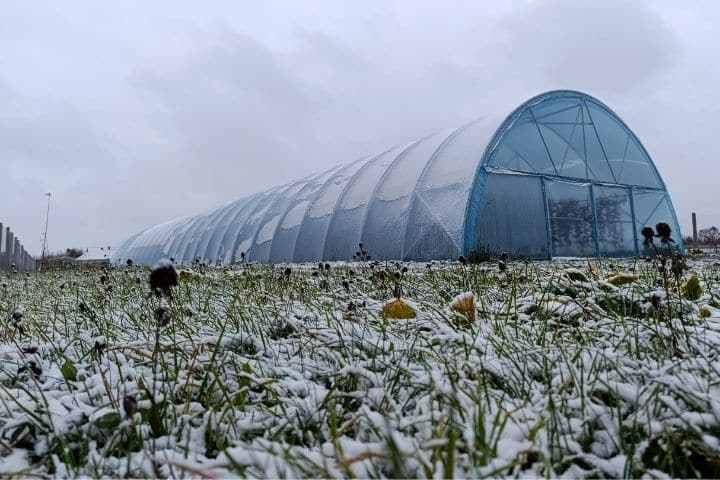
UK weather is becoming more and more unpredictable. Heavy rain, strong winds and late frosts can all damage crops or slow growth.
A polytunnel shields plants from these extremes. Leaves stay drier, roots are not waterlogged and physical damage is reduced.
That said, protection brings responsibility. Without proper ventilation, humidity can build up and cause issues like condensation or disease. Opening doors, vents or side panels is essential, especially in warmer months.
Adding thermal mass (materials that can store heat and release it gently when temperatures fall) can help keep a polytunnel cooler in summer and warmer in winter.
Reason 6: More Growing Space Per £ Spent
The structure of a polytunnel allows you to cover a large area efficiently. Curved frames and flexible materials make it easier to scale up without dramatically increasing costs.
You also gain usable vertical space. Many polytunnels offer good headroom, which is ideal for crops like tomatoes and climbing beans.
From a practical perspective, this means more planting options and better use of the space you have.
Reason 7: Flexible Installation and Relocation
Compared to a permanent greenhouse, a polytunnel is generally more adaptable. Many can be installed with less groundwork and, if needed, relocated.
This flexibility is particularly useful on allotments or in evolving garden layouts. If your needs change, your growing space can change with you.
I’ve found this reassuring. It allows you to start with a manageable setup and adjust over time rather than committing to a fixed structure immediately.
Reason 8: Supports Year-Round Growing
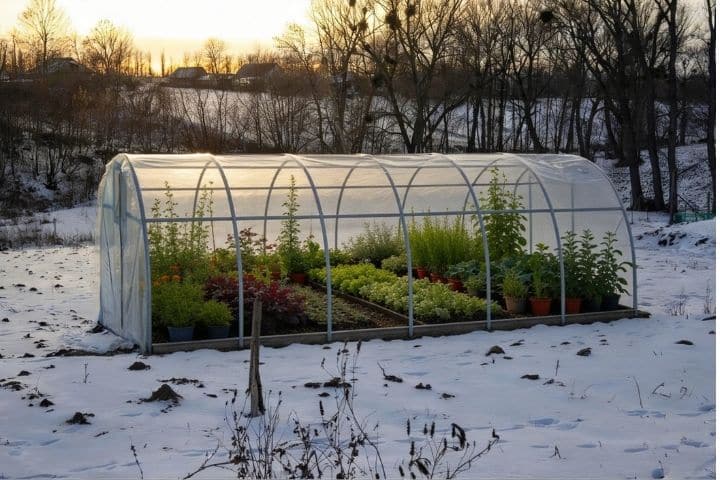
While a polytunnel won’t eliminate winter challenges, it does open up the possibility of year-round growing.
Hardy crops such as winter salads, spinach and some brassicas can continue through colder months with protection. Growth may slow, but it doesn’t stop entirely.
With good planning, you can move from a seasonal garden to something much more continuous. This shift alone can make a polytunnel worthwhile.
Reason 9: Wellbeing and Lifestyle Benefits
Gardening is not just about yield. It also supports wellbeing.
The Royal Horticultural Society highlights the positive impact gardening can have on mental and physical health. A polytunnel extends the time you can spend growing, even when the weather is less inviting.
From my perspective, having a sheltered space to work in makes gardening more consistent and enjoyable. It becomes a place you return to regularly, not just when conditions are perfect.
Reason 10: Long-Term Return on Investment
When you combine all these benefits, the long-term value becomes clearer.
A polytunnel can help you:
- Grow more food at home
- Reduce reliance on shop-bought produce
- Avoid repeated crop failures
- Make better use of your growing space
There is no fixed payback period, as it depends on how much you use it. But if you grow regularly, the investment tends to justify itself over time.
Polytunnel vs Greenhouse – Quick Comparison
Both offer protected growing, but they differ in cost, flexibility and how much space you get for your budget. The table below highlights the key differences to help you quickly understand which option might suit your garden and growing goals.
| Feature | Polytunnel | Greenhouse |
| Cost | Lower per m² | Higher upfront cost |
| Installation | More flexible | More permanent |
| Growing space | Larger for price | Typically smaller |
| Maintenance | Cover replacement required | Glass cleaning/repairs |
| Ventilation | Manual or roll-up sides | Built-in vents |

Downsides to Consider (and How to Manage Them)
It’s important to be realistic. Polytunnels are not maintenance-free.
Common challenges include:
- Ventilation and condensation
Without airflow, humidity builds up.
Solution: Open doors, vents or sides regularly. - Watering requirements
Rain does not reach your crops.
Solution: Use drip irrigation or consistent manual watering. - Cover lifespan
Polythene will eventually need replacing.
Solution: Choose quality materials and maintain them well.
In practice, these are manageable with routine care. The key is understanding them upfront.
So are Polytunnels Worth It for You?
A simple way to decide is to ask yourself:
- Do you want to grow more reliably in unpredictable weather?
- Are you interested in extending your growing season?
- Do you have space for a covered growing area?
- Are you willing to manage watering and ventilation?
If the answer is yes to most of these, a polytunnel is likely to be a worthwhile investment.
Next Steps
If you are considering one, it helps to explore size and setup options before committing.
Browse domestic polytunnel options, and download growing guides and planning resources to help you decide which polytunnel might be right for you.
For most UK home growers, polytunnels are worth it. They provide a more controlled growing environment, extend the season and improve crop reliability.
They do require some management, particularly around watering and ventilation. But with a little planning, these are straightforward to handle.
If you want to grow more consistently and make better use of your space, a polytunnel is one of the most effective steps you can take.
Sources
- Royal Horticultural Society (2025) State of Gardening Report 2025. Report. Available at: https://www.rhs.org.uk/about-the-rhs/policies-and-reports/state-of-gardening [accessed 26 February 2026].
- Kaiser, C. and Ernst, M. (2024) High Tunnel Overview. Website. University of Kentucky Center for Crop Diversification. Available at: https://www.uky.edu/ccd/production/high-tunnels [accessed 26 February 2026].