

No matter how large your polytunnel may be, you will always find that you want to fit more inside.
Though you may not be able to purchase a larger polytunnel, or invest in additional polytunnels for your property, there are some important steps you can take and strategies that you can employ to fit more plants in your polytunnel and make the most of the space available.
Preparing Your Polytunnel for Planting

If you have a new polytunnel, one of the first things that you will need to do is prepare the area inside your polytunnel for planting. There are several different stages that you will need to go through before you will actually be ready to start sowing and planting within the space.
In short, you will need to:
- Decide what to grow and how to grow it.
- Determine the best overall layout for the space, deciding where growing areas and paths will be located.
- Create an optimal planting plan within each of the growing areas, selecting the right plants and combining them in the right ways.
Getting things right at each of these stages can help you avoid a range of common problems that could arise down the road.
Deciding What to Grow in a Polytunnel
Of course, one of the very first decisions that you will have to make is what you would like to grow within the space, and the growing method or methods that you plan to employ to grow those plants. Creating a good plan from the outset can help you to avoid some of the most common pitfalls experienced by polytunnel growers.
One of the key decisions to make is whether you will grow in the ground or in raised beds, or in containers, or choose a combination of all or some of the above. You will also need to decide whether you will focus on food production, and if so, whether you will focus on annual or perennial crops.
Deciding on a Layout
You should really have decided what methods to employ and what you would like to grow before you determine the best layout for the space. The layout will of course depend on the path width and placement required, and on which other growing spaces and elements you plan to include.
Making Your Access Path or Paths
Typically, new polytunnel owners consider either a single-path or double-path layout.
In smaller polytunnels, it’s typical to opt for a single, straight path down the centre, flanked by beds on each side. In larger polytunnels, a double-path layout is common, featuring two paths with a central bed and additional beds along each side.
These layouts are designed to maximize space efficiency and accessibility within the polytunnel, but it is important to note that they are not the only options.
Consider innovative pathways within your polytunnel, such as a meandering central path or branching paths resembling tree branches or river flows.
In smaller polytunnels, an unconventional approach might involve eliminating paths entirely. For instance, a low-maintenance design could feature stepping stones instead of solid pathways, maximizing planting space while providing access for gardening tasks.
By placing low-lying plants between flagstones or other platform areas, you can efficiently utilize the available space and ensure that you can still access all areas of the polytunnel.
Creating the Main Growing Areas
Of course, the most important parts in any polytunnel used for growing plants are the primary growing areas. These might be in-ground beds, raised beds, or even containers, depending on the specific methods you have chosen to employ and the specific plants you wish to grow.
The layout for these main growing areas should be considered carefully, as you will need to ensure that these spaces can provide what the plants you wish to grow need to thrive.
When thinking about their layout therefore, both in terms of their placement within the polytunnel and the placement of specific plants within them, you need to think about the basics of sunlight and shade, ventilation, water etc.. to make sure all the basic growing needs are met.
Irregular shaped planting areas with wave-shaped edging will maximise edge, the most productive and abundant part of an ecosystem, potentially offering more space for planting and higher yields.
Herb spirals or other spiral form beds in three dimensions can help you create a wider range of habitats in a small area and are another organic form to consider to make the most of your space. Keyhole beds can also allow you to grow more plants by being an efficient use of space.
Growing in Containers
Whether or not you are primarily growing plants in containers of some kind in your polytunnel, remember that containers might allow you to grow additional plants within the space.
Containers might be used to make the most of gaps between the main growing areas, or even placed on pathways during certain periods to fit more into the space.
Container cultivation might involve using simple pots or grow bags. But it could also encompass a range of other interesting space-saving solutions for polytunnel growers.
For example, it might involve Dutch buckets, or other growing areas within a hydroponic or aquaponic system. Such water-based, closed loop growing systems can be very useful in many polytunnel gardens.
Containers might also be raised up (see below) in a vertical garden or hanging system to fit in more plants. Or made mobile so that they can be moved around at different times to different spaces not in other use within a polytunnel.
Vertical Gardening
When planning your polytunnel layout, it’s crucial to remember that thinking solely in two dimensions is a mistake. Beyond considering access and ground layout, it’s essential to think in three dimensions.
This means considering not only the arrangement of pathways and beds on the ground but also the vertical space within the structure.
Using vertical space effectively involves installing trellises or other support structures for climbing plants, creating cordons for tomatoes and other such crops, and affixing supports to the crop bars of the polytunnel structure.
Hanging Planters
Utilizing hanging planters is another excellent way to maximize space efficiency and increase the number of plants you can successfully grow in a polytunnel.
By suspending planters such as hanging baskets or other hanging containers from the ceiling or overhead structures, you can effectively use vertical space and increase the growing area within the tunnel.
Opt for lightweight, durable materials for the planters to minimize weight load and ensure longevity. There are a number of natural and reclaimed materials you might use.
Select plants that thrive in hanging conditions, such as trailing varieties or compact herbs, to make the most of the vertical space. Additionally, consider installing a pulley or adjustable system for easy access to the hanging planters, to make it easier to maintain and harvest from those areas.
Making the Most of Edge Spaces
Fitting in more plants within a polytunnel also involves making sure that you are making full use of edges and marginal spaces that might not usually be used for crops.
Planting within bed edging, or into pathways, are a couple of examples.
Layered, Polyculture Planting
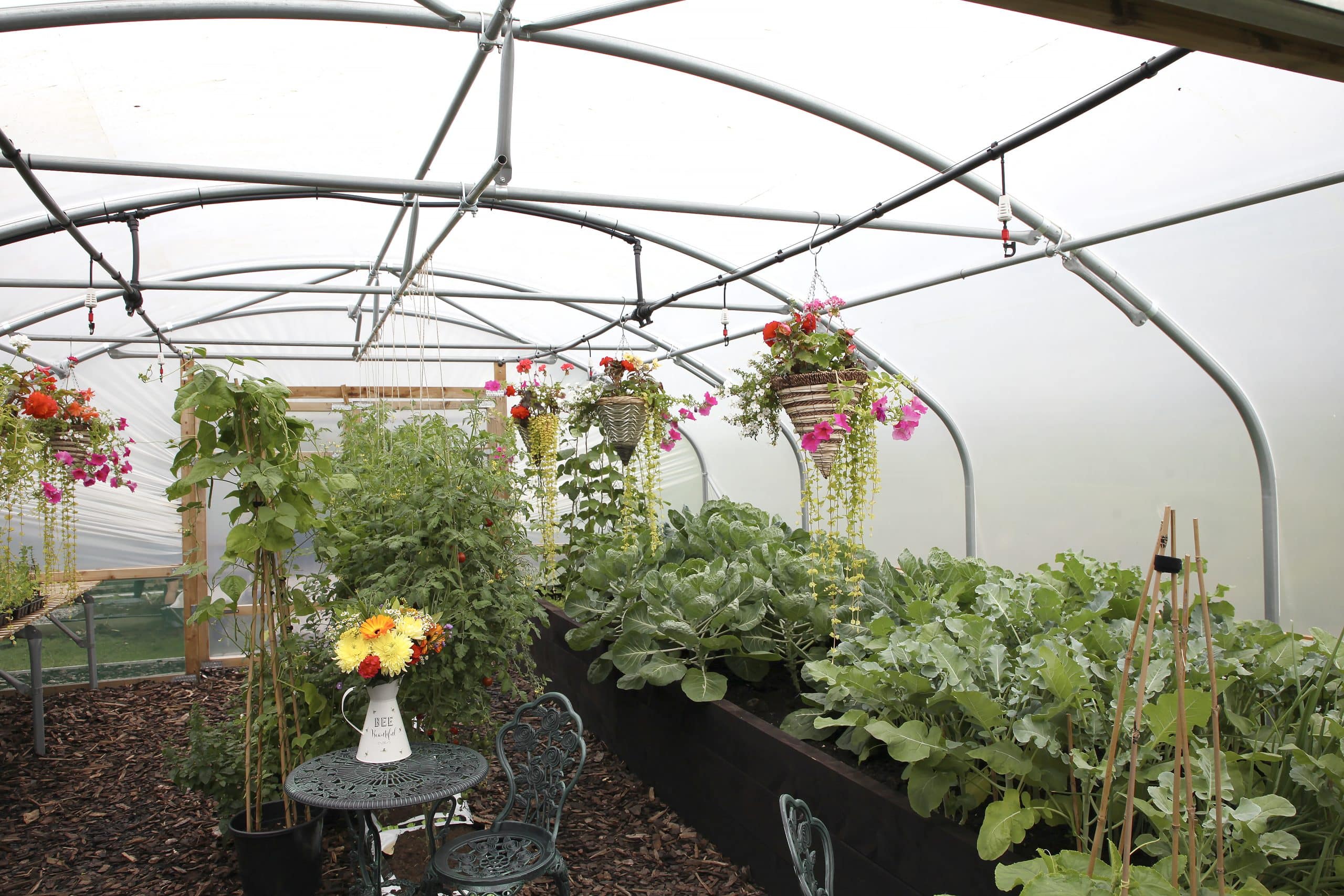
Layered, polyculture planting is an important strategy for maximizing plant diversity and yield within a polytunnel. Start by selecting complementary plant species that thrive in similar growing conditions and can coexist harmoniously.
Companion planting and intercropping different species in the same area further maximizes space efficiency and fosters natural pest control and nutrient cycling. Companion planting allows you to fit in more plants when two or more species occupy different layers within a given planting area.
By implementing layered, polyculture planting techniques, you can significantly increase the number of plants cultivated within your polytunnel while promoting biodiversity and resilience in your growing environment.
Creating a Polytunnel Planting Plan
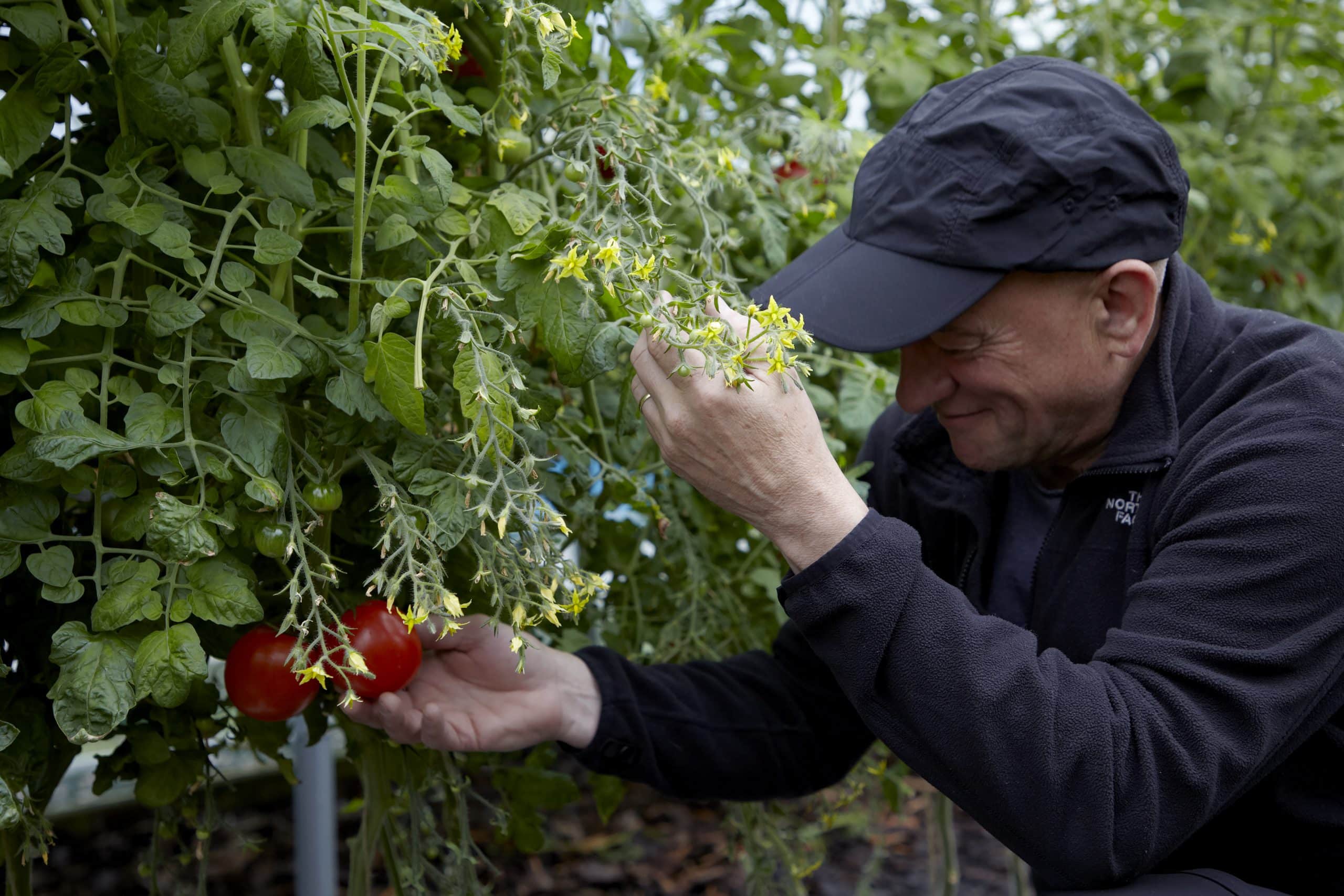
Creating the right planting plan can definitely help you to make sure that you grow an optimal number of plants, increasing the number of plants as much as possible without introducing too much competition and reducing yield.
When you are making your planting plans make sure that you place plants in locations that perfectly meet their needs, and of course think about how the plants are combined to make the whole more than just the sum of its parts.
Making a planting plan, with a good understanding of the needs, lifecycles and of the plants in question, can help you to make sure that no space is wasted and that you make the most of all the growing space that is available to you, in all the different parts of your polytunnel.
Making the Most of Time as Well as Space
Time brings change – change that we can use to our advantage. Gardeners should make sure that they understand how time will change the environment in a polytunnel over the course of a day, and a year.
They should also understand the cycles of nature, and how long plants take to progress through different stages of growth. This will be crucial to making plans to grow plants not only through the summer but all year round. It is important to make the most of space and time to get as much as we can from any given space.
One way to make the most of time is to implement succession planting by staggering the sowing and planting of crops to ensure a continuous harvest throughout the growing season. As soon as one crop is harvested, promptly replant the space with another crop that can mature within the remaining growing window.
Use fast-growing crops or early-maturing varieties to fill gaps between slower-growing plants. Additionally, interplanting different species that have varying growth rates and maturity times allows you to efficiently utilize available space.
FAQs
How do you grow things in a polytunnel?
To cultivate plants in a polytunnel, ensure proper ventilation and temperature control by adjusting vents and doors as needed. Provide adequate irrigation to maintain soil moisture levels, and consider installing drip irrigation systems for efficient watering.
Choose suitable crops based on the available space, sunlight exposure, and climate conditions. Utilize raised beds or containers to optimize growing space and soil quality. Regularly monitor and manage pests and diseases to promote healthy growth and maximize yields.
What is the best way to layout a polytunnel?
There are a number of different options and considerations when choosing how to layout the main growing areas and pathways in your polytunnel. These layout ideas should help you to determine the best layout for your needs.
What do you put on the ground in a polytunnel?
Some gardeners prefer to leave the ground bare in their polytunnel, especially if they plan to grow crops directly in the soil. They will usually then use an organic mulch around the plants in their in-ground growing areas. Sometimes, people use a weed control fabric below pathways and/or beds.
Polytunnel pathways may be constructed from a wide range of different materials.
What can you not grow in a polytunnel?
Most plants can potentially be grown in a polytunnel as long as the right conditions are provided. But you do have to think about temperatures in particular when determining which crops you will be able to grow in a polytunnel where you live – both high temperatures in summer and low temperatures over the winter months. There are of course many other factors to consider, but temperatures are one of the key limiting factors.
Sources
First Tunnels. (2020) The Complete Guide Into The World Of Companion Planting. [online] Available at: https://www.firsttunnels.co.uk/growing-guides/companion-planting-guide/ [accessed 21/05/24]