Blight can wipe out a tomato crop in a matter of days, especially during a wet UK summer.
In simple terms, blight on tomato plants is a fast-spreading disease, usually caused by fungal-like pathogens, that damages leaves, stems and fruit.
If you grow tomatoes outdoors or on an allotment, it’s something you will likely encounter at some point. This guide focuses on helping you understand what blight is, how to recognise it early and how to reduce the risk.
If you are already dealing with an outbreak, see the full tomato plant blight treatment guide.
Key Takeaways
- Blight on tomato plants is caused by pathogens such as Phytophthora infestans and Alternaria solani
- Early blight, late blight and Septoria all show different symptoms
- Warm humidity or prolonged wet weather increases risk
- Early identification improves your chances of saving part of the crop
- Good airflow, dry foliage and rotation reduce infection risk.
What Is Blight on Tomato Plants?
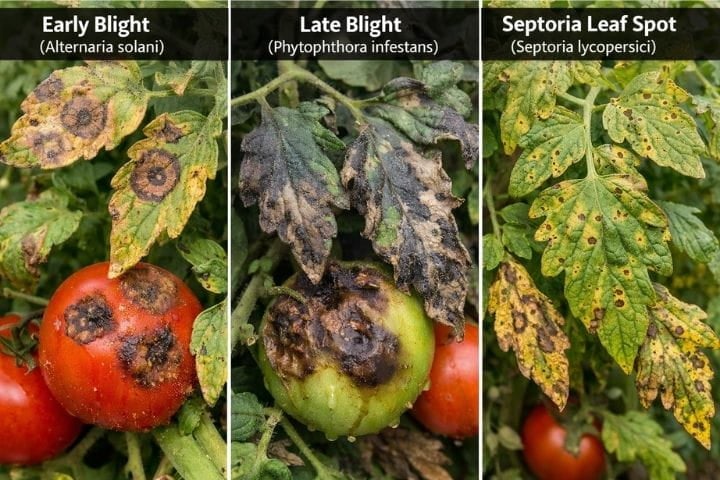
Tomato plant blight is a term used to describe several diseases that affect tomatoes, causing rapid leaf damage, stem infection and fruit rot. The most common types in the UK are early blight, late blight and Septoria leaf spot.
Early blight (Alternaria solani) is a fungal disease that develops gradually, often starting on older leaves. Despite the name, it can appear at any stage of the growing season, especially in warm, humid conditions.
Late blight (Phytophthora infestans) is the most destructive. It spreads quickly in cool, damp weather and can destroy entire plants in a short time. It is the same organism responsible for potato blight and can move between crops.
Septoria leaf spot (Septoria lycopersici) mainly affects leaves, causing spotting and eventual defoliation. It tends to weaken plants rather than kill them outright.
Blight pathogens overwinter in plant debris or infected material, then spread when conditions become favourable.
How Does Blight Spread?
Blight spreads easily and often invisibly, which is why it can catch gardeners off guard even when plants looked healthy just days before. The disease doesn’t rely on a single route of infection. Instead, it moves through a combination of air, water and contact, making it difficult to contain once conditions are favourable.
- Wind-borne spores can travel long distances
Blight spores are incredibly light and can be carried on the wind for miles. This means your plants can become infected even if your own garden has been well managed. Outbreaks in nearby allotments or neighbouring gardens can quickly spread across a wider area.
- Rain splash transfers spores from soil to leaves
When rain hits the soil, it can splash spores up onto the lower leaves of tomato plants. This is often how infections begin. From there, the disease works its way up the plant, especially if leaves remain wet for long periods.
- Infected plant debris carries disease between seasons
Blight can overwinter in infected plant material left in the soil or compost heap. If this debris is not properly cleared, it becomes a source of reinfection the following year. This is why end-of-season clean-up is so important.
- Tomatoes and potatoes can infect each other
Late blight affects both crops, and because they are closely related, the disease can move easily between them. Growing tomatoes near potatoes increases the risk, particularly in damp conditions.
- Tools and hands can spread spores if not cleaned
Simple garden tasks like pruning or tying in plants can transfer spores from one plant to another. Cleaning tools and washing hands regularly helps reduce this risk, especially during humid weather when blight is more active.
Early vs Late vs Septoria – What’s the Difference?
Understanding the differences helps you identify problems quickly and respond appropriately.
| Disease | Pathogen | Typical Weather | Leaf Symptoms | Fruit Symptoms | Speed of Spread |
|---|---|---|---|---|---|
| Early blight | Alternaria solani | Warm, humid (15–27°C) | Brown spots with concentric rings | Dark, sunken lesions | Moderate |
| Late blight | Phytophthora infestans | Cool, wet conditions | Water-soaked patches, rapidly browning | Greasy, brown rot | Very fast |
| Septoria | Septoria lycopersici | Warm, wet | Small round spots with pale centres | Rarely affects fruit | Moderate |
What Does Blight Look Like on Tomato Plants?
Blight usually starts on the leaves and spreads quickly if conditions allow. Catching it early is key.
Common signs to look for:
-
- Brown or black spots on leaves
- Yellowing around affected areas
- Leaves collapsing or dying back
- Dark streaks on stems
- Rotting patches on fruit
Key differences in appearance:
-
- Early blight often shows distinct bull’s-eye rings on leaves
- Late blight appears as water-soaked, rapidly spreading patches
- Septoria causes small, speckled spots that spread across foliage
Typical progression:
- Small spots appear on lower leaves
- Spots enlarge and merge
- Leaves yellow and die
- Infection spreads up the plant
- Fruit becomes affected (late blight especially)
From experience, once late blight takes hold, it moves incredibly quickly, so early detection really matters.

Conditions That Trigger Blight
Blight is strongly linked to weather. In the UK, damp summers create ideal conditions for outbreaks.
- Early blight prefers warm temperatures and high humidity
- Late blight thrives in cool, wet weather
- Prolonged leaf wetness is a major trigger
- Poor airflow increases risk
- Rain splash spreads spores easily
-
Key Info: The Smith Period
A Smith Period is a key warning sign used to predict when conditions are right for late blight to develop and spread. For UK growers, it is one of the most useful indicators to watch during the growing season, particularly from early summer onwards.
A Smith Period occurs when:
-
- There are two consecutive days
- The minimum temperature stays above 10°C
- Relative humidity exceeds 75% for at least 11 hours each day
When these conditions line up, it creates the perfect environment for Phytophthora infestans spores to germinate, infect plants and spread rapidly. In practical terms, it usually follows periods of warm, wet weather where leaves remain damp overnight and into the morning.
Once a Smith Period is recorded in your area, the risk of late blight increases significantly. This is often when outbreaks begin to appear across allotments and gardens, even if plants previously looked healthy. Because spores can travel on the wind, infections can arrive quickly and without obvious warning.
One of the most effective ways to reduce this risk is by limiting how long leaves stay wet. Blight needs moisture to establish, so keeping foliage dry makes a real difference. Watering at the base of plants, spacing them well for airflow and avoiding overcrowding all help.
Growing under cover, such as in a polytunnel, adds an extra layer of protection. By shielding plants from rain and controlling humidity levels, you create conditions that are far less favourable for blight to take hold.

How to Prevent Tomato Blight
Prevention is always more effective than trying to deal with blight once it appears.
Practical prevention checklist:
- Water at soil level, not over leaves
Keeping foliage dry is one of the simplest and most effective ways to reduce blight risk. When leaves stay wet, especially overnight, it creates ideal conditions for spores to infect the plant. I always water directly at the base to avoid unnecessary moisture on the leaves.
- Water in the morning so foliage dries quickly
Timing matters just as much as method. Morning watering allows any accidental splashes on leaves to dry out during the day. Evening watering, by contrast, often leaves plants damp for hours, increasing the likelihood of infection.
- Mulch around plants to prevent soil splash
A layer of organic mulch, such as compost or straw, acts as a barrier between soil and leaves. This helps stop spores being splashed upwards during rain, which is a common starting point for infection.
- Space plants generously for airflow
Good airflow reduces humidity around the plant and helps leaves dry faster after rain. It can feel counterintuitive in a small space, but slightly fewer plants often means healthier, more productive ones.
- Remove lower leaves to improve ventilation
Trimming the lower leaves reduces contact with soil and improves air circulation around the base of the plant. This is often where blight begins.
- Companion plant carefully. Good spacing and airflow also link closely with companion planting strategies, helping create a more balanced growing environment.
- Rotate crops every 3–4 years
Avoid planting tomatoes in the same spot each year. Rotation helps break the disease cycle and reduces the chance of lingering spores causing reinfection.
- Remove and dispose of infected debris
At the end of the season, clear away all plant material. Leaving debris behind allows blight to overwinter and return the following year.
- Clean tools regularly
Blight can spread through contact. Cleaning tools between uses is a simple but often overlooked step.
- Monitor weather forecasts during summer
Keeping an eye on warm, humid or wet conditions, especially potential Smith Periods, helps you act early and stay one step ahead.
For higher-risk areas, protected growing can help reduce exposure to rain and humidity. Using durable polytunnel plastic covers creates a more controlled environment for your plants.
Blight Resistant Tomato Plants
Resistant varieties won’t guarantee protection, but they can significantly reduce the risk of severe infection.
| Variety | Type | Resistance Notes |
|---|---|---|
| Crimson Crush | Medium fruit | Strong late blight resistance |
| Mountain Magic | Cherry | Good all-round resistance |
| Fandango | Plum | Bred for UK outdoor growing |
These varieties are particularly useful for outdoor growing where weather is less predictable. Starting them early indoors can give plants a stronger start.
What to Do If Blight Strikes
If blight appears, act quickly to limit the damage.
- Harvest any unaffected fruit immediately
- Remove infected plants as soon as possible
- Do not compost infected fruit
- Dispose of heavily infected material carefully
- Clean supports, tools and hands thoroughly
Unfortunately, once late blight is established, plants cannot be cured. The focus should be on preventing spread and salvaging what you can.
For full step-by-step guidance, see our treatment guide.
Frequently Asked Questions
What is blight on tomatoes?
Blight is a disease caused by fungal or fungal-like pathogens that damage tomato plants, leading to leaf loss, stem infection and fruit rot.
Can tomato blight spread to potatoes?
Yes. Late blight affects both tomatoes and potatoes and can spread easily between them.
Is it safe to eat tomatoes from blighted plants?
If fruit is unaffected, it is generally safe to eat. However, discard any fruit showing signs of rot or infection.
Can blight stay in the soil?
Blight can survive in infected plant debris and soil, which is why crop rotation and proper clean-up are important.
Sources:
Royal Horticultural Society (RHS) (2024) Tomato blight: symptoms & control. Available at: https://www.rhs.org.uk/disease/tomato-blight (Accessed: 27 February 2026).
Garden Organic (2024) Ways to beat the blight!. Available at: https://www.gardenorganic.org.uk/advice/grow-your-own/vegetables/tomatoes/blight (Accessed: 27 February 2026).
University of Minnesota Extension (2023) Early blight in tomato and potato. Available at: https://extension.umn.edu/diseases/early-blight-tomato-and-potato (Accessed: 27 February 2026).
University of Wisconsin–Madison Extension (2023) Late blight. Available at: https://hort.extension.wisc.edu/articles/late-blight/ (Accessed: 27 February 2026).