


Tomato Blight – Identification, Avoidance & What To Do When It Strikes
Tomato Blight can really decimate your tomato crop. This is a fungal problem and the spores can linger for years, causing perpetual problems.
It is unlikely that, here in the UK, you will be able to avoid this problem altogether. But there are plenty of steps that you can take to reduce the chances of infection, and to reduce the spread of this common tomato disease.
What is Tomato Blight?

Late blight is caused by a fungus called Phytophthora. This is one of the most common problems experienced with tomato crops – and can be very alarming for new gardeners.
This is such a common issue that you can now sign up for free on the Blightwatch website for Smith Period warnings that are now calculated based on data from the entire UK at postcode level. Once you register you can request warnings, either by email or text to your mobile phone.
Identification of Tomato Blight
The first symptom of blight in tomatoes is usually brown areas appearing on the leaves, which quickly spread into a watery rot that kills leaves and stems, turning them brown. As blight spreads, fruits on your tomatoes can also turn brown and start to rot on the vine.
Reducing the Chances of Tomato Blight Taking Hold
Unfortunately, blight is not an easy problem to avoid altogether. But you can reduce the chances of blight taking hold by taking some simple steps in garden design and layout, and plant care. Here are some of the things you can to to reduce the chances of tomato blight taking hold:
Grow Tomatoes Undercover
Blight is typically more common, and becomes more of an issue during wet summers. Growing tomatoes undercover in a polytunnel won’t eradicate the risk of blight taking hold.
But since, inside a polytunnel, you will have more control over the soil moisture and watering, you will be less reliant on the weather and better able to create optimal conditions for your tomatoes and other plants – regardless of what the weather may bring.
A well laid out polytunnel can make it easier to reduce the chances of blight taking hold due to wet summer conditions that allow this fungal organism to thrive.
Rotate your Crops
Whether you are growing tomatoes (or potatoes, that are also susceptible to blight) outdoors or under cover, crop rotationis another important thing to consider.
It is also important not to grow tomatoes or potatoes in the same area year after year but to practice a good system of crop rotation.
Since blight spores, like other fungal diseases, can stick around in the soil, growing tomatoes and potatoes in the same place for subsequent years can make it more likely for the problem to recur. Ideally, you should have a four-year rotation in place.
Choose Blight Resistant Varieties
If you know that you have a tomato blight problem where you live, and if it has cropped up in your polytunnel before, you may like to consider growing blight resistant tomato varieties.
Some tomato varieties with good blight resistance include Crimson Crush, Mountain Magic and Lizzano, all of which are F1 varieties.
Though even blight resistant types can still be infected, they are typically much less likely to have this problem, even when blight is present in your garden.
Ensure Good Airflow
To reduce the chances of blight and other fungal infections taking hold, ensuring good airflow is important.
When growing tomatoes undercover, open the doors on hot days, employ adequate shading. Even when it is grey and dull, you will usually still have to leave doors open for ventilation during the warmest part of the year.
Whether growing tomatoes outdoors or undercover, try not to plant too closely and cause crowding, as this can reduce air flow as well as reducing the health and vigour of your plants.
Remove Lower Leaves on Tomato Plants
Another way to decrease the risk of blight taking hold by increasing ventilation around your tomato plants. This can be achieved, when the fruits are setting this month, by removing the lower leaves of each plant. You should aim to remove leaves up to the lowest fruit truss.
Water Wisely
Remember, blight thrives where conditions are damp and warm. How and when you water can also make a big difference to how likely you are to encounter this problem – especially when you are growing undercover and therefore responsible for meeting all the water needs of your tomato plants.
When you water your tomato and potato plants, try to make sure that you water close to the soil and roots, where the water is needed, rather than getting the leaves all wet. When leaves are wet, blight is more likely to take hold.
Water will usually splash a little and it is difficult to avoid wetting foliage entirely. To minimise the risk of the leaves staying wet overnight, you should do your watering in the morning if possible, to allow things to dry out before the temperatures drop at night.
Using an organic mulch around your tomato plants can help conserve water in the soil, and can also help prevent fungal spores from splashing up onto tomato leaves. But make sure this does not become too damp, and make sure that mulch is not piled too closely around the plant stems.
Fertilise Tomato Plants Correctly
It is important to feed tomato plants in order to get good fruits. You should always feed with a high potassium feed, not a high nitrogen one because a high nitrogen one will encourage leafy growth at the expense of the fruit and leafy tomato plants are more susceptible to blight.
What To Do if Tomato Plants are Infected With Blight
Of course, even when you do everything right, blight can still take hold. It it does so, it is very important that you catch it quickly.
Make sure that you are observant, and look out for the very first signs of this tomato disease. Remember, you might check out reports to find out when blight is likely to occur where you live. So will know when you need to be especially vigilant.
Keeping on top of cleanliness and order in your indoor growing space will help to minimise blight problems. Good garden hygiene is essential.
If you notice that you have some blight, remove any plants that are suffering immediately and dispose of the material to prevent the spread.
Take care with material for disposal and make sure none of it makes its way to your compost heap. Wash your hands and any tools thoroughly to prevent the spread of this problem to other parts of your garden.
It is unlikely that you will be able to save or get any harvest from a tomato plant that already has an advanced infection. However, you can potentially, if you act quickly enough, reduce the spread of this disease to other tomato plants.
Stopping Tomato Blight From Spreading
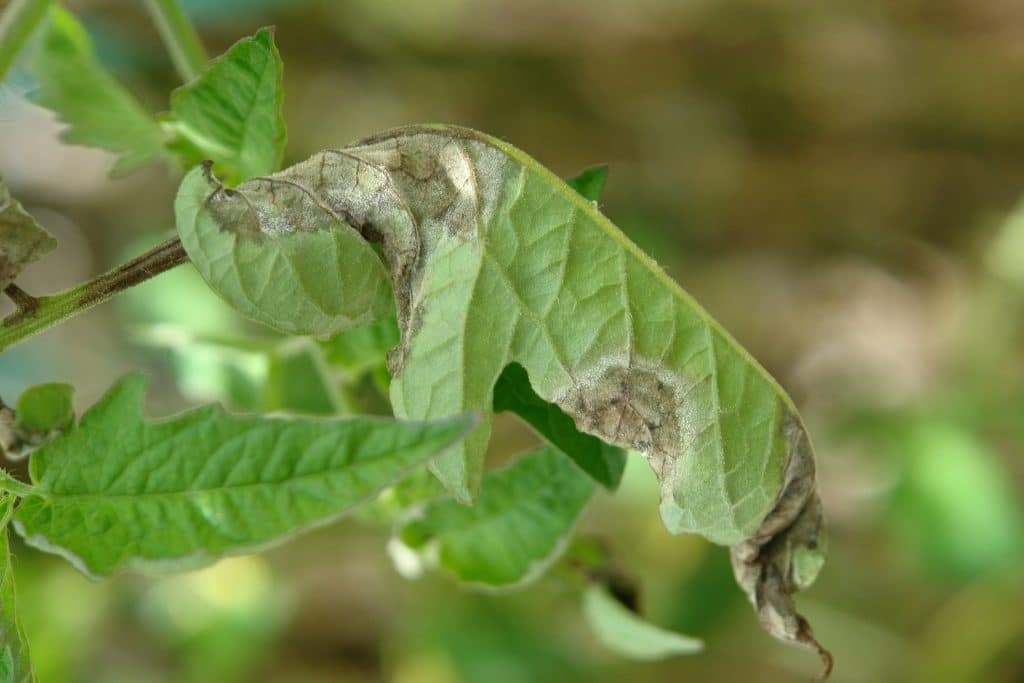
To reduce the risk of blight spreading, aside from practicing good hygiene and taking the other steps mentioned above, you can also spray the other tomato/ potato plants in your polytunnel with an organic spray.
Copper sprays are sometimes used to tackle blight and other fungal infections. However, it is important to use caution if you do decide to go down this route. Copper, if used frequently, can build up in the soil and cause toxicity. Copper spray may also do harm to bees.
Mild fungal infections can also sometimes be treated with home-made organic fungicides such as:
- A solution of 10g bicarbonate of soda to 1 litre water sprayed on leaves.
- A solution of 5% apple cider vinegar in 1 gallon of water, sprayed on the leaves in the cool morning hours.
- A solution of 1 oz milk to 9 oz water every 3-4 days after you first spot the problem.
- A spray made from 1 cup cornmeal in 5 gallons of water, with solids filtered out.
- A blended and strained solution of 1 garlic bulb, 2 tbsp canola oil, 4 hot peppers and 1 lemon. 4 tbsp of this mix added to 1 gallon of water and sprayed onto your plants.
- A solution of 1 cup of horseradish roots blended, soaked in 16 oz of water for 24 hours then strained and sprayed.
Each of the above can have (limited) efficacy in dealing with a range of fungal issues. But may be somewhat effective in reducing spread of disease into your other tomato plants nearby when used prophylactically.
You can also reduce the changes of late blight (the most serious fungal issue) from setting in by using a fungicide containing Streptomyces lydicus – a beneficial bacteria.
However, if a bad fungal infection like tomato blight has already set in, then it may well be too late to do much. These solutions generally just help to avoid a problem from spreading too much further.
So remember, prevention when it comes to blight is always better than cure.
References:
https://gardenerspath.com/how-to/organic/streptomyces-lydicus-use/