Creating a self-sufficient garden means thinking about how you can grow the things you need for survival, but also how the garden itself can be as self-sustaining and closed-loop as possible over time. Planning a garden that requires few to no external inputs is key to maximising its sustainability and its yields.
Table of Contents
KEY TAKEAWAYS
- A self-sufficient garden can reduce your reliance on external inputs and systems.
- Focusing on soil health, water management, and biodiversity creates resilience.
- True self-sufficiency is rare, but even small steps toward it can be transformative.
- Learning new skills and planning for year-round yield are essential.
- Foraging and fishing can complement what you grow at home.
What Does it Mean to be Self Sufficient in a Garden?
People use the term self-sufficiency to mean different things. Of course, broadly speaking, if we are self-sufficient it means that we only need rely on our own effort and to meet our own needs. Of course, even when we talk about being self-sufficient, we are still reliant on the natural world, and the yields that it provides.
But beyond this, we also need to consider what areas are included when we are talking about being self-sufficient. Self-sufficiency or near self-sufficiency in fruit and vegetables and herbs, for example, is quite common – but few take things as far as making everything they need at home from things they grow in their garden – including home furnishings, and clothes…
I would argue that self-sufficiency in a garden for most refers to food alone. Some really do strive to get absolutely all their sustenance from their own garden, while for others, only a partial self-sufficiency is really desired.
Making small forays into growing other things that we need – such as medicinal herbs, fibre or dye plants, for example, can be a lot of fun. But just remember that for most of us here in the UK, true self-sufficiency in all areas is not a very realistic dream.
The key in my opinion lies in designing and caring for your garden in such a way that you can maximise yields, while also making sure that the garden itself is as self-sufficient as possible.
Have You Created a Self-Sufficient Garden?
Determining how self-sufficient your garden itself can be involves looking at a few key things, including soil, water, exisitng plants and wildlife, and how much you are working as a gardener to alter the space around you.
A sustainable garden is one that is self-sufficient in the sense that you do not need to bring much in from outside to make it productive and beautiful. The fewer external inputs once the garden is established the better.
You can move closer to this ideal by adopting strategies such as:
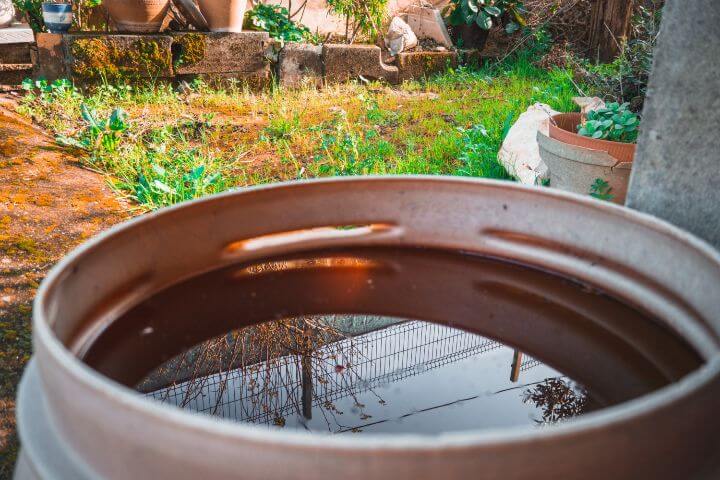
- Collecting rainwater from roofs into butts or tanks for irrigation.
- Catching and storing water naturally in the landscape, using swales, ponds, or contour beds.
- Encouraging biodiversity by creating habitats that attract pollinators and pest predators.
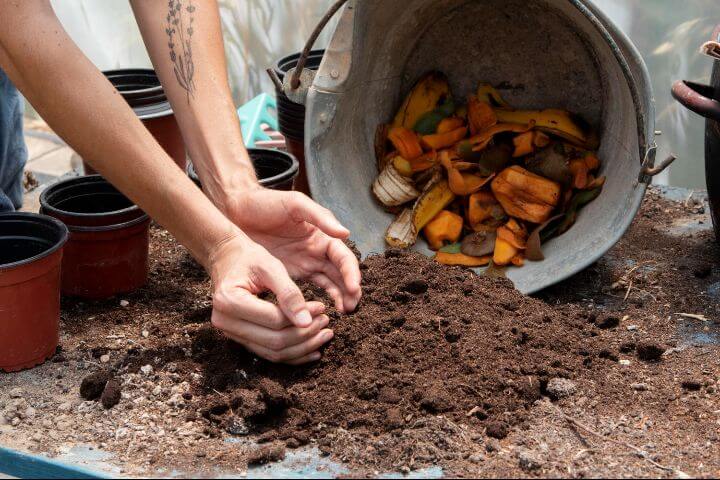
- Composting all organic waste on site, returning nutrients to the soil.
- Using mulch and green manures to reduce weeding, watering, and fertiliser needs.
The ultimate goal is to create a closed-loop system, where waste becomes a resource and each part of the garden supports the others.
How to Ensure Nutrition in a Self Sufficient Garden
One of the most important aspects of a self-sufficient garden is nutrition – both for your plants and for yourself. Everything ultimately comes back to the soil.
We derive nutrients and sustenance from plants, and if we eat animal products, those animals in turn rely on plants. Plants, however, depend on the complex web of life beneath the soil surface – bacteria, fungi, insects, and organic matter – to access nutrients.
To maintain healthy, nutrient-rich soil:
- Compost everything you can: kitchen scraps, garden trimmings, paper, and cardboard.
- Avoid chemical fertilisers – they damage soil structure and microbial life.
- Grow nitrogen-fixing plants such as peas, beans, and clover to replenish fertility.
- Add organic matter regularly, whether through compost, leaf mould, or green manures.
- Rotate crops to prevent depletion of specific nutrients.
To ensure your own nutrition, grow a wide variety of crops. Leafy greens for vitamins, roots and tubers for carbohydrates, legumes for protein, and fruit for antioxidants. Diversity in your planting ensures diversity on your plate – and a stronger, more resilient ecosystem in your garden.
Cut Costs with a Self Sufficient Garden
A self-sufficient garden is not just good for the planet; it’s also good for your pocket. The initial setup may require some investment in seeds, tools, or infrastructure, but over time you can drastically reduce household spending.
Here are a few ways your garden can help you save money:
- Seed saving: Once you learn to collect and store your own seeds, you’ll never need to buy them again.
- Composting: Eliminating store-bought compost and fertiliser can save a surprising amount each year.
- Preserving and storing food: By freezing, drying, or fermenting surplus produce, you can eat homegrown food all year.
- DIY repairs and repurposing: Old pallets can become raised beds; plastic bottles can be cut into cloches.
- Energy savings: Growing windbreaks or trellised plants against your home can even reduce heating costs.
When you start producing your own essentials, you gain not only food security but also a sense of independence and empowerment.
Creating a Self Sufficient Garden is Time-Consuming
While the dream of self-sufficiency is alluring, it’s important to recognise that it does require time and ongoing care.
Tasks such as sowing, weeding, watering, and composting need consistent attention. In the beginning, it can feel overwhelming, but as systems mature and soil health improves, maintenance tends to decrease.
You can make your self-sufficient garden more manageable by:
- Designing efficiently. Group crops with similar needs together. Create zones for frequent, occasional, and rare visits.
- Starting small. Focus on a few core crops that you love to eat before expanding.
- Automating where possible. Simple drip irrigation or gravity-fed watering systems can save hours.
- Embracing perennials. Once established, perennial vegetables, herbs, and fruit bushes yield for years with minimal work. The ultimate is a fully fledged forest garden.
The more your garden mimics natural ecosystems, the less input it requires over time. In this sense, “lazy gardening” and permaculture often go hand in hand – working smarter, not harder.
What You Need to Learn to Have an Effective Self Sufficient Garden
Design is everything. A thoughtful garden layout will save energy, reduce waste, and increase yields dramatically.
When planning, consider the permaculture principle of zones:
- Zone 0 – Your home: where you cook, preserve, and compost.
- Zone 1 – The most frequently visited area (salad beds, herbs, seedlings).
- Zone 2 – Main crops that need regular care.
- Zone 3 – Larger, less frequently tended crops (potatoes, grains, or orchards).
- Zone 4/5 – Wild or semi-wild areas for wildlife habitat and foraging.
Integrating animals (like chickens, ducks, or bees) can also improve fertility and pest control if space allows. Chickens provide eggs and manure; ducks manage slugs; bees pollinate.
You’ll also need to understand seasonal rhythms – learning when to sow, harvest, and rest the soil. Keep a garden journal or plan your crop rotations to ensure constant productivity and balanced fertility.
Finally, remember that aesthetics and function can go hand in hand. A productive garden can still be beautiful, and a beautiful one more likely to bring you joy and encourage you to commit to it long-term.
Predicting How Much Food is Necessary to Grow
One of the biggest challenges in creating a self-sufficient garden is working out how much to grow. The answer depends on your household size, diet, and growing space – but some general principles can guide you.
A rough estimate for full vegetable self-sufficiency is around 100–200 square metres per person, though this varies widely by climate and skill level. Even a small garden, however, can dramatically reduce food bills if used efficiently.
To get started:
- Track how much produce your family eats each week, then scale that up for a season.
- Focus on high-yield, space-efficient crops such as salad greens, climbing beans, tomatoes, courgettes, and soft fruit.
- Use vertical space – trellises, arches, and hanging baskets expand growing capacity.
- Stagger sowings for continuous harvests.
- Grow storage crops like potatoes, squash, and onions that last through winter.
As you gain experience, you’ll refine what works best in your own soil and microclimate. The goal is not perfection but progressive independence and to grow a little more each year.
How Fishing can Support a Self Sufficient Lifestyle
A typical garden can often provide all the fruits and vegetables you need – but growing enough protein can definitely be a challenge.
For those living near rivers, lakes, or the coast, fishing can play an important role in a self-sufficient lifestyle. Wild-caught fish provide a valuable source of protein and healthy fats, reducing reliance on farmed meat or imported food.
However, sustainability is crucial. Overfishing or pollution can easily undermine the very ecosystems we depend on. If you fish, do so responsibly:
- Follow local regulations and seasons.
- Take only what you need.
- Learn to use every part of your catch.
- Use barbless hooks or catch-and-release methods where stocks are low.
A more sustainable solution may be to consider a small-scale aquaponics system. These combine fish and plants in a closed-loop: fish waste fertilises the plants, and plants clean the water for the fish. Even a small setup can provide both vegetables and protein year-round.
Foraging to Support a Self-Sufficient Lifestyle
Foraging is a joyful and ancient practice that reconnects us to the wild abundance around us. When combined with home growing, it can fill nutritional gaps and expand the range of foods available without additional land or inputs.
In the UK, foraging opportunities abound:
- Spring: wild garlic, nettles, dandelion leaves, chickweed.
- Summer: berries, elderflowers, sea vegetables, wild herbs.
- Autumn: nuts, mushrooms (if you are confident in identification), rosehips, and sloes.
Always forage ethically and responsibly:
- Never take more than you need.
- Leave plenty for wildlife and for regrowth.
- Avoid polluted areas or protected habitats.
- Learn to identify species with certainty – if in doubt, leave it out.
Foraging also teaches us to see our gardens differently. Many so-called “weeds” – like sorrel, plantain, or fat hen – are edible and nutritious. Embracing them reduces labour and increases diversity in a self-sustaining ecosystem.
A self-sufficient garden isn’t built overnight – it evolves through observation, learning, and care. Each compost heap, seed saved, and bucket of rainwater caught brings you a little closer to independence.
More than a goal, self-sufficiency is a relationship between you, your soil, and the ecosystems that sustain you. In nurturing them, they in turn nurture you.
Whether you grow a few herbs on a balcony or manage an acre of productive beds, remember: every self-sustaining garden, however small, is a quiet act of resilience and hope for the future.
Can you be self-sufficient with a garden?
Yes, at least partially. Even a small garden can provide a surprising proportion of your food if designed well. Growing herbs, salads, root vegetables, and fruits can greatly reduce dependence on external sources, while composting and saving seeds make your garden itself more self-sufficient. Total self-sufficiency is rare, but every step toward it increases resilience and wellbeing.
What is the minimum garden size for self sufficiency?
There’s no fixed rule, as yields depend on design, fertility, and climate. However, many estimates suggest a quarter to half an acre (around 1,000–2,000 square metres) can support a family of four with a diverse diet. Smaller gardens can achieve near self-sufficiency in vegetables by maximising space vertically, using containers, and growing high-yield crops.
How much land is needed to be self-sufficient?
To be entirely self-sufficient in food – including grains, oils, fruits, vegetables, and livestock feed – most estimates suggest one to two acres per person, depending on diet and growing methods. However, modern permaculture and intensive organic gardening techniques can dramatically reduce that requirement. The key lies not in size but in design efficiency – stacking functions, recycling nutrients, and working in harmony with nature.
Sources
Seymour (2025) Self-Sufficiency: Freshwater Fishing and Starting a Fish Farm. Available at: https://www.motherearthnews.com/homesteading-and-livestock/freshwater-fishing-zmaz76mjztak/ [accessed 30.09.25]