

There are many different plum tree varieties perfect for growing in the British Isles, including many heritage varieties that have graced our gardens for many, many years.
There are of course many different things that you need to consider when choosing a plum tree for your garden over and above the variety.
Not least, you will need to think about the rootstock that is used. Plum trees are grafted onto rootstocks that will determine their size and vigour. For example, a tree on a dwarfing or semi-dwarfing rootstock will be best for a small garden.
You will also need to think about how you would like to use the plums from your garden (for cooking and preserves, for fresh eating, or for both). And also when you would like to harvest, since some will be harvested much earlier than others.
Choosing a plum tree must go hand in hand with site analysis. You need to know your garden and the conditions that you can provide to understand which trees might thrive in your area.
But determining which variety you would like to grow can be a good place to start if you have decided to grow plums in your garden.
Elsewhere we have covered taking care of your plum tree, and what to plant around fruit trees.
Now, here are some popular UK plum tree varieties to consider, whether you are growing out in the open, or with the protection of a fruit cage. Of course, there are many, many more options. But these named varieties could be a good place to start:
1. Victoria Plum Tree

By far the most popular plum tree in the UK is the Victoria plum. This is one of the oldest cultivars and also often considered to be one of the easiest to grow.
Victoria plums have yellowish flesh, and skins that ripen from green, to a reddish and sometimes mottled red and yellow hue. Depending on the rootstock used, it will typically grow between 2.5 and 4m in height.
It is a dual purpose variety that can be used both for fresh eating, and for cooking and preserves. It is self-fertile, which means that you can grow it and obtain fruits even if you only have space for one plum tree in your garden.
There is a lot to recommend this variety (and it is the variety that I myself grow in my forest garden). It fruits reliably and often extremely abundantly. But note that this can be more susceptible to pests and disease than many other more modern plum tree varieties.
2. Avalon Plum Tree
Avalon is another dual purpose plum, that can be picked when the fruits are pinkish red for preserves, or left until it turns darker purple when it is an excellent dessert plum. It is a more modern cultivar bred to be superior to the above and has superior disease resistance.
However, note that these trees are only partially self-fertile and do better with a pollination partner close by. These plum trees are in pollination group 2.
Another important thing to note is that while Victoria plums can cope with a more exposed spot and a range of environmental conditions, Avalon plum trees need good conditions and a protected position to fruit well.
3. Blue Tit Plum Tree
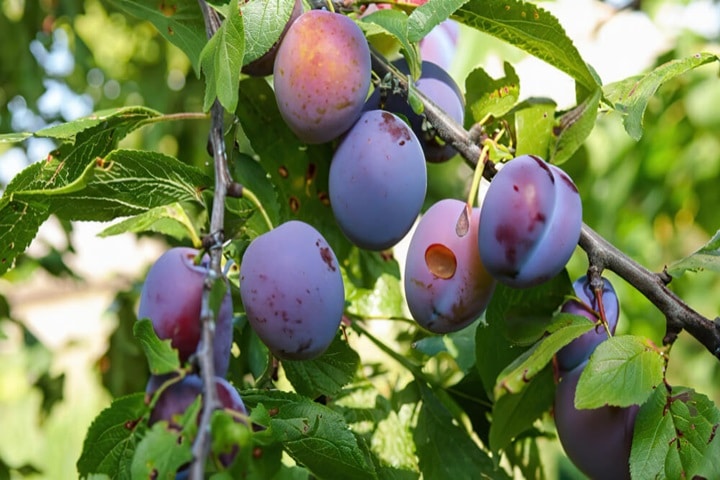
Blue tit is a cultivar derived from Czar (see below) and Old Green Gage. It was first bred by the Laxton brothers of Bedford in 1938.
If you have never grown plums before then this could be a good option to consider. It has superb taste and crops relatively well without being overburdened, is self-fertile and has pretty good disease resistance. The fruits are small, starting out green and turning a deep purple as they ripen. They can be used for both cooking and fresh eating. This tree is suitable for all but the very coldest parts of the UK.
4. Cambridge Gage Tree
This is a greengage rather than a plum, and so is smaller fruit than the above. But the honeyed taste very much makes up for the small size of the yellow fruit.
This tree won’t be suitable for all gardens. It is vulnerable to spring frosts, but in a sheltered and warmer spot, can produce reliable and truly delicious yields. The sweet tasting fruit have been a favourite dessert variety for many years.
It is partially self-fertile but will do best with a pollination partner. Cambridge gage is within pollination group 3.
5. Czar Plum Tree
This is an old variety, a cross between Prince Engelbert and Early Prolific bred in 1874. It was named after the Czar of Russia.
Czar is an excellent plum for cooking, producing good quality and attractive white blossom and dark purple fruits reliably year on year.
It is self fertile, great for small gardens, and can be grown in more northerly and colder gardens where other plum varieties won’t always thrive. If you have cold, shade or poor soil conditions, then this plum might be reliable for you, even in more challenging conditions.
6. Denniston’s Superb Plum Tree
This option, also known as Imperial Gage, has a juicy and sweet fruit and crops reliably. It looks like a typical green gage but is considered to be a true European plum on the basis of its growth habit and reliable productivity. The fruits are good cookers and eaters.
Though it has an early flowering time and so can be damaged by frost in some locations, in warmer and more sheltered positions it can be an excellent choice. The blossom of this tree is particularly attractive and high pollen production makes it a good pollination partner for many other plums.
This option is partly self-fertile but is in pollination group 2 and will do best when planted close to a pollination partner in groups 1, 2 or 3. It was raised in New York in the 19th Century.
7. Farleigh Damson Tree

Along with true plums and gages, damsons are another Prunus type that can be a good choice for UK gardens. This damson is a compact culinary damson that tends to fruit reliably. It has white blossoms, and very dark blue fruits.
This is a self-fertile option, so could be a good choice for smaller spaces. It is in pollination group 4. Though generally pretty hardy, it will do best in a sheltered spot in full sun. However, this cultivar is less susceptible to frost damage than many other types.
8. Golden Sphere Plum Tree
Golden Sphere is a large yellow cherry plum with a sweet plum flavour.It is great for cooking but can also be eaten fresh. The tree is spreading, typically wider than it is tall,
It is partially self fertile and is in pollination group 1. This is a cherry plum variety from Ukraine that has been specifically developed to suit the lower temperatures and lower light levels of Northern Europe.
9. Jubilee Plum Tree
This is another newer plum to rival Victoria plums, and is sometimes considered to be a superior option. The fruit is of an excellent quality, with a light red colour and juicy yellow flesh. It is, like Victoria, great for both cooking and eating as a dessert fruit but is slightly larger in size and ripens very slightly quicker.
Raised in Sweden, and more technically known as Jubileum, it is extremely hardy, and is also high-yielding, with good disease resistance. Like Victoria, it is also self-fertile and so can be grown on its own.
10. Marjorie’s Seedling Plum Tree
A great late-season plum variety, this option is self fertile, but is in pollination group three and may produce better yields when it has a compatible pollination partner.
This tree produces reliably and has good disease resistance. It produces juicy, dark blue fruits in September or October. These fruits are good for preserves and for fresh eating.
11. Opal Plum Tree

Opal is a cross between a gage and a plum. It is a cross between Early Favourite and Oullin’s Gage and was bred in Sweden and released in 1925. it has the full, sweet gage flavour but slightly larger fruit like a plum. This is an early variety, and fruits can be ready as early as late July or early August in some areas.
When mature, the fruits have a mottled red and yellow appearance. Best eaten as a dessert fruit, they can also be used in jams or cooked desserts.
This has good disease resistance when compared to many other varieties, and is strong and vigorous, which makes it a good choice through much of the UK.
Of course, these are not the only options. So exploring heritage plums specific to your particular area can also be an excellent idea. Many other heritage varieties can be discovered that will often be the best choice, specifically bred to do well in your particular location.
Many plum tree varieties can do well through most of the UK. But you do need to make the right choice for your particular garden to see the best possible results. Once you have grown prosperous plums, you can try these plum recipes!
FAQs
How many varieties of plum are there?
There are over 2,000 varieties of plums worldwide.
What are the best plums to eat in the UK?
The best plums to eat in the UK include Victoria, Damson, and Greengage plums.
What is the best tasting plum variety?
The Mirabelle plum is often considered the best tasting variety due to its sweet and full flavour.
What are the best plums for North England?
In North England, the Victoria and Damson plums are highly recommended due to their hardiness and suitability for the cooler climate.
Sources
BBC Good Food. (2020) Plum Recipes. [online] Available at: https://www.bbcgoodfood.com/recipes/collection/plum-recipes [accessed 24/07/24]