

There is something very satisfying about an autumn tidy. The leaves are falling, plants are dying back, and the garden starts to look ready for winter. When you clear your garden in autumn, it can be tempting to remove anything that looks untidy and leave everything neat and bare.
But I don’t think a garden needs to be completely bare to be well cared for.
In fact, leaving some fallen leaves, old stems and seedheads in place can be much more useful than removing everything. These materials provide food and shelter for wildlife, protect the soil and eventually return nutrients to the ground.
The trick is not to stop clearing altogether. It is to become a little more selective about what we clear, what we move and what we leave.
If you are wondering what to do with fallen leaves in particular, you can make full use of autumn leaves in the garden.
Key takeaways
- You don’t need to clear every leaf, stem and seedhead from your garden in autumn.
- Fallen leaves can provide shelter and food for wildlife while gradually adding organic matter to the soil.
- Leaving some dead stems and seedheads gives insects somewhere to shelter and birds something to feed on.
- Clear material from lawns, paths, drains and areas affected by disease, but consider leaving healthy plant material in suitable places.
- Think about autumn clearing as a process of clear, move or leave, rather than trying to make the whole garden look tidy at once.
Why Is Clearing Your Garden Too Much in Autumn a Bad Idea?
A completely cleared garden might look neat, but it can also mean removing many of the things that help a garden carry on functioning through winter.
Fallen leaves are useful material. So are hollow stems, old flowerheads and the remains of healthy annual plants. Once they fall or die back, they don’t suddenly become useless. They become part of another stage in the garden’s life cycle.
I find it helpful to ask a simple question before picking something up: does this actually need to be removed?
Sometimes the answer is yes. Leaves covering a lawn can cause problems, paths need to remain safe, and diseased plant material should not simply be left lying around. But in a border, underneath shrubs or around established perennials, there is often no real need to remove every last bit of plant material.
Leaving some of it in place means there is less work for you, more shelter for wildlife and more organic material returning to the soil.
1. Fallen Leaves Provide Food and Shelter for Wildlife
One of the biggest reasons not to clear every leaf is the life that depends on them.
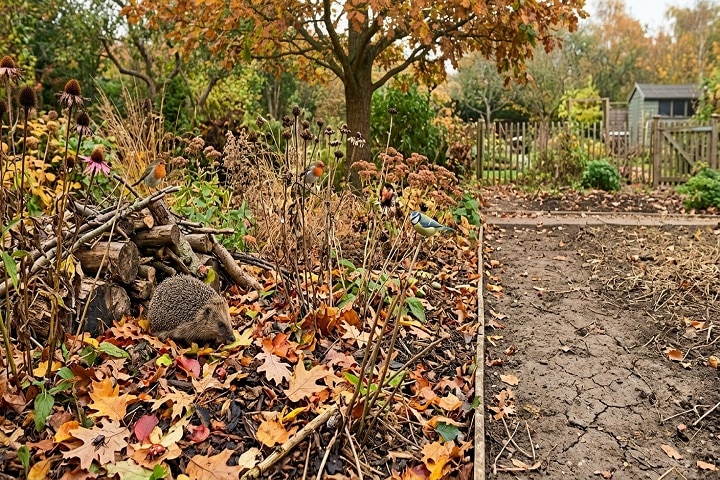
A layer of fallen leaves can provide shelter for insects and other small creatures during the colder months. The material also becomes part of the food web as it breaks down.
This is easy to overlook because a pile of leaves doesn’t look particularly lively. Much of what happens beneath and within leaf litter is happening on a scale we don’t notice.
Leaves also have a useful role in the soil. As they break down, they contribute organic matter and help create conditions where soil organisms can thrive.
That doesn’t mean every leaf needs to stay exactly where it fell. I often move leaves away from places where they cause problems and use them elsewhere. Leaves collected from paths or lawns can be put onto borders, around shrubs or into a leaf mould pile.
That way, the material stays within the garden rather than immediately becoming something to dispose of.
2. Dead Stems and Seedheads Have a Purpose
I don’t think every perennial needs to be cut down as soon as it finishes flowering.
Some of those old stems provide places for insects to shelter. Seedheads can also provide food for birds, particularly when other natural food sources become harder to find.
There is something rather lovely about leaving them standing through winter too. Frost, rain and low winter light can make dried seedheads and stems a real feature of the garden.
Some perennials can be left standing over winter, while cutting back some at the appropriate time can help with tidiness, plant health and new growth. There isn’t necessarily one correct approach for every plant or every part of the garden.
I tend to think of this as selective cutting rather than a blanket autumn cutback.
You might cut back a perennial that has collapsed across a path while leaving another one standing in a quieter part of the border. You might remove diseased foliage but leave healthy stems nearby.
It is a small distinction, but it changes how you look at the garden. Remember, good gardeners know it’s about more than aesthetics.
3. Leaf Litter Can Benefit Your Soil
There is also a simple question worth asking when autumn leaves begin to pile up: where did all that material come from?
The leaves grew using nutrients, water, sunlight and carbon. When they fall, they still contain organic material that can eventually become part of the soil again.
Removing every leaf from the garden means removing that material too.
I’m not suggesting that we should cover every border with a thick, wet layer of leaves. Too much material in the wrong place can smother smaller plants or create other problems. But a moderate layer beneath trees, shrubs and established plants can be useful.
Leaves can also be gathered and allowed to break down separately into leaf mould. If you have a lot of autumn leaves, it is worth learning how to preserve autumn leaves and make leaf mould.
I like this approach because the leaves are not treated as rubbish. They become another useful garden material.
Over time, this means more of what grows in the garden can stay within the garden rather than being removed and replaced with bought-in materials.
But You Shouldn’t Leave Everything Untouched!
There is a difference between leaving some natural material in place and simply abandoning the garden until spring.
Some autumn clearing is useful.
Leaves can become slippery on paths. Thick layers on lawns can block light and air from reaching the grass. Gutters, drains and water features may also need attention. Plants affected by serious disease may need to be removed rather than left in place.
There are also situations where fallen leaves can cause problems for particular plants.
So I wouldn’t suggest following a rule that says everything should be left alone.
Instead, look at the individual space.
A lawn is different from a woodland-style border. A narrow path is different from the ground beneath a mature tree. A vegetable bed affected by disease needs a different approach from a healthy perennial border.
Once you start looking at the garden in those terms, autumn clearing becomes much more straightforward.
What Should You Leave in Your Garden Over Winter?
There is no need to leave everything, but several things can usually stay where they are if they are healthy and not causing a problem.
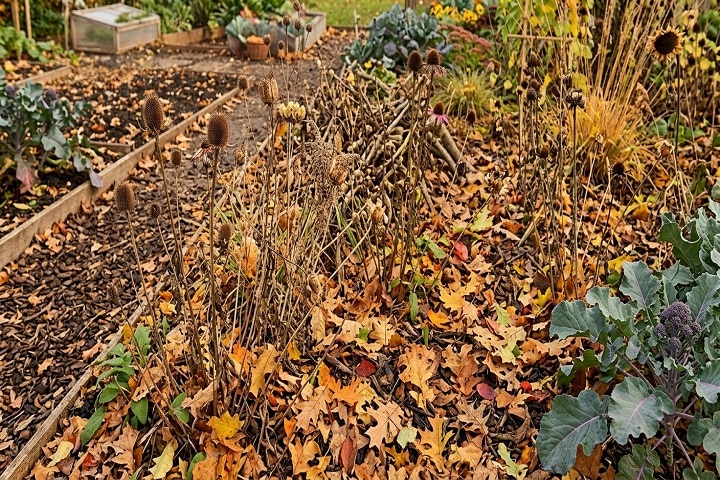
Fallen leaves
Leave some leaves in suitable borders and beneath trees and shrubs. Move them away from lawns, paths and drainage areas where necessary.
Healthy perennial stems
Some can be left standing through winter, particularly in areas where they won’t get in the way.
Seedheads
These can provide food for birds and shelter for insects, as well as adding winter structure.
Small amounts of plant debris
Healthy material can gradually break down and return organic matter to the soil.
Natural shelter
A few undisturbed areas, such as a quiet corner beneath shrubs or a pile of logs and leaves, can provide useful winter habitat.
You don’t need to turn the whole garden into a wildlife reserve. Even small areas of less-disturbed ground can make a difference.
6. What Should You Clear Away in Autumn?
Some things are better removed.
Leaves from lawns and paths: A thick layer of leaves on a lawn can block light, while wet leaves can make paths slippery.
Diseased plant material: If plants have been affected by disease, remove the affected material appropriately rather than leaving it to spread problems around the garden.
Excessive debris: Large accumulations of wet material around crowns or delicate plants may cause problems.
Material blocking drains and gutters: This is one job where a little autumn maintenance can prevent bigger problems later.
Plants that have become a nuisance: Anything that is spreading into paths or causing an access problem can be cut back or moved.
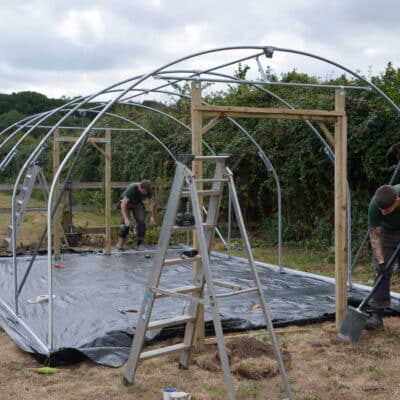
And if you have a polytunnel, autumn is a useful time to clean your polytunnel as part of your autumn garden routine. Keeping the growing space clean and functional is quite different from clearing every natural part of the garden outside.
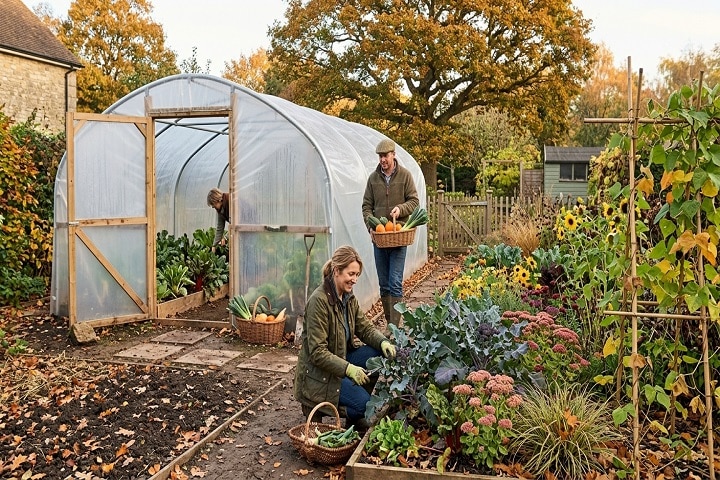
The Best Approach Is to Tidy Selectively, Not Completely
If you’re standing in the garden with a rake in your hand and wondering where to start, I find it useful to think in three categories:
Clear
Remove anything that is causing a practical problem.
That might mean clearing leaves from a lawn, removing diseased foliage, opening up paths or clearing blocked drainage.
Move
Sometimes something doesn’t need removing at all. It simply needs moving somewhere more suitable.
Leaves from a lawn can go onto a border. Healthy plant material can be gathered for composting. Fallen branches can become part of a habitat pile rather than going straight into the garden waste bin.
Leave
This is the part we perhaps forget.
Healthy leaves beneath trees, old seedheads, some perennial stems and small areas of natural plant debris can often stay where they are.
They will change over the winter. Some will disappear into the soil, some will provide shelter and some will simply become part of the background of the garden until spring.
This approach also makes autumn gardening feel a little less like a race to get everything finished before winter.
A garden is not a room that needs to be cleaned back to an empty floor. It is an ongoing system, and some of the things that look like mess in autumn are simply the garden changing from one stage to another.
Conclusion
I don’t think autumn should be about making the garden completely bare.
Some clearing is sensible and necessary, but there is plenty we can leave behind. Fallen leaves, old stems and seedheads can provide shelter, food and organic material, while giving the garden somewhere to continue its natural processes through the colder months.
For me, the useful question is not “What should I clear?” but “What actually needs clearing?”
That small change in perspective can save work and leave more of the garden’s resources where they belong.
Frequently Asked Questions
Should you clear leaves from your garden in autumn?
Not necessarily. Leaves should be cleared from lawns, paths and areas where they could cause problems, but they can usually be left in suitable borders and beneath trees and shrubs. You can also move them elsewhere in the garden or collect them for leaf mould.
Should you leave dead plants in the garden over winter?
Healthy dead stems and seedheads can often be left over winter. They can provide shelter for insects and food for birds, while also adding structure to the garden. Remove plant material where there is disease or where it causes a practical problem.
Should you cut back all perennials in autumn?
No. Some perennials benefit from being cut back, while others can be left standing until later in winter or spring.
What should you clear from your garden in autumn?
Clear anything that creates a practical or plant-health problem. This includes leaves from lawns and paths, diseased plant material, excessive debris and material blocking drains or gutters. Healthy leaves, stems and seedheads can often be left or moved elsewhere.
Sources
Royal Horticultural Society (n.d.) Perennials: Cutting Back. RHS. https://www.rhs.org.uk/plants/types/perennials/cutting-back
Royal Horticultural Society (n.d.) Encourage wildlife in your garden. RHS. https://www.rhs.org.uk/wildlife/in-the-garden/encourage-wildlife-to-your-garden
Royal Horticultural Society (2025) Mullet gardening. RHS. https://www.rhs.org.uk/garden-inspiration/wildlife/mullet-gardening
RSPB (2025) Less is more this Autumn. RSPB. https://www.rspb.org.uk/england/england-news/less-is-more-this-autumn
Woodland Trust (2022) 10 Ways to Help Wildlife in Autumn. https://www.woodlandtrust.org.uk/blog/2022/10/10-ways-to-help-wildlife-in-autumn/
Kew Grow Wild (2026) The other life of leaves: why ‘litter’ is good for gardens, soil and wildlife. https://growwild.kew.org/blog/other-life-leaves-why-litter-good-gardens-soil-and-wildlife
GrowVeg (n.d.) Autumn Garden Cleanup: Tidy Your Garden and Help Wildlife at the Same Time!. https://www.growveg.co.uk/guides/autumn-garden-cleanup-tidy-your-garden-and-help-wildlife-at-the-same-time/