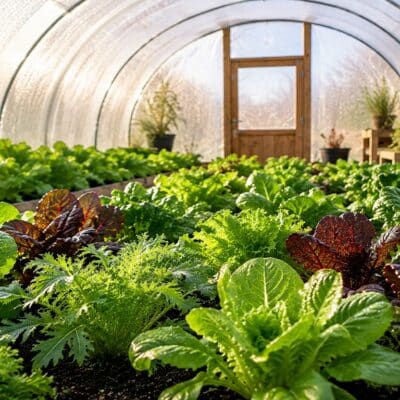
Slugs don’t just nibble—they destroy. A few leftover slugs in your garden overnight can wipe out your lettuces, strawberries, or seedlings before you’ve had your morning coffee.
If you’re tired of finding trails of slime and half-eaten crops, a slug trap might be your next step. But do slug traps really work? In this article, we’ll explore different types of slug traps—from the common beer trap for slugs to simple slug traps without beer. We’ll look at DIY methods, pros and cons, and how to manage slugs effectively—especially in gardens and polytunnels.
Key Points:
- Slug traps work best when placed in shady, damp areas slugs prefer
- Beer traps attract slugs from long distances—but that’s not always good
- You can make simple slug traps at home using household materials
- Live traps allow relocation, while poison traps offer permanent removal
- Slug control inside a polytunnel requires enclosed, scent-contained traps
Slug Traps: Pros, Cons, and Smart Placement
Slug traps work because they give slugs what they crave: darkness, moisture, and a bit of food. Yet not every slug trap is the same, and some can even backfire. Below, we break down the two main categories so you can match the right tactic to your plot.
Live Traps
- How they work: A live trap offers an inviting hideaway—usually a shaded container baited with lettuce leaves or apple cores. Slugs crawl in overnight, then sit tight because brighter exits feel risky.
- Why choose them: No chemicals, no harm to pets or wildlife, and you can reuse the same kit for years. They’re the perfect slug trap without beer if you’d rather avoid the strong scent of a slug beer trap.
- Watch-outs: You must empty the trap at dawn and relocate the haul at least 20m away (otherwise the freeloaders simply slime back). Kitchen scraps work, but never use cooked food—it tempts rats. Learn how to prevent rats in compost bins.
Poison Traps
- How they work: These trays or bait stations hold ferric-phosphate pellets that slugs eat and then die out of sight. Good ones shelter the bait from rain, so it lasts for days.
- Why choose them: One application covers up to a week, making poison traps handy during peak slug season. Ferric phosphate breaks down into iron and phosphate, so it’s safe for soil life, birds, and pets.
- Watch-outs: You’ll still need to check traps and top up pellets, especially after heavy downpours. Metaldehyde products are banned in the UK—avoid old stock.
| Trap type | Build cost | Pet safety | Effort level | Result |
| Live | Very low | High | Daily checks | Relocation |
| Poison | Moderate | High* | Weekly top-up | Permanent |
*Ferric-phosphate baits only.
Tip: For a 100 m² raised bed, deploy 20-30 traps spaced 4–5 m apart, tucking them under shrubs or along polytunnel edges where slugs loiter.
The Beer Trap Dilemma
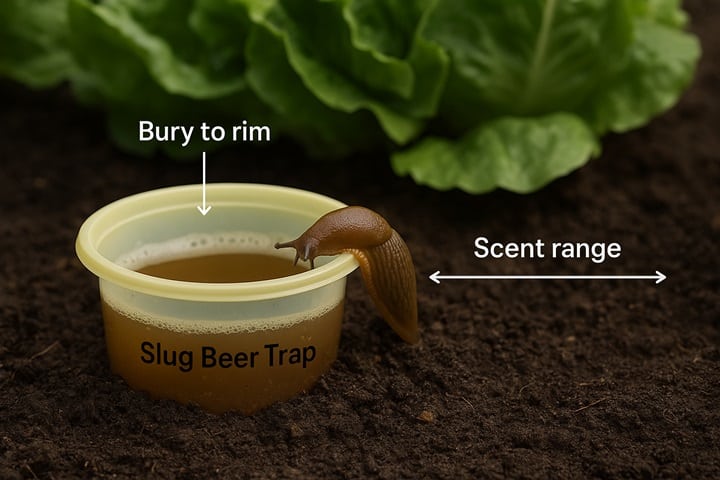
A beer trap for slugs (sometimes called a slugs beer trap) uses the yeasty aroma of stale lager to lure pests into a drowning pool. It certainly catches slugs—but it also summons invaders from up to 200m away, turning a small outbreak into a festival of slime.
If you do try a slug beer trap, bury the container up to its rim and position it down-wind, well outside prized beds. Better yet, stick to enclosed bait stations that keep the scent contained inside a small polytunnel.
DIY Slug Trap Basics
Before you pick up costly gadgets, remember the most effective slug trap can be homemade for a small amount of money, so don’t worry about sticking to a budget when creating your slug traps.
Slugs roam after dusk, often seeking shade and moisture; give them both plus a light snack and they’ll gather overnight.
Now, let’s get into the most practical slug traps that you can try out without breaking the bank which are also eco-friendly:
1. Dark, Damp Shelter Traps
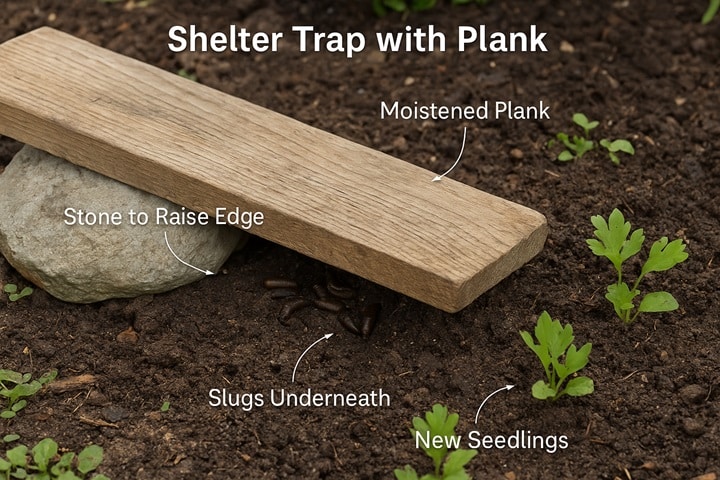
Start with a plank. Moisten a grooved board, raise one edge with a stone, and lay it beside new seedlings. By morning slugs cling underneath—scrape them into a bucket and relocate or feed to hens.
This simple slug trap without beer is chemical-free and pet-safe. An up-turned flower pot lined with a cabbage leaf works just as well.
Drill two 1 cm entry holes; darkness inside feels safe, while the brighter exit whispers “stay put.” Shift the pot every three days so slugs don’t memorise its spot.
2. Quick Milk-Carton Slug Trap
Need a deeper hold?
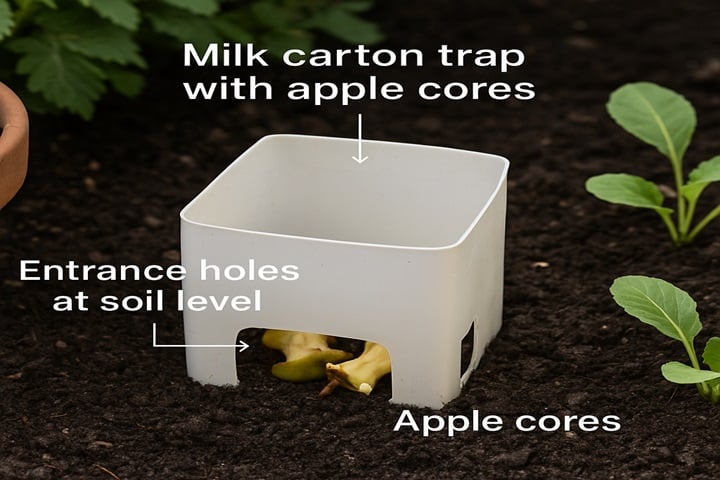
Rinse a one-litre milk carton, remove the top third, and punch four small doors at soil level.
Drop in apple peelings, then bury so the doors sit flush with the ground. Empty each morning and renew bait twice weekly.
This design skips the scent plume of a slug beer trap, keeping distant invaders away.
3. Pellet Bait Stations
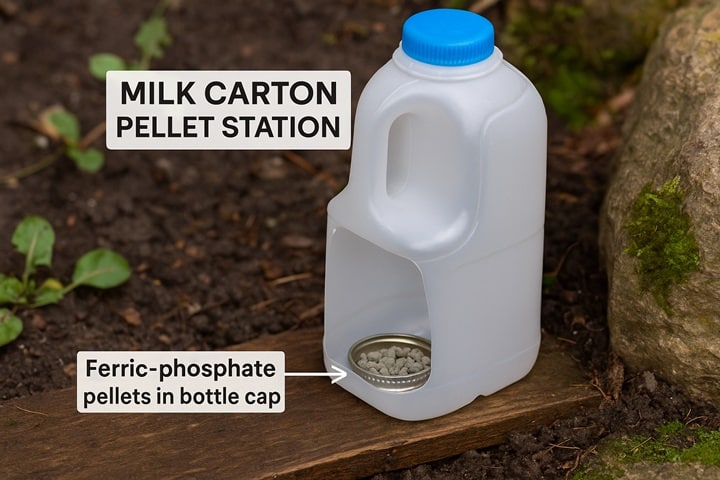
When slug numbers are persistent in your garden, you can turn that empty milk carton into a bait box.
For quick solution, add ferric-phosphate pellets in bottle caps, tape them to the base, and snap on a dark yoghurt-pot lid.
Unlike an open beer trap for slugs, the aroma stays contained.
Check every four days; replace pellets that dissolve.
4. Placement and Maintenance
Even the best slug traps fail if placed poorly.
Space traps 4–5m apart, focusing on polytunnel edges, mulch lines, and fresh plantings. Rotate weekly; slugs learn patterns fast. Rinse traps with hot water between moves to clear old scents that might confuse helpful insects.
Fast tip: Combine a board hideout with a pellet station in the same bed—the shelter lures slugs while the bait finishes the job. No need for a slugs beer trap that could invite fresh hordes. Keep notes on catch numbers to spot trends across the season.
Alternatives to Slug Traps
Sometimes, your DIY slug traps may not work, which means opting for other, quicker solutions, and may require a justifiable investment:
Ferric-Phosphate Pellets
When slug traps alone aren’t cutting it, modern ferric-phosphate pellets offer a tidy back-up.
Scatter them sparingly around lettuces or strawberries, then top up after heavy rain. Because the bait sits in the open, it pairs well with a slug trap without beer—the trap lures, the pellet finishes the job, and you skip the wide scent plume of a slug beer trap.
Grow Plants That Slugs Hate
Decorate your garden with tasty crops with thyme, wild garlic, or oregano; slugs will dislike these aromas and head elsewhere.
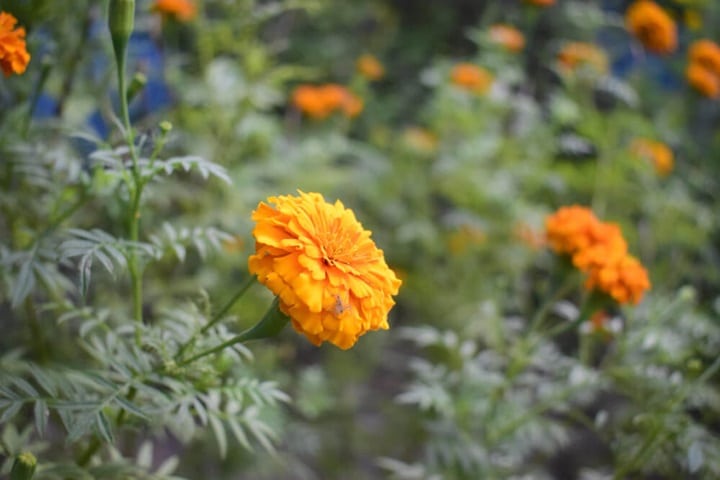
Plant a strip of marigolds as “sacrifice” blooms: slugs chew those first, buying you time to sweep them into a waiting slug trap.
Adding a few bait leaves inside boosts catches and keeps damage localised.
Follow these other tips on how to stop slugs eating plants.
Fences, Grit, and Other Hard Borders
A low metal snail fence—10cm deep and 10cm high with an outward lip—blocks most nightcrawlers.
No sheet metal to hand? Pour a ring of sawdust, diatomaceous earth, or fine gravel. The sharp particles slice soft bodies until rain turns them to mush; after showers, reset the barrier or switch to covered slug traps that stay dry.
Recruit Natural Predators
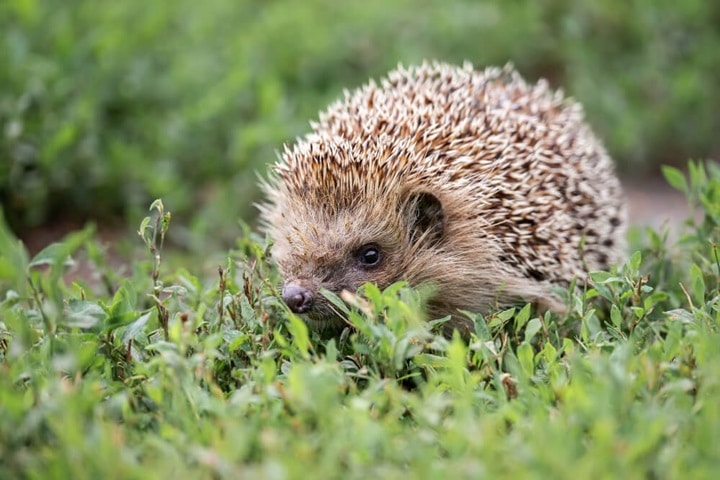
Hedgehogs, song thrushes, frogs, and ground beetles all have an appetite for slugs, so if you want to make a more natural habitat in your garden, be willing to allow these predators to feast on slugs.
Stack a log pile by the compost, leave a shallow water dish, and add a gap under the back fence: each tweak invites new hunters. The more prowlers patrol, the less you’ll depend on a beer trap for slugs.
Discover more about what eats slugs and how to incorporate these creatures in your garden.
Copper and Curiosity Methods
Copper tape round raised beds gives slugs a mild electric jolt. Old pre-1983 pennies work too, though you’ll need more of them in order for this method to work effectively. Because copper only repels, combine these with a slugs beer trap set outside the defended area to siphon off newcomers.
Layering Defences in a Polytunnel
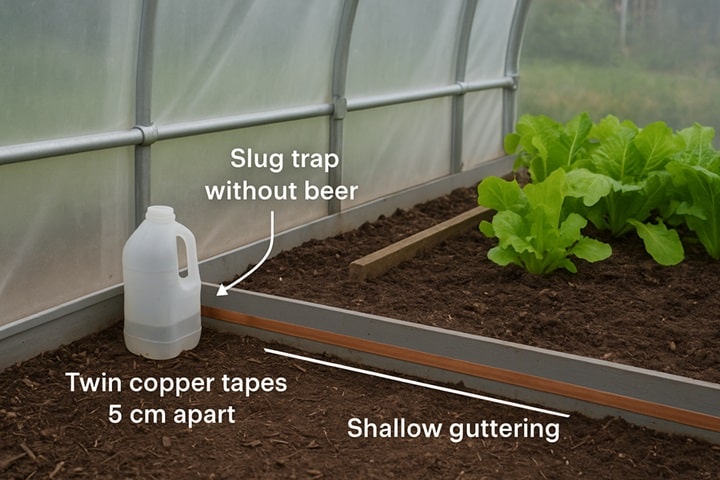
Space is tight under cover, so each control step must pull its weight. Run shallow guttering along the tunnel frame so condensation drips outside, keeping beds drier.
Position a slug trap without beer at every doorway to stop invaders, then ring salad beds with twin copper tapes 5 cm apart—slugs bridging the gap trigger a stronger shock. One slow-worm patrolling the mulch can outperform several slug traps during peak season.
Protect Your Crops With First Tunnels
Polytunnels create the warm, humid heaven that slugs unfortunately adore, but they also give you unique control points. At First Tunnels, we don’t sell slug pellets or traps, yet we help growers win the war with knowledge and design. Start by learning the basics about what are slugs, and expanding your gardening knowledge further on our blog.
Harness your polytunnel, outsmart the pest, and enjoy an unblemished harvest.
Still need more methods on how to get rid of slugs utilising slug traps? Read about the slug hack the King’s gardener swears by – and you may be surprised about what it is…
FAQs
What’s the best bait to use in a slug trap?
Slugs are drawn to moist, decomposing plant matter. Lettuce leaves, apple cores, cabbage leaves, and even dry cat food can work well. Avoid cooked or greasy food scraps, which can attract rats.
Can I use slug traps all year round?
Slug activity peaks in spring and autumn, especially after rain. While traps can be used year-round, they’re most effective during these wetter periods. In very hot or dry weather, slug numbers often drop naturally.
Sources
Whitehead, A., (2022) Ban on metaldehyde slug pellets finally comes into force. Garden Organic. [online] Available at: https://www.gardenorganic.org.uk/news/ban-on-metaldehyde-slug-pellets-finally-comes-into-force [accessed 08/07/2025]
Reynolds, K., (2024) This is the slug hack the King’s gardener swears by – and all you need is yeast and sugar. Ideal Home. [online] Available at: https://www.idealhome.co.uk/garden/garden-advice/yeast-and-sugar-slug-hack [accessed 08/07/2025]