

Many gardeners are profoundly influenced by the beautiful world and works of J.R.R. Tolkien. His world, imbued with the author’s love of nature, strikes a chord with those who also love the natural world and love tend it.
Samwise Gamgee, in many ways the true hero of ‘The Lord of the Rings’, is perhaps one of the most famous gardeners in literature, and it is no coincidence that a gardener is, as Tolkien himself stated, a main hero of the story.
Tolkien himself was a keen plantsman and gardener, and the value he placed on these things was central to the moral compass of his works
No wonder then, that so many gardeners wish to recreate some element of Tolkien’s Middle-earth in their own gardens – particularly wishing to bring some element of The Shire, Hobbiton, Bag End and Bagshot Row to life where they live.
Designing a Hobbit Garden
Gardens are very important in hobbit culture. As fans of the books and/or films will know, hobbits “love peace and quiet and good tilled earth”. Well-ordered farms and gardens shape our vision of the area called The Shire where many hobbits live.
Hobbit gardens, humble and small though they may be, are an ideal grasped for my many gardeners – pretty gardens filled with good things to eat – since of course hobbits like their food!
Sam, when tempted by the Ring, overcomes temptation, recognising that “The one small garden of a free gardener was all his need and due, not a garden swollen to a realm; his own hands to use, not the hands of others to command.” His descendants later took the surname Gardner in his honour.
As Faramir states, “The Shire must truly be a great realm, Master Gamgee, where gardeners are held in high honour.”
The humble gardens of the Shire are home and happiness – something simple yet powerful to cling to and value in the darkest of times. Gardens represent beauty and practical service, fertility and fecundity, but also the high nobility and value of the homely and everyday.
What Makes a Garden Look and Feel Like a Hobbit Garden?
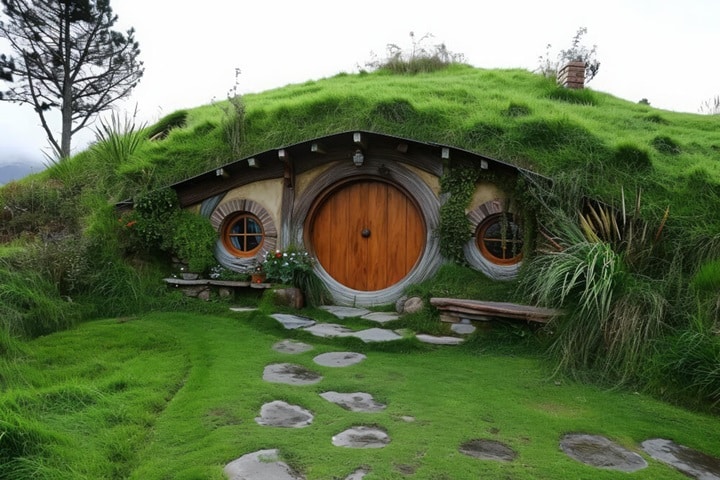
In many ways, a hobbit garden is a traditional English cottage garden. Though there are a few elements that can be included beyond traditional cottage garden plants to make the space really feel like it is part of The Shire and of Tolkien’s sub-creative world.
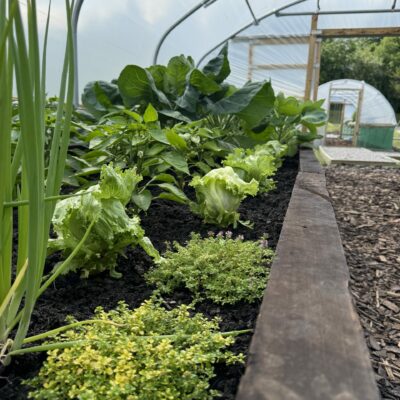
Hobbit gardens definitely need to produce plenty of food, and the other simple things hobbits would need in their daily lives. These are first and foremost practical spaces, though of course they should also have a simple beauty, with plenty of flowering plants.
They should not be in any way grand, but rather small, and for all they have a fantastical element, should be rooted in nature and the mundane.
Designing the Garden Backdrop
One thing, of course, they can help you create a hobbit garden rather than just a traditional English cottage garden is creating a backdrop that shows the traditional round door of a hobbit house or hobbit hole.
In a small garden, even one with little space, installing an artwork of recycled wood, perhaps, against a wall or fence can bring the world to life and suggest that the Shire extends beyond your garden boundaries.
Hobbit Hole or Hobbit Playhouse for Kids
Of course, if you have the space available, you might consider creating a ‘real’ hobbit hole or hobbit house in your garden. This might be a playhouse for kids, at a smaller scale, or even, scaled up, a hobbit summerhouse or other garden building for the whole family to enjoy.
Hobbit holes, also called smials, like Bag End and those of Bagshot Row are earth-sheltered – built into the hillside, with turf roof. Other hobbit homes can be above the ground but still share the same rustic aesthetic, with natural materials and typically rounded or organic forms.
Creating a Hobbit Planter or Growing Areas
Even if you do not have the space to include a hobbit hole in your garden, you might still include other smaller features with a similar aesthetic. For example, you can bring in the curves and organic materials and forms when creating planters, or edging for new raised beds or other growing areas.
Preparing to Plant the Garden
Before you begin to plant out a hobbit-inspired garden, you need to think about the ‘good tilled earth’. You may not have access to Sam’s precious gift from Galadriel that made the Shire so fertile once restored. But you do have access to organic matter that can be used to top dress and enrich the area.
Plants For the Hobbit Garden
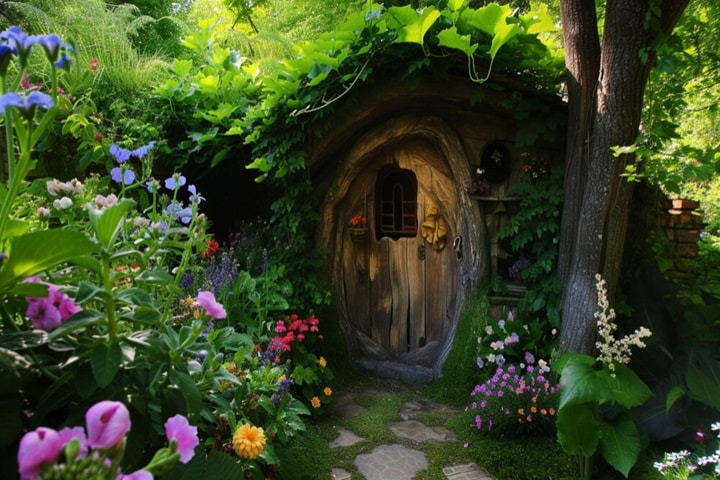
Many plants are mentioned in Tolkien’s works, and we can make a good guess at many of the plants (edible and ornamental) that would be growing in the gardens of the Shire.
For those wanting to dig deeper and find more potential plant choices, “Flora of Middle-Earth: Plants of J.R.R. Tolkien’s Legendarium” is a good resource.
Finishing Touches
Once you have planted up your garden, you can make it feel even more ‘hobbity’ by adding some extra finishing touches, such as little wheelbarrows or small tools and pots that make it feel as though one of the halflings has just left the scene.
Other Gardens from Tolkien’s Works for Inspiration
Hobbit gardens and hobbit houses or holes are enduringly popular. But there are also plenty of other amazing gardens in Middle-earth to which we can turn for inspiration.
Elven Gardens – Rivendell, Lothlorien and More
For example, there are certainly plenty of Elven gardens to inspire is to garden greatness. From the ancient gardens of Gondolin in the first age, to Rivendell, with its pleasant gardens to stroll in, and Lothlórien, a realm of unmatched beauty, where the trees known as mallorn have golden leaves that shimmer in the sunlight and the forest and its surroundings are filled with a sense of timelessness and peace.
The elven sense of aesthetic beauty can inspire us all to create our own beautiful gardens in harmony with the natural world.
Beorn’s Garden
Beorn, the bear/ man from ‘The Hobbit’ has a garden filled with vegetables, fruits, and flowers, providing sustenance for Beorn and his animal companions. You too, of course, could grow plenty of your own food at home.
Tom Bombadil and Goldberry’s Garden
Likewise, Tom Bombadil and Goldberry’s rustic little garden nestled in the forest also provides good things to eat, as well as having a range of beautiful flowers. There are certainly beans growing on poles – something that most of us could easily have in our own gardens.
Gardens of the Entwives
The Entwives (female counterparts of the Ents) were known to cultivate gardens, fields, and orchards. They taught the early Men how to farm and tend the earth, preferring areas where they could grow crops, fruits, and flowers in an orderly fashion.
Unlike the wild forests preferred by the Ents, the gardens of the Entwives were likely well-ordered, with neatly arranged rows of crops, carefully pruned trees, and beautifully designed flower beds.
These gardens were a testament to the Entwives’ love for order and cultivation, where nature was shaped and tended to create productive and aesthetically pleasing landscapes.
The Gardens of the Entwives are a blend of natural beauty and human-like cultivation, representing a unique approach to nature that values both productivity and aesthetic order. But they were lost, and their loss is a reminder of the fragility of beauty and the cost of conflict.
These gardens would have been places of great beauty, full of carefully tended plants and trees, representing a harmony between nature and human-like cultivation. We can imagine and mimic these too as we create our own food producing gardens.
The Gardens of Numenor
The once splendid gardens of the island kingdom of Numenor became a memory of a golden age lost to the waves, representing the fleeting nature of human achievement and the consequences of turning away from humility and wisdom.
Once, however, the whole island was often described as a garden due to its rich soil and diverse flora. The people of Númenor took pride in maintaining and enhancing its natural beauty.
The capital city of Númenor, Armenelos, was home to the most splendid gardens, especially those surrounding the palace of the Kings. These gardens were meticulously maintained and filled with a wide variety of plants, including both native species and exotic ones brought from Middle-earth.
In the western part of the island, the city of Andúnië also had beautiful gardens, reflecting the love of the Númenóreans for nature and their desire to live in harmony with it.
We can imagine and be inspired by the gardens of this lost island kingdom, and incorporate its lushness, and species that resemble the fantasy species Tolkien describes.
The Garden of Ithilien
Known as “the garden of Gondor,” Ithilien is a lush and fertile region on the eastern borders of Gondor, near Mordor. Despite its proximity to darkness, Ithilien remains a place of natural beauty, with an abundance of trees, herbs, and flowers.
Many beautiful plants are named in Tolkien’s writing about this area, and we can take those descriptions and use them to create our own beautiful planting plans for a Mediterranean style garden, with olive and bay trees, pretty flowers, and culinary and medicinal herbs such as thyme, sage, and marjoram which are described as growing abundantly in the area.
Garden of the The Houses of Healing
Also in Gondor, the Houses of Healing in Minas Tirith are said to have lawns, and plenty of healing herbs. We could also create a medicinal herb garden in our own outside spaces.
For more garden ideas, try these guides:
Don’t forget, polytunnels of all shapes and sizes can be integrated naturally with all of our garden ideas.
FAQs
Would a hobbit hole be a good house?
As we are told hobbit holes mean comfort. A hobbit hole could make a very comfortable home, and could also be an eco-friendly choice in the right location. Hobbit holes are known for their snug, warm interiors.
Built into hillsides, they offer natural insulation, keeping the house cool in summer and warm in winter. The rounded, organic architecture creates a comforting and welcoming atmosphere.
The quaint charm of a Hobbit hole, with its round door, earthy tones, and rustic materials, also makes it a unique and visually appealing home. It has a storybook quality that many people find enchanting.
Many people have made eco homes inspired by hobbit holes around the world.
What is a hobbit hole called?
A Hobbit hole is called a smial. This term is used in J.R.R. Tolkien’s “The Lord of the Rings” and other related works to describe the homes of Hobbits, which are often dug into the sides of hills or mounds.
What is a Hobbit garden?
A Hobbit garden is a charming and picturesque garden style inspired by the descriptions of gardens in J.R.R. Tolkien’s works, particularly those in the Shire, the homeland of the Hobbits. The gardens are characterized by their lush, practical, and aesthetically pleasing design.
Sources
Waddington, E., (2022) Case Study: Family-Fun Garden. EWSP Consultancy. [online] Available at: https://ewspconsultancy.com/2022/06/04/case-study-family-fun-garden/ [accessed 21/08/24]
Judd, W., (2017) Flora of Middle-Earth: Plants of J.R.R. Tolkien’s Legendarium. [online] Available at:
https://tolkiengateway.net/wiki/Flora_of_Middle-Earth [accessed 21/08/24]
Atlas Sheds. [2024] 7 Creative Ideas for Your Child’s Wooden Playhouse. [online] Available at: https://www.atlassheds.co.uk/blogs/news/7-creative-ideas-for-your-child-s-wooden-playhouse [accessed 21/08/24]