Many of us need our gardens to be oases of calm for us in a frenetic and stressful world. To achieve our goal and turn our gardens into tranquil spaces in which to spend some time, we might like to turn to the Japanese garden concept commonly known as the zen garden.
What is a Zen Garden?
A Zen garden, also known as a Japanese rock garden or “karesansui,” is a minimalist, meditative garden style originating from Japan. These gardens are designed to evoke tranquility, contemplation, and a sense of timelessness, often associated with Zen Buddhism. Unlike traditional gardens filled with lush plants and vibrant colours, Zen gardens focus on simplicity and symbolism, using natural elements to create a serene atmosphere.
Central to a Zen garden is the use of rocks, gravel, and sand. Rocks of varying shapes and sizes represent mountains or islands, symbolizing strength and permanence. The gravel or sand is meticulously raked into patterns that suggest rippling water, waves, or the flow of a river, promoting mindfulness and meditation. This act of raking is often seen as a meditative practice, helping to clear the mind and achieve inner peace.
Minimalist plantings, such as moss, small shrubs, and carefully pruned trees like Japanese maples or pines, add subtle touches of greenery and life. Bamboo fences, stone lanterns, and water basins might also be incorporated, enhancing the garden’s aesthetic and cultural resonance.
Zen gardens are designed to be viewed from a single perspective, often from a seated position on a veranda, patio or decking, encouraging quiet reflection and appreciation of nature’s simplicity. This contemplative aspect makes Zen gardens not just a physical space, but a spiritual retreat that fosters calmness and introspection in its visitors.
What are the Benefits of a Zen Garden?
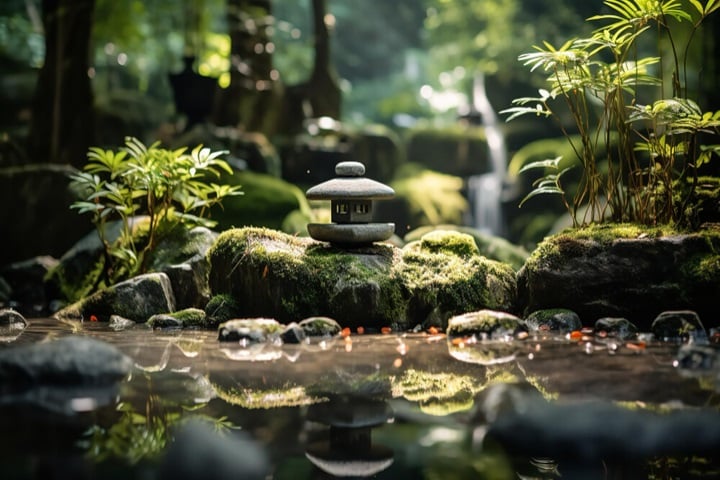
A Zen garden provides a peaceful retreat that supports mental clarity, mindfulness, and relaxation.
What is more, Zen gardens introduce elements of Japanese culture and Zen philosophy, enriching one’s understanding and appreciation of these traditions. It serves as a cultural and aesthetic link to the principles of simplicity, harmony, and tranquility.
A Zen garden also fosters a deeper connection with nature. The use of natural elements like rocks, sand, and carefully selected plants encourages appreciation and mindfulness of the natural world.
Zen Garden Ideas for Creating a Calm Sanctuary
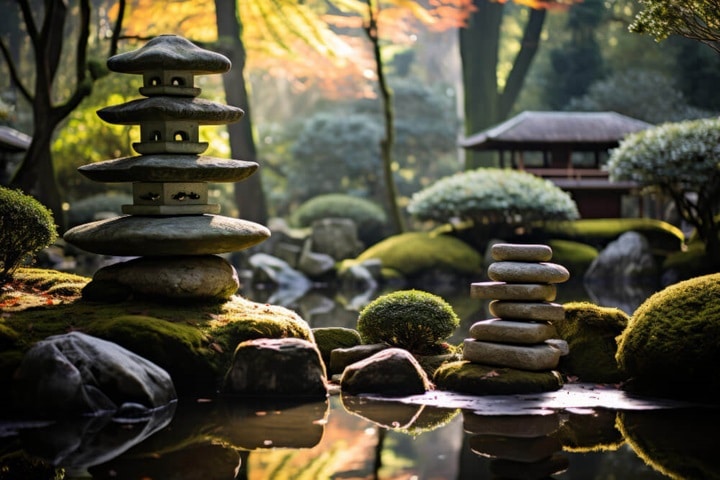
Here are some key concepts to keep in mind as you create a Zen garden:
Work With What You Have
Creating a Zen garden doesn’t align with the idea of uprooting an entire garden to install brand-new plants and materials. Instead, take a moment to assess your current garden. Are there any plants you’d like to retain, such as a venerable old tree or shrub? Can any existing materials be repurposed?
The philosophy of a Zen garden includes finding beauty in aged objects and appreciating imperfection. For instance, your patio paving could be transformed into stepping stones amidst gravel, or an old stone planter might be repurposed as a serene water feature.
Use Natural Elements
Zen gardens are designed to capture the essence of nature rather than replicate its exact appearance, serving as a tool for meditation. But what can mimic nature and represent it better than natural materials?
Since in a zen garden, how we feel is hugely important, we need to pay careful attention to the materials we use, and recognise the tranquil vibe that comes from using natural materials and avoiding the synthetic as much as possible. Natural materials are more in keeping and help to preserve the natural harmonious feel of your garden as a whole.
Incorporate a Sense of Transition
Whether it’s an arch, a gateway, a bridge, or a more abstract feature, establishing a defined entrance or a kind of proscenium arch framing your Zen garden from a certain angle creates a sense of separation from the outside world and aids in focusing the mind on the vista the frame contains.
Create a Sense of Seclusion
Maintaining privacy is integral to cultivating a serene garden atmosphere. The sensation of being watched or overlooked can hinder complete relaxation.
Introducing a natural screen, such as bamboo or hedging, can partition off specific areas, while a pergola adorned with climbing plants offers additional shielding from neighbouring structures’ view.
Include an Area of Gravel or Sand
In Zen gardens, white gravel or sand typically represents water. It is often raked into patterns that seem to give a sense of movements, patterns and waves. It also represents purity, and also the space between – a sense of distance.
These areas of sand and gravel are often considered to be one of the most iconic features of a zen garden and are important in evoking the gardens on which they are based, and the ideas that lay behind them.
Arrange Rocks Artistically
Rocks are important features in a Zen garden, and are often arranged in very specific ways in order to evoke a sense of natural balance and to represent the essence of the natural world. Compositions of stone have long been important in Chinese and Japanese gardens.
Rocks are carefully chosen and arranged to create aesthetically appealing views, typically added in odd-numbered groups of three, or sometimes five. Often, mossy and algae covered rocks are favoured, to give an idea that they have been there for a long time.
Show Restraint in Your Planting Choices
Less is definitely more when it comes to choosing plans for a zen garden. Though the surrounding planting is often dense and lush to give a sense of privacy and quiet to the space, within the garden itself, plant use is typically limited.
To give a sense of space and nothingness, and to draw attention to negative space, plants are used sparingly, with those plants that are chosen carefully selected, and often pruned for a very contained and managed effect.
Add a Water Feature
Though water is not essential (many zen gardens are what is referred to as ‘dry gardens’ where an inert material such as gravel represents water), a water feature can play a part in encouraging mindfulness in your garden and may be desirable.
The gentle noise of water falling can help to reduce the impact of noise pollution – especially in city gardens. It can also help to concentrate the mind on the here and now, and help us to reduce distractions to intrude upon our peace.
Let There Be Light
Some may choose to install some lighting so that a zen garden can be enjoyed after dark. But it is important not to overdo it, and to be sensitive to the natural balance and natural harmony of the space, into which too much lighting may intrude.
Encourage Wildlife
While planting choices should be restrained in a Zen garden, it is important to select some plants that will help to attract wildlife to the garden. Planting around the edges of the Zen garden can help promote biodiversity while also adding helpfully to the sense of seclusion.
A space buzzing and alive with life will help you to relax and remain in the moment, and understanding that actually, even in your peace and quiet you are not alone, can be an aid to mindfulness and meditation.
The Best Plants for a Zen Garden

Choosing specific plants can help tie your own meditation space into the traditions of the ‘dry garden’ or Zen garden, helping to tie the different elements of the space together and adding important structure between the moss, rocks and gravel.
Clipped Evergreen Topiary
Evergreens carefully clipped into very structured forms are popular elements to include. Japanese holly is one traditional choice but you might also use yew, pines, box, or Pittosporums… or a number of other evergreen/ coniferous plants.
Deciduous Trees
Deciduous trees on the boundary of a Zen garden, sometimes also carefully clipped and maintained, can allow for contemplation of the changing seasons and allow for observation of the dappled light playing on other features of the garden.
Bamboo
Bamboo around the fringes of the space can also help to build up lush planting for privacy and a sense of seclusion. It can also give a sense of a Japanese garden, and evoke the region from which we got this type of garden.
Ornamental Grasses
Ornamental grasses evoke a sense of movement and light airiness as they blow in a breeze, and this could also serve as an aid to meditation and help you feel calm. Taller grasses might also be used to provide some structure, and, again, help ensure privacy screening around the space without restricting light too much.
Flowering Shrubs and Sub-shrubs
Around the edges of your zen garden, remember that you might also wish to include some flowering plants to attract wildlife. Flowering shrubs like Azaleas and rhododendron, Camellias etc. can be good choices to fit in with the other features from Japanese traditions that you have chosen to include.
Zen Garden Ideas on a Budget
You do not necessarily need to have a large budget to create a zen garden. You may even already have some materials that you might use in your garden – such as natural rocks and stones, or reclaimed gravel from a different area where it is not wanted. On a small scale, even when you do need to source gravel and other materials, it should not cost a fortune to implement your ideas.
Zen Garden Ideas for Small Spaces
Zen gardens can be created in even the smallest of spaces, with a tiny patch of raked gravel and a few carefully chosen rocks and plants. If you have no soil in which to plant, you might still create a similar vibe with plants in pots and other carefully chosen containers. Remember, with a zen garden, less is more, and the aim is to create a meditative and tranquil place.
How to Make a Zen Gravel Garden
- Decide on a location and layout for the space.
- Source materials (gravel, rocks, key plants).
- Clear the area of existing plants/ debris/ and perhaps remove some topsoil to use elsewhere.
- Level the area, and add a weed barrier.
- Create edging to contain the gravel within the defined area.
- Place key rocks and any other features as desired.
- Cover the desired area with gravel.
- Rake the gravel level.
- Make the desired patterns within it, around the rocks and any other features.
- Add any finishing touches that might be wanted.
FAQs
What are the 7 principles of zen garden?
The 7 principles of a Zen garden are austerity, simplicity, naturalness, asymmetry, subtlety, unconventionality and stillness. These principles aim to foster peace and mindfulness through their minimalist and thoughtful design.
How do you layout a zen garden?
A Zen garden layout should always be chosen with reference to the site and its characteristics, thinking about the environs, and the shape and size of the space. The garden layout is not something to be rushed into but should be carefully pondered, until it comes into balance, taking the core principles into account.
How to create a tranquil garden?
Zen gardens are just one concept for a tranquil garden. There are many different schemes and styles that you might employ to create a tranquil garden. In very general terms, you should think about creating a sense of privacy and seclusion, welcome and find a harmony with nature, and select plants and other features to engage the senses.
What colours are good for a zen garden?
Whites, greys and greens are usually the dominant colours in a zen garden. When thinking about the colour palette for any tranquil, meditative space, try to use cool, calm colours, and don’t make things too busy by introducing too many colours at once.
Sources
Japeto. (2018) The Different Types & Elements of Japanese Gardens. [online] Available at: https://www.japeto.co.uk/blog/29/2/the-different-types-of-japanese-garden