

Cottage gardens look good, but are also productive. An enduring favourite style for many gardeners, this type of garden is easy to create. In this guide, we will discuss some cottage garden ideas, with twelve tips to help you create an inspiring cottage garden wherever you live.
What is a Cottage Garden?
As the name suggests, cottage garden ideas comes from the traditional gardens that would have surrounded cottages in the British Isles.
Traditionally, a cottage garden would largely have been used as a practical space – a place to grow food and herbal remedies and other things for the people living within the cottage itself. These useful plants would jostle with some other perennial and self-seeding annual or biennial flowers that would provide some cheer without needing too much work.
The stylised re-invention of the cottage garden took place in the 1870s as this informal and relaxed style with its muddle of the practical and ornamental in dense planting was embraced in reaction to rigorously maintained estate gardens.
Over time, the concept of the cottage garden became less practical, and more focussed on flowers. Today, aesthetics are still very important but there is also an increasing interest in re-integrating edibles and other practical features into the cottage garden.
Cottage Garden Ideas: Top Tips
Here are some cottage garden ideas to help you create an inspiring cottage garden where you live:
1. Use Foundation Trees and Shrubs
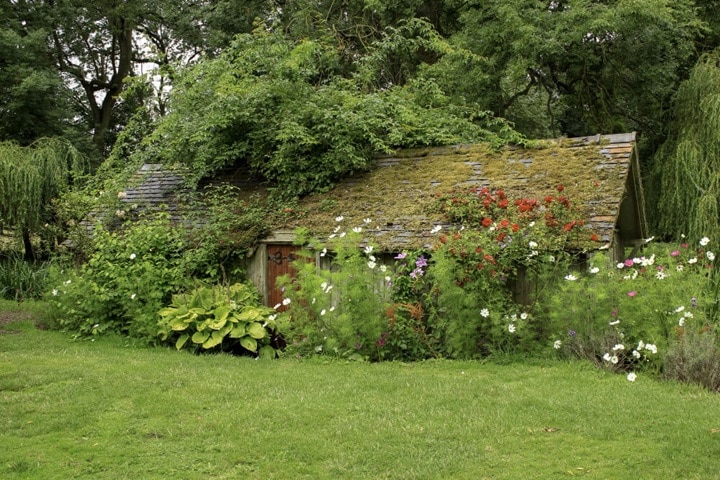
Cottage garden ideas often revolve around traditional shrub roses and climbing roses, since these are key elements within traditional cottage gardens. But, of course, many other shrubs can also be used to form an architectural framework for cottage garden beds and borders.
Trees, especially productive fruit or nut trees, also work well for cottage gardens. And smaller fruit trees can work even where the space available is small.
Remember, trees and shrubs add height and structure to a garden, enhancing privacy and helping to create that cozy, cottage garden feel. Many also provide you with an edible yield, and most, especially native choices, will help the wildlife in your garden.
Consider including a few evergreens to keep the garden looking good over the winter months as well as through the rest of the year. Evergreen boughs and branches would also often have been taken inside from a cottage garden at Christmas to decorate the home over mid-winter, which takes us back to the origins of the cottage garden.
2. Ensure there is Year-round Interest
When considering which roses, other shrubs and trees to grow with your cottage garden ideas, and thinking about all the other layers of planting, one of the most important things to aim for is year-round interest. Not only for your own benefit but also for the bees and other pollinators, a cottage garden should have flowers in bloom throughout as much of the year as possible.
Think about how you can enjoy flowers right through from the earliest spring flowering bulbs right through to the warm-toned blooms of autumn-flowering perennials. With the right plant choices you can ensure that your garden remains a riot of colour and interest throughout as much of the year as possible.
3. Align with Tradition
If you want your outside space to feel like a cottage garden then you need to think about incorporating some of the traditional cottage garden features. Today, the term cottage garden can be applied to gardens covering quite a large range of styles, but all share certain things in common:
- A dense style of planting, with layers – trees, shrubs and herbaceous plants, often also with climbers on structures partitioning or defining the space.
- A certain naturalistic feel and informality, and a lack or rigorous order and straight lines.
- An unplanned feel, like it has evolved over time rather than being created all at once. Cottage gardens are designed to look artless, though they are often tended with great care.
4. Incorporate Edibles
Though not essential really for a cottage garden look, growing your own food within a cottage garden increases its authenticity, as well as providing a range of benefits to you and your family.
Increasingly, people are realising that growing food in a garden definitely does not mean giving up space for flowers to grow vegetables in neat rows.
A cottage garden can essentially be a vegetable garden or kitchen garden in which the flowers have taken over. And the integration helps to increase yield – polyculture planting is an eco-friendly way to make the most of your garden.
Those who want a cottage garden should embrace perennial edibles just as original cottage-dwellers looking to sustain their families would have done. And perennial edibles can be very ornamental too.
5. Keep Things Low Maintenance if Time is Limited
The good news is that the cottage garden style is one to be recommended to busy gardeners. Those who are poor in time will find that a cottage garden can be created that requires little upkeep.
However, cottage gardens, it should be noted, are not always low-maintenance. They can sometimes take a lot of care and attention.
To reduce the amount of care and maintenance required, it is important to plant densely, but not so closely that plants struggle with the competition and overcrowding occurs. It is also very important, of course, to select plants that are suited to the conditions that you can provide in your own particular garden.
6. Focus on Colour
Cottage gardens do tend to have an aesthetic function as well as a practical one and often this is, indeed, the most important consideration. When you are considering the features and planting for any cottage garden, it is important to think about which colours to bring to the fore.
Cottage gardens often embrace bright, vibrant hues such as pinks, purples and reds, though pastel shades with a softness and a vintage feel are also extremely popular in such designs. You do not need to choose any specific colours when creating a cottage garden, but you do need to make sure you have a range of colourful blooms.
7. Engage All the Senses
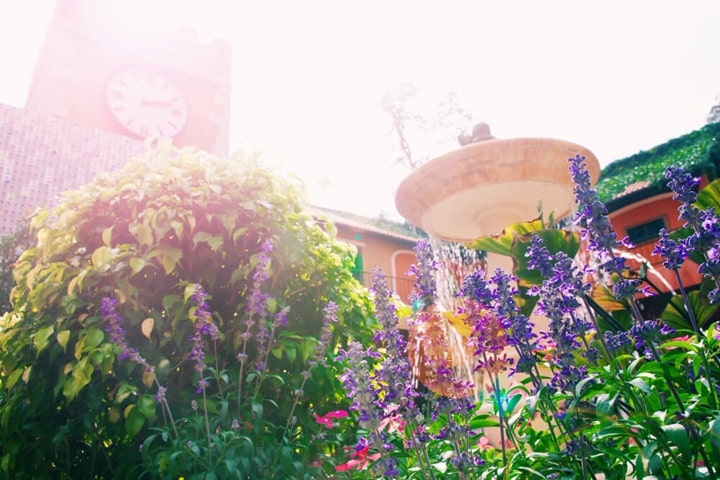
As well as thinking about how to delight the eye in a cottage garden, you should also think about how to engage the other senses.
Fragrance is one other thing that can be important in a cottage garden and so it is often important to incorporate plenty of traditional, fragrant roses and other fragrant flowers.
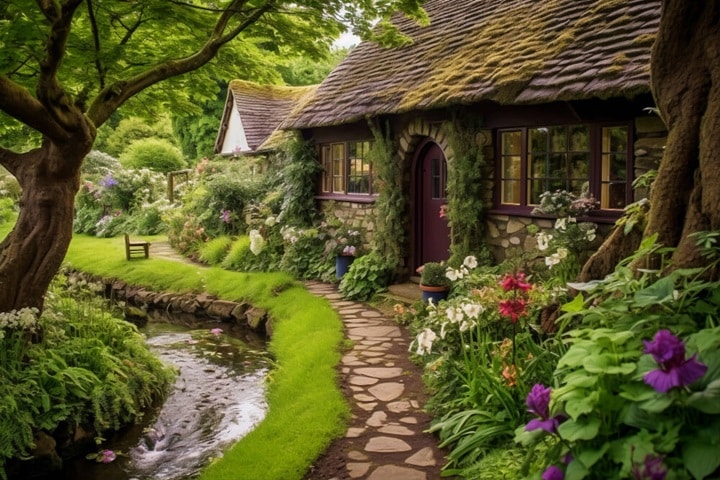
Trickling water can also help to add to the ambiance of a calm and traditional cottage garden. So incorporating a water feature of some kind can also help to create the right feel for your cottage garden scheme.
8. Add Structures and Ornamental Extras in Keeping With the Style
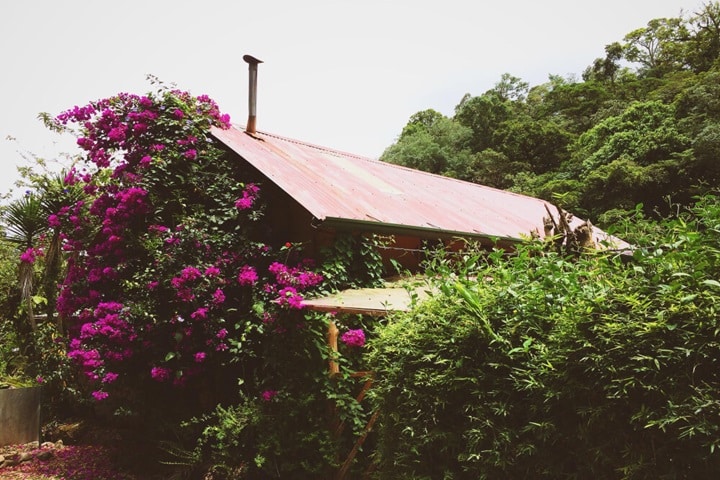
In addition to thinking about the planting, and adding a water feature of some kind, it can also be a good idea to think about what other structures and ornamental extras you might add to your cottage garden to create the right feel and add to the style.
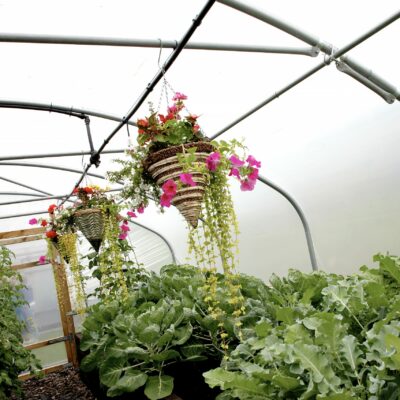
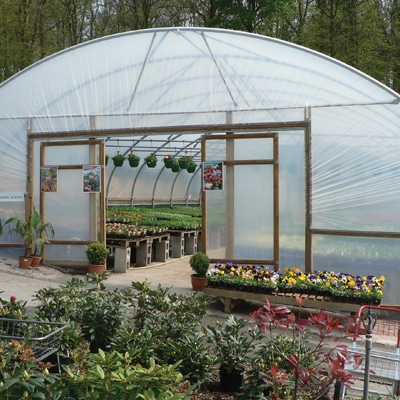
Remember, growing food is an important part of a traditional cottage garden, and so structures that help you do that, like greenhouses or polytunnels, can enhance the sense that this is a working and practical space as well as an ornamental one.
Other features that you might like to add include rustic planters and/or bed edging, features like old wheelbarrows or watering cans artistically placed, or even a coop with a few hens or other additions that would once have been a key part of cottage life.
9. Consider the Boundaries
Traditional cottage gardens were often bordered by a wooden picket fence, woven wattle fencing, or a low stone wall. Think about what type of boundary you will have on your garden to make sure that it is in keeping with the style.
One other option that blends perfectly with a cottage garden, of course, is a traditional hedge. Some cottage gardens may suit a traditional clipped hedge, while others will suit a much more informal native hedgerow with plenty of berries and fruits for birds and other wildlife, and perhaps even for foraging too.
10. Think About Pathways & Access
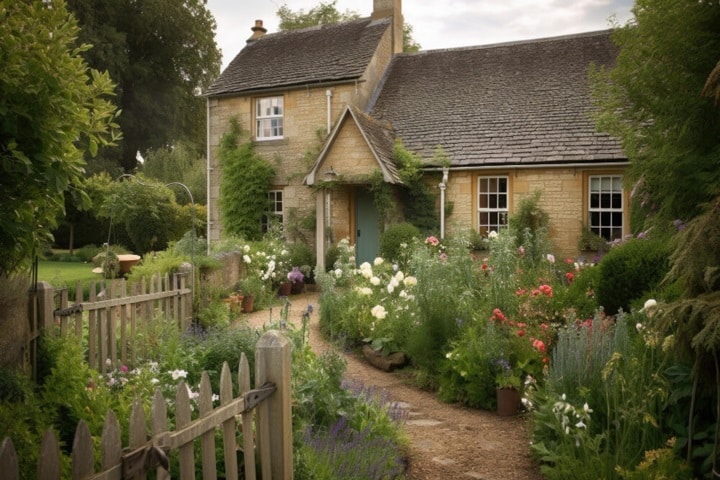
Thinking about pathways and access can also be important in a cottage garden. Remember, cottage gardens are all about an unplanned-looking and rustic feel. So particularly ordered pathways are not suited to this type of design.
Instead, think meandering pathways with gentle curves, and plants that spill out over them or are even planted within the path itself, between pavers.
11. Take a Make Do and Mend Approach
Cottage gardens of the past would have slowly evolved over time as cottage-dwellers made shift with what they had, repaired old items and cobbled together new solutions. These sorts of gardens were not the gardens of the wealthy.
So they were not about the new and modern. Rather, they were places where tools generations old could be found, and where the residents new how to make do and mend.
Seek out old, traditional tools with wooden handles and other old garden items rather than buying new to add to the style and further evoke the sense of a traditional cottage garden.
12. Embrace Native Plants
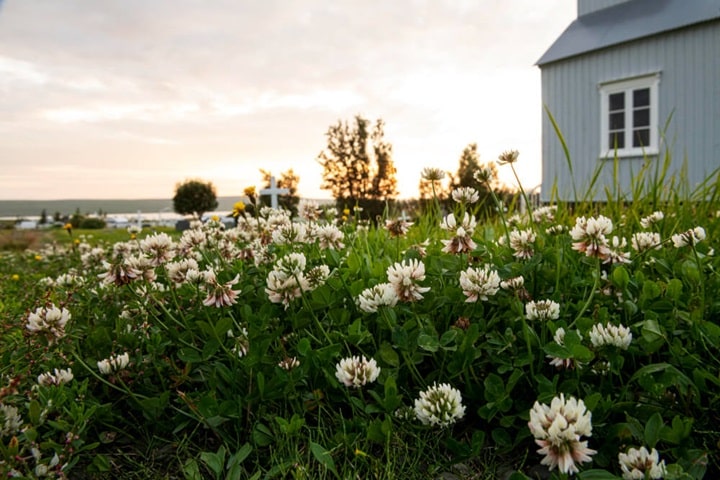
Last but definitely not least, there are certain plants commonly found in traditional cottage gardens, including roses, lavender, and a whole bunch of perennial and self-seeding annual plants.
But in any cottage garden, no matter where you live, it is important to embrace native plants to achieve the best results. This is especially true, of course, if you want to create a low-maintenance scheme for your garden.
How Do You Lay Out A Cottage Garden?
- Observe your own particular space carefully, looking at sun, wind, water and soil and design for your own particular site.
- Create an overall design, starting with broader patterns and slowly honing in on the details.
- Decide on the boundaries and pathways, and the positions of the main beds and/or borders.
- Create planting plans, selecting the right plants for the right places and embracing natives and edible plants.
- In traditional cottage gardens, tallest plants go to the back of beds and borders, medium sized plants in the middle, and shorter plants to the front.
- Plant densely but do not overcrowd the plants. Think about how large each plant can be expected to grow, and how quickly it can be expected to do so.
- Plant plants in their growing positions and mulch between them to protect the soil, conserve moisture and suppress weeds until the scheme fills out.
How Do I Set Up A Cottage Garden On A Budget?
To save money when establishing a cottage garden, and to garden on a budget it is important to take a DIY approach. Grow whatever you can from seed, or propagate your own plants by cuttings or division. With that being said, be sure to take these cottage garden ideas to their fullest potential, even if you only have a small budget, to shape up your garden.
Learn more insightful information from the knowledge section of our blog.
Follow these tips to transform any garden on a budget.
FAQs
How do you design a small cottage garden?
Make the most of the space with clever path layout and dense, layered planting. Embrace vertical gardening and maximise yield by growing edible crops throughout the whole of the year.
What plants go into a cottage garden?
Many plants, both edible and ornamental, can be incorporated into a cottage garden design. Roses, lavender, hollyhocks, foxgloves, daises and cranesbill geraniums are among the popular plants commonly used in UK cottage gardens, along with fruit trees, berry bushes, and culinary herbs.
What are the features of a cottage garden?
Dense, layered planting, an informal, un-artful design that looks like it has evolved naturally over time rather than being carefully planned, traditional materials and an integration of the edible and the ornamental are key features of a cottage garden.
How do you build a cottage core garden?
Embracing cottage-core means trying to mimic a garden from a quaint, traditional British cottage. Creating a cosy, whimsical and romantic vibe is the order of the day. Plant old-fashioned flowers like roses, peonies and violets, mixed with as wide a range of other plants as possible. Plant carefully for a natural look and feel, and make sure you include somewhere to sit and enjoy the scheme you have created.
Sources
Britain and Britishness. (2024) 18 Gorgeous English Thatched Cottages. [online] Available at: https://britainandbritishness.com/18-gorgeous-english-thatched-cottages/ [accessed 22/07/24]