

For many children—and indeed many grown-ups—the idea of dinosaurs captures the imagination in a unique and awe-inspiring way. These ancient giants of prehistory roamed the Earth long before us, yet echoes of their world still remain.
Creating a dinosaur garden is a delightful way to connect with nature, spark curiosity, and learn about the deep time of life on Earth. This could be the perfect child-friendly garden.
But a dinosaur garden isn’t just about toy models or novelty. When rooted in the ethos of permaculture and natural learning, it can become a space that is educational, sustainable, and utterly enchanting.
In this guide, we’ll explore dinosaur garden ideas, including how to build a dinosaur garden using primitive plants, edible species, and playful design elements that connect children (and adults) with both the ancient world and the living, breathing Earth of today.
A Prehistoric Garden With Primitive Plants
You may be surprised to learn that many of the plants we grow today have their origins in ancient ecosystems. Some species growing in our gardens trace their lineage back over 200 million years—meaning they may well have been around when dinosaurs first roamed the Earth.
A prehistoric garden focuses on these “living fossils”—plants that evolved in ancient geological epochs and have changed very little since. They are not merely decorative—they’re time travellers, offering a glimpse into the Mesozoic world.
Incorporating such plants into your garden is more than just educational. It creates a soothing, almost otherworldly environment—ideal for quiet reflection or child-led play.
What are Primitive Plants?
Primitive plants are those that evolved millions of years ago, long before bees buzzed and roses bloomed. These species were around when dinosaurs roamed the Earth, and remarkably, many remain virtually unchanged.
Some ancient plant groups to include in a dinosaur garden include:
Ferns
Ferns first appeared around 360 million years ago. They were a dominant plant group during the Jurassic period. Ferns reproduce via spores, not flowers or seeds. Look for native UK ferns like:
- Dryopteris filix-mas (Male fern)
- Athyrium filix-femina (Lady fern)
- Polystichum setiferum (Soft shield fern)
Their unfurling fronds look almost reptilian—an ideal feature in a prehistoric-themed space.
Horsetails (Equisetum)
Often seen as weeds, horsetails are among the oldest plant genera still alive. Fossil records show they grew over 30 feet tall in prehistoric swamps.
In the garden, Equisetum hyemale can add striking vertical structure—but beware: they spread aggressively, so they are best grown in pots or contained beds if not already present where you live.
Mosses & Liverworts
These tiny, ancient plants pre-date even ferns and horsetails. Moss adds soft textures to rockeries and shaded corners. You can encourage moss naturally in damp, low-light areas by avoiding disturbance and chemical inputs.
Cycads
While not reliably hardy across the UK, some cycads—such as Cycas revoluta—can be grown in pots and overwintered in greenhouses or conservatories. With their thick trunks and palm-like fronds, they look truly prehistoric.
Ginkgo biloba
This extraordinary tree, native to China, is often dubbed a “living fossil.” Ginkgo trees date back over 270 million years. Their unique fan-shaped leaves and golden autumn colour make them a stunning choice for larger gardens.
How to Build a Dinosaur Garden with Veggies & Herbs
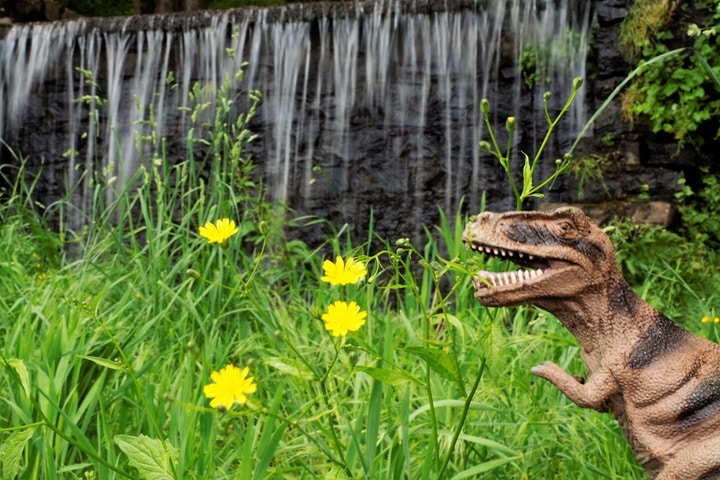
A dinosaur garden doesn’t have to be purely ornamental. We can blend the prehistoric theme with edible plants, bringing both productivity and purpose to the space.
Some vegetables and herbs have truly ancient origins or lend themselves well to the theme:
Tree Kale (Brassica oleracea var. ramosa)
With large, dinosaur-scale leaves and perennial growth, this leafy green fits well among ferny neighbours. It evokes the massive foliage of the Jurassic period.
Rhubarb (Rheum rhabarbarum)
Its huge, architectural leaves look positively prehistoric (though note that the leaves are toxic and this is something to bear in mind in a child-friendly garden).
Cardoon (Cynara cardunculus)
Tall, thistle-like, and imposing. A relative of globe artichokes, it looks like something a Triceratops might graze on.
Fennel
With its towering stems and feathery foliage, fennel provides both vertical interest and a touch of wildness. It’s also excellent for attracting pollinators.
Asparagus
A member of a very old plant family, asparagus spears were likely similar to the tender shoots eaten by early herbivorous dinosaurs.
By weaving these edibles into your dinosaur garden, you create a functional, delicious landscape that also teaches us about the evolution of our food plants. All of these plants integrate well into a forest garden type sustainable garden system.
Just Add Dinosaurs?
Of course, no dinosaur garden is complete without a few prehistoric inhabitants—real or imagined. And here’s the wonderful twist: birds are modern-day dinosaurs.
That robin in your hedge? A descendent of the theropods, the same lineage as Velociraptor and Tyrannosaurus rex. When we observe blackbirds hopping across the lawn or starlings chattering overhead, we’re looking at the living echoes of an ancient lineage.
While we can’t (yet) clone a Tyrannosaurus rex from amber-trapped mosquitoes, we can embrace their closest living relatives.
By encouraging birdlife in your dinosaur garden, you quite literally bring the legacy of dinosaurs to life. Provide bird feeders, native shrubs, and small water features to attract feathered visitors.
If your dinosaur garden is for kids, you might also like to include fun features like, for example:
- Dinosaur models, toys or homemade weatherproof artworks.
- Dinosaur footprints made with clay or painted on stepping stones.
- A “dinosaur dig” area with sand, stones, or clay where young palaeontologists can unearth their finds.
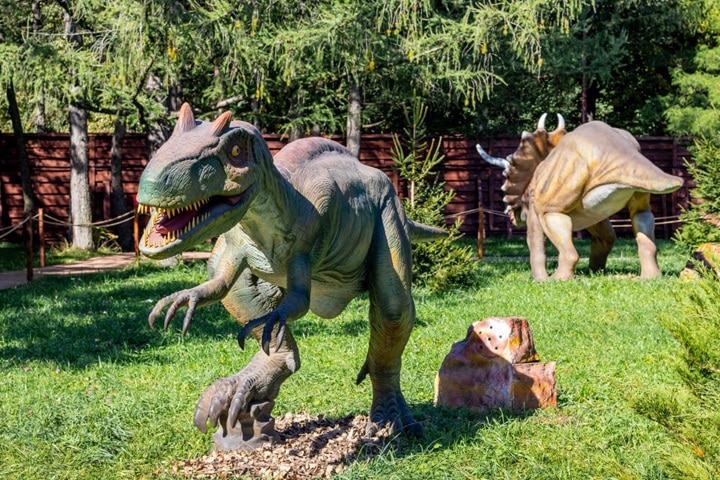
How To Build A Dinosaur Garden
1. Choose a Site
Preferably semi-shaded and moist, as many primitive plants prefer woodland or forest-like conditions. Under a deciduous tree, beside a shed, or next to a pond works well.
2. Plan Your Layers
Think in layers, like a mini-forest:
- Tall backdrop: Monkey puzzle tree, ginkgo, or conifers
- Mid layer: Ferns, rhubarb, tree kale
- Ground layer: Moss, horsetail, herbs
- Features: Rocks, logs, pathways, and water
3. Add Natural Materials
Use logs, boulders, and driftwood to mimic fallen tree trunks and rocky crevices. These provide both aesthetic structure and habitats for insects and fungi.
4. Build Soil Health
Permaculture gardens begin with the soil. Add organic matter, leaf mould, and use mulch to suppress weeds and retain moisture.
5. Install Features for Wildlife
Include a mini pond, log piles, and bird-friendly planting to create a thriving ecosystem.
6. Plant Your Prehistoric Picks
Arrange plants to create drama—large foliage near the back, with moss and ferns spilling forward. Allow space for pathways and perhaps a small seating area.
7. Create Play and Learning Areas
Add seating, interactive features (like a fossil sand pit), or a simple trail with signs teaching children about ancient plants and ecosystems.
Got Weeds? Don’t Worry!
Primitive plant environments were wild and unruly, and your garden should feel lush and layered, not manicured and sterile. Dandelions, clover, dock, and nettles can all have their place here, especially if children are using the space for exploration and play.
Indeed, so-called weeds like plantain, sorrel, and dead-nettle are valuable for both wildlife and learning. In a permaculture system, each plant has a role—soil healer, pollinator haven, or culinary curiosity.
Primitive-looking plants often resemble weeds—and sometimes are considered weeds in modern horticulture. Horsetails, mosses, and even brambles can cause alarm to traditional gardeners.
But in a dinosaur garden, this wildness is a feature, not a flaw.
By allowing some natural succession and minimal disturbance, you may find that nature does the design work for you—colonising the space with just the kind of ancient-looking flora you’re aiming for.
Learn to observe rather than immediately intervene. You may discover that many “weeds” are deep-rooted native species with long evolutionary histories.
Dinosaur Play Gardens
For families, a dinosaur garden becomes even more magical when it invites imaginative play. Create a space that children can explore freely, with features that spark storytelling, role-play, and discovery.
In addition to the dinosaur themed features mentioned above, you might also consider adding a place to make mud pies and potions, Hidden dinosaur nests made from mossy bowls or wood rounds, and planting with red and orange flowers that resemble volcanoes and other geothermal features.
You might even mound earth and create a dinosaur that will slowly colour in with living plants.
Use natural materials—logs to balance on, stones to stack, bark to build with. The aim is to create a rich, sensory environment that children can shape and reshape in their own way. You don’t need plastic toys to bring the space alive. With a few creative elements and an open invitation, children will turn any garden into a time-travelling adventure.
Benefits of Unstructured, Outdoor Play
There is a growing body of research showing the developmental benefits of free, imaginative play in nature. A dinosaur garden, whether as a corner of your vegetable plot or the centrepiece of a family-friendly design, offers space to:
- Connect with the natural world
- Explore scientific ideas through lived experience
- Develop fine and gross motor skills
- Foster curiosity and creativity
- Reduce stress and improve mental wellbeing
In permaculture, we talk about multifunctionality. A dinosaur garden, rich in story, ecology, education, and play, offers a beautiful example of this principle in action.
Building a dinosaur garden is about celebrating the wonder of the natural world, both ancient and modern. It is about creating a space that invites curiosity, fosters creativity, and quietly teaches us to respect the interconnected web of life that has existed for hundreds of millions of years.
As we plant ferns and mosses, add rhubarb and monkey puzzle trees, or hear a blackbird sing through the canopy, we’re connecting across time. Dinosaurs may be gone, but their world lives on in fragments—in spores and seeds, in birds and bones, in story and in soil.
Check out these other fun activities to do with children in polytunnels for schools:
FAQs
Can I create a dinosaur garden in a small space?
Yes, absolutely. A dinosaur garden doesn’t need to be large to evoke the magic of the Mesozoic era. Even a small raised bed, container, or courtyard can become a prehistoric haven with careful plant selection and thoughtful design. Choose compact ferns, mosses, and dwarf conifers, and consider planting in vertical layers to maximise space.
How can I make a dinosaur garden safe for children?
A child-friendly dinosaur garden should encourage exploration while remaining safe and accessible. Here are a few tips:
Avoid toxic plants (e.g., rhubarb leaves, yew, foxglove) or ensure children are supervised if included for visual effect
Provide soft paths using bark, grass, or mulch to prevent slips
Make sure rocks, logs, and water features are stable and well-secured
Avoid sharp-edged decorations; opt for natural materials and rounded stones
Clearly mark edible vs. non-edible plants if foraging or mud kitchen play is encouraged
Most importantly, observe how children use the space, and adapt it over time to their age and curiosity. A dinosaur garden is a dynamic place where nature and play can combine and kids and plants can grow together.
Can I incorporate water features into a dinosaur garden?
Yes—and in fact, water features can greatly enhance the atmosphere of a dinosaur garden, evoking prehistoric swamps and lush wetlands. Even a small pond, birdbath, or pebble stream can bring sound, movement, and wildlife to the space.
Some tips:
For young children, choose shallow features or use sealed containers filled with pebbles and water for safe play
Surround water areas with ferns, horsetails, or mosses for an authentic prehistoric feel
Consider adding frog- or dragonfly-friendly zones to further connect the space with real-life “dinosaurs” of the insect world
Fossil evidence shows that early frogs hopped about during the Triassic period, which means they shared the Earth with dinosaurs. Modern frogs are descendants of those ancient amphibians — so while they’re not dinosaurs themselves, they are living relics of the same era.
Dragonflies are even older — they belong to an ancient group of insects that date back over 300 million years, well before the first dinosaurs emerged. In fact, some prehistoric dragonflies had wingspans over 70 cm (28 inches)! Today’s dragonflies are much smaller, but they are close relatives of those gigantic ancestors and represent one of the oldest surviving insect lineages.
Maintain water quality naturally using oxygenating plants and by avoiding chemicals
Water, in all its forms, invites discovery—and in a dinosaur garden, it completes the story of the wild, ancient world you’re recreating.
Sources
ED_H4StinGs. (2020) 10 Living Descendants and Relatives of Dinosaurs. Hastings Aquarium. [online] Available at: https://hastingsaquarium.co.uk/blog/animal-stories/10-living-descendants-and-relatives-of-dinosaurs/