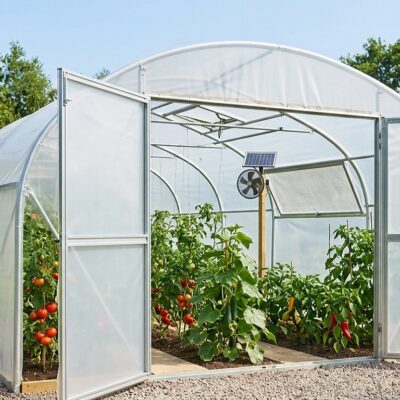

HOW TO STOP CONDENSATION IN A POLYTUNNEL
Condensation in a polytunnel is usually a sign that warm, moisture-filled air is becoming trapped inside the growing space. When that humid air meets the cooler surface of the polythene cover, water droplets form and begin dripping back down onto plants and soil.
The good news is that condensation in polytunnel growing spaces can usually be improved with a few simple changes. Better ventilation, more thoughtful watering routines, healthier airflow around plants, and a more balanced growing environment often make a significant difference surprisingly quickly.
In this guide, I’ll explain what causes condensation, why it matters, and the practical steps I’ve found most effective for reducing it naturally while still maintaining healthy growing conditions.
For a closer look at how temperature changes inside a polytunnel lead to condensation problems, it helps to understand how humidity and temperature interact throughout the day and night.
Key Takeaways
- Condensation forms when warm humid air meets cold surfaces
- Poor ventilation is usually the biggest contributing factor
- Watering timing has a major impact on humidity levels
- Plant spacing affects airflow more than many growers realise
- Small daily adjustments often prevent larger moisture problems
What Causes Condensation in a Polytunnel?
Condensation develops when moist air inside the tunnel cools rapidly and releases water onto colder surfaces, particularly the inside of the polythene cover.
This often happens overnight. During the day, warmth builds up inside the tunnel and plants release moisture through transpiration. As temperatures drop in the evening, the cooler cover surface causes that moisture to condense into droplets.
Condensation is rarely caused by one issue alone. It is usually the result of several small factors combining together.
Common Causes of Condensation
- Poor ventilation trapping humid air
- Large temperature differences between day and night
- Overwatering
- Wet soil surfaces
- Overcrowded planting
- Lack of airflow through the tunnel
- Excessive humidity from dense foliage
Understanding how temperature changes inside a polytunnel lead to condensation problems helps growers respond more effectively rather than simply treating the symptoms.
Key Point: Condensation itself is natural to some extent. Problems usually begin when moisture remains trapped for long periods without enough airflow.
Why Condensation Can Be a Problem for Your Plants
A little moisture is not necessarily harmful. In fact, healthy growing spaces naturally contain humidity. The issue comes when damp conditions persist consistently.
Problems Caused by Excess Condensation
- Water dripping repeatedly onto leaves
- Increased risk of mould and mildew
- Greater spread of fungal diseases
- Reduced airflow around crops
- Lower light levels through misted polythene
- Stressed or weakened plants
I often find that growers focus on the visible droplets while overlooking the underlying humidity imbalance causing them.
In enclosed environments, prevention usually works far better than trying to treat disease outbreaks later.
The Most Effective Ways to Reduce Condensation
Some solutions make a far bigger difference than others. In most cases, ventilation should always come first.
1. Improve Ventilation
Allow humid air to escape regularly and encourage fresh air movement through the structure.
For a deeper look at why balancing temperature and ventilation is key to preventing condensation, it helps to think about airflow as part of the wider growing ecosystem rather than simply cooling the tunnel down.
2. Water Earlier in the Day
Morning watering gives excess moisture time to evaporate gradually before temperatures fall overnight.
3. Avoid Overcrowding
Dense planting blocks airflow and traps humidity around leaves and stems.
4. Reduce Excess Surface Moisture
Mulching soil naturally helps reduce evaporation while also supporting healthier soil life.
5. Improve Tunnel Layout and Airflow
Sometimes small changes in pathways, bed positioning, or vent use can improve conditions dramatically.
Tip: I often find that several small adjustments together work far better than relying on one major intervention.
Improve Ventilation (The #1 Fix)
Ventilation is usually the single most important factor in preventing condensation in polytunnel growing spaces.
Even during colder months, some airflow is almost always beneficial.
Practical Ventilation Checklist
- Open doors daily where possible
- Use cross-ventilation whenever conditions allow
- Open side vents during warmer periods
- Avoid sealing the tunnel completely overnight
- Maintain clear airflow pathways inside the structure
Cross-ventilation is particularly effective because it allows humid air to move through the tunnel rather than simply circulate inside it.
Passive vs Mechanical Ventilation
| Type | Advantages | Considerations |
|---|---|---|
| Passive airflow | Low energy use, natural regulation | Depends on weather conditions |
| Fans | Useful in still conditions | Uses electricity |
Where possible, I prefer natural ventilation methods first. They are usually more sustainable, quieter, and easier to manage long term.
Tunnel design itself can also help significantly. These polytunnels designed to improve airflow and reduce condensation issues often make humidity management easier throughout the year.
Key Point: Good airflow does not mean creating cold draughts directly onto plants. The goal is gentle, consistent air exchange.
Control Moisture Levels Inside the Tunnel
Humidity inside a polytunnel is strongly linked to moisture management.
The more exposed wet surfaces inside the tunnel, the more water vapour enters the air.
Ways to Reduce Excess Moisture
- Water early in the morning
- Avoid soaking pathways unnecessarily
- Mulch soil to reduce evaporation
- Repair leaks promptly
- Avoid leaving standing water inside the tunnel
Organic mulches are especially useful because they regulate moisture naturally while also feeding the soil gradually as they break down.
I also find that healthier soil rich in organic matter tends to hold moisture more evenly, reducing sudden humidity swings.
For growers interested in using compost heat to stabilise temperatures and reduce condensation risk, compost systems can sometimes help create gentler overnight temperature changes.
Space and Position Your Plants Properly
Plant spacing affects airflow far more than many people realise.
In crowded tunnels, humid air becomes trapped between leaves and stems, creating ideal conditions for fungal problems.
Signs Plants Are Too Crowded
- Leaves staying damp for long periods
- Poor airflow beneath foliage
- Condensation forming heavily around crops
- Increased mould or mildew issues
Ways to Improve Airflow Naturally
- Leave wider spacing between mature plants
- Prune dense growth where appropriate
- Avoid blocking pathways completely
- Use vertical growing methods carefully
I often prefer slightly fewer healthy plants with good airflow over squeezing every possible crop into the available space.
From a permaculture perspective, balance usually produces stronger and more resilient growing systems than maximum density.
Use Air Movement to Your Advantage
Air movement does not always require expensive equipment.
Often, understanding how wind naturally moves around the site makes a surprising difference.
Helpful Airflow Strategies
- Position doors to encourage natural breezes
- Keep vents clear
- Avoid clutter blocking airflow
- Use shelving carefully so air can still circulate
When Fans May Help
Fans can sometimes help in:
- Very still environments
- Winter propagation areas
- Densely planted tunnels
However, they are not always necessary in well-designed tunnels with sensible layouts and regular ventilation routines.
I generally see mechanical airflow as supportive rather than the main solution.
Seasonal Tips to Prevent Condensation
Condensation risks change throughout the year as temperatures and humidity fluctuate.
| Season | Main Risk | Helpful Action |
|---|---|---|
| Winter | Cold nights and trapped moisture | Ventilate carefully during milder periods |
| Spring | Sudden temperature swings | Monitor humidity daily |
| Summer | High humidity from rapid plant growth | Increase airflow and spacing |
| Autumn | Cooler evenings and damp conditions | Reduce excess watering |
In winter especially, there is often a balance between retaining warmth and allowing enough ventilation.
Slightly cooler but well-ventilated conditions are usually healthier than warm stagnant air.
Quick Checklist: How to Stop Condensation Fast
If condensation is becoming a visible problem, these are usually the most effective immediate steps.
Daily Condensation Prevention Checklist
- Open vents or doors regularly
- Water earlier in the day
- Reduce overcrowding
- Improve airflow through planting layouts
- Mulch exposed soil
- Remove dead foliage promptly
- Monitor humidity visually each day
Keeping the polythene cover clean can also help improve light levels and reduce moisture build-up over time. This a polytunnel cleaner that helps maintain clear covers and reduce moisture buildup may help with ongoing maintenance.
Condensation in polytunnel growing spaces is common, particularly during cooler months and periods of rapid temperature change. Fortunately, most problems can be improved with relatively simple adjustments.
In my experience, ventilation remains the single most important factor. Beyond that, healthier planting layouts, careful watering, and building balanced growing systems all contribute to more stable conditions.
Rather than trying to eliminate every trace of moisture, it is usually better to focus on creating an environment where humidity can move and regulate naturally. Small daily habits often make the greatest long-term difference.
Frequently Asked Questions
Can condensation damage plants?
Yes. Persistent condensation can increase the risk of fungal diseases, mould, mildew, and general plant stress, especially where airflow is poor.
Should I leave my polytunnel door open?
Often, yes during the day. Allowing regular airflow helps reduce trapped humidity. Overnight ventilation depends on weather conditions and temperature levels.
Does ventilation stop condensation completely?
Not always completely, especially during cold weather, but good ventilation usually reduces condensation significantly and helps prevent moisture-related problems.
Does putting heating on reduce condensation?
Heating can sometimes help by reducing temperature differences, but without proper ventilation it may also increase humidity levels. Balanced airflow remains important.
How to reduce humidity in a polytunnel?
Improving ventilation, watering earlier in the day, spacing plants properly, mulching soil, and avoiding overcrowding are usually the most effective ways to reduce humidity naturally.
Sources
Royal Horticultural Society (RHS) (2026) Greenhouse: ventilation and shading. Available at: https://www.rhs.org.uk/garden-features/ventilation-and-shading-greenhouses/ (Accessed: 20 May 2026).