

When to plant pumpkin seeds in UK depends on where and how you plan to grow them. Pumpkin seeds are generally sown under cover from mid to late April, giving the young plants time to establish before they move into their final growing position.
A polytunnel can give pumpkins a more sheltered start, but the best planting date still depends on temperature, frost risk and how well the seedlings have developed rather than one fixed date on the calendar.
This distinction is worth making from the start. Sowing pumpkin seeds and planting pumpkin seedlings are two different stages. You can start the seeds under cover, then plant the young pumpkins into the polytunnel once they are established and conditions are suitable.
I recommend sowing pumpkins indoors from mid to late April and planting outdoors from late May to early June. A polytunnel changes the growing environment, so rather than simply copying the outdoor calendar, it makes sense to look at the conditions you have created inside your tunnel.
Key takeaways
- Sow pumpkin seeds under cover around mid to late April.
- Treat the final planting date as a window rather than a fixed UK date.
- Make sure seedlings are established before moving them into their final growing position.
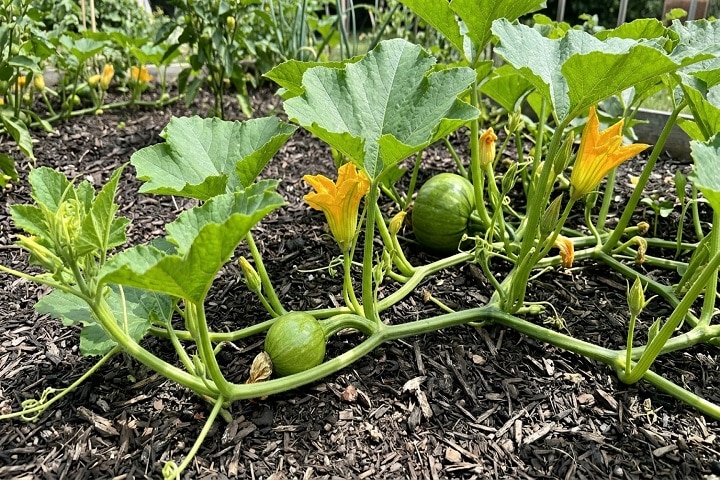
- Give pumpkins plenty of room because the vines can become vigorous.
- Ventilation becomes increasingly important as the polytunnel heats up in summer.
When should you plant pumpkin seeds in a UK polytunnel?
If you are wondering when to plant pumpkin seeds in the UK, start by separating seed sowing from transplanting.
For most UK gardeners, mid to late April is a useful starting point for sowing pumpkin seeds under cover. The young plants can then be grown on until they are large enough to plant into their final position.
With a polytunnel, the final planting date is less about reaching a particular day and more about whether the plants and growing environment are ready.
| Stage | Approximate timing | What to look for |
|---|---|---|
| Sow seeds | Mid to late April | Warm, bright conditions |
| Seedling development | Late April to May | Healthy established plants |
| Plant into polytunnel | Spring, once conditions are suitable | Low frost risk and suitable growing conditions |
| Active growth | Late spring through summer | Plenty of space, water and ventilation |
| Harvest | Late summer to autumn | Mature fruit before damaging frost |
The dates are a guide rather than a rule. A sheltered polytunnel in one part of the UK may be quite different from one in an exposed garden elsewhere.
The useful approach is to plan backwards from an autumn harvest.
Why a polytunnel can change your pumpkin planting schedule
Pumpkins are tender plants, so starting them under protection makes good sense in the UK.
A polytunnel provides shelter from cold winds, heavy rain and sudden changes in weather. It also creates a more controlled environment in which young plants can establish before they face the full conditions of an outdoor growing season.
But protection does not mean that temperature suddenly becomes irrelevant.
A polytunnel can help by providing:
- Shelter while young plants establish
- Protection from late cold conditions
- A more stable growing environment
- A longer protected growing season
- Space to grow tender crops that may struggle in exposed positions
If you are considering protected growing for pumpkins and other tender crops, you can choose a polytunnel for growing pumpkins.
The important point is not that a polytunnel gives you a guaranteed number of extra weeks. It is that it gives you more control over the conditions surrounding the crop.
When to sow pumpkin seeds under cover
For UK conditions, mid to late April is the RHS recommendation for sowing pumpkins indoors. The aim is to give the seeds and young plants a warm, bright start before they are moved into their final growing position.
A simple sowing sequence
- Sow the seeds under cover in spring.
- Give the seedlings warmth and plenty of light.
- Allow the young plants to establish.
- Prepare their final growing position in the polytunnel.
- Move them once conditions are suitable.
Individual pots are practical for pumpkins because they give the developing plants their own space and make it easier to move them without disturbing neighbouring seedlings.
There is also little benefit in sowing so early that the seedlings become large and difficult to manage before the final growing position is ready.
If you are starting other crops at the same time, you can learn more about starting seeds in a polytunnel.
When to plant pumpkin seedlings in a polytunnel
This is where the distinction between sowing and planting becomes particularly useful.
It is best to plant pumpkins outdoors from late May to early June. For a polytunnel, you can use that as useful seasonal context, but you do not need to treat those dates as an absolute rule.
Instead, look at the plants and the conditions inside your specific tunnel.
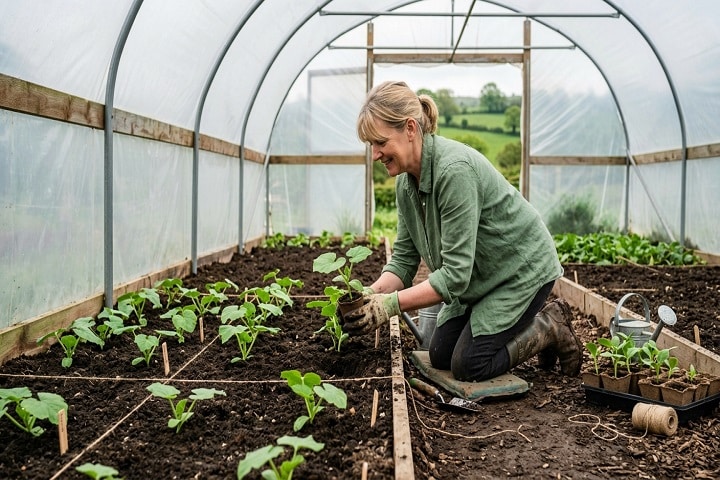
Is your pumpkin seedling ready to plant?
Look for a plant that:
- Has established beyond the first delicate seedling stage
- Is growing actively rather than sitting still
- Has several healthy leaves
- Has a strong, well-developed appearance
- Can be moved without being overly cramped in its current container
Also consider the weather. If a significant cold spell is forecast, there may be little advantage in rushing the planting.
A polytunnel is protection, but it is not a substitute for sensible timing.
If you raised your seedlings somewhere warmer and more protected than the polytunnel, give them time to adjust gradually.
How to prepare your polytunnel for pumpkins
Most pumpkin varieties are large trailing plants and it is important to allow sufficient growing space.
Before planting, think about where the vines will go and consider trellising or other vertical gardening techniques for space-saving.
Polytunnel preparation checklist
- Choose a bright position.
- Prepare fertile, well-drained soil.
- Allow plenty of room for trailing growth.
- Keep vines away from paths where possible.
- Make sure there is access for watering and harvesting.
- Consider airflow once the foliage becomes dense.
- Have your watering arrangements ready before planting.
Planning this at the beginning is much easier than trying to untangle a mass of pumpkin growth later in the summer.
If you are still deciding what kind of protected growing space will suit your garden, you can choose a polytunnel for growing pumpkins.
Pumpkin planting timeline: from seed to autumn harvest
The whole season becomes easier to understand when you look at it as one sequence.
| Stage | Typical UK timing | What you are doing |
|---|---|---|
| Seed sowing | Mid to late April | Start seeds under cover |
| Young plants | Late April to May | Grow seedlings on in warm, bright conditions |
| Planting | Spring, when suitable | Move established plants into the polytunnel |
| Summer growth | June to August | Water, ventilate and give vines room |
| Fruit development | Summer into early autumn | Allow pumpkins to mature |
| Harvest | Late summer to autumn | Harvest mature pumpkins before damaging frost |
This is deliberately a flexible timeline. Variety, local weather and the conditions inside your polytunnel can all affect how quickly plants develop.
If you are planning several crops rather than just pumpkins, find out what to sow and grow throughout the year in a polytunnel.
How to care for pumpkins in a polytunnel
Once pumpkins are planted, the main job is to maintain good growing conditions while the plants put on their substantial summer growth.
Water consistently during active growth and keep an eye on the soil rather than allowing plants to swing between very dry and very wet conditions.
Ventilation is equally important.
As the weather warms, the polytunnel can become much hotter than you might expect. Large pumpkin leaves can also create a dense canopy, reducing air movement around the plants.
Summer care checklist
- Water consistently during active growth.
- Monitor soil moisture regularly.
- Ventilate the polytunnel as temperatures rise.
- Give the vines room to spread.
- Watch for excessive humidity around dense foliage.
- Feed plants during active growth as appropriate.
- Check developing fruits regularly.
You can keep your polytunnel cool in summer with practical ventilation and temperature-management measures.
The aim is not to create a completely controlled environment. It is to avoid the extremes that can make growing more difficult.
When to harvest pumpkins grown in a UK polytunnel

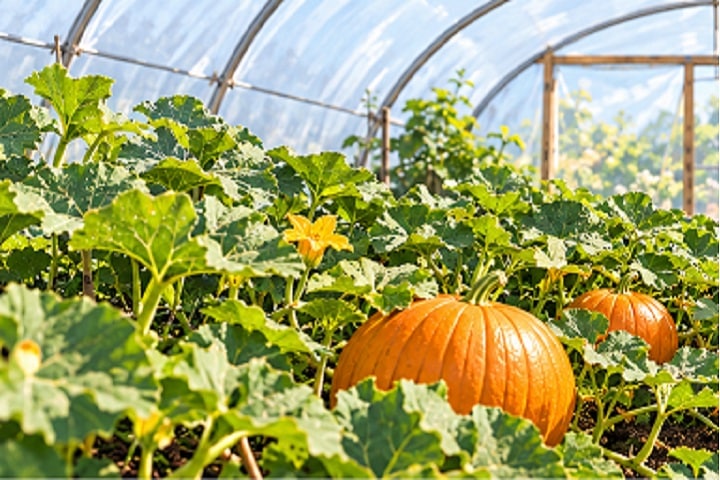
The harvest comes towards the end of the growing season, usually from late summer into autumn depending on the variety and growing conditions.
Rather than relying entirely on the calendar, look at the fruit itself.
Signs that pumpkins are ready
- The fruit has reached its expected mature colour.
- The skin has hardened.
- The plant is beginning to slow down towards the end of the season.
- The fruit has developed a mature appearance rather than looking soft and immature.
The RHS recommends harvesting pumpkins before the first frost.
This brings us back to the original timing question. Starting seeds at the right point in spring gives the crop enough time to establish, grow and develop fruit before autumn conditions arrive.
Growing pumpkins with First Tunnels
A polytunnel can make growing tender crops such as pumpkins much more manageable in the UK, particularly when spring and autumn weather are unpredictable. The key is still to work with the season rather than trying to force it.
At First Tunnels, we have practical experience of growing crops under protection as well as supplying polytunnels for home gardeners. The right structure gives you a useful sheltered growing environment, while good timing, ventilation and space help you make the most of it.
If pumpkins are one of the crops you want to grow under cover, you can choose a polytunnel for growing pumpkins and plan your growing space around the crop.
Conclusion
The best answer to when to plant pumpkin seeds in the UK is to start with the spring sowing window rather than one fixed planting date. Sow under cover around mid to late April, grow the seedlings on, and move them into the polytunnel once they are established and the growing conditions are suitable.
The advantage of a polytunnel is not that it removes the need to pay attention to the weather. It gives you more protection and control while the season gets underway.
Plan backwards from the autumn harvest, give pumpkins plenty of room, and let the conditions inside your own polytunnel guide the final planting decision.
Frequently Asked Questions
When should I sow pumpkin seeds in the UK?
The RHS recommends sowing pumpkin seeds indoors from mid to late April. Starting under cover gives tender young plants a protected beginning before they are planted into their final growing position.
When can I plant pumpkin seedlings in a UK polytunnel?
Plant established seedlings once the conditions inside the polytunnel are suitable and the plants have developed enough to cope with the move. Do not rely solely on a calendar date. Temperature, frost risk and the development of the seedlings all matter.
Can you sow pumpkin seeds directly in a polytunnel?
Yes, pumpkins can be started under protected conditions. However, starting seeds in individual containers can make it easier to manage young plants and move them into their final position once they are established.
Do pumpkin seedlings need protection from frost?
Yes. Pumpkins are tender plants and young seedlings are vulnerable to cold and frost. A polytunnel provides protection, but it is still important to consider temperatures during unusually cold spring weather.
Can pumpkins grow in a polytunnel?
Yes. A polytunnel can provide a useful protected environment for growing pumpkins. The main considerations are space, watering and ventilation, particularly once the plants develop their large leaves and trailing growth.
Sources
Royal Horticultural Society (RHS) (n.d.) How to grow pumpkins. Available at: https://www.rhs.org.uk/vegetables/pumpkins/grow-your-own (Accessed: 27 September 2026).
Royal Horticultural Society (RHS) (n.d.) Vegetable seeds: sowing guide. Available at: https://www.rhs.org.uk/vegetables/seeds-sowing (Accessed: 27 September 2026).