

Tomato plant diseases UK gardeners have to contend with are often exacerbated by high humidity and wet conditions. Polytunnel growing can provide a level of protection from extremely wet weather. But without care, humidity issues can quickly arise in enclosed conditions. In this guide, I’ll walk you through how to identify common tomato diseases fast, understand why they happen (especially in polytunnels), and take simple, effective action to protect your plants and your harvest.
Key Takeaways
- Most tomato plant diseases in the UK are linked to moisture and humidity.
- Early identification is critical, small symptoms escalate quickly.
- Polytunnels reduce rain risk but increase humidity challenges.
- Airflow, spacing, and watering habits are your strongest defences.
- Remove infected material quickly to prevent spread.
Why Tomato Plants Get Diseases in the UK (and Why Polytunnels Matter)
The UK’s climate naturally leans toward conditions that plant diseases—particularly fungal ones—find ideal. It isn’t just one factor at play, but a combination of environmental patterns that quietly work in favour of pathogens.
- Cooler temperatures mean moisture doesn’t evaporate quickly. Leaves stay damp for longer, giving fungal spores more time to settle, germinate, and spread.
- Regular rainfall keeps soil and foliage consistently wet. More importantly, it helps move disease around—splashing spores from the ground onto lower leaves, where problems often begin.
- Persistently high humidity levels create a thin film of moisture on plant surfaces. This is exactly what many fungal diseases need to infect and establish themselves.
- Unpredictable weather swings—warm days followed by cooler nights—lead to condensation forming on plants. In protected spaces, this can drip directly onto leaves, recreating the same risks as rainfall.
Taken together, these conditions don’t just allow disease to appear but also help it to spread quickly and quietly before the problem is even noticed.
Outdoor vs Polytunnel Growing
| Growing Environment | Advantages | Risks |
|---|---|---|
| Outdoor | Natural airflow, less humidity build-up | Rain spreads disease, cold stress |
| Polytunnel | Protection from rain, warmer temperatures | Condensation, potential for trapped humidity |
Polytunnels give you control but that control comes with responsibility. Without proper ventilation, humidity rises, and diseases like mould and mildew spread quickly.
If you are setting up or improving your growing space, explore domestic polytunnels for home gardeners to create a more controlled, productive environment.
Common Tomato Plant Diseases UK
Most tomato plant diseases fall into three categories:
Fungal Diseases (most common)
- Blight
- Leaf mould
- Powdery mildew
- Septoria leaf spot
Bacterial Diseases
- Bacterial canker
- Speck and spot
Viral Diseases
- Mosaic virus
Fungal diseases dominate in the UK due to moisture, and when ventilation is not ideal, can proliferate quickly in enclosed growing spaces like polytunnels.
How to Identify Tomato Diseases Quickly
When something looks “off,” act fast. Jumping on early symptoms as soon as possible offers you a chance to intervene before things spread.
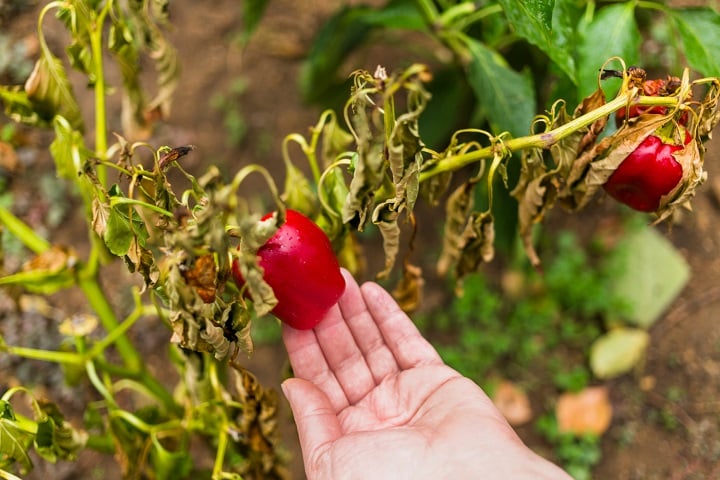
Quick Symptom Checklist
Leaves
- Yellowing
- Brown or black spots
- Curling or wilting
- Powdery coating
Stems
- Dark streaks
- Weak or collapsing growth
Fruit
- Rotting patches
- Sunken spots
- Uneven ripening
Fast Diagnosis Table
| Symptom | Likely Issue | Urgency |
|---|---|---|
| Yellow lower leaves with spots | Septoria leaf spot | Medium |
| White powder on leaves | Powdery mildew | Medium |
| Rapid blackening of leaves & fruit | Blight | High |
| Wilting despite watering | Fusarium/Verticillium wilt | High |
| Distorted leaves & mottled colour | Mosaic virus | High |
Most Common Tomato Diseases (UK Focus)
Blight
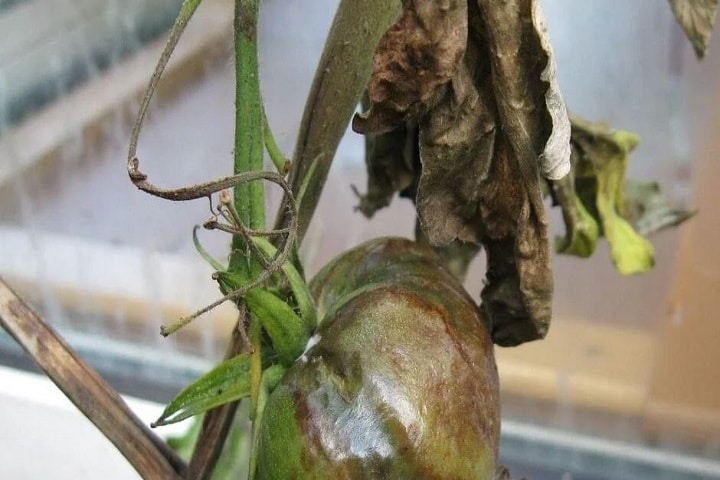
- Symptoms: Rapid browning and blackening of leaves, stems, and fruit. Leaves often look water-soaked before collapsing, and fruit develops dark, greasy patches.
- Cause: Prolonged wet conditions and airborne spores, often arriving during warm, humid weather spells.
- Action: Remove infected plants immediately, blight spreads fast and cannot be reversed.
Blight is the one disease most growers worry about, and for good reason. In the right conditions, it can take hold and destroy a crop in days rather than weeks. What makes it particularly challenging is how quickly it moves: one day your plants look healthy, the next they’re visibly deteriorating.
Even in a polytunnel, blight can still enter through air movement, clothing, or tools. The key difference is that a covered structure can reduce the likelihood of spores landing on wet foliage but only if humidity is controlled carefully.
If you’re growing under cover, it’s worth understanding prevention strategies in detail, especially around airflow and moisture management. Learn more about managing tomato blight in polytunnels.
Leaf Mould (especially in polytunnels)
- Symptoms: Pale yellow patches on the upper surface of leaves, with a velvety grey or olive-green mould underneath.
- Cause: High humidity and stagnant air, very common in enclosed spaces.
- Action: Increase ventilation immediately and remove affected leaves.
Leaf mould is one of the most common issues I see in polytunnels. Unlike blight, it doesn’t usually kill plants outright, but it weakens them significantly by reducing photosynthesis. Over time, this leads to reduced yields and poor fruit quality.
Because it thrives in still, humid air, it often appears when ventilation isn’t quite sufficient, even if everything else seems “right.” Opening doors earlier in the day, improving spacing, or even thinning foliage can make a noticeable difference.
Septoria Leaf Spot
- Symptoms: Numerous small brown spots with yellow halos, usually starting on lower leaves and working upward.
- Cause: Splashing water from soil or infected plant debris.
- Action: Remove affected lower leaves and avoid wetting foliage during watering.
Septoria tends to creep in quietly. It often starts low down where airflow is poorest and moisture lingers longest. If left unchecked, it gradually climbs the plant, reducing vigour and exposing fruit to sunscald due to leaf loss.
One of the simplest and most effective prevention methods is removing lower leaves early in the season before they become a problem. Mulching can also help prevent spores splashing up from the soil.
Powdery Mildew
- Symptoms: A white, powdery coating on leaves, often starting in patches and spreading across the surface.
- Cause: Humid conditions combined with poor airflow, even when leaves appear dry.
- Action: Improve ventilation and remove affected areas promptly.
Powdery mildew behaves differently from many fungal diseases, it doesn’t need wet leaves to spread. Instead, it thrives in humid, stagnant air, which makes it particularly suited to polytunnel environments during warm periods.
While it’s rarely fatal, it can weaken plants and reduce yields if ignored. Keeping air moving through the structure is your best defence.
Fusarium / Verticillium Wilt
- Symptoms: Yellowing and wilting, often affecting one side of the plant first. Plants may appear to recover overnight, then wilt again during the day.
- Cause: Soil-borne fungi that infect through the roots.
- Action: Remove infected plants and avoid replanting tomatoes in the same soil.
These wilts are particularly frustrating because they originate below the surface. By the time symptoms appear, the plant’s internal system is already compromised.
In polytunnels where the same soil is used year after year, the risk increases. Crop rotation, resistant varieties, or growing in containers can help reduce long-term problems.
Mosaic Virus
- Symptoms: Mottled, patchy leaves with light and dark green patterns, often accompanied by distortion or reduced growth.
- Cause: Virus spread through contact, tools, hands, or even handling plants after smoking (tobacco can carry similar viruses).
- Action: Remove affected plants and disinfect tools thoroughly.
Unlike fungal diseases, mosaic virus doesn’t respond to environmental changes. Once a plant is infected, it won’t recover. Prevention is entirely about hygiene: clean hands, clean tools, and avoiding unnecessary handling.
Blossom End Rot
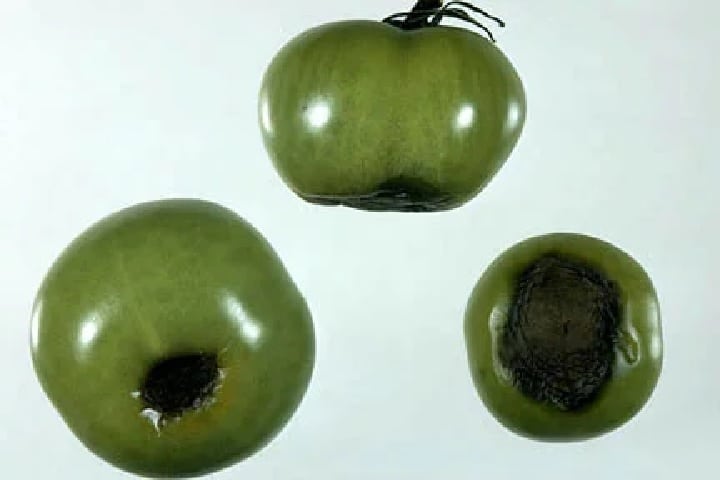
- Symptoms: A dark, sunken patch at the base of the fruit, often leathery in texture.
- Cause: Calcium imbalance, usually triggered by inconsistent watering rather than a lack of calcium in the soil.
- Action: Maintain consistent watering and avoid letting soil dry out completely.
Blossom end rot often causes alarm, but it’s not a disease in the traditional sense. It’s a physiological issue, and one that’s very common in polytunnels where watering can fluctuate.
The key is consistency. Irregular watering prevents the plant from properly transporting calcium to developing fruits. Once you stabilise watering habits, new fruits should develop normally.
Why Polytunnel Tomatoes Get Different Disease Problems
Polytunnels change the environment, and that changes disease patterns.
- High humidity → encourages mould and fungal growth
- Condensation → water droplets spread disease
- Limited airflow → spores linger longer
- Overwatering → saturated soil increases risk
- Temperature spikes → stress plants, making them vulnerable
Understanding this balance is key to success. For broader growing insights, see what you can grow in a polytunnel.
How to Prevent Tomato Diseases in a Polytunnel

Prevention is always easier than cure. These are the habits that make the biggest difference.
Prevention Checklist
- Open vents and doors daily to improve airflow
- Space plants generously
- Water at soil level (never overhead)
- Remove lower leaves regularly
- Clean tools between plants
- Rotate crops each year
- Choose disease-resistant varieties
For a deeper dive, read how to grow tomatoes successfully in the UK.
Continue Learning
Explore polytunnel growing and maintenance guides
Treatment: What to Do When Disease Appears
If disease shows up, act quickly and decisively.
Step-by-Step Action Plan
- Remove affected leaves immediately
- Isolate infected plants if possible
- Increase ventilation (open doors, vents)
- Reduce watering temporarily
- Use appropriate treatments if needed
- Dispose of heavily infected plants (don’t compost)
Common Mistakes That Lead to Tomato Diseases
Avoid these common pitfalls:
- Overcrowding plants
- Poor airflow inside the polytunnel
- Overwatering or inconsistent watering
- Wetting leaves during watering
- Reusing contaminated soil without rotation
Quick Diagnosis & Prevention Summary
| Problem | Cause | Prevention |
|---|---|---|
| Blight | Wet conditions | Keep leaves dry, monitor weather |
| Leaf mould | High humidity | Ventilation, spacing |
| Powdery mildew | Stagnant air | Improve airflow |
| Septoria | Water splash | Mulch, careful watering |
| Blossom end rot | Water imbalance | Consistent watering |
Tomato plant diseases in the UK are common—but they’re not inevitable.
In my experience, success comes down to three things:
- spotting problems early
- understanding how your environment affects disease
- taking quick, practical action
Polytunnels give you a powerful advantage. When managed well, they don’t just protect your plants, they create the ideal conditions for healthier growth and more reliable harvests.
Frequently Asked Questions
What is the most common tomato disease in the UK?
Blight is the most widespread and destructive, especially during wet summers.
Can tomato plants recover from blight?
No – once blight takes hold, plants rarely recover. Removal is usually necessary.
How do you stop tomato diseases spreading?
Remove infected material quickly, improve airflow, and avoid wetting leaves.
Why do tomato leaves turn yellow or develop spots?
This is often due to fungal diseases like Septoria or leaf mould, or watering issues.
Are tomatoes safer from disease in a polytunnel?
Yes, if managed properly. Polytunnels reduce rain exposure but require careful control of humidity and airflow.
Sources:
Royal Horticultural Society (RHS) (2025) Tomatoes: leaf problems. Available at: https://www.rhs.org.uk/problems/tomatoes-leaf-problems (Accessed: 24 April 2026).
The Spruce (2024) How to identify, treat, and prevent tomato diseases. Available at: https://www.thespruce.com/identify-treat-prevent-tomato-diseases-7153094 (Accessed: 24 April 2026).
Department for Environment, Food & Rural Affairs (DEFRA) (2024) Pests of tomato crops factsheet. Available at: https://planthealthportal.defra.gov.uk/assets/factsheets/Plant-Pest-Factsheet-Pests-of-tomatoes-June-update2.pdf (Accessed: 24 April 2026).