

In this article, we’ll take a look at how you can enjoy your own Monet garden at home. The famous artist Claude Monet’s famous garden at Giverny was the subject of many of his best-loved works. And it has inspired many gardeners, and many artists, around the world. If you are one of the many people inspired by the Impressionist master and his garden, read on.
Monet’s Famous Garden
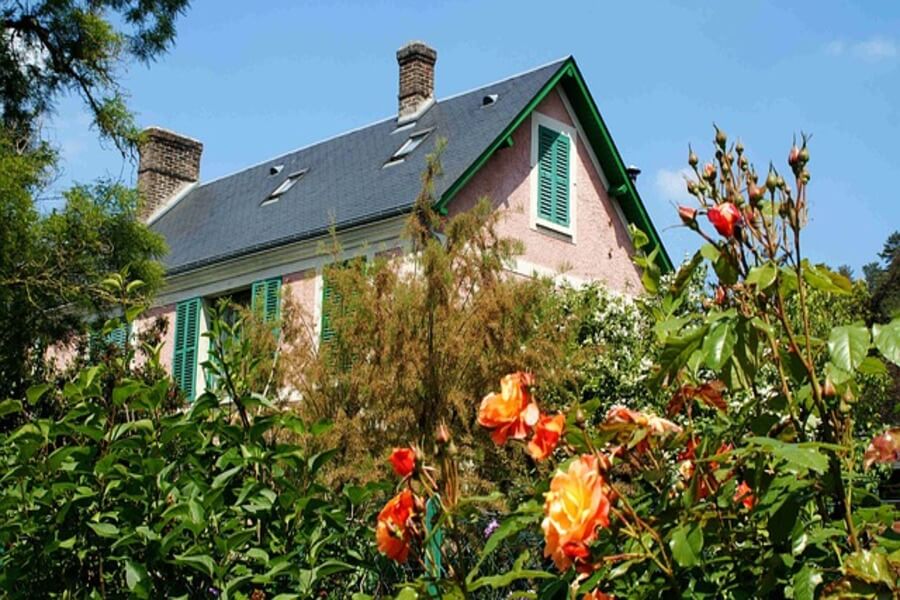
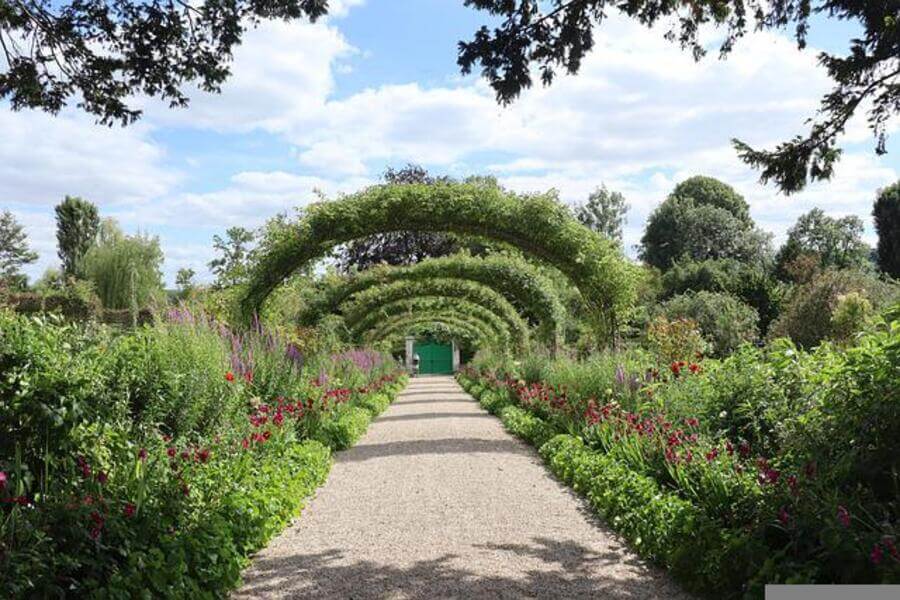
Monet’s famous garden in Giverny has two main areas. The first is a flower garden, which slopes down to the road in front of the house. When Monet and his family moved in, this area was an orchard, divided by an alley bordered with pines. Monet had most of the pines cut down, and turned the orchard space into a breath-taking flower garden, with fruit trees, iron arches with climbing roses, and a riot of colourful flowers.
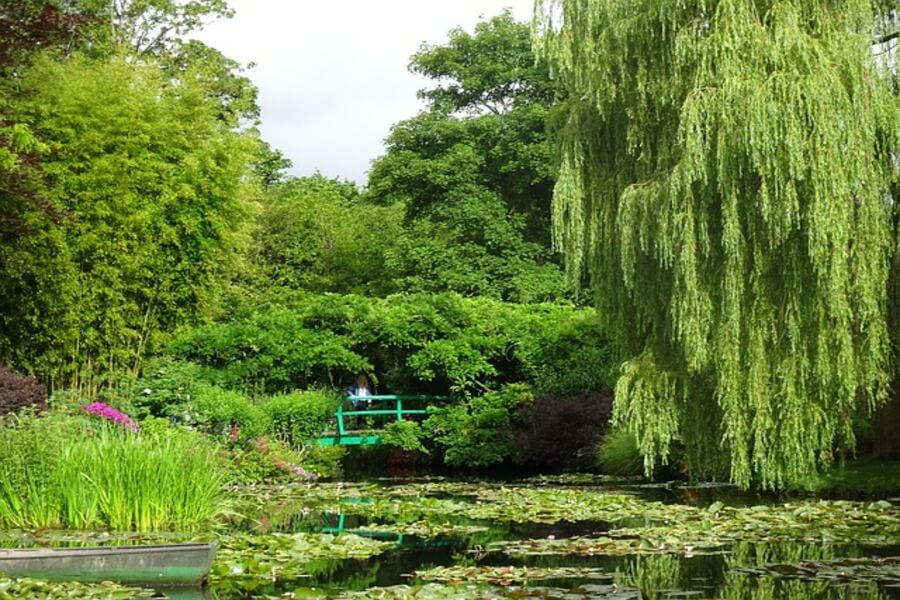
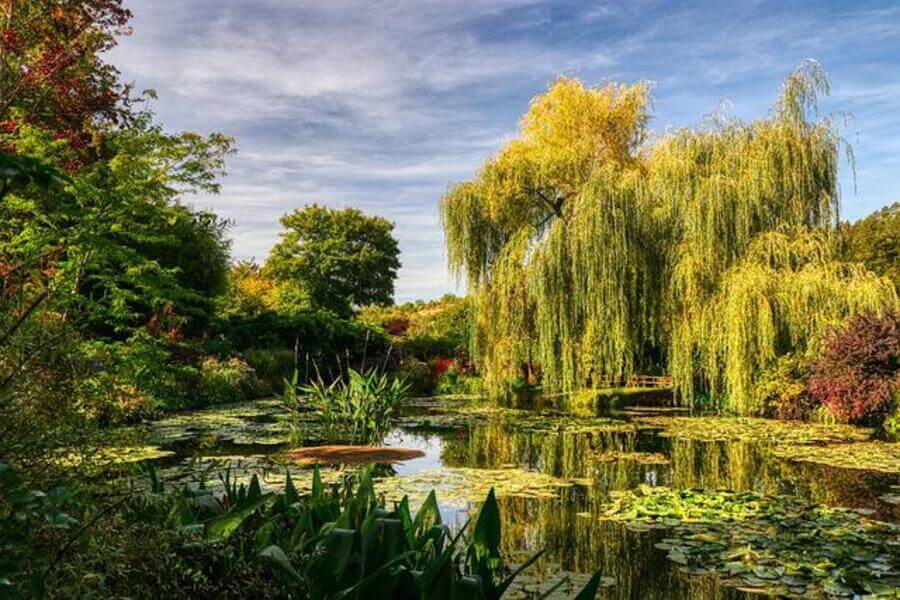
The second area, which Monet bought ten years after his arrival in Giverny, is a Japanese inspired water garden. The Ru, a small diversion from the Epte, which drains into the Seine, traverses the land. A pond was dug, and then enlarged. Here, of course, you will find the famous water lilies, and the famous Japanese bridge draped with wisteria, along with weeping willows, bamboos, and many other beautiful plantings which cast their reflections onto the water.
Create a Clos Normand Flower Garden Inspired Garden
If you love the breath-taking chaos of flowers and beautiful perspectives of the Clos Normand flower garden, here are some tips to help you replicate the effect in your own garden:
- Create a central arch covered alley, with iron arches to serve as trellis for climbing roses and/or other climbers and vines.
- To either side of the alley, create a series of flower beds with diverse bed planting around the fruit trees. Start with fruit trees or ornamental trees (including apples and/or cherries, and laburnum, for example), for height and structure, as well as visual appeal.
- Plant herbaceous perennials, biennials and annuals around the fruit trees – Monet included many flowering plants, including hollyhocks, daisies, poppies, spring flowering bulbs, asters, marigolds, rudbeckias, Pelargoniums, delphiniums, dahlias and many rarer flowers, intermixed.
- Keep plantings wild and varied with sweeping drifts of plants to replicate the look. Choose flowering plants for the way their colours intermarry, and let them grow rather freely. Plant as diversely as possible, for blooms throughout the year.
- Line the pathways between the bed, as in these gardens, with lavender and rosemary.
- Create ground cover beneath the alley arches. In the Clos Normand garden, nasturtiums coat the soil in the central alley during the summer months.
One way to take some inspiration from this garden but also grow more food is to create a series of fruit tree guilds with plenty of flowering plants, but interspersed with edible perennials and fruiting shrubs too.
Monet’s Vegetable Garden
Many people do not realise it but Monet also cultivated (or rather, had a gardener who cultivated) a two and a half acre potager or kitchen garden at the other end of the village. It had walls lined with many espaliered fruit trees, cold frames, and formal beds with many common crops. It was painted by an impressionist painter Willard Metcalf who visited, which is how we know what it looked like today. You might not have as much space as that for an edible garden. But like Monet, can benefit from fresh, homegrown food for your kitchen. Integrating flowers with edible crops is beneficial in ecological terms. And can allow you to create a space that is both beautiful and useful.
Here are the perfect vegetables for your very own Monet garden:
- Cabbages
- Lettuce
- Courgette
- Winter squash
- Apple trees
- Pear trees
- Peach trees
- Apricot trees
- Plum trees
- Fig trees
Create a Monet Garden Inspired By the Water Garden
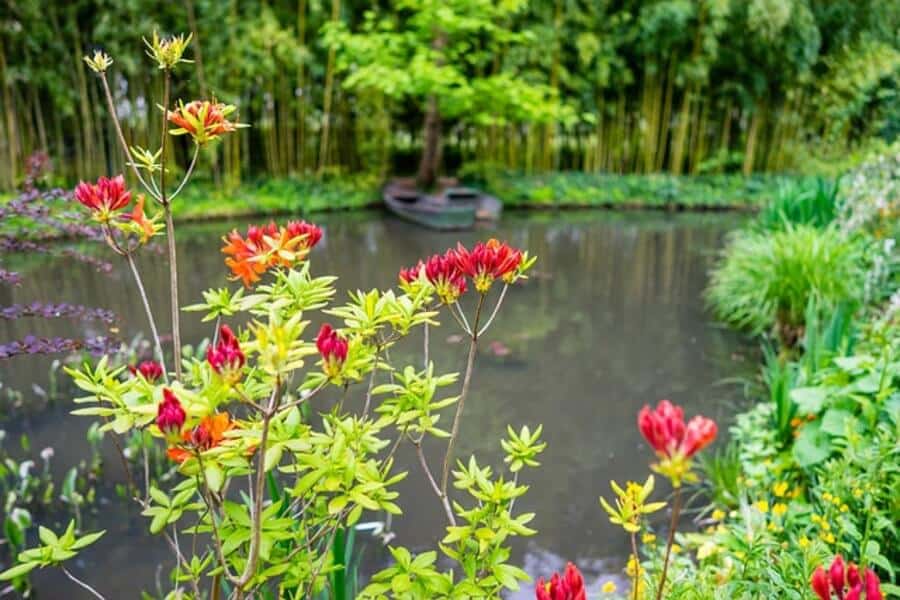
The water garden, of course, is the image that most springs to mind when thinking of the Monet gardens, and it has been immortalised in his artworks. He himself was inspired to artistry by this garden for over 20 years. And if you are an artist, you too could create a similarly inspirational garden where you live.
Here are a few tips to help you create a Monet garden of your own based on his beautiful water garden at Giverny:
- A water garden, of course, is dominated by water. A pond will be the primary feature in a garden of this type. Create as large a pond as you can manage, with a naturalistic form that blends into the surrounding landscape, with a curving and organic shape.
- Dense planting around the edge of the pond at Giverny creates an enclosed and nurturing space, separated from the surrounding environment. Monet included a rage of trees and tall perennial plants inspired by Japanese gardens.
Read More: UK Pond Fish You Need In Your Pond
Monet Plants For Your Garden
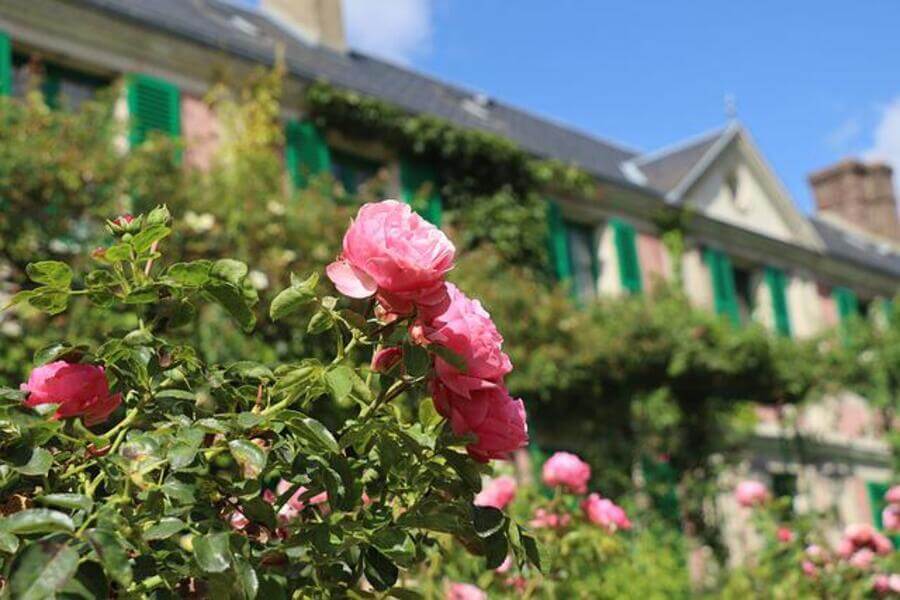
Trees in the Monet garden include ash, alder, popular, willows, ginkgos, Japanese cherries, Japanese quince… you might also include Acers, conifers, and other Japanese trees for colour and form. A range of bamboos are also key features in the scheme.
Shrubs include raspberries, rhododendron, azaleas, holly, fern of Kalmia, berberis and many more… massive gunnera make an impact. And of course, from tulips to lupins, to stem roses, there are also plenty of flowering plants in the mix.
In short, some of the best Monet plants to include in your inspired garden include:
- Ash
- Alder
- Popular
- Willow
- Ginkgo
- Japanese cherry trees
- Japanese quince
- Acer
- Conifer
- Bamboo
- Raspberries
- Rhododendron
- Azalea
- Holly
- Gunnera
- Tulips
- Lupins
- Stem roses
Inspiring Features For A Monet Garden
There are so many inspiring features in Monet’s garden besides flowers, crops and plants. Take at look at some of the beautiful elements of Monet’s garden to influence your own:
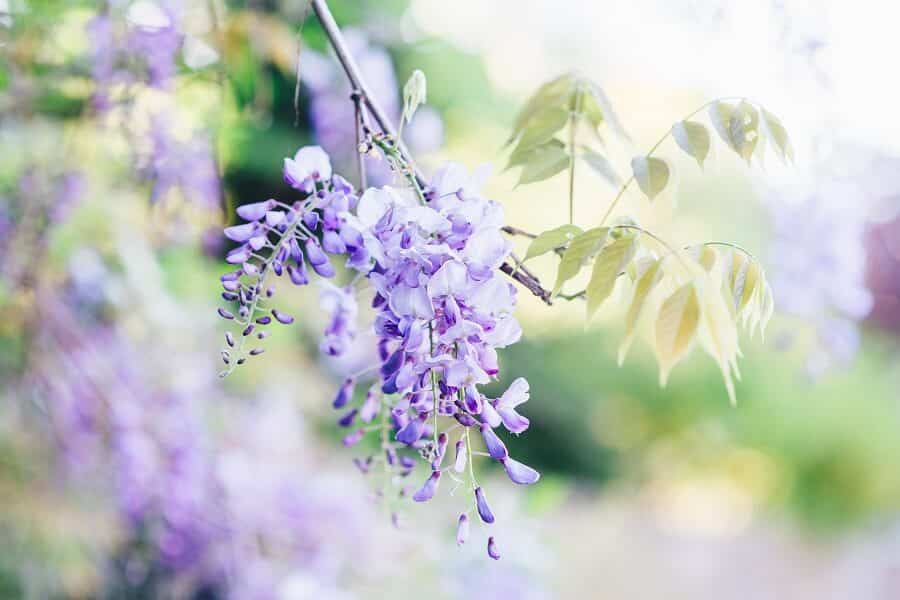
- The garden at Giverny’s most famous features is, of course, the Japanese bridge. Creating your own bridge across a section of your water feature can help create the same effect. Plant wisteria over the structure.
- Around the pond, many marginal plants blend the boundary between water and soil. Reeds, rushes and irises, for example.
- In the pond itself are many more plants, including, of course, the famous water lilies, Nymphaea. Include plenty of water lilies, taking care to choose those which are suitable for the depth of water in your own pond.
Looser Inspiration
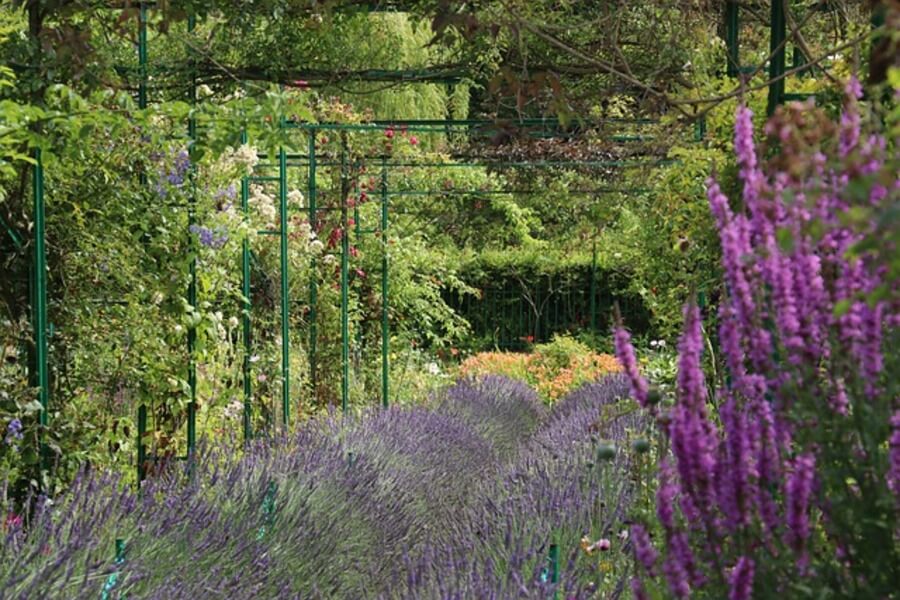
Of course, a garden inspired by Monet, or the other Impressionists, need not be a faithful replica. Monet garden inspiration can also sprout from a garden filled with colour and forms. One that delights the eye and feed the imagination. Whether you are an artist or not, everyone can be inspired by a beautiful garden, no matter what style it may be in, and no matter what plants it contains.
Many artists throughout history have been inspired by their own gardens. Monet is not the only artist to find inspiration in the planting schemes around their home. A garden, whether you are a talented artist or not, can be a truly inspiring place. There are few rules. Creating an inspirational garden is all about following your own tastes and inclinations.
Finding Inspiration For Your Monet Garden
I hope I’ve given you some inspiration to create your own Monet garden! Whether you choose to craft your own water garden or include some of Monet’s favourite plants in your flowerbeds, I know you’ll love your Monet garden.
Have you been inspired by Monet or by the gardens at Giverny when creating your garden? Let us know how you were inspired, and which plants and layouts and other features you chose. We’d love to hear more about your Monet garden in the comments below.