Cabbage root flies can be a gardener’s nightmare if you are planning on growing your own cabbages, but fear not!
In this article, you will learn about our top cabbage root fly identification and prevention methods, so that you know how to spot them, and how you can get rid of them humanely. You will also learn about the life cycle of cabbage root flies, so that you are aware when they are most likely to cause a problem, and how early prevention can reduce the risks that they can bring to your cabbages, particularly when growing cabbages in your garden or polytunnel.
What are cabbage root flies?
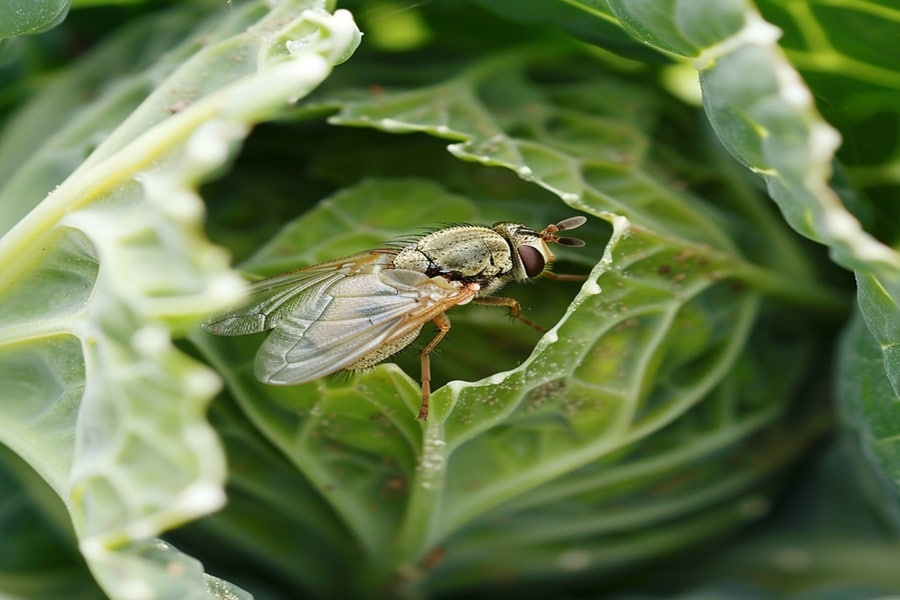
Cabbage root flies may look like common house flies, but they can be a persistent pest for both your growing garden, domestic polytunnels, and most importantly, your cabbages. These pests are part of the Anthomyidae family, which includes various fly species, with over 100 found in Britain. While some of these flies mainly feed on roots, others, like the beet leaf miner, are leaf miners and are generally harmless to garden plants.
Cabbage Root Fly Biology
The cabbage root fly goes through three generations during the summer, but it’s the first generation that usually appears in late spring and early summer that can be the most destructive. Adult cabbage root flies could easily be mistaken for house flies due to their similar size and appearance. However, it’s the cabbage root fly larvae that you need to watch out for.
Cabbage Root Fly Larvae
These white, legless, and headless maggots can grow up to 9mm long and have a voracious appetite for plant roots. They particularly target seedlings and recently transplanted brassicas, causing severe damage. Although older plants with more extensive root systems can withstand their presence better, host plants like radishes, turnips, and swedes are susceptible to damage throughout the cabbage root fly generations as well as, of course, cabbages.
Life Cycle of Cabbage Root Flies
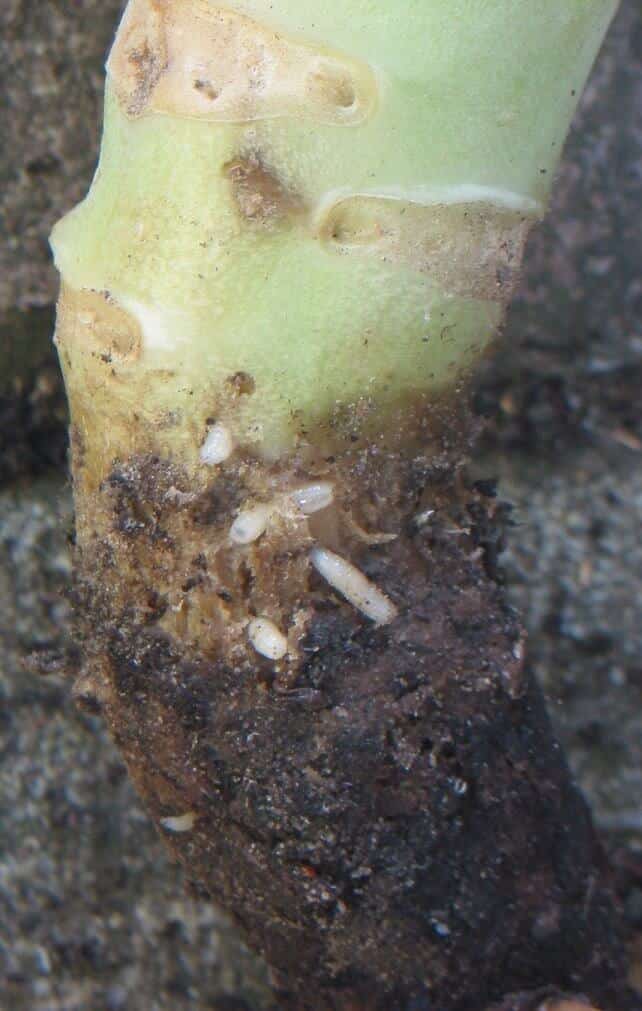
Cabbage root flies begin with the emergence of adults from overwintering pupae. This typically occurs between April and early June when conditions are suitable. These adult flies lay tiny (1 mm) white eggs near brassica plants. In about a week, these eggs hatch, and the maggots start feeding on the lateral roots before moving on to the main taproot and eventually tunnelling into the main stem. After about 3-4 weeks of feeding, the mature maggots pupate in the soil, becoming reddish-brown pupae approximately 1 cm long. Some overlapping generations, usually 2-3 per year, can occur throughout the summer months. Those appearing in September may even invade oilseed rape crops.
Symptoms of Cabbage Root Fly
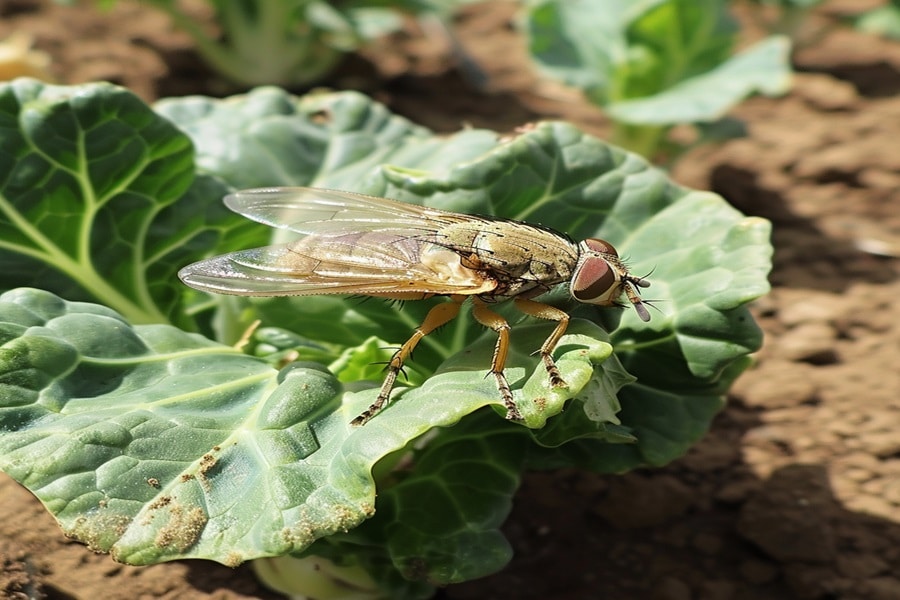
There are several ways that you can spot the presence of cabbage root flies before they begin to bring too much harm to your crops. Be on the lookout for these symptoms:
- Stunted growth of crops.
- Wilting.
- Death in cabbages and other brassicas, especially in recently transplanted seedlings during early summer.
- Ruined edible parts of root crops like swedes, turnips, and radishes.
- White maggots tunneling through the roots of root crops.
- Occasional infestation of individual buttons on Brussels sprout plants.
1. Threshold
To apply a suitable threshold over your crops and prevent cabbage root flies from causing further trouble, consider the following methods below:
- Apply a suitable insecticide drench within four days of transplanting or at seedling emergence for direct-sown crops after the third week in April.
- Modules can also be treated with a drench before planting out and should be treated before the 3 to 4 leaf growth stage.
2. Modern Polythene Insect Netting
Crop growers have found success in safeguarding their crops with modern polythene insect netting. This netting serves as an effective barrier, preventing adult cabbage root flies from laying their eggs in the crop.
3. Monitoring
In order to monitor cabbage root flies correctly, apply these methods in your garden or polytunnel:
- Capture adult flies using yellow water traps or specialised traps that release semiochemicals, which are related to the distinctive chemical compounds produced by brassicas.
- Sample the soil around plants to determine if their eggs are present.
- Use weather-based forecasts to predict the timing of egg laying.
4. Protection for Recent Transplants
Provide some protection for recent transplants by placing brassica collars around the base of their stems. These collars can be purchased from garden centres or made from materials such as carpet underlay, roofing felt, cardboard, or similar items. These transplants will prevent female cabbage root flies from laying eggs on the soil surface near host plants; eggs placed on the plant collar often dry up and will fail to hatch.
5. Insect-Proof Mesh and Horticultural Fleece
Shield your crops by growing them under the cover of insect-proof mesh. For seedbeds, horticultural fleeces may be better as it also helps warm the soil. Keeping these protective covers in place throughout the growing season can also mitigate other brassica-related problems, such as cabbage caterpillars.
Practice crop rotation to disrupt the life cycle of cabbage root flies. Avoid growing host plants in the same piece of ground from year to year. Doing this will prevent cabbage root flies from appearing from overwintered pupae in the soil under your protective covering.
6. Biological Pest Control with Nematodes
Using a selection of pathogenic nematode species (a variety of fruits and veg) is an effective biological pest control method which will work cabbage root fly larvae and other insects. These nematodes will help to prevent several pest larvae, including:
- Carrot fly.
- Caterpillars.
- Codling moth.
- Fungus gnats.
- Gooseberry sawfly.
- Leatherjackets.
- Onion fly.
- Thrips.
However, please be aware that nematodes can also affect non-target species, so use them carefully.
7. Encourage Natural Predators
An alternative cabbage root fly prevention method is to attract natural predators to your garden or polytunnel. Birds, hedgehogs, and ground beetles are among the best animals to help in your garden. Some ground and rove beetles are known to feed on root-feeding maggots too.
By implementing these management strategies and prevention tips, you can protect your cabbage and other brassica crops from the ravages of cabbage root flies and ensure a healthy and thriving garden.
8. Polytunnels
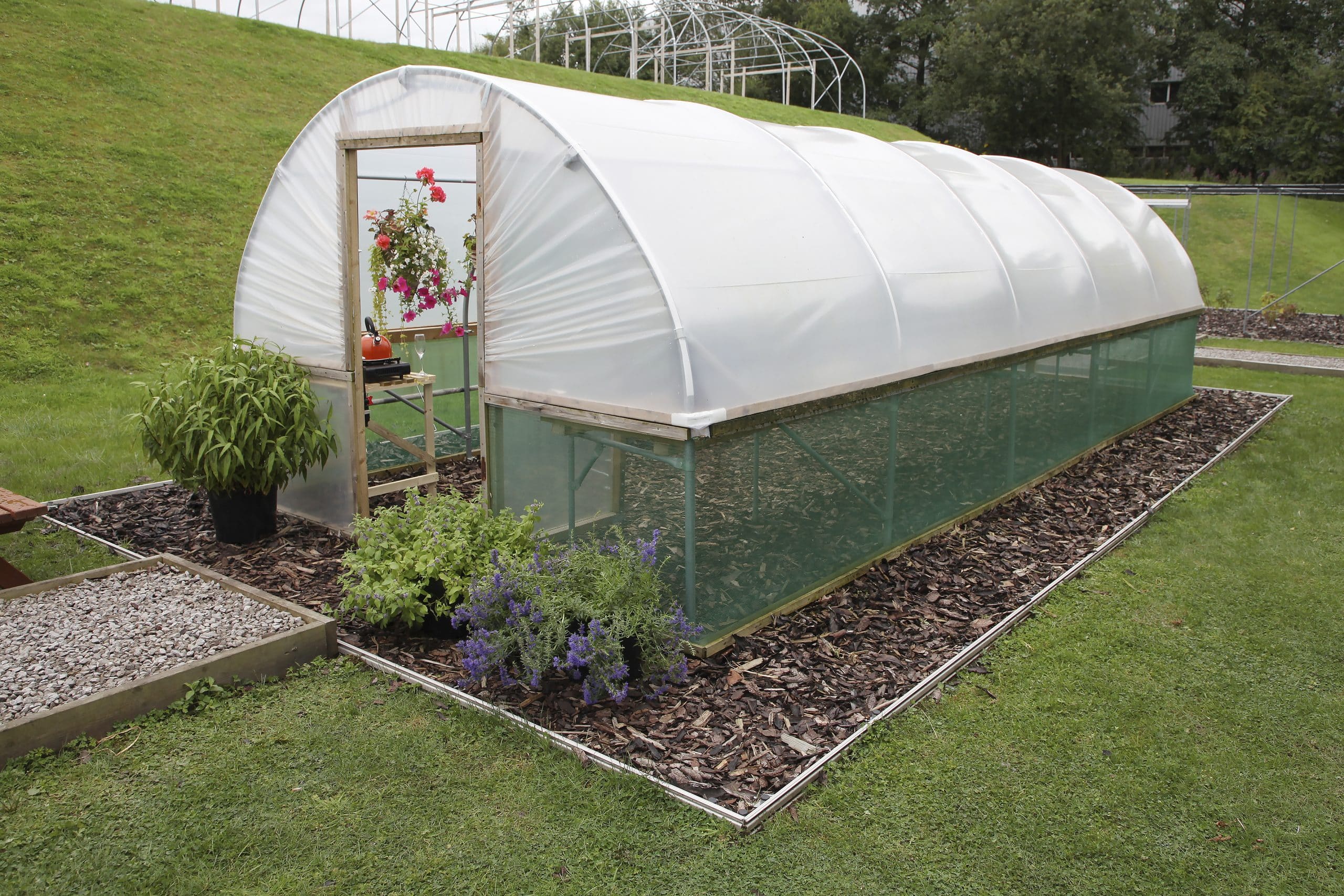
For those tending to raised beds or smaller gardening spaces, consider the practicality of mini polytunnels. At First Tunnels, we believe that polytunnel gardening is better for growing a vast variety of crops in the UK, and mini polytunnels would be no exception. You can use polytunnel covers as well as fleeces, polythene, or insect mesh to safeguard your crops.
Make sure to check out our other polytunnel accessories to see how you can better protect and secure your polytunnel from pests, including badgers and foxes too, as well as growing cabbages in a polytunnel.
9. Rotate Crops
If you’ve experienced cabbage root fly infestations in the past, it’s better to realise where you may have gone wrong in not realising their presence, and how you can better prevent cabbage root flies sooner.
Begin by uprooting any plants you suspect are affected and bury them deep in your compost heap, where the larvae are likely to perish. To minimise future problems, practice crop rotation and develop your own crop rotation plan. Cabbage root fly adults have a tendency to seek out new host plants by flying low. As mentioned, to deter them, protect your brassicas with fine mesh netting or horticultural fleece supported by hoops or frames. Ensure that these protective coverings are well-secured at ground level.
Additionally, vertical barriers made from the same materials can be an effective deterrent. To deter pests further, it may be worth sacrificing some of your less valued plants too. By rotating your crops and implementing protective measures, you can reduce the likelihood of cabbage root fly infestations.
Preventing Cabbage Root Fly and Maggots in the Garden
In conclusion, protecting your cabbage and brassica crops from relentless cabbage root fly infestations can be easily done so long as you are thoroughly prepared. By understanding the pests’ lifecycle, and symptoms of their infestation, you can protect your cabbages and brassica before it is too late, by covering your polytunnel or adding insect-proof mesh, as well as rotating your crops. As you grow your crops year after year, gardening should be a lot easier and less stressful now that you know how to prevent cabbage root fly.
FAQs
How big are cabbage root flies?
Cabbage root flies are approximately the size of common house flies. They are small insects, typically measuring around 6 to 8 millimetres (0.24 to 0.31 inches) in length.
How do you keep root maggots away?
To keep root maggots, such as cabbage root flies, away from your plants, you can implement several preventive measures:
Use insect-proof mesh or horticultural fleece to physically block access to your crops.
Practice crop rotation to disrupt the life cycle of the pests.
Employ biological pest control methods, such as beneficial nematodes, to target the larvae in the soil.
Encourage natural predators, like birds, ground beetles, and hedgehogs, in your garden.
What does a root fly look like?
Adult cabbage root flies, which are a type of root fly, resemble common house flies in size and appearance. They are small, typically greyish-brown or blackish flies with a length of about 6 to 8 millimetres (0.24 to 0.31 inches). The larvae of cabbage root flies are white, legless, and headless maggots that feed on the roots of plants, particularly brassicas.
Sources
Nature Spot (n.d.) Anthomyildae. [online] Available at: https://www.naturespot.org.uk/family/anthomyiidae [accessed 16/11/23]
Modern Gardening. (n.d.) Insect Net Mesh Cover. Modern Gardening. [online] Available at: https://moderngardening.co.uk/products/insect-net-mesh-cover-6-10m-long [accessed 16/11/23]
House Beautiful. (2023) 6 sacrificial plants to naturally deter pests from your garden. House Beautiful. [online] Available at: https://www.housebeautiful.com/uk/garden/plants/g40481754/sacrificial-plants/ [accessed 16/11/23]