

Learn to grow tatsoi in the UK within this expert guide.
Growing hardy Asian greens in your polytunnel or another protected position, such as in a fruit cage, in your garden in autumn can give you access to green leafy vegetables through the winter and into spring. There are a number of different crops that can allow you to go beyond kale and explore some different and often very flavoursome options and tatsoi is one of them.
Key Information About Tatsoi
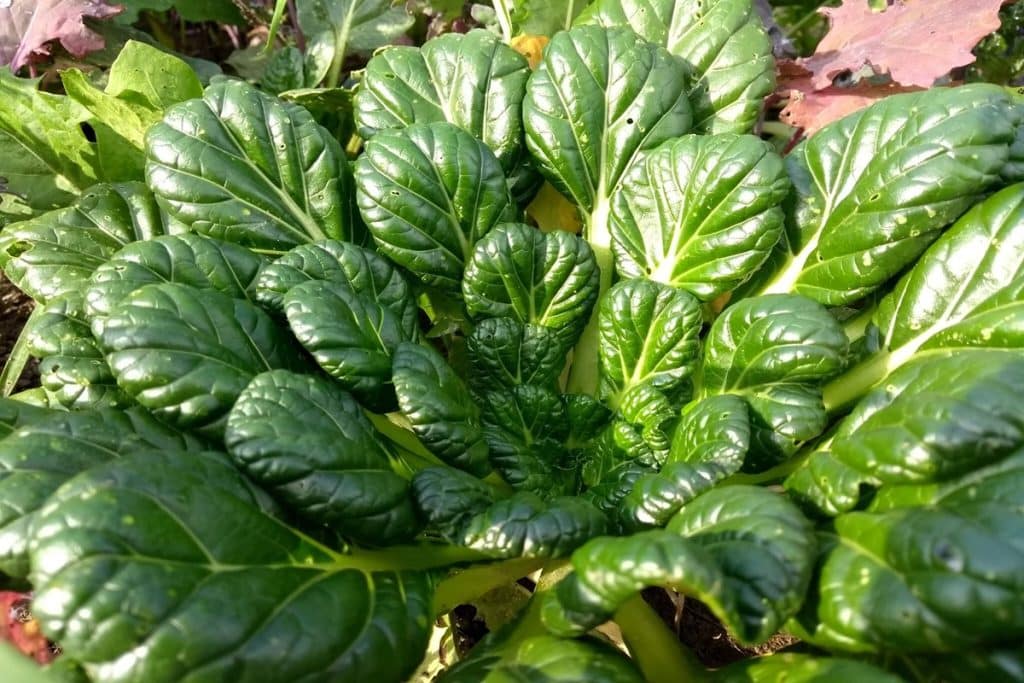
Tatsoi, (Brassica rapa subsp. narinosa), derived from the Cantonese term meaning ‘drooping vegetable’, produces dense rosettes of spoon-shaped dark green leaves and offers a subtle yet distinct flavour profile.
This resilient leafy green is exceptionally hardy, capable of enduring temperatures as low as minus 10 degrees Celsius, and has been observed to thrive and be harvested even beneath a blanket of snow. It serves as a versatile substitute for spinach and yields ample fresh greens during the winter season and, indeed, potentially over a large portion of the year.
This is a good crop to choose if you want to be able to grow greens to feed yourself and your family throughout the whole of the year rather than just over the summer months.
Tatsoi: Origin and Characteristics
Tatsoi is of somewhat uncertain origin, but we do know that it came from somewhere in east Asia, where it was first cultivated before 500 CE. Just like its close relatives pak choi (Brassica rapa subsp. chinensis) and Chinese cabbage (Brassica rapa subsp. pekinensis), Tatsoi is increasingly finding its way into European and North American cuisine.
Tatsoi, also known as spoon mustard or leaf mustard due to its small, spoon-shaped leaves, exhibits a mild, mustard-like flavour, as its names imply. The younger leaves of tatsoi bear a resemblance to spinach (Spinacia oleracea) and can be used in the same ways.
Companion Plants
As always, when choosing companion plants, selecting what to grow alongside tatsoi in your garden involves looking at the growing conditions they require and grouping plants that like similar conditions and yet which will not introduce too much competition to the planting scheme.
Tatsoi likes the same growing conditions as many other leafy green vegetable crops, including other members of the cabbage family, spinach, chard, and lettuce…
Tatsoi can be included in crop rotation schemes alongside other brassicas. Remember, however, that this plant shares a number of pests and diseases with other cabbage family plants. Companion planting with Alliums (onion family) and/or aromatic herbs may be beneficial for pest control purposes.
Like other leafy greens that need plenty of nitrogen to thrive, Tatsoi may also benefit from being grown after or alongside nitrogen-fixing legumes or other nitrogen fixers in the garden.
Let some of your tatsoi flower and set seed and, like other members of the cabbage family, it can be beneficial as a companion plant for other crops, since it will draw in pollinators and other beneficial insects to you garden.
Sow and Plant
Tatsoi is relatively easy to grow from seed. Or you may be able to source and purchase starter plants. You can either sow seeds indoors, or sow them directly where they are to grow, in raised beds, containers or in the ground, either in miniature polytunnels or outside in your garden.
Sowing Indoors
If you decide to sow indoors, sow into seed trays, small pots or soil blocks, covering the seeds lightly with the growing medium. Ideally, sow into a good-quality seed-starting potting mix for best results. In a bright location, at around room temperature, seeds should germinate within a week or so.
Remember, you might consume the seedlings as micro-greens. But you can also prick out and pot on seedlings as needed, to plant out into their final growing positions later on.
Outdoor Sowing
The other alternative is to direct sow seeds into a suitable location, in the ground, in a raised bed or in a container. The seeds can be broadcast more randomly, or sown in rows or blocks and thinned to give an eventual spacing of around 10-15cm between plants, and 30cm between rows.
Prepare the area before planting by making sure that it is rich in organic matter and well-weeded to avoid any excessive competition.
Notes
- This crop will often grow better in autumn than in the spring, and is a great choice if you are interested in polytunnel growing not only in summer but year-round.
- Site Selection: Opt for a sunny location with well-draining soil when planting tatsoi.
- Planting: Directly sow seeds into the soil during early spring or midsummer for consecutive harvests.
- Spacing: Ensure adequate spacing by planting seeds or seedlings approximately 6 inches apart within rows spaced 12 inches apart.
- Water Management: Maintain consistent soil moisture levels without allowing it to become waterlogged, as tatsoi thrives in evenly moist conditions.
- Fertilization: Prior to planting, apply a balanced fertilizer or compost to enrich the soil with essential nutrients.
- Weed Control: Keep the area surrounding tatsoi plants free from weeds to minimize competition for nutrients and water.
- Pest and Disease Management: Regularly monitor for pests such as aphids and flea beetles, promptly addressing any infestations. Watch for signs of diseases like damping-off or downy mildew, ensuring proper airflow to prevent fungal issues.
Harvesting
Tatsoi can be harvested at any stage. You can choose to:
- Harvest tiny seedlings as a micro-green.
- Pick baby-leaves individually as needed from plants for salads and other meals.
- Or harvest whole plants to use their stems and leaves in stir-fries or other recipes once they are around 10-15cm tall.
Storing Tatsoi
Tatsoi can be stored similarly to pak choi. By placing it in an airtight bag or wrapping it in a damp towel, the cabbage can remain fresh in the refrigerator for approximately a week. However, due to its delicate tissue, tatsoi does not freeze as effectively as other brassica family plants, such as kale.
Usage
Tatsoi is an extremely versatile leafy vegetable that can be served raw or cooked. This cabbage family crop is used wherever you would use spinach or pak choi. Use it for salads, pesto, stir-fries, soups and a range of other recipes.
Care Tips
This is not a crop that is difficult to care for, as long as you keep the basics in mind and have chosen a suitable growing location.
Watering Tatsoi Correctly
Water tatsoi to maintain moist but not waterlogged conditions, making sure that excess water can drain away freely. Water at the base of the plant and where possible, try to avoid wetting the leaves as this can promote issues like mildews on the plants.
Remember that plants in raised beds and even more so plants in containers are likely to need more frequent watering than those growing in the ground.
Fertilising Tatsoi
Tatsoi will appreciate a nitrogen-rich organic mulch around the base of the crop. This will not only help to suppress weed growth and conserve soil moisture, it can also provide slow-release fertility over time.
Tatsoi growing in containers may also benefit from the provision of a nitrogen-rich organic liquid plant feed, such as nettle tea for example, over the summer months.
Using nitrogen-fixing plants either before or alongside tatsoi in rotation can also help to make sure that these leafy plants get the nitrogen that they need.
Troubleshooting
Troubleshooting tatsoi involves addressing common issues that may arise during cultivation. Wilting or yellowing leaves can indicate overwatering or nutrient deficiencies, while stunted growth may signal poor soil quality or inadequate sunlight.
Adjusting watering schedules, improving soil drainage, and providing adequate sunlight can mitigate many problems. Regular inspection and prompt action are key to maintaining healthy tatsoi plants and ensuring a bountiful harvest.
Common Diseases and Pests
Pests such as aphids or flea beetles can damage foliage but rarely become a serious issue for this crop in an organic garden where their numbers are kept in check by biodiverse conditions and natural predation.
Like other brassicas, tatsoi can also experience problems with birds, and with cabbage caterpillars. Netting or otherwise covering the crop may therefore be a good idea to prevent excessive damages and losses.
Diseases like damping-off or downy mildew may also occur in damp conditions, necessitating improved ventilation and care when watering.
Tatsoi Varieties
While there are specific cultivars of tatsoi available, commonly, you’ll encounter seed packets labeled simply as “tatsoi” in stores. These packets may contain seeds with either white or green stalks, or they may feature a savoyed (crinkled) variety that tends to grow slightly larger and more upright.
For a broader selection, specialty seed catalogs may offer additional varieties of tatsoi. Some named cultivars are:
- Black Summer’: Best planted in the fall for a winter harvest; notable for its strikingly dark leaves.
- ‘Ching-Chiang’: A rapid-growing dwarf variety well-suited for early spring conditions.
- ‘Joi Choi’: Medium-sized plant characterized by its excellent resistance to bolting.
- ‘Mei Qing Choi’: Dwarf variety known for its quick growth and compact green heads.
- ‘Win-Win’: Produces extra-large, dense heads and is slow to bolt, making it an ideal choice for prolonged harvesting.
You might also try an interesting hybrid of tatsoi and mizuna named ‘Mispoona’ that was created by Frank Morton in 2006. This variety combines the bolt-resistance of Mizuna with the large leaves of Tatsoi.
It can be sown either in spring or midsummer, quickly forming substantial rosettes of dark green leaves. These leaves are equally delightful when consumed raw or cooked, offering versatility in culinary applications.
FAQs
How do you eat tatsoi?
Tatsoi can be eaten raw in salads, stir-fried, steamed, or added to soups or other cooked recipes. Its tender leaves and stalks offer a mild, mustard-like flavour. You can use this versatile vegetable in all of the same ways that you might use spinach, or the related pak choi.
Is tatsoi the same as pak choi?
Tatsoi is not the same as pak choi, though the two plants are closely related. Tatsoi has the Latin name Brassica rapa subsp. narinosa while pak choi is officinally named Brassica rapa subsp. chinensis.
Is tatsoi a Superfood?
Tatsoi is often considered a superfood due to its high nutrient content, including vitamins A, C, and K, as well as calcium, potassium, and antioxidants.
Can you eat tatsoi stems?
Yes, you can eat tatsoi stems. They are tender and flavourful, similar to the leaves, and can be cooked and eaten in the same way.
Sources
Masterclass. (2024) Tatsoi Recipe: How to Cook Chinese Mustard Greens. [online] Available at: https://www.masterclass.com/articles/tatsoi-recipe [accessed 21/03/24]