

In an eco-friendly, regenerative garden, ‘waste’ is a dirty word. Reusing garden waste means seeing what others may consider waste as a valuable garden resource. Our goal is to create closed-loop systems, where few inputs are required and no waste leaves the garden.
Leaves, grass clippings, healthy plant stems, small prunings and other organic materials can often be put to good use right where they are. Instead of seeing these materials as something to clear away, I find it much more useful to ask a simple question: what could this become?
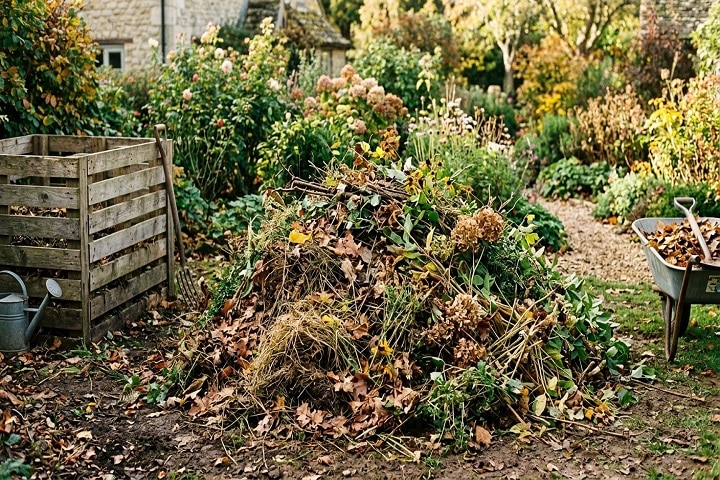
A pile of autumn leaves could become leaf mould. Healthy plant material can become compost. Suitable prunings can be turned into mulch, while logs and branches can provide valuable wildlife habitat.
Of course, not everything that comes out of the garden should go straight back into it. Diseased plants, invasive weeds and contaminated materials need a little more care.
The aim is not to reuse everything regardless. But it is important to recognise the useful resources already available in the garden and to make the most of them.
Key takeaways
- Healthy garden waste can often be turned into compost, mulch or other useful resources.
- Fallen leaves have plenty of uses, including leaf mould and wildlife habitat.
- Fine grass clippings can be left on the lawn or added to compost rather than automatically removed.
- Suitable prunings can be processed for mulch or left as habitat for wildlife.
- Diseased, invasive or contaminated material needs a different approach.
Garden Waste Does Not Have to Become Waste
There is something satisfying about keeping the garden’s resources moving in a natural cycle.
Plants grow, we harvest or enjoy them, and eventually some of that plant material returns to the soil. When we compost, make leaf mould or use organic mulch, we are simply helping that process along.
The condition and type of material matter. A healthy plant stem is very different from a diseased plant, and a pile of clean autumn leaves is very different from material contaminated with something you do not want to introduce elsewhere in the garden.
Once you start looking at garden maintenance in this way, clearing up can become part of the growing cycle rather than a separate job.
1. Turn Garden Waste Into Homemade Compost
Composting is probably the most obvious way to turn garden waste into something useful.
Healthy plant material, fallen leaves, grass clippings and suitable small quantities of woody material can all contribute to a composting system. Rather than treating these things as rubbish, you can combine suitable organic materials and allow them to break down into a valuable garden amendment.
Good composting is about balance and conditions. It is not simply a matter of throwing every bit of garden waste into one pile and hoping for the best. The materials you add, their proportions and the conditions within the compost all affect how well the process works.
The reward is something that can go back into your growing areas, helping to return organic matter to the garden.
If you want to take the idea further, you can learn how to turn garden waste into fungal compost.
Good compost material
- Healthy plant stems and leaves
- Grass clippings in suitable quantities
- Fallen leaves
- Other suitable plant-based garden material
- Small quantities of appropriate woody material
Use caution
Avoid treating diseased or otherwise unsuitable plant material in exactly the same way as healthy garden waste. If you are unsure about a particular material, check appropriate guidance before adding it to your compost.
2. Use Grass Clippings Instead of Throwing Them Away
Grass clippings are one of those garden materials that can quickly become a nuisance if you collect them without thinking about what happens next.
But freshly cut grass does not automatically need to be bagged up and removed.
When mowing and producing fine clippings, leaving suitable clippings on the lawn can return organic material to the surface. There is no need to collect every small clipping simply because it is visible.
Another option is to add suitable grass clippings to your composting system.
The key is not to create a thick layer of grass that sits heavily on the lawn or compost pile. Excessive quantities can clump together, so it is better to think about how the material is being used rather than simply trying to get rid of as much as possible.
A simple reuse route
Mow → leave fine clippings where appropriate → return nutrients to the lawn
Or:
Mow → collect suitable excess → add to compost
It is a small change, but these small changes add up. Keeping useful organic material within the garden means there is less to collect, transport and dispose of.
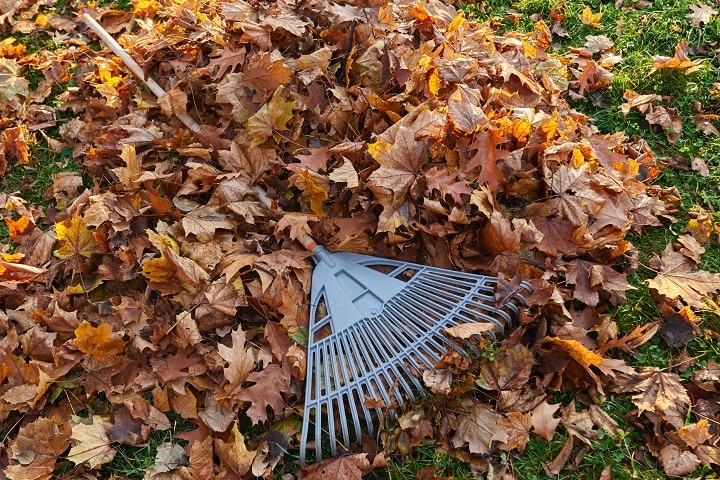
3. Turn Fallen Leaves Into Leaf Mould
Every autumn, I am reminded just how much useful material trees can provide.
Leaves can look like a job that needs doing, particularly when they are covering paths, lawns and beds. But there is no need to regard every fallen leaf as garden waste.
One of my favourite options is leaf mould.
The process is wonderfully simple:
- Collect the leaves.
- Keep them contained in a suitable pile or container.
- Allow them to remain moist as they break down.
- Give them time, then use the resulting leaf mould around the garden.
Leaf mould can be useful for improving soil and as a mulch around suitable growing areas. It gives those leaves a second life instead of sending them away as soon as they fall.
If autumn leaves tend to take over your garden each year, you can make full use of autumn leaves in the garden rather than viewing them simply as something to clear.
There is also another reason to avoid being too tidy. Fallen leaves and other organic material can provide valuable habitat, particularly when some is left in quieter corners of the garden.
4. Reuse Prunings and Plant Material as Mulch
Pruning can leave you with an impressive amount of material, particularly after tackling an established shrub or cutting back a group of plants.
Some of those prunings can be put to work.
Suitable woody material can be chopped or shredded and used as an organic mulch. This gives you another way to keep garden material on site rather than sending it away.
A layer of appropriate organic mulch can help around suitable plants and growing areas. It can help with moisture retention and weed suppression while gradually becoming part of the organic matter in the garden.
5. Leave Some Garden Waste for Wildlife
Not every useful garden resource needs to end up as compost.
Sometimes the best thing to do with a log, branch or pile of leaves is simply to leave it somewhere suitable.
A quieter corner of the garden can become a useful little habitat. Logs and branches provide shelter, while leaf piles can offer another place for wildlife to live and forage.
This is also a good reminder that a productive garden does not have to be perfectly tidy.
I certainly would not suggest leaving diseased plants or problematic waste unmanaged. But there is a big difference between neglect and deliberately leaving suitable natural materials in a part of the garden where they can do some good.
A simple wildlife-habitat checklist
- Leave suitable logs in a quiet spot.
- Keep some branches and woody material rather than clearing everything away.
- Allow a small leaf pile to remain undisturbed.
- Choose a location where the habitat will not interfere with paths or growing areas.
- Avoid using diseased or contaminated material for this purpose.
6. Use Reused Garden Resources in Productive Growing Areas
This is where the whole idea comes full circle.
A productive garden is not just somewhere plants grow. It is a system in which materials can move from one part of the garden to another.
The material produced by the garden helps support the next round of growth.
I find this particularly useful when growing intensively. When you are trying to make productive use of every available growing space, it makes sense to think about the condition of the soil as part of the whole system rather than as something separate.
The same principle applies when growing under cover. Good soil and organic matter are valuable foundations for productive growing, but watering still needs to be managed carefully and efficiently.
For those growing in a polytunnel, you can make the most of your compost-rich garden with efficient polytunnel watering.
The important point is that the product or technique is secondary to the principle. The garden is producing resources, and those resources can help support the next generation of plants.
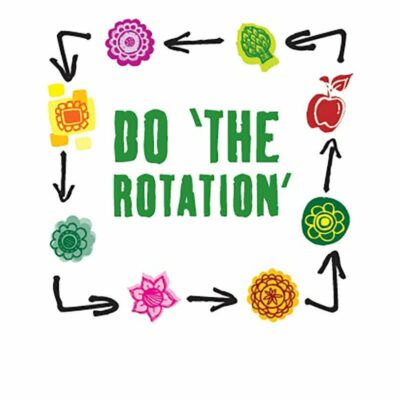
Garden growth → organic material → reuse → healthier growing areas → new growth
That is a much more satisfying cycle than simply filling a bin.
What Garden Waste Shouldn’t Be Reused?
It is tempting to take the idea of reuse to its extreme and assume that everything organic should go back into the garden.
I would not recommend that.
Some materials need caution, particularly when there is a risk of spreading disease or introducing an unwanted plant elsewhere in the garden.
Reuse, use caution or find an alternative route
| Garden material | Approach |
|---|---|
| Healthy plant material | Reuse where appropriate |
| Fallen leaves | Reuse as leaf mould, mulch or habitat |
| Suitable grass clippings | Leave on the lawn where appropriate or compost |
| Clean woody prunings | Process for mulch or retain as habitat |
| Diseased plant material | Use caution and check appropriate guidance |
| Invasive weeds | Do not automatically add to ordinary garden reuse systems |
| Contaminated material | Find an appropriate alternative route |
If you are unsure, it is better to identify the problem before returning the material to the garden.
The right treatment depends on what the material is and why it may be unsuitable. Local guidance can also differ, particularly when it comes to garden-waste recycling.
When Garden Waste Can’t Be Reused at Home
Sometimes there simply is not a suitable use for something in your garden.
That is where garden-waste collection and recycling services have their place.
If you cannot reasonably compost, mulch, retain or otherwise reuse a material, check the arrangements provided by your local authority. Accepted materials and collection arrangements vary, so it is worth checking the current guidance for your area.
The important thing is to think through the options in the right order:
Can I reuse it?
If yes, keep that useful material within the garden where appropriate.
If not, can it be recycled through a suitable garden-waste service?
If yes, use the appropriate local route.
This keeps disposal as a useful fallback rather than the automatic destination for everything that comes out of the garden.
Conclusion
Garden waste is often only waste if we have no further use for it.
Leaves can become leaf mould, healthy plant material can become compost, suitable prunings can become mulch, and logs or branches can provide wildlife habitat. The trick is to look at what you have before deciding where it needs to go.
Not everything belongs back in the garden, so take care with diseased, invasive or contaminated material. But where it is suitable, keeping organic resources within the garden is a simple and rewarding way to support healthier soil, productive growing and a more connected garden cycle.
Frequently Asked Questions
What can you do with garden waste?
You can compost healthy plant material, leave suitable grass clippings on the lawn, turn fallen leaves into leaf mould, process suitable prunings into mulch, or retain logs, branches and leaves as wildlife habitat.
Can garden waste be reused in the garden?
Yes. Many common types of garden waste can be reused, provided the material is suitable. Healthy plant material, fallen leaves, grass clippings and suitable prunings all have potential uses within the garden.
What garden waste can go into compost?
Healthy plant material, suitable grass clippings, fallen leaves and other appropriate organic garden materials can contribute to homemade compost. Diseased or otherwise unsuitable material should not automatically be added.
Can leaves be reused in the garden?
Absolutely. Fallen leaves can be collected and allowed to break down into leaf mould, used appropriately as mulch, or left in selected areas to provide wildlife habitat.
What should you not reuse from the garden?
Diseased plant material, invasive weeds and contaminated materials should not automatically be returned to the garden. The appropriate approach depends on the material, so check relevant guidance where you are unsure.