

If you’re comparing polytunnels, you may have come across the terms standard, reinforced and heavy-duty. But what do they actually mean, and is a reinforced polytunnel worth considering for your garden or allotment?
The main difference comes down to construction. A polytunnel may have a reinforced cover, a stronger frame, additional bracing or more substantial anchoring. These features aren’t necessarily included together, so it’s important to look beyond the label and understand exactly what you’re buying.
The right choice depends on your growing site, exposure to wind, intended use and the level of durability you’re looking for.
I’ve had my polytunnel for around 11-12 years now and it is still going strong. In part, I put that down to the decisions we made to invest in a good cover rather than simply opting for the cheapest option. But I’d recommend thinking about your own circumstances before you make your choices, and taking a little time to explore what is actually on offer before making any purchases.
Key Takeaways
- Reinforcement can apply to the polythene cover, frame, bracing or anchoring.
- A reinforced cover doesn’t automatically mean the whole structure is stronger.
- Wind resistance depends on the complete structure, its installation and its position.
- Standard polytunnels can suit many gardens and allotments, while stronger specifications may be useful in more demanding conditions.
- Comparing actual specifications is more helpful than relying on the word “reinforced” alone.
What Is a Reinforced Polytunnel?
A reinforced polytunnel is one that incorporates additional strength or protection in one or more parts of its construction. However, the term doesn’t describe one universal specification. Different products may use it to refer to different features.
For example, reinforcement might mean a polythene cover designed to offer greater resistance to tearing, or a frame with stronger structural components and additional bracing. Some specifications may address several of these elements, while others focus on just one.
The cover is an important starting point. Polytunnel polythene comes in different types, with varying characteristics and intended uses. It’s worth understanding how to choose the right polytunnel polythene for your growing conditions.
The key is to check the details. Don’t assume that a reinforced cover means the hoops, bracing and anchoring have also been upgraded.
Reinforced vs Standard Polytunnels: What’s the Difference?
A standard polytunnel generally uses the structural components and cover specified for that particular model. A reinforced or heavier-duty version may include stronger materials or additional features intended to improve durability or structural performance.
The exact differences depend on the product, but this table gives you a useful starting point.
| Feature | Standard polytunnel | Reinforced or heavier-duty specification |
|---|---|---|
| Cover | Standard polythene for the model | May use reinforced or higher-specification polythene |
| Frame | Standard structural components | May include stronger or heavier components |
| Hoops | Profile and dimensions depend on the design | May use a stronger profile or different dimensions |
| Bracing | Standard arrangement | May include additional or stronger bracing |
| Anchoring | Fixings specified for the model | May use more substantial anchoring |
| Durability | Depends on materials, construction and conditions | May offer greater resistance to particular types of wear or stress |
| Weather exposure | Suitability depends on the complete design and site | May be designed with more demanding conditions in mind |
These are general distinctions, not guarantees about every product. A reinforced polytunnel might have a stronger cover but a standard frame, for example. Another model might focus on structural strength instead.
This is why it’s worth comparing the complete specification rather than assuming that one label tells you everything.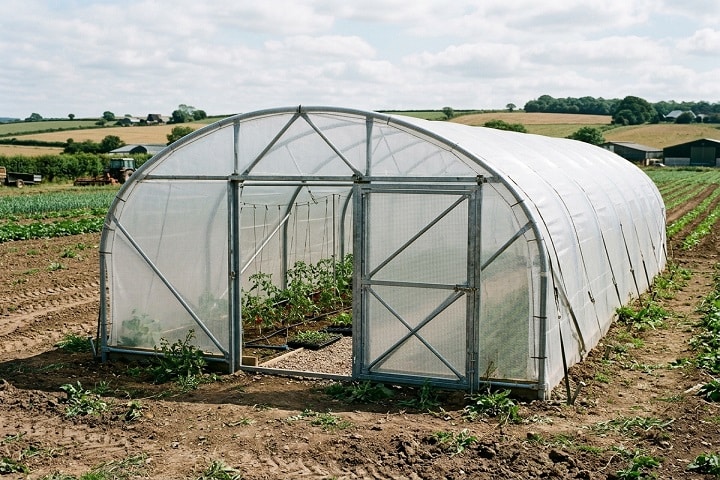
Reinforced Polytunnel Covers vs Standard Covers
A polytunnel cover protects your crops from the elements and helps create the growing environment inside. Its construction matters, particularly if you’re concerned about everyday wear and the possibility of tearing.
A reinforced cover may be designed to improve resistance to tearing or damage, depending on its materials and construction. However, performance varies between products, and no cover is immune to damage.
It’s also worth paying attention to areas where the polythene may experience additional wear, such as around door frames, end structures and fixing points. Correct fitting and suitable maintenance matter alongside the choice of material.
Remember, a stronger cover cannot compensate for an unsuitable frame or poor anchoring. The cover and structure need to work together.
Before choosing a cover, take time to choose the right polytunnel polythene for your needs, rather than assuming that the most heavily specified option will always be the most appropriate.
How the Frame and Bracing Affect Polytunnel Strength
The frame provides the main structure of a polytunnel. Its hoops support the cover and help the tunnel maintain its shape, while other structural components contribute to the overall stability of the design.
Several factors are worth comparing:
- Hoop strength: The dimensions, profile and material of the hoops influence how they perform under load.
- Hoop spacing: The distance between hoops affects how the structure supports the cover.
- Bracing: Ridge bars and other bracing components help connect structural elements and contribute to stability.
- Anchoring: Secure ground fixings help hold the structure in position.
A reinforced structure is about more than simply choosing a stronger cover. The frame, bracing and ground fixings all play a part.
If you’re reviewing the anchoring arrangements for your tunnel, take a look at these options to anchor your polytunnel securely. Always check that any fixings are appropriate for your particular structure and ground conditions.
How Do Reinforced Polytunnels Perform in Wind and Bad Weather?
Wind can place considerable demands on a polytunnel, particularly in exposed gardens, open allotments and locations with little shelter. A stronger specification may be worth considering in these circumstances, but reinforcement doesn’t make a tunnel storm-proof.
Wind resistance depends on the complete installation, including the cover, frame, bracing, anchoring and site position. Poor installation or unsuitable ground fixings can undermine an otherwise well-constructed structure.
For a more exposed growing site, consider the following:
- Frame: Is the structural specification appropriate for the location?
- Bracing: Does the design include suitable structural support?
- Cover: Is the chosen polythene appropriate for the intended use?
- Anchoring: Are the fixings suitable for the ground and structure?
- Position: Could a more sheltered location reduce exposure?
- Installation: Has the tunnel been assembled and secured according to the manufacturer’s guidance?
It’s also worth taking practical steps to protect your polytunnel from strong winds. Good positioning, secure installation and regular checks all matter, regardless of whether the tunnel is described as standard or reinforced.
What Are the Advantages and Limitations of a Reinforced Polytunnel?
Reinforcement can be useful, but its benefits depend on what has actually been strengthened.
| Potential advantages | Considerations |
|---|---|
| A reinforced cover may offer greater resistance to certain types of wear | Cover performance varies between materials and products |
| Stronger structural components may improve structural performance | Check the actual frame specification |
| Additional bracing may contribute to stability | The complete design still matters |
| A suitable heavier-duty model may better meet the needs of a demanding site | Not every garden or allotment requires the same specification |
| Greater emphasis on durability may suit frequent or long-term use | Installation and maintenance remain important |
A reinforced polytunnel isn’t automatically the best option for everyone. If your growing space is relatively sheltered and your needs are straightforward, a standard model may be entirely suitable. If your site is exposed or you plan to use the tunnel intensively, additional reinforcement may be worth investigating.
The aim is to choose a structure that fits your circumstances, rather than paying for features you may not need or overlooking those that matter.
Is a Reinforced Polytunnel Right for Your Growing Conditions?
Think about your site first, then compare the specifications that address its particular challenges.
| Your situation | What to consider |
|---|---|
| Sheltered garden | A standard specification may be sufficient for your needs |
| Exposed garden or allotment | Pay closer attention to frame strength, bracing and anchoring |
| Wind-prone location | Assess the complete structure and installation, not just the cover |
| Concerns about cover wear | Compare the construction and characteristics of different polythene options |
| Frequent or intensive use | Look closely at durability-related specifications and maintenance requirements |
| Tight budget | Compare construction quality and expected suitability, not just the initial price |
It’s worth thinking about long-term value as well as the cost of buying a tunnel. A cheaper option isn’t necessarily the most economical if it doesn’t suit your site or intended use. Equally, a more heavily specified structure isn’t automatically a better investment for every grower.
Take a look at this guide to compare polytunnel quality and cost before making your decision.

Conclusion
The difference between a standard and reinforced polytunnel isn’t always straightforward. Reinforcement may relate to the cover, frame, bracing or anchoring, and the term alone doesn’t tell you which components have been upgraded.
When comparing options, look at the whole structure and consider the conditions in which you’ll be growing. A sheltered garden may need a different specification from an exposed allotment, while your plans for long-term use may influence the features worth prioritising.
Rather than choosing on the label alone, compare the actual materials, structural components and installation requirements. That way, you can find a polytunnel suited to your growing space and make a more informed decision.
Frequently Asked Questions
What is the difference between a reinforced and standard polytunnel?
A reinforced polytunnel has additional strength or protection in one or more components, such as the cover, frame or bracing. A standard model uses the specification provided for that design. The precise difference depends on the products being compared.
Are reinforced polytunnels better in windy areas?
They may be suitable for more demanding conditions, depending on their design. However, wind performance also depends on anchoring, installation, positioning and the strength of the complete structure.
Is a reinforced polytunnel cover stronger?
A reinforced cover may be designed to resist certain types of tearing or wear more effectively. The level of protection depends on its materials and construction, so check the manufacturer’s specification.
Does a reinforced polytunnel last longer?
Not necessarily. Durability depends on the materials, overall construction, site exposure, installation, maintenance and how the tunnel is used. The word “reinforced” alone isn’t a reliable guide to lifespan.
Sources
Royal Horticultural Society (RHS) (n.d.) Greenhouses: Choosing the Right One. Available at: https://www.rhs.org.uk/garden-features/choosing-greenhouses (Accessed: 1 November 2026).