

Pruning, though not always essential, is an important gardening practice that enhances the health, shape, and productivity of trees and shrubs.
Whether you’re maintaining an ornamental garden, a fruit orchard, or trees for shade, understanding the fundamentals of pruning will ensure your plants thrive. This guide will walk you through the essential tools, techniques, and timing on how to prune plants, with pruning various types of trees and shrubs.
What Tools Will I Need?
Having the right tools for the job makes pruning easier and more effective. Some pruning tools that you might need, depending on what you grow, are:
- Secateurs (Pruning Shears) – Ideal for small branches and delicate trimming.
- Loppers – Useful for cutting thicker branches up to 5 cm in diameter.
- Pruning Saw – Required for larger branches where loppers aren’t effective.
- Hedge Shears – Best for shaping hedges and topiary.
- Pole Pruner – Helps with high branches without needing a ladder.
- Gloves and Safety Gear – Protects hands and eyes from thorns, sap, and debris.
- Disinfectant – Prevents the spread of disease between plants.
Why Do I Need To Prune?
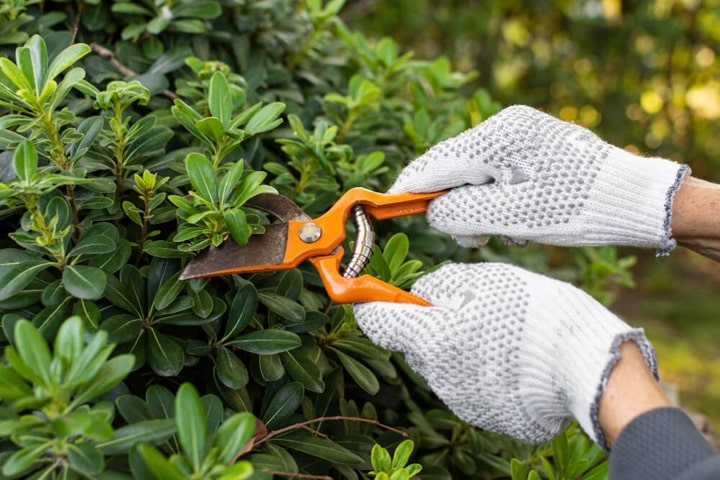
Pruning is not always needed, and is certainly not required for all plants in all situations, it can serve multiple purposes depending on the plant species and its intended use in the landscape. Some key reasons to prune for the health and wellbeing of the plant itself include:
- Removing dead, diseased, or damaged wood.
- Encouraging healthy growth and airflow.
- Improving structural integrity to prevent storm damage.
- Rejuvenating old or neglected plants.
- Enhancing flower and fruit production.
When growing fruit trees or shrubs in a polytunnel, regular pruning is essential to manage space, improve light penetration, and prevent excessive humidity, which can lead to fungal diseases. Ensure good airflow by thinning overcrowded branches and removing any weak growth.
What Are The Benefits Of Pruning?
Of course, the above reasons why pruning can be good for plants are the main benefits. Pruning can help you maintain healthy plants and a healthy garden.
Pruning can also benefit you, as the gardener, by helping you achieve your desired results. For example, you might prune to maintain a shrub or tree at a particular size and/or shape.
Pruning in certain ways can be good for space-saving in smaller gardens, allowing you to grow more plants in limited areas. By strategically pruning branches, you can also create openings for more sunlight to reach lower-growing plants, improving their health and productivity.
Aesthetic reasons are another important consideration. Pruning allows you to create a neat, well-maintained garden that looks visually appealing. Removing dead or overgrown branches tidies up your space and gives it a more structured and intentional appearance. Whether you prefer a natural, free-flowing garden or a highly structured landscape, pruning lets you sculpt your plants to match your vision.
For those who enjoy more artistic gardening styles, pruning techniques like topiary allow for dramatic shaping of shrubs and trees. Some gardeners enjoy creating intricate shapes, formal hedges, or even animal-like forms from plants such as boxwood. Espalier pruning, commonly used for fruit trees, trains plants to grow in a flat, controlled form against walls or trellises—perfect for small spaces.
Beyond aesthetics and plant health, pruning also makes garden maintenance easier in the long run. Keeping plants well-shaped and removing problem branches early can prevent future issues such as tangled growth, excessive shade, or weak structures that could break in storms.
Just don’t be afraid to let things go a little too, for wilder and more natural parts of your space. Remember, too, that you can have too much of a good think. Pruning too hard can be a problem.
What Are The Different Types Or Methods Of Pruning?

Pruning techniques vary depending on the plant type and desired outcome. Common types of pruning for trees and shrubs include:
- Thinning – Removing entire branches to improve air circulation.
- Heading Back – Cutting back a portion of a branch to encourage bushier growth.
- Pollarding – Repeated removal of upper branches to maintain a compact crown.
- Coppicing – Cutting a tree or shrub to ground level to encourage new shoots.
RHS Pruning Groups
The Royal Horticultural Society (RHS) pruning groups classify plants into different categories based on their growth and flowering habits. This system helps gardeners know the best time and method to prune various plants.
The RHS has 13 pruning groups, each suited to specific plant types. These can be extremely beneficial for UK gardeners who want to know what to prune, when to prune and how to prune in our climate and conditions.
Group 1 – No Regular Pruning Required
- Includes: Some conifers, slow-growing shrubs, and plants that naturally form their shape (e.g., holly, mahonia).
- When to prune: Only remove dead, damaged, or diseased wood as necessary.
Group 2 – Light Pruning After Flowering
- Includes: Early-flowering shrubs (e.g., forsythia, lilac, camellia).
- When to prune: After flowering in spring or early summer.
Group 3 – Prune Flowered Stems in Late Summer
- Includes: Shrubs that flower on old wood (e.g., philadelphus, deutzia, weigela).
- When to prune: After flowering in summer, cutting back older stems to encourage new growth.
Group 4 – Hard Pruning in Spring
- Includes: Summer-flowering shrubs that bloom on new growth (e.g., buddleia, lavatera, spiraea japonica).
- When to prune: Late winter or early spring before new growth begins.
Group 5 – Regular Thinning and Rejuvenation
- Includes: Plants prone to overcrowding (e.g., hydrangeas, some cornus varieties).
- When to prune: Remove some older stems each year to maintain health and vigour.
Group 6 – Coppicing and Pollarding
- Includes: Plants that benefit from being cut back hard (e.g., willows, eucalyptus, paulownia).
- When to prune: In late winter or early spring.
Group 7 – Shrubs Grown for Winter Stem Colour
- Includes: Dogwoods (Cornus), Rubus (ornamental bramble).
- When to prune: Hard prune in early spring to encourage bright new stems.
Group 8 – Wall-Trained Shrubs
- Includes: Pyracantha, ceanothus, climbing hydrangeas.
- When to prune: After flowering or as needed to maintain shape.
Group 9 – Clematis (Early Flowering)
- Includes: Clematis montana, Clematis alpina.
- When to prune: Light pruning after flowering, only to remove deadwood or control size.
Group 10 – Clematis (Mid-Season Flowering)
- Includes: Clematis varieties that flower on old wood (e.g., Clematis ‘Nelly Moser’).
- When to prune: Light pruning in late winter or early spring.
Group 11 – Clematis (Late Flowering)
- Includes: Clematis viticella, Clematis texensis.
- When to prune: Cut back hard in early spring, as these flower on new growth.
Group 12 – Roses (Light Pruning for Once-Flowering Roses)
- Includes: Rambling roses and some old garden roses.
- When to prune: After flowering, removing old wood and shaping lightly.
Group 13 – Roses (Repeat-Flowering Bush Roses)
- Includes: Hybrid tea and floribunda roses.
- When to prune: Hard prune in late winter or early spring to encourage strong new growth.
Pruning Trees And Shrubs

Spring-Flowering Trees And Shrubs
Spring-flowering trees and shrubs such as magnolia, lilac, and forsythia should be pruned immediately after flowering. These plants produce buds for the following year’s blooms on old wood, so pruning too late in the season can reduce next year’s flowers. Remove any dead or weak growth and shape lightly.
Summer-Blooming Trees And Shrubs
Trees and shrubs that bloom in summer, such as hydrangea paniculata and buddleia, flower on the current year’s growth. These should be pruned in early spring before active growth begins. Cut back old flowering stems to encourage new growth, which will produce blooms in the summer months.
Shrubs Without Showy Blooms
For shrubs that are primarily grown for their foliage, such as boxwood and privet, pruning should focus on maintaining a balanced shape and promoting healthy new growth. Regular thinning will improve airflow and prevent the plant from becoming too dense.
When To Prune:
When To Prune Deciduous Shade Trees
Deciduous shade trees, such as oak, beech, and sycamore, should be pruned in late winter to early spring when they are dormant. This helps minimise sap loss and reduces stress on the tree. Avoid heavy pruning in summer, as this can weaken the tree.
When To Prune Deciduous Fruit Trees
Fruit trees like apple and pear require annual pruning in late winter or early spring before new growth begins. This helps shape the tree, improve sunlight penetration, and encourage better fruit production. Remove inward-growing and overcrowded branches to maintain an open canopy.
Prunus like cherry and plum, however, should be pruned in summer, when diseases are less likely to take hold.
When To Prune Pine Trees
Pine trees require minimal pruning. If necessary, prune in late winter or early spring, removing only damaged or poorly placed branches. Avoid cutting back into old wood, as pines do not regenerate growth from bare stems.
Renovating Trees And Shrubs
Deciduous Tree And Shrub Renovation
Overgrown deciduous trees and shrubs can be revitalised through gradual pruning over several years. Remove dead, damaged, and crossing branches first, then reduce the plant’s height and width over subsequent seasons.
Evergreen Tree And Shrub Renovation
Evergreen shrubs such as yew and holly can tolerate more significant pruning, but many conifers do not regrow well from old wood. When renovating, trim lightly each year rather than cutting back severely.
Renovating Shrubs Or Roses With Too Many Stems
Shrubs and roses that have become crowded can benefit from thinning. Remove the oldest stems at ground level to promote healthy, vigorous new growth. This technique encourages better flowering and overall plant structure.
Yearly Pruning Plan:
| Year | Task |
| 1 | Identify and remove dead, diseased, or crossing branches. Begin shaping where necessary to establish a strong framework. |
| 2 | Further refine the structure by thinning weak or excessive shoots. Adjust shaping to maintain plant health and productivity. |
| 3 | Maintain the desired shape and health through annual pruning. Rejuvenate as needed by removing older wood gradually. |
Further reading:
Discover more to improve your pruning techniques:
FAQs
What is selective pruning, and why is it important?
Selective pruning involves carefully choosing branches to remove to improve the plant’s shape, health, and airflow. It is essential for preventing overcrowding and maintaining a plant’s long-term health.
What are water sprouts and suckers, and how should they be handled?
Water sprouts are fast-growing vertical shoots that appear along branches, while suckers emerge from the base of the plant. Both should be removed regularly to prevent them from diverting energy away from the main plant.
How do I prune plants that have been neglected or overgrown?
For severely overgrown plants, prune gradually over a few years to avoid stress. Begin with dead and diseased branches before thinning and reshaping.
Sources
Waterworth, K., (2022) Damage From Over Pruning: Can You Kill A Plant From Over Pruning? Gardening Know How [online] Available at: https://www.gardeningknowhow.com/ornamental/trees/tgen/damage-from-over-pruning.htm [accessed 26/03/2025]