Pruning blackberries is one of the most important jobs when growing this crop of berries in your garden. This guide will walk you through the process, helping you to understand its importance, and how to undertake this simple gardening job.
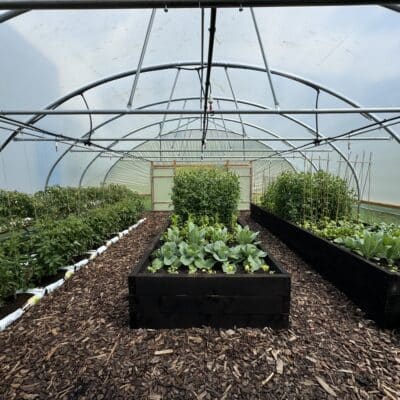
Blackberries have a terrible reputation with some gardeners, who think of these brambles as a problem rather than a crop. But growing blackberries in your garden can be a wonderful thing to do – not only so you can harvest some of the delicious berries right there where you live – but also for the wildlife in your area, which will also like the berries, and otherwise make use of these plants. Using a growing tunnel can make the process easier for you.
Why Is Pruning Blackberries Important?
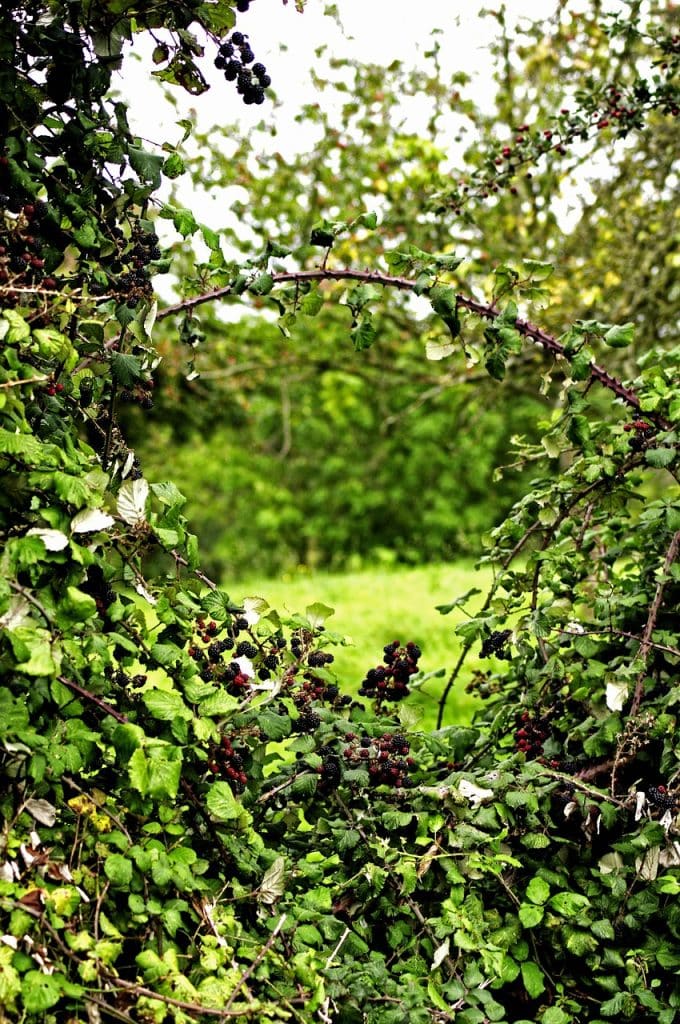
Pruning blackberries is important because, when left unchecked, these plants do have a tendency to completely take over. When left unpruned, blackberries can often become dangled bramble patches, spreading to take over a far greater area than you planned.
When they are not pruned correctly, blackberries may also fall off in fruit production and may not be as productive as they were before. So pruning blackberries also helps to ensure that you get the best possible yield from your plants.
When To Prune Blackberries In The UK
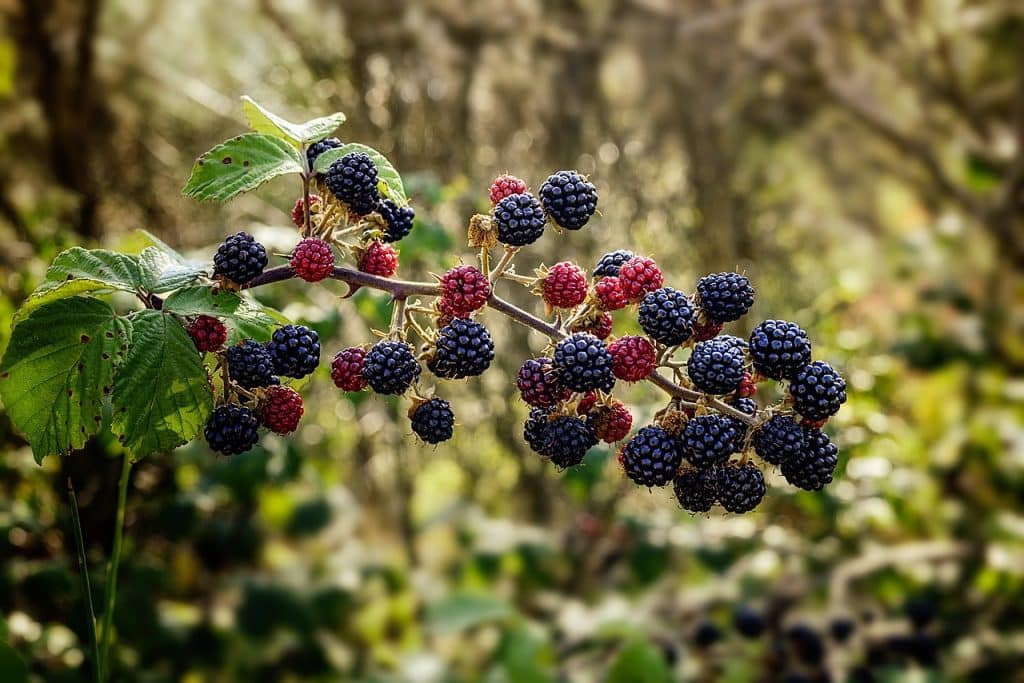
Most blackberries should have their main prune in the summer or in the autumn, just after you have harvested the last of the berries. However, you may also need to undertake a little more pruning in the spring in order to reduce congestion or to get rid of stems damaged over the winter months.
There are a few newer varieties, too, which are not treated in quite the same way. Those that fruit on canes produced during the same growing season (primocanes) are pruned in the same way as autumn-fruiting raspberries – typically in February here in the UK.
Understanding Blackberry Pruning
In order to understand when you should prune the blackberry variety you are growing, and how to do so, you need to understand the type of shoot on which the berries will form.
In most blackberries, fruits form on canes or shoots produced the previous growing season. In other words, the canes will grow during once summer and flower fruit the following year. The shoots are called primocanes in their first year, and floricanes in the next.
One floricanes have produced their berries, they will die back and will not fruit again. So these can be removed entirely in order to allow the primocanes to become floricanes and to take their place.
However, a few modern cultivars of blackberry do not follow this pattern and rather than having biennial canes, they have canes that produce during their first growing season. That is why these are treated in a different way when it comes to pruning.
Read more: How to Grow Rocket
What Equipment Do You Need For Pruning Blackberries?
What you will need to prune blackberries will depend on the size of the plant and the girth of the canes.
Some of the time, with smaller canes in more compact varieties, simple secateurs or small pair of garden shears will be needed. With a larger, more vigorous blackberry, you may require more sturdy and sizeable loppers in order to prune blackberries successfully.
Often, unless you are pruning a thornless cultivar, then it will be wise to wear gloves and long sleeves while you are carrying out this gardening job.
How To Prune Blackberries
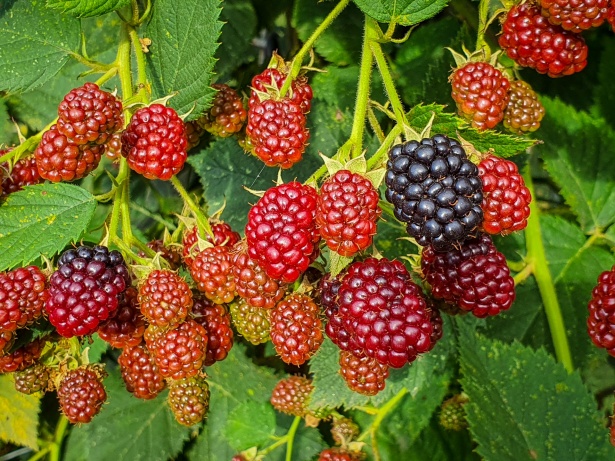
Thinking about primocanes and floricanes can help you to understand how to prune blackberries successfully.
Typically, you will work to remove floricanes that have done their jobs, to allow the plants developing growth to mature to full fruition. Of course, primocanes should be left for another year to become the new floricanes – unless they have set fruit in their first year.
Sometimes, additional pruning in late winter or early spring may be required in order to sort out plants damaged by winter weather. But in general, one simple pruning session each year is all that is required.
Find out how to boost brainpower in a garden!
Pruning Blackberries In Summer or Autumn: Floricane Pruning
The main pruning job for most blackberries involves tying in the first season canes and then cutting back each of the canes that has fruited already down as close to the ground as possible.
In order to tie back the canes, you will need to have a support system of some kind, such as wire stretched between hooks on a wall or fence, or between two posts around 5 m apart. Wires are usually spaced with a vertical spacing of 30cm between each one, and blackberries should be placed in front of these supports with around 2 ½ to 3 ½ metres between them.
It is a good idea to keep the primocanes and floricanes separate as the season progresses, as this makes pruning easier. Primocanes can be tied together at the centre in a vertical bunch. The floricanes can be tied to the horizontal support wires and trained to grow along them until the harvesting period is done.
Once the harvesting period is over, the floricanes can then be easily identified and pruned out from the base. While the primocanes can then be tied in along the wires. Some are also trained as fans if they have rigid canes and very vigorous growth.
Pruning Blackberries In Late Winter or Early Spring: Primocane Pruning
The above is the main pruning period for most blackberries. But as mentioned above, some blackberries fruit on first year canes – like autumn-fruiting raspberries. These are best pruned in February, when you should cut the canes to just above ground level.
In early spring, you may also undertake a little more pruning on blackberries that fruit on floricanes.
You may decide that things are a little overcrowded and limit the number of canes that you allow to grow to bear fruit by cutting unwanted ones off at or close to the base.
Older cultivars can often support around 24 healthy canes, while more modern ones are usually best restricted to 16 canes (on 8 support wires) as a maximum.
You may simply need to get rid of any material that is dead, damaged or diseased after the winter. Frost-damaged material should be pruned out to allow for the formation or healthy new shoots and side shoots.
You may also wish to limit the size of vigorous blackberry varieties by pruning out the growing tips of the canes to keep them from growing too tall, and to encourage side-branching. This can mean higher yields of fruit and stronger plants.
Make sure to learn about the best blackberry recipes that you can evoke for your foods.
Pruning Thornless Blackberries
Thornless blackberry varieties are a much easier proposition when it comes to pruning as these blackberries won’t fight back! Without the thorns to contend with, you will find pruning and other maintenance much easier and less potentially painful too.
Often, thornless blackberries are a better choice for smaller gardens as they can be easier to restrict in size. If you wish, you can train them to grow on a smaller trellis and prune them to restrict their canes to no more than around 1-1.5m in length.
You can let them grow a lot larger if you wish but often, this will not enhance the harvest or mean that more berries are produced. So keeping them reasonably small in size typically won’t mean reducing the size of the harvest.
Some blackberries, including thornless ones, will produce suckers that emerge near the base of the plant. In many cases, it will also make sense to prune out these suckers when they appear, so that energy is not lost and the parent plant can focus on berry production.
FAQs
When is the best time to prune blackberry bushes?
The best time to prune blackberry bushes is in late winter or early spring, before new growth begins. This is typically between late February and early March.
How often should I prune blackberry plants?
Blackberry plants require annual pruning. It is recommended to prune them every year to maintain plant health, productivity, and manage their size.
Why is pruning important for blackberry plants?
Pruning is important for blackberry plants for several reasons. It helps remove old, unproductive canes, promotes airflow and sunlight penetration, reduces disease incidence, stimulates new growth, and increases fruit production.
How should I prune blackberry canes?
When pruning blackberry canes, the general rule is to remove the old, fruiting canes that have already produced berries. Cut them off at ground level or remove them completely. Retain the healthy, vigorous canes that are one or two years old to produce fruit in the upcoming season.
Are there any specific techniques for pruning blackberry plants?
Yes, there are specific pruning techniques for blackberry plants. The two common methods are the “floricane-fruiting” and “primocane-fruiting” types. Floricane-fruiting varieties bear fruit on canes that are one year old, while primocane-fruiting varieties produce fruit on the current season’s growth. Prune accordingly based on the type of blackberry variety you have.
Should I prune the tips of blackberry canes?
Yes, tipping the canes of blackberry plants is often recommended. After the canes reach a height of about 3.5 to 4 feet, cut off the top 1 to 2 inches to encourage lateral branching, which results in more fruit-bearing side branches.
Can I prune blackberry plants during the summer?
It is generally not advisable to prune blackberry plants during the summer. Pruning during this time can remove potential fruiting canes and reduce the current season’s berry yield. Stick to pruning during late winter or early spring.
Are there any precautions to take while pruning blackberry bushes?
When pruning blackberry bushes, it’s essential to wear protective gloves and clothing to avoid thorns and scratches. Additionally, using clean and sanitized pruning tools helps prevent the spread of diseases.
Sources
Primocanes. In Encyclopedia of Applied Plant Sciences (Second Edition). Retrieved from: https://www.sciencedirect.com/topics/agricultural-and-biological-sciences/primocanes [accessed 02/06/23]