

Polyhouse farming is a controlled-environment growing method that helps farmers produce higher yields, grow crops year-round, and protect plants from unpredictable weather.
In my experience working with protected growing systems, polyhouse farming allows growers to create stable microclimates, which means better quality produce, improved resource efficiency, and more predictable harvests.
This guide explores how polyhouse farming works, the core components involved, setup steps, benefits, challenges, and best practices to help you maximise results and long-term returns.
Key Takeaways
- Polyhouse farming creates controlled growing environments for higher productivity
- Strong structures and quality materials are essential for performance
- Planning and crop selection directly influence profitability
- Polyhouse farming can dramatically increase yields and crop quality
- Ongoing monitoring is key to long-term success
What Is Polyhouse Farming?
Polyhouse farming is a form of protected cultivation where crops are grown inside structures, typically in tunnel form in the UK, covered with polyethylene film. This creates a controlled environment where temperature, humidity, light, and irrigation can be managed precisely.
Polyhouse farming, often described as polytunnel farming or polytunnel agriculture in the UK, differs from open-field farming because external weather has far less impact. Instead of reacting to climate changes, growers control growing conditions inside the structure.
Polyhouse farming works by:
- Using protective covering to reduce weather exposure
- Creating a microclimate tailored to crop needs
- Reducing pest and disease pressure
- Allowing year-round cultivation
Polyhouse farming is particularly useful where weather is unpredictable or where high-value crops require stable growing conditions. The controlled climate inside a polyhouse allows farmers to grow crops outside traditional seasons and maintain consistent production.
Increasing weather weirding and weather extremes in recent years have of course been difficult for farmers. Polyhouse farming can sometimes help to mitigate the risks associated with our changing climate.
Polyhouse or Polytunnel?
Historically, traditional protected growing used glasshouses. When plastic film became cheaper and more widely available from the mid-20th century onwards, farmers began building plastic-covered growing structures. In parts of Asia and the Middle East, these became widely known as polyhouses.
In the UK and much of Europe, the term polytunnel became more common, especially in horticulture and commercial growing.
In my experience, the difference is often more about regional language and marketing than strict technical design, although there are some practical distinctions.
Primarily, the distinction is that a polyhouse can be shaped like a glass greenhouse, while polytunnels typically have the arched, curved top form. Though in the UK, polytunnels are far more common, these are one type of polyhouse, so can also be referred to by this term.
Essential Components of a Polyhouse
Each component in polyhouse farming directly affects crop performance, efficiency, and longevity of the structure.
Polyethylene Sheet
The polyethylene sheet is central to polyhouse farming success.
Key roles:
- Light diffusion for even plant growth
- UV protection for durability
- Weather shielding
Most professional polyhouse farming systems use UV-stabilised polyethylene which helps to balance strength and light transmission.
Frame Structure
Polyhouse farming structures typically use:
- Galvanised iron or steel frames
- Aluminium components for lighter builds
Strong frames provide wind resistance and long-term durability. Galvanised steel structures can last over 10 years with proper maintenance.
Irrigation System
Polyhouse farming relies heavily on precision irrigation, especially drip irrigation.
Benefits include:
- Reduced water waste
- Improved nutrient delivery
- Compatibility with fertigation systems
Drip irrigation in polyhouse farming significantly improves water efficiency compared to traditional methods.
Ventilation System
Ventilation prevents heat and humidity buildup.
Options include:
-
- Natural ventilation via vents
-
- Forced ventilation using fans
Poor ventilation is one of the most common causes of crop failure in polyhouse farming.
Cooling and Heating System
Temperature control is often essential in polyhouse farming. Systems may include:
- Foggers or misting systems
- Cooling pads and exhaust fans
- Heating units
Sustainable options encourage passive methods for temperature control, alongside sustainability initiatives like the use of waste-heat (from composting, or from server farms, for example).
Planning is the foundation of successful polyhouse farming.
Selecting the Right Location
Polyhouse farming works best where sites have:
- Full sunlight exposure
- Good drainage
- Reliable water and electricity access
Choosing Suitable Crops
Polyhouse farming suits high-value crops such as:
- Tomatoes
- Capsicum
- Cucumbers
- Strawberries
- Flowers
These crops respond well to controlled environments and offer strong market returns.
Installing the Polyhouse Structure
Professional installation reduces structural and operational problems long-term.
Learn more about expert installation through this polytunnel construction service.
Soil Preparation and Planting
Successful polyhouse farming starts with:
- Soil testing
- Raised beds
- Soil sterilisation where needed
Monitoring and Maintenance
Polyhouse farming requires daily monitoring of:
- Temperature
- Humidity
- Pest presence
- Irrigation performance
Benefits of Polyhouse Farming
Polyhouse farming offers several advantages:
- Higher yields per square metre
- Year-round production
- Higher quality produce
- Reduced pest pressure
- Efficient water and fertiliser use
Controlled environments allow farmers to grow crops outside normal seasonal windows and stabilise production.
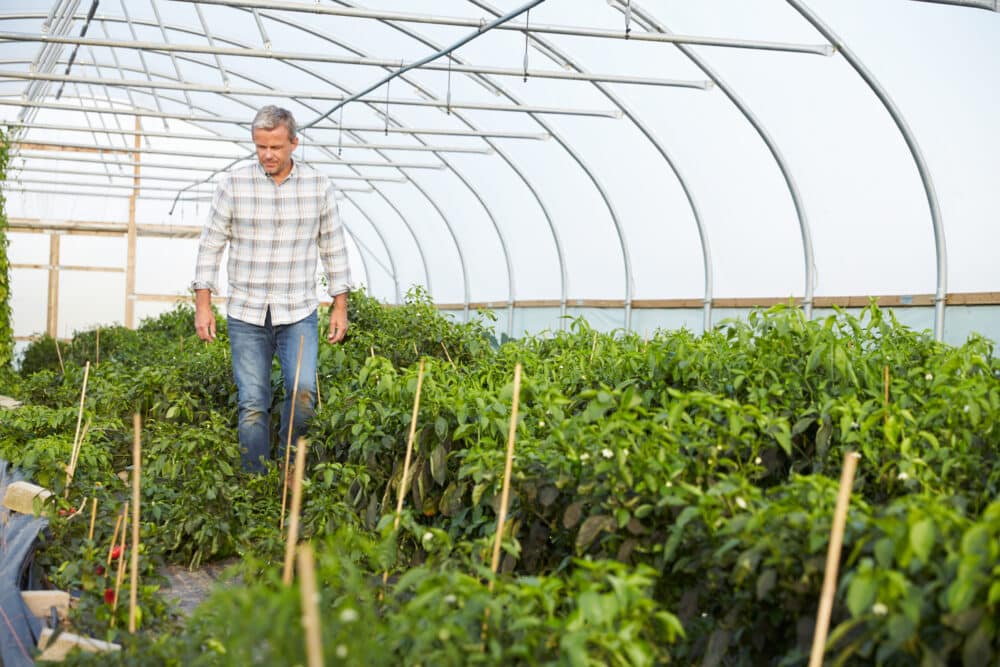
Farmer Checking Organic Chilli Plants In Greenhouse
Challenges in Polyhouse Farming
Polyhouse farming is powerful but requires planning and investment.
High Initial Investment
Polyhouse farming involves costs for:
- Structure
- Irrigation systems
- Climate control equipment
Returns depend heavily on crop selection and management quality.
Technical Knowledge Required
Polyhouse farming requires understanding of:
- Climate control
- Nutrient management
- Pest monitoring
Power and Water Dependency
Polyhouse farming relies on stable utilities. Backup planning is important.
Tips for Successful Polyhouse Farming
From practical experience, these principles matter most:
- Start small and scale gradually
- Choose crops with strong local demand
- Monitor climate data daily
- Maintain strict hygiene inside the structure
- Work with experienced suppliers
Types of Polyhouses
Polyhouse farming structures vary depending on climate, scale, and budget.
| Type | Best For |
|---|---|
| Naturally ventilated polyhouse | Moderate climates |
| Climate-controlled polyhouse | High-value crops |
| Low-cost polyhouse | Small growers |
| Commercial polyhouse systems | Large-scale production |
Explore options for commercial polytunnels.
From Planning to Profit – The Complete Polyhouse Farming Process
Research, Planning, and Goal Setting
Polyhouse farming success begins with:
- Budget planning
- Yield targets
- Market research
Site Selection and Preparation
Good preparation improves long-term polyhouse farming results:
- Ground levelling
- Drainage planning
- Equipment access
Design and Construction of Polyhouse Structure
As a designer and agricultural advisor, I often recommend working with experienced suppliers to ensure structure quality and long-term reliability.
Explore high-quality systems via First Tunnels Polytunnels.
Crop Selection and Cultivation Techniques
Polyhouse farming best practices include:
- Crop rotation
- Pruning
- Spacing optimisation
Irrigation and Nutrient Management
Polyhouse farming typically uses fertigation to deliver nutrients efficiently.
Instead of synthetic soluble fertilisers, sustainable polyhouse farming can use:
- Compost teas
- Seaweed extracts
- Fish hydrolysate
- Plant-based liquid fertilisers
This is a sustainable choice because it:
- Supports soil microbial life
- Reduces chemical runoff risk
- Builds long-term soil fertility
Organic fertigation requires filtration and careful system maintenance to prevent clogging, but it can work very well in well-managed systems. The the most resilient systems combine precision irrigation with living soil approaches, organic inputs, and careful resource monitoring.
Monitoring and Maintenance
Effective monitoring and maintenance are at the heart of consistent, profitable polyhouse farming. In practice, success comes from combining technology with regular hands-on observation. Sensor monitoring allows growers to track temperature, humidity, soil moisture, and sometimes CO₂ levels in real time.
This data helps prevent stress conditions that can reduce yield or trigger disease outbreaks. However, sensors should support, not replace, manual crop checks. Walking the crop daily allows you to spot early signs of pests, nutrient deficiencies, or irrigation issues that technology might miss.
Record keeping is equally important. Maintaining detailed records of irrigation schedules, nutrient applications, climate conditions, pest activity, and crop performance helps identify patterns over time. This allows growers to make better decisions each season, improve resource efficiency, and refine growing strategies.
In my experience, growers who consistently record data are better able to predict crop behaviour and respond quickly to problems. Preventative maintenance of irrigation lines, ventilation systems, and structural components should also be part of routine management to avoid unexpected downtime during critical growing stages.
Harvesting, Marketing, and Sales
Harvesting is one of the most time-sensitive stages in polyhouse farming. Crops grown under protected conditions often mature faster and more uniformly, meaning timing must be carefully planned.
Harvesting too early can reduce flavour and quality, while harvesting too late can shorten shelf life. Many growers plan harvesting schedules around market delivery times to ensure produce reaches customers at peak freshness.
Post-harvest handling has a direct impact on profitability. Gentle handling, rapid cooling where required, and correct storage conditions help maintain quality and reduce losses. Clean packing areas and proper grading also improve product consistency and buyer confidence.
Strong market planning is just as important as growing success. Before planting, it is wise to understand local demand, price trends, and buyer requirements.
Some growers focus on local farm shops and direct sales, while others supply wholesalers or contract buyers. Diversifying sales channels can help reduce risk.
Ultimately, successful polyhouse farming is not just about growing well. It also involves aligning production with reliable, profitable markets.
Buying the Right Polyhouse System
When investing in polyhouse farming, check:
- Material quality
- UV resistance
- Warranty support
- Structural durability
Read this polytunnel buying guide before making your key purchases.
Polyhouse farming is one of the most effective ways to improve productivity, stabilise yields, and grow high-quality crops throughout the year. When planned properly, polyhouse farming can provide strong long-term returns and resilience against changing weather patterns.
The key is to focus on design quality, crop selection, and ongoing management. With the right approach, polyhouse farming can transform how growers produce food and manage risk.
Sources
Blustal (2024) Things You Need to Know About Polyhouse Farming. Website. Available at: https://www.blustal.com/post/things-you-need-to-know-about-polyhouse-farming