

Choosing multi-functional elements for your garden is important if you want to garden in a sustainable way, and in a way that allows your efforts to stand the test of time. But what exactly do we mean when we talk about creating a multi functional space, what does that really look like in a garden, and why is this the right approach to take? Read on for a discussion of this topic, to help you in designing and creating your garden.
What Do We Mean By A Multi Functional Space?
Whenever we work on garden design, it is important to think holistically about the garden as a whole. That involves thinking about how we can develop strategies suited to a specific site and to our own needs. It also involves selecting elements that work well within the system as a whole.
When selecting elements for any garden, there are many different things to think about. Of course, we need to consider the characteristics of our space, and its strengths, weaknesses, opportunities and challenges. We also need to think about own own needs and what we would like to get from our gardens – both tangible and intangible yields.
Each element that we might include in our space – whether we are talking about individual plants, growing systems, elements we add to ensure the long term health and productivity of the space, or elements we add to allow us to use our gardens in different ways – should be carefully considered.
We need to think about the uses or functions we require different elements to perform, and which elements can fulfil those roles within our gardens.
When we talk about creating a multi functional space, we are talking about elements that can fulfil as many different functions as possible – they don’t only do or provide us with one thing, but perform several different functions or provide us with several different things.
Stacking Functions in Sustainable Garden Design
Creating a multi functional space is one factor in something known as ‘stacking functions’ in a sustainable garden.
This is a key concept in permaculture design, which is a design methodology and ethos that involves gardening in a way that allows us to meet our own needs today in a way that does not impact the ability of future generations to do the same, while caring for planet and people and thinking about fair share.
When we talk about stacking functions in permaculture design, in the context of a garden, we are talking about two different things. The first of these things is stacking functions within elements. So rather than choosing elements that provide only one service or yield, we choose elements in which multiple functions are ‘stacked’ up.
The second thing that we are talking about is making sure not only that every element has multiple functions but also that for every function we require, there is not just one, but rather multiple elements to meet that need.
In this article, we are focussing on the former. But we’ll also take a look at the latter towards the end of this guide, so that we can think about how we might incorporate those multi functional spaces within a sustainable garden design.
Examples of A Multi Functional Space in a Garden
In order to turn the abstract concept of multi functional space elements into something we can more easily understand within the real-world gardens we create, let’s take a look at some examples of multi-functional elements that you might consider including in your garden.
Multi Functional Plant Choices
First of all, multi-functional elements might be individual plants that we choose to include in our gardens. Certain plants can deliver far more than others, and we can select plants that can meet many of our needs and fulfil a range of different roles.
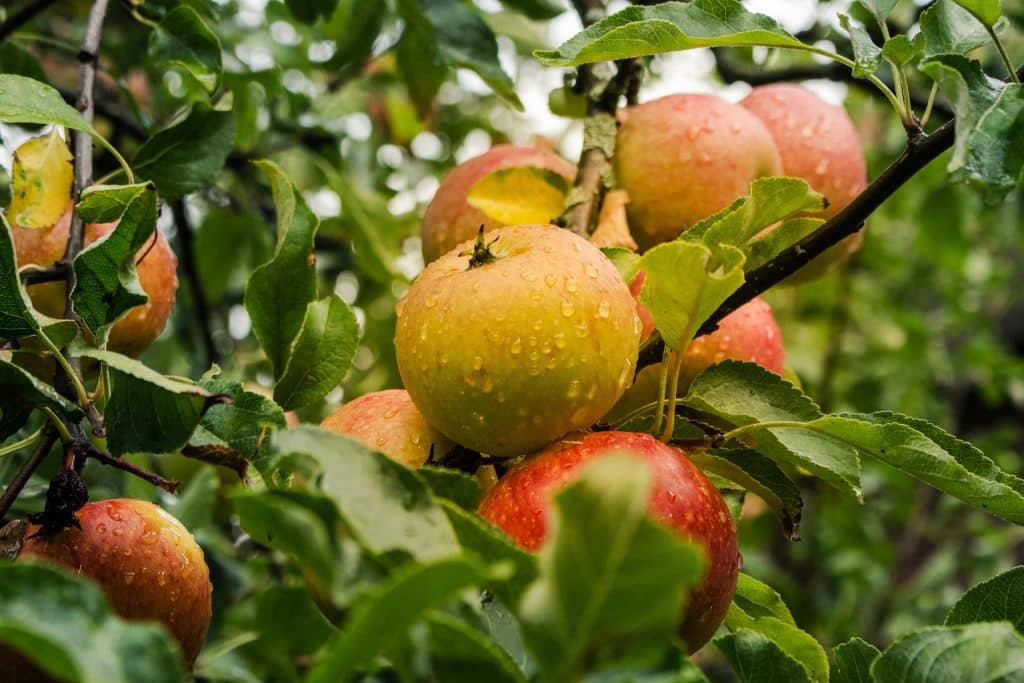
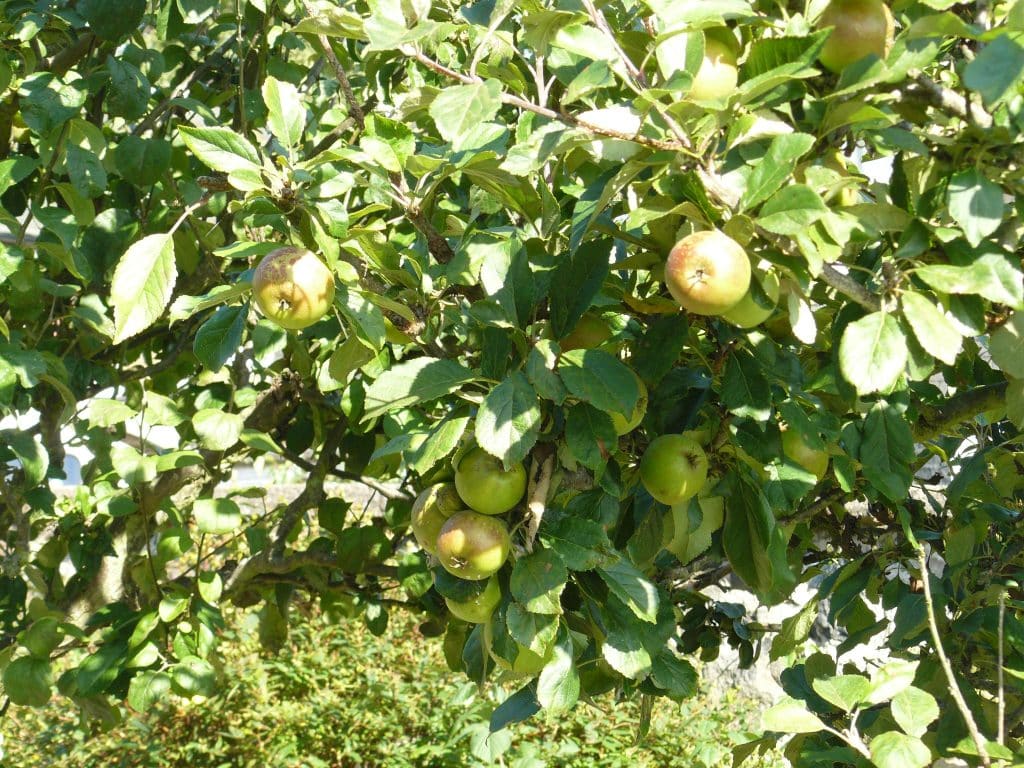
To give one example, we can look at an apple tree – a common choice for growing in UK gardens.
Apple trees can fulfil a range of roles. They can:
- Sequester carbon, helping to fight anthropocentric climate change.
- Provide us with a yield of edible fruits that we can use in a range of different ways.
- Give us pruned materials that might be used as fuel wood.
- And which might be used for a number of garden applications, or for craft.
- They also drop their leaves in winter, which helps to maintain soil health and fertility.
- And the dead leaves can also be used in mulches, compost, or making leaf mould.
- Apple trees might also create beneficial shade below their branches.
- And they will create habitat, shelter and provide food for garden wildlife.
These are just some examples that show how many different functions apple trees can have.
By looking at different plants in a similar way, we can not only find plants suited to the growing conditions were we live, but also plants that will provide for us, wildlife and the garden system as a whole in a range of different ways.
Multi Functional Plant Combinations
Of course, when looking at plants in our gardens, we should not only consider those specific plants in isolation. Our goal should be to combine plants in ways that improve the function of the whole and allow us to meet our own needs through the creation of habitats and functioning ecosystems within our space.
A food forest or forest garden is a good example, that shows how combinations of plants can also be elements within a garden design that fulfil multiple functions.
A layered forest garden planting scheme can, for example:
- Maximise photosynthesis and further increase carbon sequestration in a garden.
- Aid in managing water effectively on your property.
- Protect and improve the soil in a garden.
- Create an incredibly biodiverse space, welcoming and catering for a range of wildlife.
- Meet multiple human needs through providing edible yields, and numerous other tangible yields including fuels, crafting materials, biomass for mulches etc. and so much more.
- Meet intangible human needs – providing visual and other sensory appeal, creating a calming atmosphere, increasing wind protection, screening unsightly views, blocking noise, reducing air pollution, increasing privacy within a space… etc.
So, by carefully considering not only the individual plants but also the planting schemes that we include within our gardens, we can make sure that we have elements that fulfil as many different functions as possible.
Other Multi Functional Space Elements for Garden Yield & Longevity
Other elements that we might consider when thinking about elements with multiple functions that we can include in our gardens include those additional elements that we might add to a space to increase our yields and ensure the longer-term viability of our plans.
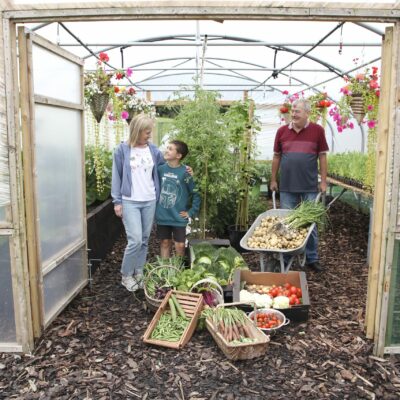
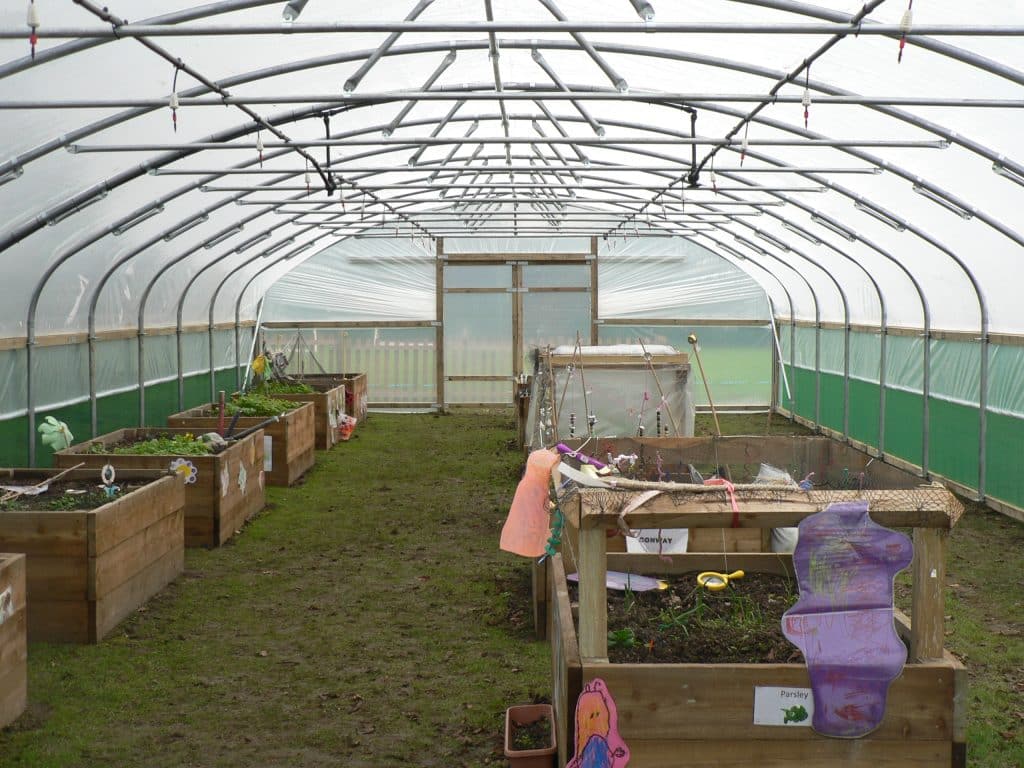
One great example of this is a polytunnel, which can potentially:
- Protect crops from annual weather changes and extreme weather events.
- Allow us to grow our own food (and other resources) year-round, not only through the primary growing season.
- Provide structure for trellis support/ vertical gardening.
- Increase the number of crops that we can potentially grow where we live.
- Provide shelter in the garden for the gardener.
- And for others using the garden recreationally (to sit or dine within, perhaps)
- Give us space to dry foods we have grown, or cure certain crops.
- Offer a covered space to dry clothes, etc…
- Provide another structure in a garden from which rainwater can be harvested.
- Potentially also provide space for garden livestock, for some or all of the year.
A polytunnel, like the other multi=functional elements mentioned above, will not just provide one thing, but can potentially provide us with a wide range of yields and services.
Multi Functional Elements for Human Use
There are of course, plenty of other multi-functional elements, both more natural plant-based systems and man-made structures, that we might include in our gardens to make sure that they are ideal for our needs when it comes to both work and play or leisure time.
Let us take for an example the idea of adding a multi-functional garden building, which might be:
- A space for socializing.
- An area for quiet relaxation.
- A home office area.
- Workshop/ studio space for hobbies or pastimes.
- Space for food production, sowing or other garden jobs.
And more. A flexible and well-designed structure can fulfil each of these roles, and more…potentially also improving environmental conditions by creating shade, providing vertical growing surfaces on the structure itself, and providing spaces for wildlife to enjoy, to give just a few examples.
Why is Creating A Multi Functional Space a Good Idea?
The reasons that it is a good idea to include multi-functional elements within a garden may now seem clear.
When we choose multi-functional elements that do and provide as much for us a possible, this allows us to make sure that every inch of our gardens optimally meet our needs and the needs of other life around us. We can ensure that each element provides as much as possible within the system and for our own needs and wishes and make the most of our space.
What is more, the more functions each element we choose to include fulfils, the more beneficial interactions we can create between different elements, and the more stable and resilience the system and our lives will become.
Multiple Elements to Fulfil Different Functions
As mentioned above, choosing multi-functional elements is part of the concept of stacking functions. This also includes thinking about how we can make sure we build redundancy into our gardens, avoid putting all our eggs in one basket, and have multiple elements to fulfil different functions too.
These may at the core be common sense ideas. But thinking about them can help us create gardens that really meet our needs, provide abundant yields, and stand the test of time.
References:
https://bottomuppermaculture.com/2020/10/18/integrate-elements-and-functions/