

Layout Tips for Small City Gardens
In this article, we will be looking at layout tips for small city gardens. In a previous article I already shared my top tips for urban gardens. But in this article, we will be delving a little deeper and looking specifically at how you might determine the best placement for all the elements in the space and begin to bring the whole thing together.
Map Out the Space Before You Begin
A city garden may be very small, but that does not mean that you cannot do amazing things with that space. However, in order to make the best decisions about which elements to include and how to lay them out, you need to know what you are dealing with.
Think about the basics – sunshine and shade, wind and water. Think about what the space encompasses right now and how it alters throughout each day and throughout the year.
Mapping out the space is not just about its horizontal physical dimensions. Remember that you can also think vertically, and that will be very important especially where space is very limited on the ground.
But remember, also, that mapping out the space should also involve thinking about the characteristics of the space – how it looks and feels – and how well plants will do in specific areas.
Following the sun will help you site areas for food production. And even the smallest area for growing your own will be great in small city gardens. And by getting to know the space better, you can also find the sweet spots perfect for sitting or dining outdoors at certain times of day.
Consider Zoning Even in Small Spaces
In sustainable garden design, one of the key ideas used in determining the best layout for a space, beyond the basics of sunshine and other environmental factors is zoning.
Zoning is all about making the space as efficient as possible. Elements used most frequently are located closest to the door of the home, while less managed and more stand-alone elements that you won’t need to tend frequently are positioned further away.
In a small space, it won’t take long to get to the far reaches of the space, as it would on a farm or in a larger garden. But zoning can still be important.
It can, in a small space, help you to think about how and when the space will be used. You might not have as many choices as in a larger space, but you can create different areas that are used more or less frequently, and thereby create a space that really works for you.
For example, you don’t want to be tripping over lush planting or having to navigate around a growing area or other feature to get to a seating area you want to use everyday. Such a frequently used space should be easily accessed straight from the back door. And your vegetable garden should be in easy reach of your kitchen too.
Extend Your Living Space

When you only have a small urban garden, it is especially important to consider how this inside space interacts with the rest of your home. Many of the best small city garden designs blend the boundary between inside and out, bringing the inside out and the outside in.
Thinking about the outside garden or courtyard space not as a separate area but as an integral part of your home can be key to making the perfect layout and the best overall design.
A countertop in the kitchen inside which continues outside as an outside kitchen or bar area is one feature that can help to blend inside and out. You might also have a flooring used inside continue in a small area outside the back door, or in a pathway or deck boardwalk leading to an outdoors seating or dining area.
You might also consider a pergola or porch to create intermediate spaces between inside and out.
Urban garden design involves thinking about how you can lead a more outdoors lifestyle in the heart of a city, bringing nature right into the heart of your life.
So be sure to think about the layout of the garden while also considering the layout of the inside room or rooms adjoining this outside area.
Access is Important
In a small city garden, you might be tempted to try to cram in as many elements and as many plants as possible. But it is important that you are still able to move around the small space. So considering access is vital at the design stage.
Creating a pathway that leads through a small space, and making sure that you can easily reach all the growing areas that you will need to tend, can help the space feel less confined even when in reality there is very little space available.
Consider Functions Before Thinking About Elements to Include
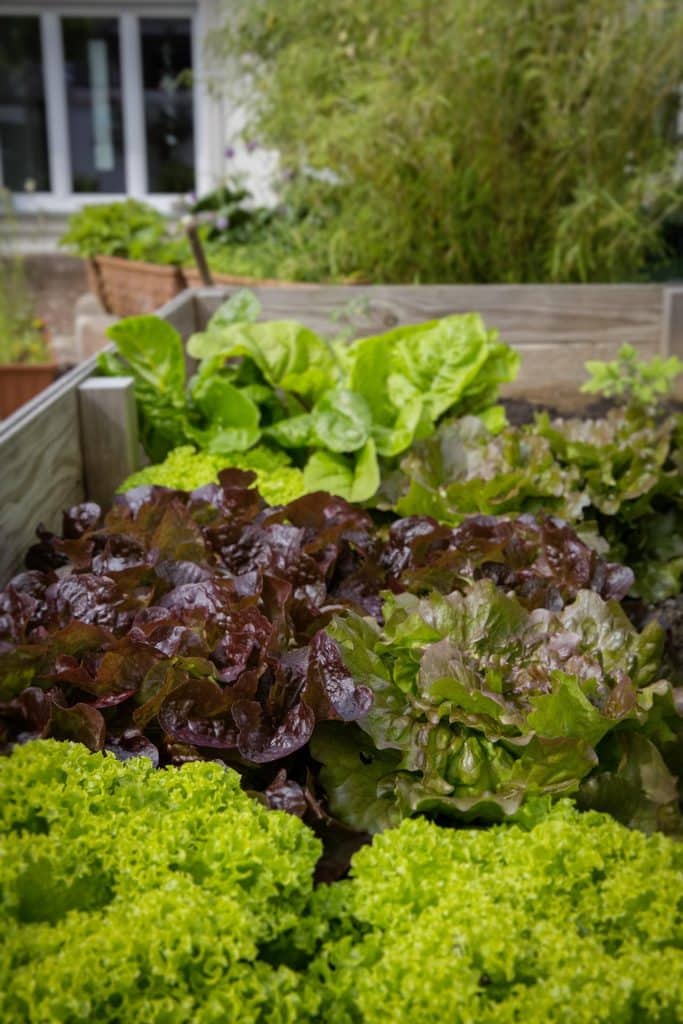
The mistake that many will make when it comes to small space design is trying to include certain specific elements without truly taking the time to think about how they will use the space and the various functions you need the elements (and planting) in the garden to fulfil.
Some typical functions a sustainable small city garden should fulfil include:
- Space for outdoors seating/ dining.
- An area for food production.
- Water and fertility provision.
- Habitat, and provision for wildlife.
- Privacy, shade, and/or screening from air pollution, noise pollution etc…
There may also be other functions a small city garden should fulfil, such as space for children to play, space to work, space for pets, a place for drying clothes, storage space etc…
Thinking about what you need your garden to provide should be the first step in working out precisely what you should include in your layout plan.
Choose Elements For Small Spaces That Fulfil Multiple Functions
There are no hard and fast rules about the elements that you should include in a city garden. But it is a good idea to think carefully before you include any particular element at all.
Ideally, whether we are talking about a plant, a growing area, some landscaping materials or structures, or a piece of garden furniture, every element that you include should be able to fulfil more than one function.
For example, a fruit tree might not only provide food, but also shade for a seating area, add privacy by blocking sight lines from adjacent buildings, give benefits for wildlife, and so much more. While a man-made shade cover, for example, might provide only one of these things.
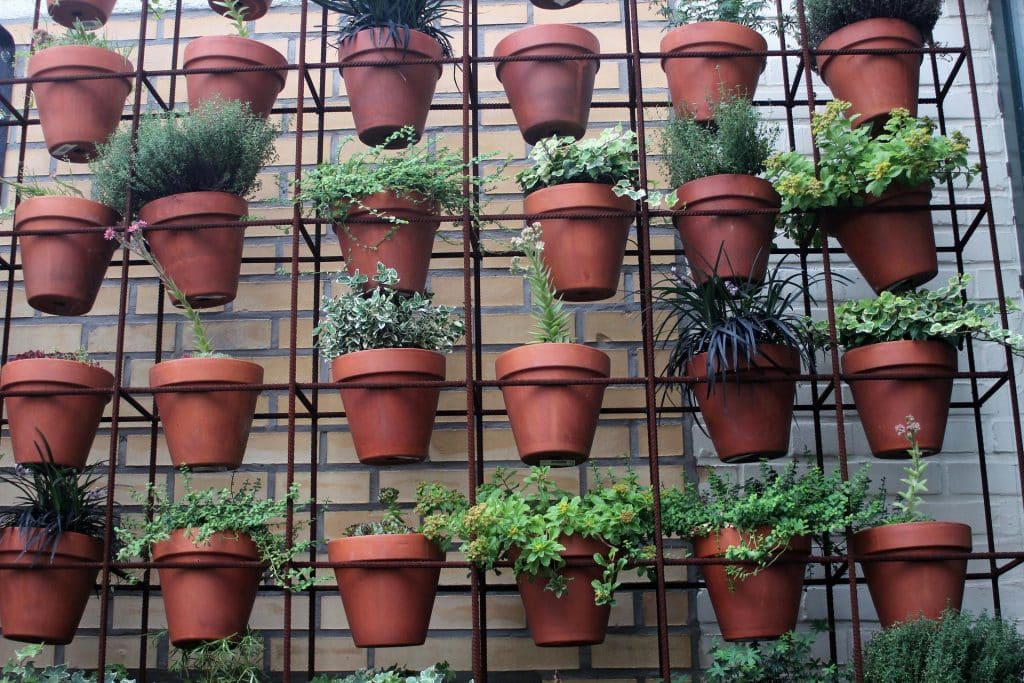
A rainwater butt will collect rainwater. But a vertical garden connected to a downspout that channels water while also growing plants, then feeds out into a small garden pond will provide far more and make more of the space…
The low walls, reclaimed wood or logs edging a raised bed might also become additional seating, or contain hollow areas to grow yet more plants… or even be bench seating that opens to have storage or other features within.
A static greenhouse could allow you to grow through the winter. But mini polytunnels that can be moved around could be a more versatile choice, and might be used in multiple different ways in different places through the year.
Thinking about how many functions an element has can help you really make the most of even the smallest of spaces.
Be Cohesive in Your Approach To Planting
Remember, it is the planting in a small space garden that will really bring everything together. No matter what other elements you choose to include in your small city gardens, taking the right approach to planting is key to creating the right feel, and a truly useful and beautiful space.
Think about the overall effect you want to go for before you begin to hone in on the details and decide which specific plants to grow. Do you want a lush jungle-like garden? A food forest? A sleek contemporary space? A cheerful cottage garden vibe? Whatever you want your garden to look and feel like, planting the right plants in the right places can help you achieve your goal.
It is important to be cohesive in your approach to planting and no just chuck plants here and there without a broad plan. Especially in a small place, planning your planting is key.
When you plan carefully you can make sure that the planting does what you want and need it to do. For example it can:
- Blur the boundaries of the space making it feel bigger.
- Take the eye vertically, as well as along the ground, again increasing the sense of space.
- Delight all the senses and make the area a pleasant place to be by providing shade, privacy, wind breaking, acoustic insulation etc…
- Provide you with food and many other yields for you and your home.
- Provide for wildlife and bring beneficial creatures into the space.
Stacking plants – layering them with smaller plants below taller ones, and training plants to grow vertically, or in vertical garden structures can help you make the most your space and find a layout that works for you. And growing a beautiful blend of edibles and ornamentals will mean that your small city garden is a useful and attractive oasis in your area.
So plant as diverse a range of plants as possible to reap the largest amount of benefits for all.
References:
https://www.discoverwildlife.com/how-to/wildlife-gardening/urban-gardens-wildlife/